简要总结: Arc Hydro is a comprehensive GIS framework developed by Esri that combines a data model, toolset, and workflows for water resource management. Operating on ArcGIS Pro, it helps water resource managers build foundational datasets for watershed analysis, hydrologic modeling, and integration with water resource models through specialized geoprocessing tools.
Water resource management demands robust geospatial tools that can handle everything from terrain analysis to watershed delineation. Arc Hydro has been a cornerstone of hydrologic GIS work for years, but how does it stack up in 2026?
This review breaks down the framework’s capabilities, practical applications, and how it fits into modern water resource workflows. Whether analyzing flood risk, modeling water availability, or managing watershed data, understanding what Arc Hydro brings to the table matters.

What Is Arc Hydro?
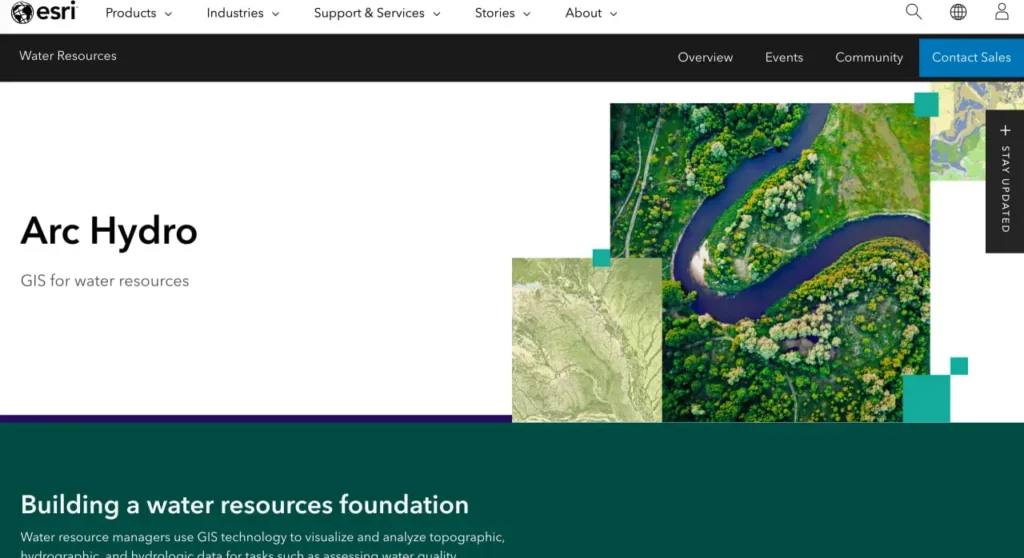
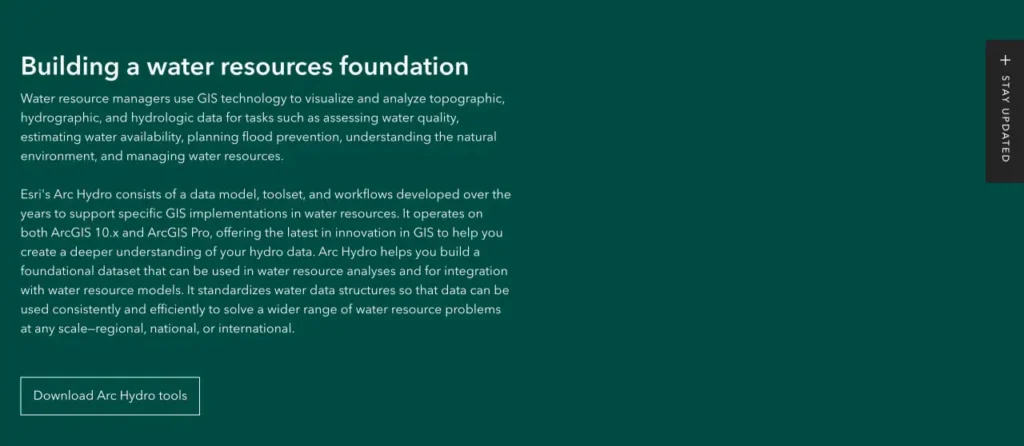
Arc Hydro is more than just a toolset—it’s a complete framework for water resource GIS. According to the official Esri documentation, it consists of three core components: a standardized data model, a comprehensive toolset, and established workflows developed specifically for water resource implementations.
The framework operates on ArcGIS Pro, giving organizations flexibility in their GIS infrastructure. Water resource managers use it to visualize and analyze topographic, hydrographic, and hydrologic data across multiple applications.
Real talk: the data model component sets Arc Hydro apart. Rather than working with disconnected datasets, the framework provides a structured schema that organizes water resource information in ways that support both analysis and long-term data management.
Core Components Breakdown
The data model defines how hydrologic features are stored and related—streams, catchments, watersheds, and monitoring points all connect through standardized relationships. This structure makes it possible to trace flow paths, aggregate upstream data, and maintain network topology.
The toolset includes geoprocessing functions for terrain processing, watershed delineation, network generation, and attribute assignment. These aren’t generic spatial analysis tools; they’re built specifically for hydrologic workflows.
Workflows tie everything together with documented processes for common water resource tasks. From initial DEM processing through final watershed characterization, these workflows provide tested approaches that reduce trial-and-error.
Get More From Drone and Satellite Imagery With FlyPix AI
Geospatial projects often depend on large amounts of imagery that can be difficult to review manually. FlyPix AI helps automate image analysis, allowing teams to detect objects, classify areas, and monitor changes more efficiently.
想要更快速的地理空间分析?
FlyPix AI 可以提供帮助:
- satellite and drone image processing
- object detection and classification
- land-use analysis
- 自定义人工智能模型训练
👉 试试 FlyPix AI to explore geospatial analysis workflows.
主要特性和功能
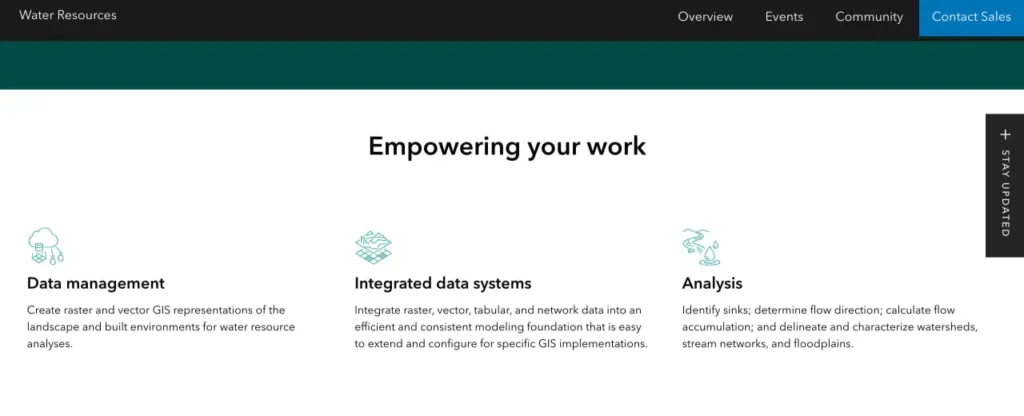
Arc Hydro’s toolset covers the full spectrum of hydrologic GIS work. Terrain processing tools handle DEM conditioning, filling sinks, and calculating flow direction and accumulation—the foundational steps for any watershed analysis.
Watershed delineation functions let users define catchment boundaries for any point on the landscape. This matters when analyzing drainage areas for monitoring stations, evaluating contributing areas for pollution sources, or segmenting river networks into manageable units.
Network generation creates connected stream networks with proper topology. Flow direction gets encoded, tributaries connect correctly, and the resulting network supports upstream/downstream tracing and network-based analysis.
Attribute Management Tools
The framework includes specialized tools for calculating and managing hydrologic attributes. Length and area calculations, slope statistics, upstream accumulation values—these get computed and stored according to the data model schema.
Time series data management handles temporal information like stream gauge readings or water quality measurements. The data model includes structures for linking time-varying data to spatial features, which supports trend analysis and temporal queries.
Integration capabilities connect Arc Hydro datasets with external modeling software. The framework can export data in formats compatible with rainfall-runoff models, groundwater models, and water quality simulation tools.

Integration with ArcGIS Pro
Arc Hydro’s compatibility with ArcGIS Pro brings modern GIS capabilities to water resource work. The 64-bit architecture handles larger datasets without memory constraints that plagued older systems.
According to Esri’s official ArcGIS Pro documentation, ArcGIS Pro delivers 2,000+ geoprocessing tools and supports advanced automation and customization. Arc Hydro tools plug into this ecosystem, leveraging Pro’s performance improvements and interface enhancements.
The ribbon interface organizes Arc Hydro functions logically, and the ability to create custom toolboxes means organizations can package their specific workflows for consistent execution across teams.
Performance Considerations
Processing speed matters when working with high-resolution DEMs across large watersheds. ArcGIS Pro’s parallel processing and optimized algorithms deliver noticeable improvements compared to the 10.x environment.
But here’s the thing—you’ll need adequate hardware. Professional Plus user types access ArcGIS Pro Advanced, which includes the full spatial analysis toolkit. Esri’s ArcGIS Pro licensing documentation outlines license levels including Basic, Standard, and Advanced, with Arc Hydro workflows typically requiring Standard or Advanced capabilities.
| License Level | Typical Arc Hydro Use Cases | Key Limitations |
|---|---|---|
| 基本的 | Simple watershed viewing, basic queries | Limited geoprocessing tools |
| 标准 | Watershed delineation, network creation, attribute calculation | Some advanced spatial analysis restricted |
| 先进的 | Complete hydrologic modeling, DEM processing, network analysis | None for Arc Hydro workflows |
实际应用
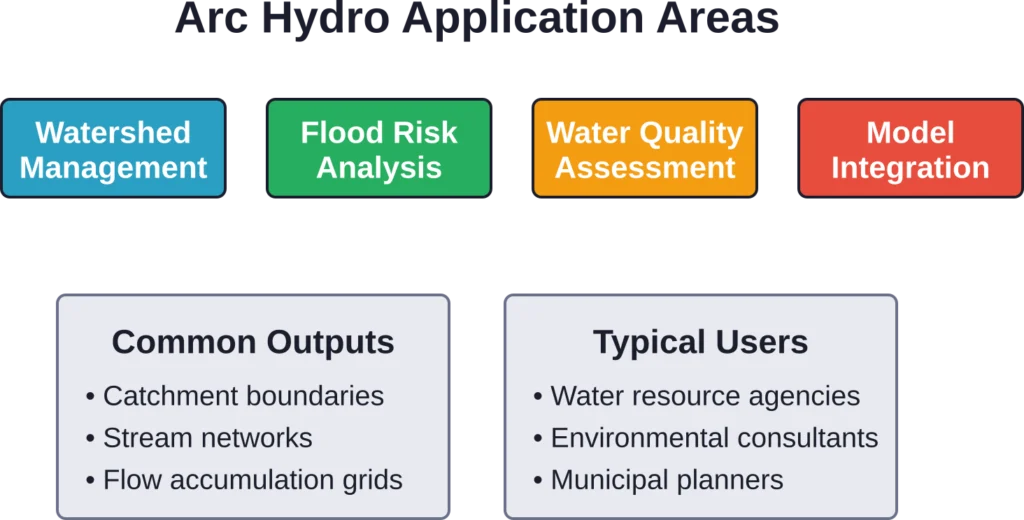
Water resource managers use Arc Hydro for watershed assessment and planning. Delineating drainage boundaries, calculating basin characteristics, and identifying critical sub-watersheds all flow from the framework’s core capabilities.
Flood risk analysis leverages Arc Hydro’s terrain processing and flow accumulation tools to identify areas prone to inundation. Combined with precipitation data and hydraulic modeling, the framework supports flood hazard mapping and mitigation planning.
U.S. Geological Survey research demonstrates the use of watershed characterization data in hydrologic models like HSPF (Hydrological Simulation Program—FORTRAN). Arc Hydro provides the spatial processing needed to generate model parameters from GIS data layers.
Water Quality Applications
Non-point source pollution assessment requires understanding contributing areas and flow paths. Arc Hydro’s network tracing identifies upstream land uses that affect downstream water quality monitoring points.
National Hydrography Dataset Plus High Resolution (NHDPlus HR) uses similar hydrographic data model concepts for seamless network analysis. This national-scale hydrography framework demonstrates the application of standardized data models across regions.
Community discussions highlight Arc Hydro’s role in multi-disciplinary projects where GIS specialists support hydrologists, engineers, and environmental scientists. The standardized data structure facilitates collaboration and data sharing.

Comparing Arc Hydro to Alternatives
The hydrologic GIS landscape includes several alternatives. SWAT (Soil & Water Assessment Tool), developed by Texas A&M University, is widely used for watershed-scale modeling. According to the official SWAT website, it simulates water quality and quantity from small watersheds to river basin scales.
But SWAT focuses on simulation modeling rather than spatial data management. Arc Hydro provides the GIS framework that can prepare input data for SWAT and other models.
Open-source tools like TauDEM and Whitebox Geospatial offer terrain analysis capabilities without licensing costs. These tools excel at specific tasks but lack Arc Hydro’s integrated data model and workflow documentation.
When Arc Hydro Makes Sense
Organizations already invested in the Esri ecosystem benefit from Arc Hydro’s tight integration. Data flows seamlessly between Arc Hydro tools and other ArcGIS capabilities, and the common interface reduces training time.
Projects requiring standardized data structures for long-term management gain value from Arc Hydro’s data model. Ad-hoc analyses work fine with generic tools, but sustained programs need consistent schemas.
Multi-disciplinary teams benefit from Arc Hydro’s documentation and established workflows. Rather than reinventing processes, teams can adopt tested approaches and customize as needed.
| 工具 | 主要优势 | 最适合 |
|---|---|---|
| 弧水电 | Integrated framework with data model | Enterprise water resource GIS |
| SWAT | Watershed simulation modeling | Water quality/quantity prediction |
| TauDEM | Open-source terrain analysis | Academic research, custom workflows |
| WMS | Specialized watershed modeling interface | Engineering design projects |
Learning Curve and Support
Arc Hydro requires solid GIS fundamentals. Understanding coordinate systems, raster processing, and geodatabase concepts is essential before diving into hydrologic workflows.
Esri provides training resources through its academy and community forums. University of Tennessee library research guides document multiple GIS learning resources covering fundamentals and ArcGIS applications.
Community discussions reveal that troubleshooting spatial reference mismatches and processing errors requires patience. The Esri Community forums provide valuable peer support, with experienced users and Esri staff responding to questions.
Documentation Quality
Official Arc Hydro documentation walks through standard workflows with step-by-step instructions. The data model specification explains table structures, field definitions, and relationship classes in detail.
Tutorial datasets let users practice core workflows without hunting for appropriate test data. These controlled examples demonstrate tool behavior and expected results.
That said, complex projects often require experimentation. Not every edge case appears in documentation, and adapting workflows to specific requirements takes time and testing.

Common Challenges
DEM quality directly affects Arc Hydro results. Artifacts in elevation data propagate through processing steps, creating spurious flow paths or incorrect watershed boundaries. Pre-processing to condition DEMs matters.
Processing large watersheds at high resolution pushes hardware limits. Even with ArcGIS Pro’s improvements, extensive terrain processing can take hours or days depending on data size and computer specifications.
Data model complexity creates an initial barrier. Organizations need to invest time understanding schema relationships before the structure’s benefits become clear. Simple projects might not justify this overhead.
Version Compatibility
Arc Hydro versions align with ArcGIS releases, but updates don’t always happen simultaneously. Users sometimes work with Arc Hydro tools built for earlier ArcGIS versions, which can create compatibility questions.
Tools function differently between platforms in some cases, requiring testing and validation.
Check the official Esri website for current Arc Hydro version compatibility with specific ArcGIS releases before starting projects or planning upgrades.
Who Should Use Arc Hydro?
Water resource agencies managing long-term monitoring programs benefit from Arc Hydro’s data model. Consistent structure supports data accumulation over years and facilitates comparisons across time periods.
Environmental consultants working on watershed assessments can leverage Arc Hydro’s established workflows to deliver standardized analyses efficiently. The framework reduces project setup time.
Academic researchers and students gain exposure to professional hydrologic GIS practices. Arc Hydro workflows align with industry standards, making skills transferable to professional settings.
Small organizations or individual practitioners face a cost-benefit calculation. ArcGIS licensing represents significant investment, and Arc Hydro adds complexity beyond basic GIS operations. Evaluate whether the framework’s capabilities justify costs.
常见问题
Absolutely. Arc Hydro works with any raster elevation dataset, including high-resolution LiDAR DEMs. The tools handle fine-resolution data, though processing times increase with DEM size. Proper DEM conditioning becomes more important with detailed elevation data to handle small-scale artifacts.
Arc Hydro focuses primarily on surface water hydrology—watersheds, stream networks, and surface flow. While it can prepare some inputs for groundwater models, dedicated groundwater tools and frameworks provide more specialized capabilities for subsurface analysis.
Update frequency varies. Major releases typically align with significant ArcGIS versions, while incremental updates address bugs and minor enhancements. Check the official Esri Arc Hydro page for current version information and release notes detailing recent changes.
Arc Hydro’s standard workflows assume gravity-driven flow from high to low elevation. Tidally influenced areas with bidirectional flow require specialized approaches beyond basic Arc Hydro tools. Users can adapt the data model for coastal applications, but standard processing tools may not apply directly.
Arc Hydro uses Esri geodatabase formats—file geodatabases for most applications, enterprise geodatabases for multi-user environments. Input data can come from various sources (shapefiles, rasters, coverages), but Arc Hydro stores results in geodatabase structures following its schema.
Basic Arc Hydro workflows run through the ArcGIS interface without programming. Advanced customization and automation benefit from Python scripting skills. Most users start with standard tools and gradually incorporate scripting as needs grow.
最终评估
Arc Hydro delivers a mature, comprehensive framework for water resource GIS. The integrated data model, specialized toolset, and documented workflows address real needs in hydrologic analysis and watershed management.
Organizations already using ArcGIS gain the most value—Arc Hydro extends existing capabilities rather than requiring a completely separate platform. The framework leverages ArcGIS Pro’s performance improvements while maintaining compatibility with established GIS infrastructure.
The learning curve is real. Arc Hydro isn’t a simple plugin; it’s a full methodology requiring time investment to master. But for sustained water resource programs, that investment pays dividends through standardized processes, consistent data structures, and efficient workflows.
Alternatives exist—open-source tools, specialized modeling software, custom scripts. Each serves specific niches. Arc Hydro’s strength lies in bringing comprehensive capabilities together in a supported, documented framework backed by Esri’s ecosystem.
Check the official Esri Arc Hydro page for current version information, compatibility details, and licensing requirements. Evaluate how the framework fits organizational needs, existing infrastructure, and project requirements before committing.