You know that feeling when something’s just not quite right-like a sidewalk that’s cracked or a website that skips over what you need because of how you’re navigating it? That’s the opposite of inclusive infrastructure, and honestly, it’s something we’ve all bumped into at some point. But here’s the good news: in 2025, top solutions are stepping up with tools that make everything from digital platforms to physical builds truly accessible. These aren’t just add-ons; they’re smart, practical solutions that blend AI smarts with real-world checks to ensure no one’s left behind. Whether you’re in urban planning, web dev, or running a big operation, these tools cut through the complexity and deliver results that feel empowering. Let’s dive into the standouts that are reshaping how we design for all abilities-faster, fairer, and way more forward-thinking.

1. FlyPix AI
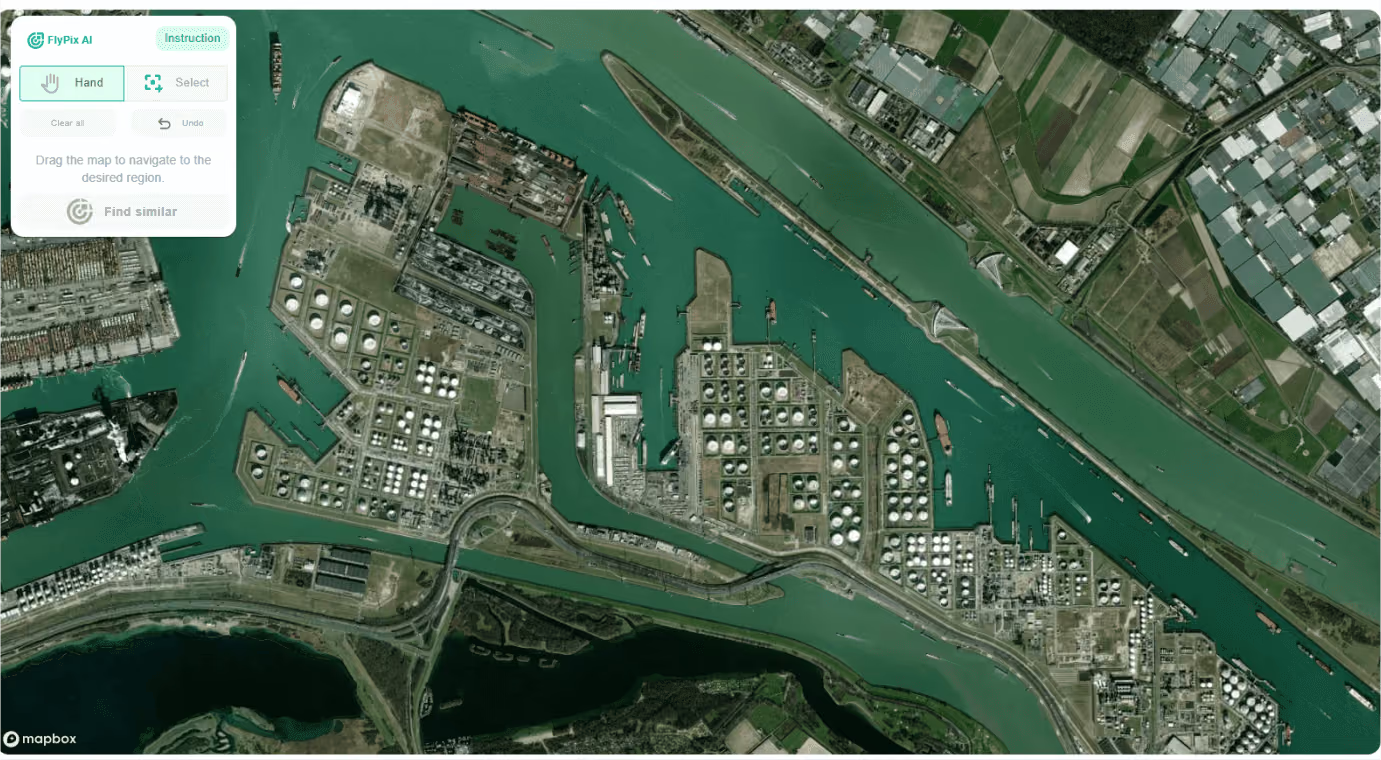
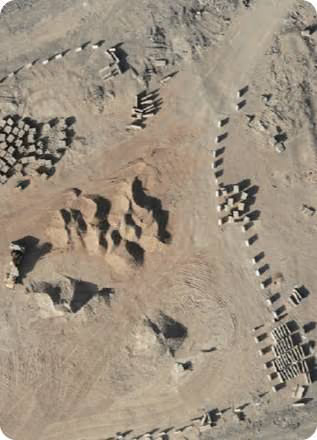
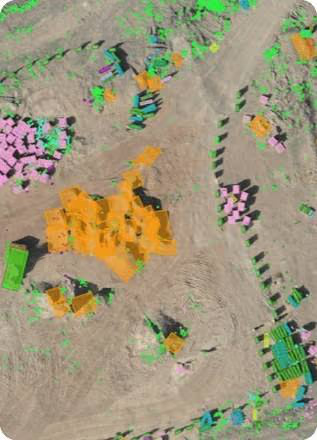
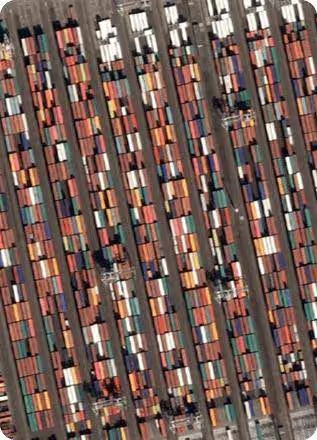
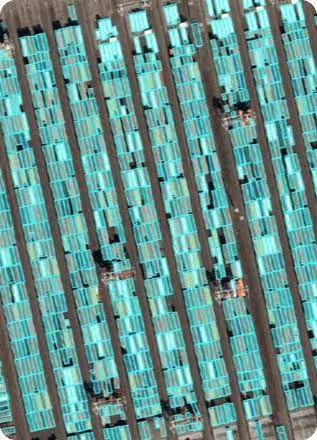
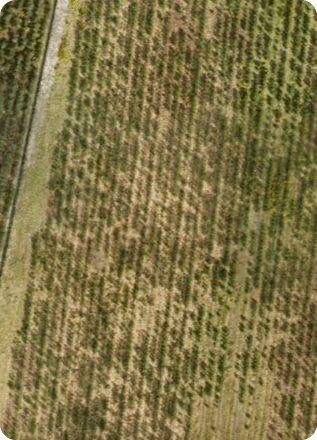
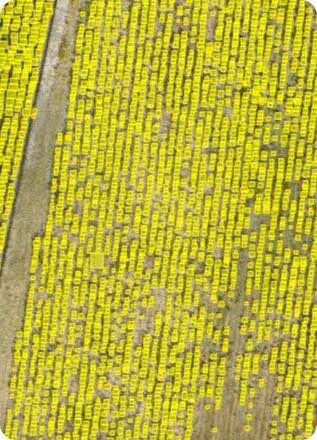
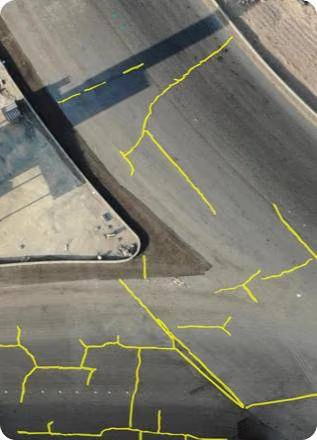
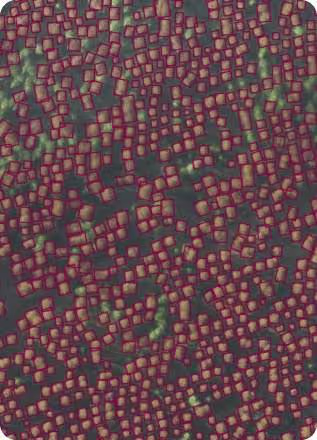
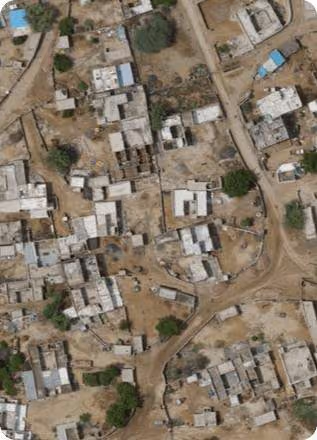
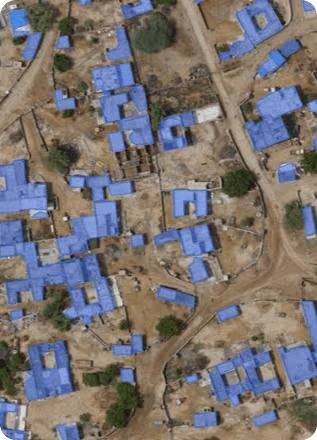
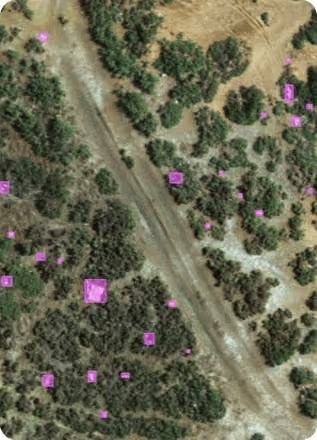
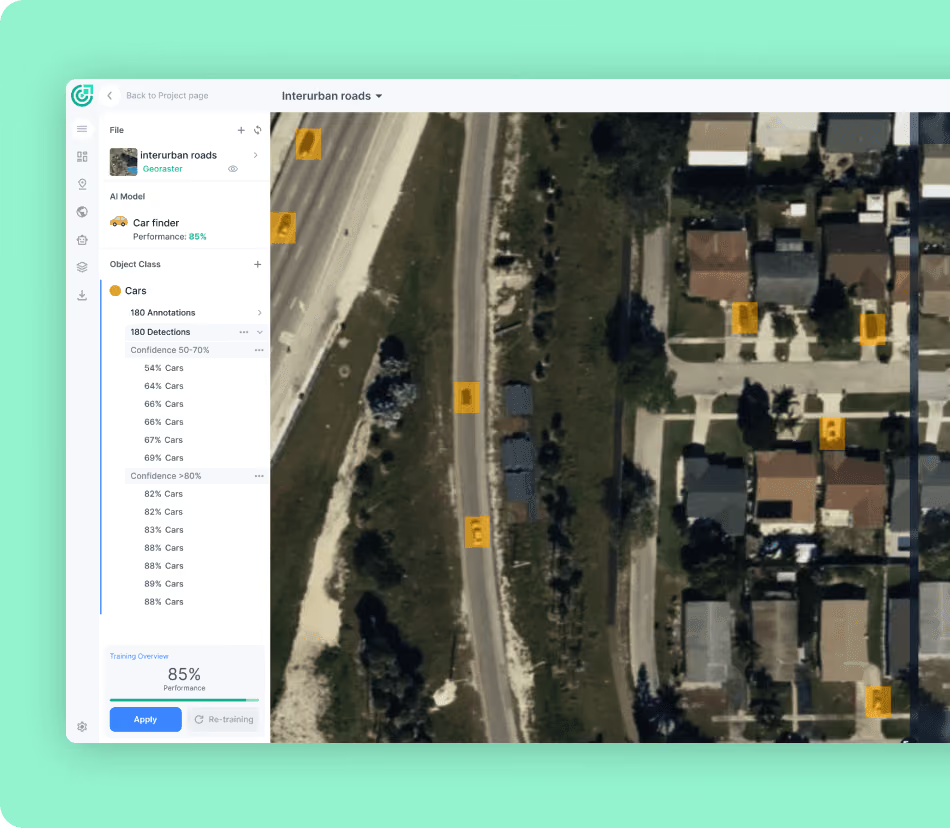
We’ve built a platform that simplifies crunching through satellite, drone, or aerial images, using AI to pick out objects like roads, buildings, or green spaces so no one’s stuck squinting at raw data. You can train custom models with your own markers to highlight what matters-say, accessibility ramps or flood-prone zones-and see it all on a dashboard that keeps things clear for everyone involved, from planners to community reps. Our free trial starts you off with basic model training and some storage, while paid plans, billed monthly or yearly with a slight discount, unlock more space, processing credits, and tools like vector exports or map sharing to keep projects inclusive and open.
Higher plans add collaboration features, letting diverse groups swap maps or set access rules, ensuring everyone from local councils to field crews stays in the loop. API hooks and expert reviews in top tiers make it easier to weave insights into broader systems, like city planning tools or public apps. The free trial gives a taste of these capabilities, letting you test predictions before scaling up for bigger jobs or faster support. It’s pretty neat how a flood of sky-high data turns into shared, clickable plans that help build spaces everyone can use.
Key Highlights
- Custom AI models for spotting infrastructure features
- Clear dashboard for diverse user access
- Vector exports for sharing in paid plans
- Collaboration tools for inclusive project input
- API and expert checks in higher tiers
- Multispectral data for detailed site analysis
Who it’s best for
- City planners mapping accessible layouts
- Community groups reviewing land use
- Infrastructure crews ensuring equitable designs
Contact Information
- Website: flypix.ai
- Phone: +49 6151 2776497
- Email: info@flypix.ai
- Address: Robert-Bosch-Str. 7, 64293 Darmstadt, Germany
- LinkedIn: www.linkedin.com/company/flypix-ai

2. CARTO
Spatial tools like this one sit fully in the cloud, linking up with storage spots like BigQuery or Snowflake to run queries without pulling data around. Analysts drag pieces together for quick calcs on locations, mixing in machine learning bits to probe patterns in traffic flows or service gaps. Visuals handle massive point sets, letting folks poke at maps by chatting in plain words, which pulls up layers on demand without coding marathons.
Custom agents handle routine tasks, like plotting growth zones or risk pockets, feeding answers back to whoever needs them in the org. App builders skip heavy backend lifts, leaning on the lakehouse for speed and tossing in graphics tech for smooth renders. What catches the eye is how it opens up the heavy lifting to more hands, turning what used to be specialist work into shared chats over coffee.
Key Highlights
- Drag-drop analysis with ML hooks
- Natural language map interactions
- Custom agents for routine insights
- Billions-point visualization
- Cloud ties without data moves
- Framework-free app scaling
- GPU-backed renders
Who it’s best for
- Data folks in planning depts
- Devs building location apps
- Execs needing quick spatial overviews
Contact Information
- Website: carto.com
- Email: rfp@carto.com
- LinkedIn: www.linkedin.com/company/carto
- Facebook: www.facebook.com/CartoDB
- Twitter: x.com/CARTO

3. Maptionnaire
Map-based surveys form the core of this platform, where users craft interactive questionnaires that pin feedback right onto locations, pulling in responses from folks who might skip traditional meetings. Multi-language options and social shares broaden who chimes in, especially from groups that don’t always make it to in-person events, while gamified elements keep things light and encourage more shares on preferences for parks or routes. Analysis tools layer heatmaps over the inputs, spotting clusters of concerns or wishes without sifting through spreadsheets, and exports feed straight into GIS setups for blending with city data.
Project pages bundle the story-drafts, polls, and wrap-up reports-into shareable sites that loop back results to participants, fostering that sense of being heard. Started as a spin-off from planners frustrated with patchy input methods, it’s evolved to handle everything from budgeting votes to idea drops, making the whole process feel less like a chore and more like a conversation. It’s one of those tools that quietly shifts power by letting voices from quieter corners shape the map.
Key Highlights
- Interactive map questionnaires for location feedback
- Multi-language support for broader reach
- Heatmaps and AI theme spotting
- Export to GIS formats
- Dedicated pages for project updates
- Gamified polls and budgeting tools
Who it’s best for
- Urban planners gathering resident views
- City offices running participation drives
- Consultants building inclusive proposals
Contact Information
- Website: www.maptionnaire.com
- Address: Mapita Oy Fredrikinkatu 55 A 2, FI-00100 Helsinki
- LinkedIn: www.linkedin.com/company/mapita-oy
- Facebook: www.facebook.com/maptionnaire
- Twitter: x.com/Maptionnaire

4. Digital Blue Foam
Generative tools here spin up building scenarios based on inputs like site constraints or emission targets, using drag-and-drop to tweak models that hook into existing workflows. BIM outputs pop out for facility handoffs, complete with layers for maintenance checks, while spatial pulls from various sources crunch metrics on walkability or green coverage to ground designs in real context. Sustainability checks run in real time, flagging carbon hotspots across scales from single structures to neighborhood layouts.
Custom builds cater to enterprise needs, with access kicking in midway through setup phases for tailored features. Focused on tough spots like labs or master plans, it leans on algorithms that balance novelty with practicality, so iterations don’t stray too wild. Kinda reminds you how AI can turn vague briefs into tangible options, saving the endless redraws that bog down bigger visions.
Key Highlights
- Scenario generation from user requirements
- Drag-drop BIM for facility models
- Multi-source spatial metric validation
- Real-time carbon emission modeling
- Integrations with design tools
- Custom enterprise adaptations
Who it’s best for
- Architects iterating on urban schemes
- Consultants optimizing site plans
- Planners assessing environmental fits
Contact Information
- Website: www.digitalbluefoam.com
- LinkedIn: www.linkedin.com/company/digital-blue-foam

5. Project for Public Spaces
Placemaking guides and trainings here equip groups with steps to observe and tweak spaces, drawing from community chats to highlight what draws people in or pushes them away. Workshops cover everything from quick audits to full redesigns, emphasizing experiments like pop-up events that test vibes before committing funds. Resources include handbooks and toolkits that break down values like equity, nudging projects toward spots that serve mixed crowds without erasing local flavor.
Networks link practitioners for sharing stories, from market revamps to street conversions, fostering that ongoing dialogue that keeps spaces alive post-launch. Born from watching how folks actually use-or ignore-plazas, it’s less about blueprints and more about sparking local ownership. You get the sense it’s for those moments when a blank lot could be anything, but only if the right voices weigh in early.
Key Highlights
- Observation-based space audits
- Experimental redesign toolkits
- Equity-focused placemaking guides
- Workshop series for community leads
- Case studies on space transformations
- Networks for practitioner exchanges
Who it’s best for
- Neighborhood groups revitalizing parks
- Municipal teams on public realm tweaks
- Designers incorporating user insights
Contact Information
- Website: www.pps.org
- Phone: +1 (212) 620-5660
- Email: info@pps.org
- Address: 49 5th Ave #1025 Brooklyn, NY 11217 USA
- LinkedIn: www.linkedin.com/company/project-for-public-spaces
- Twitter: x.com/PPS_Placemaking
- Instagram: www.instagram.com/pps_placemaking

6. Lincoln Institute
Research hubs here churn out studies on land use, taxes, and stewardship, linking theory to policy tweaks for fairer resource splits. Training and events build skills for officials on fiscal tools or water management, while publications feed into decisions on growth or conservation. The work spans local to broader scales, envisioning coordinated planning that boosts equity and sustainability without siloed fixes.
Fellowships nurture fresh voices, and tools like datasets support grounded choices in communities or regions. It’s the kind of steady backdrop that turns big environmental worries into actionable local steps, one tax reform or zoning chat at a time.
Key Highlights
- Policy research on land and fiscal systems
- Capacity trainings for decision makers
- Publications bridging theory and practice
- Fellowships for emerging experts
- Data tools for community allocation
Who it’s best for
- Policy makers on land equity
- Local governments fiscal planning
- Researchers stewarding resources
Contact Information
- Website: www.lincolninst.edu
- Phone: 617-661-3016
- Email: help@lincolninst.edu
- Address: 113 Brattle St, Cambridge, MA 02138-3400 USA

7. Nearmap
Aerial captures from custom rigs deliver crisp, frequent views of sites, layering in 3D models and AI flags for roof wear or vegetation sprawl. Tools pull measurements or risk scores remotely, feeding into inspections without site visits every time. Integrations slot the feeds into workflows for insurance, construction, or public works, turning overhead snaps into ongoing monitors.
Coverage hits urban pockets with multiple angles, helping track changes like asset shifts or hazard builds. Odd how a plane pass can save boots on the ground, spotting a sagging line before it snaps.
Key Highlights
- High-clarity multi-perspective imagery
- 3D models for site visualization
- AI attributes on conditions
- Remote metric extractions
- Workflow ties for sector uses
Who it’s best for
- Insurers assessing property risks
- Engineers monitoring build progress
- Governments prepping disaster plans
Contact Information
- Website: www.nearmap.com
- Phone: 1-844-463-2762
- Address: 1850 Ashton Blvd, Ste 500 Lehi, UT 84043
- LinkedIn: www.linkedin.com/company/nearmap-com
- Facebook: www.facebook.com/nearmap
- Twitter: x.com/nearmap
- Instagram: www.instagram.com/nearmap

8. weADAPT
Users tap into this platform to share and explore resources on adapting to climate shifts, pulling from a library of case studies and project notes that cover everything from urban flood planning to rural water access. The setup encourages posting your own work, connecting folks tackling similar challenges, like how to rethink city layouts for rising heat or coastal surges. It’s a space where practitioners swap practical ideas, with tools like map-based case browsers to pinpoint relevant examples by region or issue.
Engagement runs deep, with options to join discussions or link up with others, from policy advisors to grassroots organizers, all focused on making infrastructure resilient and fair. The platform’s strength is its open vibe-anyone can add insights or browse without heavy gatekeeping, which feels refreshing in a field that can lean academic. It’s less about slick tech and more about real-world lessons that shape inclusive projects from the ground up.
Key Highlights
- Library of adaptation case studies
- Map-based browsing by region or topic
- User-driven project sharing
- Connection hub for practitioners
- Open access to resources
Who it’s best for
- Urban planners tackling climate risks
- Community groups sharing local fixes
- Policy makers seeking practical examples
Contact Information
- Website: weadapt.org
- Email: info@weadapt.org
- LinkedIn: www.linkedin.com/in/weadapt

9. World Bank PPP
This hub gathers tools and guides for public-private partnerships, laying out resources like model contracts and case studies to shape infrastructure deals that prioritize access for all. Sections cover financing tricks, legal frameworks, and topics like gender equity, offering templates to craft transparent agreements that don’t leave communities out. It’s built for those piecing together projects where private funds meet public needs, like roads or water systems that serve everyone.
Navigation feels intuitive, with filters for specific sectors or issues, and a forum lets users swap feedback on what’s worked or hasn’t. The focus stays on practical know-how—think checklists for inclusive bidding or ways to loop in local voices. It’s the kind of place that grounds big funding talks in details that keep projects fair and usable, even if it leans heavily on policy wonks’ lingo at times.
Key Highlights
- Model agreements for partnerships
- Guides on inclusive financing
- Case studies across sectors
- Forum for user discussions
- Filters for topic-specific tools
Who it’s best for
- Government reps structuring deals
- Developers balancing profit and equity
- Advisors on public infrastructure
Contact Information
- Website: ppp.worldbank.org
- Facebook: www.facebook.com/worldbank
- Twitter: x.com/WBG_PPP

10. GIHub Inclusive Infrastructure
A framework anchors this tool, breaking down six key areas for embedding equity into infrastructure, from stakeholder outreach to universal design standards. Each area comes with actionable steps, backed by case studies showing how real projects-like transit hubs or power grids-brought in underserved groups. The interactive setup lets users dig into specific themes or examples, making it easy to see how a policy tweak or engagement plan played out in practice.
What clicks is the focus on real-life lessons, not just theory, with navigation that doesn’t overwhelm despite the depth. It’s aimed at practitioners who need to justify choices to funders or locals, offering a roadmap to avoid leaving anyone behind. Feels like a quiet nudge toward projects that don’t just build stuff but actually fit the people using it.
Key Highlights
- Six-area framework for equity
- Detailed case studies by sector
- Interactive theme navigation
- Practical guidance for each step
- Focus on underserved groups
Who it’s best for
- Project managers planning inclusivity
- Urban designers on community needs
- Funders ensuring equitable outcomes
Contact Information
- Website: inclusiveinfra.gihub.org
- Email: gihub@worldbank.org
- Address: 1818 H Street NW Washington DC 20433 USA
- Phone: 202.458.5588
- LinkedIn: www.linkedin.com/company/global-infrastructure-hub
- Twitter: x.com/gi_hub

11. OpenSidewalks
Pedestrian paths get mapped here with a focus on details like slope, width, or surface type, creating a network that’s clear enough for tailored routing-say, avoiding steep hills for wheelchair users. The schema builds on open-source mapping but pushes for richer attributes, ensuring data reflects real accessibility needs rather than vague labels. It’s designed to slot into broader systems, letting apps or planners pull precise info for custom navigation.
Contributors can add to the dataset, feeding in local sidewalk conditions to keep things current, which makes it a living resource. It’s less flashy than some tech but hits hard on utility, especially for those who know how much a bumpy curb can derail a day. The open approach feels like a small rebellion against one-size-fits-all maps.
Key Highlights
- Detailed path attributes for access
- Open-source compatible schema
- Community-driven data updates
- Flexible for app integration
- Focus on user-specific routing
Who it’s best for
- Accessibility advocates mapping routes
- App developers building nav tools
- City planners enhancing walkways
Contact Information
- Website: tcat.cs.washington.edu
- Phone: +1 206-543-1021
- Email: uwtcat@uw.edu
- LinkedIn: www.linkedin.com/company/taskar-center-for-accessible-technology
- Facebook: www.facebook.com/TaskarCenter
- Twitter: x.com/taskarcenter

12. SEI Urban Toolbox for Liveable Cities
This toolbox pulls together methods for urban planning, from stakeholder mapping to health-focused design, all aimed at making cities work better for everyone. Tools like MapStakes guide users through steps to identify and engage diverse groups, ensuring projects like green spaces or transit lines reflect local needs. It’s hosted on a platform that encourages swapping case studies or joining chats, keeping the vibe collaborative.
The setup shines for its practical bent-less about grand theories and more about usable steps, like how to weigh community input in a flood plan. It’s got a slight learning curve if you’re new to urban policy, but the examples ground it in real places, which helps. Feels like a toolkit for folks who want cities to feel fair, not just functional.
Key Highlights
- Stakeholder engagement tools
- Health and equity-focused methods
- Case studies for practical use
- Community platform for sharing
- Guides for inclusive planning
Who it’s best for
- City officials on urban projects
- NGOs pushing equitable design
- Researchers studying city health
Contact Information
- Website: www.sei.org
- LinkedIn: www.linkedin.com/company/stockholm-environment-institute
- Facebook: www.facebook.com/StockholmEnvironmentInstitute
- Twitter: x.com/SEIresearch
- Email: info-Africa@sei.org
- Phone: +254 (0) 711 034 422
- Address: Head Office, World Agroforestry Centre, United Nations Avenue, Gigiri, Nairobi, 00100, Kenya
Conclusion
Wrapping up our look at inclusive infrastructure tools, it’s clear the landscape’s shifting toward systems that don’t just check boxes but actually open doors for everyone. From satellites catching land shifts in real time to platforms cleaning up messy data for smoother city planning, these tools are about making spaces-digital or physical-work for all, no matter the need or context. They’re not perfect; sometimes the tech feels like it’s racing ahead of the folks trying to use it. But that’s where the magic lies: in setups that let planners, builders, and managers pivot fast, whether it’s spotting a pipe leak before it floods or tweaking a site for better access.
What stands out is how these tools bridge the gap between big ideas and gritty details. You’ve got visuals that turn raw feeds into clear plans, analytics that flag risks before they’re problems, and interfaces that don’t demand a PhD to navigate. It’s less about flashy promises and more about handing people the means to build smarter, fairer spaces. As cities grow and challenges stack up, these kinds of solutions remind us that inclusion isn’t a buzzword-it’s a practical push to make sure no one’s left standing on the sidelines.