
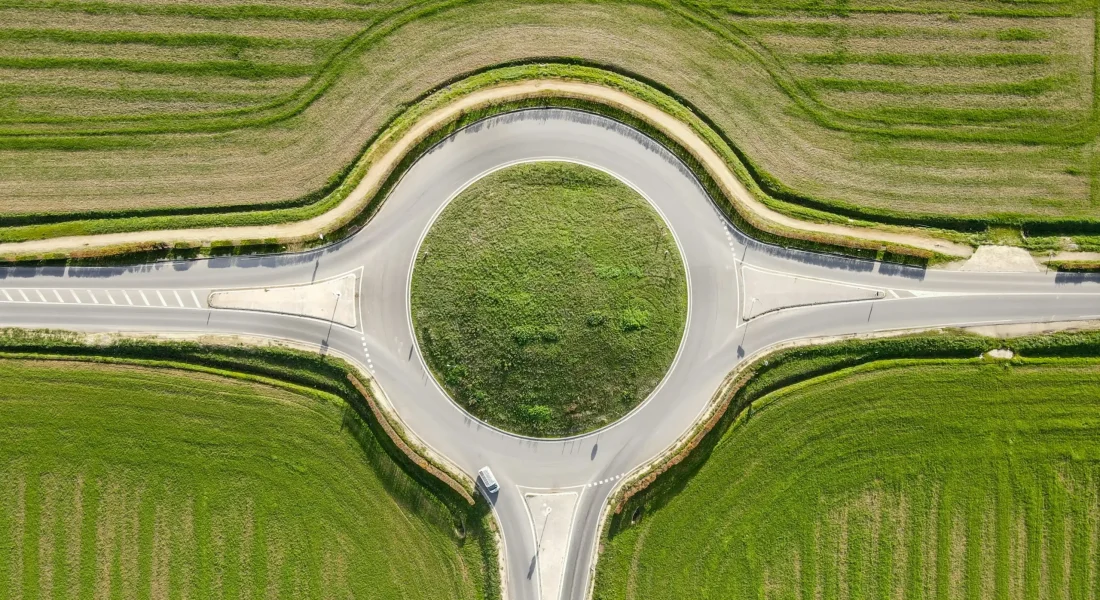
Planning green infrastructure isn’t just about planting trees or adding a rain garden – it’s about fitting nature into the way cities and landscapes actually function. The right tools make that easier. They help teams map what exists, spot where gaps are, and test scenarios before breaking ground. Some focus on data layers and ecosystem models. Others handle zoning, carbon storage, or runoff flow. This list brings together a mix of platforms that support real-world decisions, whether you’re restoring a floodplain or setting up urban cooling corridors.

1. FlyPix AI
FlyPix AI is used in green infrastructure planning to process drone, satellite, and aerial imagery at scale without manual annotation. Our platform detects visible objects like vegetation, water, and surfaces that influence how green infrastructure can be located or adjusted.
Users can train custom models with simple annotations to identify features tied to planning decisions – such as canopy coverage, runoff channels, or built structures. No coding is needed. Once trained, the AI runs across large image sets in seconds, turning raw visuals into labeled layers for mapping, analysis, or reporting.
Key Highlights:
- Automates detection of objects relevant to green infrastructure
- Supports satellite, aerial, and drone image inputs
- Custom models trainable without coding
- Output integrates with planning and GIS workflows
Who it’s best for:
- Urban planning teams working on green corridors or canopy strategies
- Environmental consultants analyzing runoff and vegetation
- Researchers handling large-scale imagery for natural infrastructure
- Local governments mapping nature-based solutions in dense areas
Contact Information:
- Website: flypix.ai
- E-mail: [email protected]
- LinkedIn: www.linkedin.com/company/flypix-ai
- Address: Robert-Bosch-Str. 7, 64293 Darmstadt, Germany
- Phone: +49 6151 3943470
2. Green Infrastructure Toolkit (Georgetown Climate Center)
Green Infrastructure Toolkit helps local governments plan and manage green infrastructure to reduce runoff, restore site permeability, and ease storm system pressure. The toolkit breaks down how to work with permeable surfaces, green roofs, tree cover, and other nature-based elements while building policy frameworks that support them long-term.
They built it with input from cities already using green infrastructure, so the focus stays on practical planning. It walks through how to test ideas with pilot projects, then embed them into comprehensive plans, stormwater policies, and zoning updates. It’s not a software tool but a policy and design guide built for teams who need to shift from concept to implementation across multiple agencies.
Key Highlights:
- Focuses on real-world green infrastructure planning challenges
- Includes guidance on zoning, legal frameworks, and funding
- Covers a wide range of green infrastructure techniques
- Designed to help cities move from pilot to long-term adoption
Who it’s best for:
- Local governments updating land use codes
- Planners integrating stormwater and green space goals
- Public works teams managing aging infrastructure
- Legal and policy advisors on environmental compliance
- Regional agencies building long-term resilience strategies
Contact Information:
- Website: www.georgetownclimate.org
- E-mail: [email protected]
- Facebook: www.facebook.com/georgetownclimate
- Twitter: x.com/Climate_Center
- LinkedIn: www.linkedin.com/company/georgetown-climate-center
- Address: Georgetown Law, 500 First St. NW; 8th Floor, Washington DC 20001
- Phone: (202) 661-6566

3. Esri Green Infrastructure Resources
Esri’s Green Infrastructure resources support map-based planning by helping teams identify ecological assets, cultural zones, scenic areas, and hazard zones that influence green infrastructure decisions. Their Living Atlas pulls together peer-contributed data, imagery, and planning layers so users can map cores, buffers, boundaries, and gaps – all in one place.
They don’t provide a step-by-step design tool, but their platform gives planners the data to build green infrastructure strategies that respond to both site-specific constraints and regional patterns. Whether it’s evaluating habitat corridors or locating urban heat sinks, these maps help teams ground their decisions in spatial context and track results over time.
Key Highlights:
- Access to curated green infrastructure datasets
- Built-in layers for habitat, hazards, and conservation
- Helps define priority zones and plan ecological networks
- Allows integration of local datasets
Who it’s best for:
- GIS teams supporting infrastructure planning
- Regional planners balancing green space and development
- Landscape designers evaluating land potential
- Environmental analysts identifying sensitive zones
- Agencies building data-backed green infrastructure plans
Contact Information:
- Website: www.esri.com
- E-mail: [email protected]
- Facebook: www.facebook.com/esrigis
- Twitter: x.com/Esri
- LinkedIn: www.linkedin.com/company/esri
- Instagram: www.instagram.com/esrigram
- Address: 380 New York Street, Redlands, California, United States of America
- Phone: +1-909-793-2853
4. WayWyser
WayWyser offers mobile and desktop tools for managing parks, greenways, waterfronts, and other public green infrastructure. The system combines GIS-based reporting with task delegation, asset tracking, and map overlays – making it easier for teams to handle everything from trail maintenance to community reports.
They support broader green infrastructure planning by helping connect physical use with ecological and maintenance data. Overlays allow teams to work with flood zones, biodiversity corridors, or accessibility scores as part of the same workflow. Whether it’s monitoring park traffic or keeping coastal paths open, the platform focuses on keeping green infrastructure visible, functional, and responsive to field conditions.
Key Highlights:
- Mobile GIS and task tracking for green infrastructure sites
- Tools for trail, park, and waterfront maintenance
- Custom forms for site surveys and public feedback
- Offline support and third-party integration
Who it’s best for:
- Field teams maintaining trails, parks, and waterfronts
- Local governments managing distributed green assets
- NGOs tracking community-led green space projects
- Landscape managers working in areas with limited connectivity
Contact Information:
- Website: www.waywyser.com
- E-mail: [email protected]
- Address: Unit 6, Ennistymon Hub, Parliament St., Ennistymon, Co. Clare, Ireland
- Phone: +353 65 7071844

5. PCSWMM
PCSWMM supports green infrastructure planning by modeling how water moves through urban systems. The platform helps teams simulate runoff, drainage, and storage across surfaces, sewers, and open spaces. For planners, it’s a way to see how green infrastructure – like bioswales, rain gardens, or permeable pavements – actually interacts with existing drainage networks.
They use it for planning new layouts or upgrading older systems to include natural water management features. The software handles both large-scale catchment models and site-level details, helping integrate green and gray systems into one map. It’s not just about predicting floods – it’s about testing how green infrastructure affects resilience, water quality, and long-term maintenance needs before construction starts.
Key Highlights:
- Models runoff and drainage for both green and gray systems
- Supports design of permeable surfaces and stormwater features
- Simulates flood control, overflow, and catchment performance
- Integrates with GIS for visual and spatial analysis
- Useful for assessing design impacts at different scales
Who it’s best for:
- Civil and environmental engineers planning drainage systems
- Urban planners testing green infrastructure layouts
- Municipal teams upgrading flood-prone areas
- Consultants balancing hydraulic modeling with nature-based design
Contact Information:
- Website: www.pcswmm.com
- E-mail: [email protected]
- Facebook: www.facebook.com/pcswmm
- Twitter: x.com/PCSWMM
- LinkedIn: www.linkedin.com/pcswmm
- Address: 147 Wyndham St. N., Ste. 202, Guelph, Ontario, Canada, N1H 4E9
- Phone: 888-972-7966
6. Green Infrastructure Consultancy (GIC)
Green Infrastructure Consultancy works across the full lifecycle of green infrastructure planning – from strategy and design to build and long-term maintenance. They focus on bringing nature back into urban areas in ways that work with local regulations and environmental goals.
They take a straightforward approach: measure what exists, identify what’s missing, and build practical routes for green infrastructure to fit into the built environment. Whether it’s a living wall, tree corridor, or new park system, their work links ecological planning with development processes.
Key Highlights:
- Provides strategy, design, and maintenance for green infrastructure
- Supports audits and urban greening policies
- Integrates ecological, social, and economic priorities
- Applies nature-based solutions at city and site level
Who it’s best for:
- City authorities creating green infrastructure frameworks
- Developers adding natural systems to urban projects
- Environmental planners working on urban regeneration
- Landscape designers aligning with sustainability goals
Contact Information:
- Website: thegic.com
- E-mail: [email protected]
- Twitter: x.com/TheGIC_
- LinkedIn: www.linkedin.com/company/green-roof-consultancy
7. TEP – The Environment Partnership
TEP develops green infrastructure plans that connect natural spaces within cities and regions. Their approach balances environmental, social, and economic priorities to create networks that work at both local and regional scales. In practice, that means mapping where ecosystems and communities intersect – parks, rivers, urban corridors – and designing systems that manage runoff, improve air and water quality, and support biodiversity.
They use a mix of planning and stakeholder engagement to get projects moving. Their work helps define where green infrastructure fits best, from large frameworks like regional strategies to site-specific action plans. The focus stays on function and integration: connecting habitats, reducing flood risk, and making urban areas more resilient without overcomplicating the process.
Key Highlights:
- Balances ecological, social, and economic factors
- Supports stakeholder coordination and consensus building
- Applies ecosystem services as a planning framework
- Helps align local and regional policy objectives
Who it’s best for:
- Regional planners designing connected green networks
- Local authorities balancing development and conservation
- Environmental consultants managing ecosystem services
- Community planning groups improving access to green space
Contact Information:
- Website: www.tep.uk.com
- E-mail: [email protected]
- Twitter: x.com/TEP_Ltd
- LinkedIn: www.linkedin.com/company/tep—the-environment-partnership
- Address: 401 Faraday Street, Birchwood Park, Warrington, WA3 6GA
- Phone: 01925 844004
8. R3GIS
R3GIS builds web-based platforms for managing urban green infrastructure with a focus on practical coordination between data, fieldwork, and maintenance. Their GreenSpaces system is used by cities to manage public trees, parks, and vegetated areas – connecting inventory data, task scheduling, and environmental metrics in one interface.
They’ve added integrations like sensor data for tree health and LiDAR-based field tools to cut down on manual input. Teams use it for both routine maintenance and long-term planning, especially where legal requirements or carbon tracking are part of the workflow.
Key Highlights:
- Web-based platform for managing urban green spaces
- Modules for inventory, maintenance, tree risk, and benefit mapping
- Sensor integration for irrigation and health monitoring
- Supports public transparency and stakeholder access
Who it’s best for:
- Municipal teams managing public trees and green areas
- Urban foresters needing structured, long-term records
- Planners integrating green space into sustainability reporting
- Contractors responsible for vegetation maintenance
- Cities standardizing digital inventory systems
Contact Information:
- Website: www.r3gis.com
- E-mail: [email protected]
- Facebook: www.facebook.com/r3gis
- LinkedIn: www.linkedin.com/company/r3gis
- Address: NOI Techpark, D1, Via Ipazia, 2, 39100 Bolzano, Italy
- Phone: +39 0471 155 1177

9. CanopyQ
CanopyQ is built around high-resolution satellite imagery and AI analysis to support green infrastructure planning at the city scale. Their platform helps teams monitor vegetation cover, map biodiversity, and assess tree health without relying on field surveys for every step. It’s especially useful where planning teams need regular updates on urban canopy changes, ecosystem gaps, or green equity across neighborhoods.
They focus on diagnostics, planning, and assessment – delivering maps and data that help decision-makers see what’s working and where interventions are needed. By combining satellite data with biodiversity models, they give users a way to prioritize areas, compare baseline conditions, and track progress over time.
Key Highlights:
- AI-powered platform for urban vegetation and biodiversity mapping
- Reduces manual survey time using satellite imagery
- Tracks canopy coverage and change over time
- Tools for climate strategy, equity mapping, and vegetation health
Who it’s best for:
- Urban planners building biodiversity into city plans
- Environmental teams managing urban forest strategies
- Consultants modeling canopy change or green equity
- Cities needing up-to-date vegetation diagnostics
Contact Information:
- Website: www.canopyq.com
- E-mail: [email protected]
- Phone: +34628408878
Conclusion
When we step back from the technical details, what this set of tools shows us is how green infrastructure planning is increasingly tied to clear workflows and data‑driven decisions. Whether teams are mapping stormwater flows, tracking tree canopy, or managing park maintenance, they now have software that helps them move from “maybe this works” to “we can test this.” The aim isn’t just to pick one app and call it a solution, but to use the right mix depending on scale, discipline and outcome.
What’s also clear is that no tool replaces the context: local budgets, regulatory frameworks, stakeholder coordination and long‑term maintenance still matter as much as modelling or mapping. These tools are aids – they give us visibility, structure and repeatability. But choosing where and how to apply green infrastructure remains a human question of goals, trade‑offs and site‑specific variables. The combination of smart tools + solid planning is what helps teams build green infrastructure that lasts.