
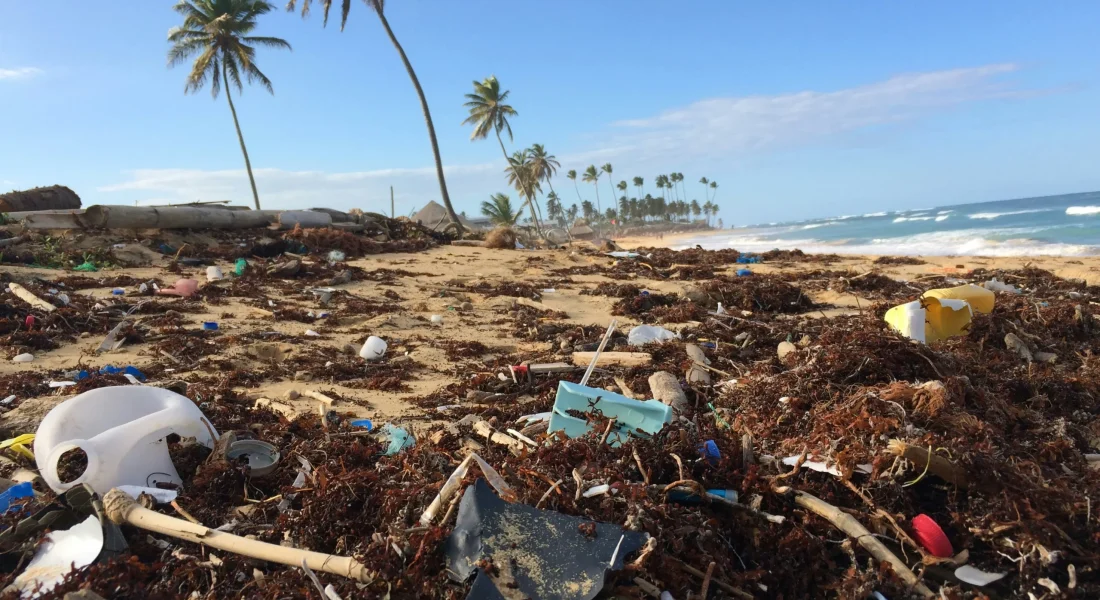
Figuring out where pollution starts can feel like chasing smoke, literally. Whether it’s factory exhaust drifting over a city or runoff clouding a river, the sources often hide in plain sight until the right tech pulls them into focus. Top companies now offer a mix of satellite feeds, AI-driven image scans, and mapping platforms that turn raw data into clear leads. These tools help environmental crews, regulators, and researchers spot trouble fast, from daily fire alerts to chemical signatures on the ground, making cleanup efforts sharper and more targeted.

1. FlyPix AI
We built FlyPix AI to handle the heavy lifting in geospatial image analysis, using agents that spot and outline objects in satellite, aerial, or drone footage without much manual input. Users upload rasters or images, and the system runs detections on everything from buildings to vegetation patches, pulling out vectors for further review. It’s set up to work across sectors like forestry or ports, where dense scenes make spotting details a chore otherwise.
Customization comes through training models on user annotations, so the AI learns to pick up specific features relevant to a project – no coding required. We keep things straightforward with a dashboard for analytics and exports, and plans scale from basic access up to full collaboration tools.
Key Highlights:
- Runs object detection on uploaded geospatial images
- Allows training custom models via annotations
- Provides vector outlines and analytics dashboard
- Supports multispectral data processing
Who it’s best for:
- Forestry managers mapping tree cover changes
- Port operators tracking vessel movements
- Government agencies inspecting infrastructure
Contact Information:
- Website: flypix.ai
- Email: [email protected]
- Phone: +49 6151 2776497
- Address: Robert-Bosch-Str. 7, 64293 Darmstadt, Germany
- LinkedIn: www.linkedin.com/company/flypix-ai

2. ArcGIS Pro
Users turn to this desktop GIS software when they need to pull together different kinds of spatial data and make sense of it through maps. It handles everything from basic editing to running complex analytics on 2D or 3D layers, and people often use it to track air quality patterns or spot pollution hotspots by layering satellite feeds with ground measurements. The platform lets analysts slice through time-series data, like hourly nitrogen dioxide readings, to see how concentrations shift across a region and pinpoint likely sources.
Built-in tools make it straightforward to aggregate readings over days or weeks, calculate averages, or flag unusual spikes that stand out from the norm. Sharing the finished maps or web layers with others in an organization happens without much hassle, which keeps everyone on the same page during investigations.
Key Highlights:
- Combines tabular, cloud, and remote-sensing data in one project
- Supports multidimensional rasters for time-based air quality tracking
- Offers aggregation and anomaly detection for pollution patterns
- Allows publishing results as web services or printable maps
Who it’s best for:
- Environmental agencies monitoring regional air or water quality
- Consultants assessing industrial emission impacts
- Research groups studying long-term pollution trends
Contact Information:
- Website: www.esri.com
- Phone: +19097932853
- Address: 380 New York Street, Redlands, California, United States of America
- LinkedIn: www.linkedin.com/company/esri
- Facebook: www.facebook.com/esrigis
- Twitter: x.com/Esri

3. QNSPECT
This open-source plug-in runs inside QGIS and focuses on watersheds, helping users figure out how land-use changes affect runoff and nonpoint-source pollution. Analysts load terrain, soil, and rainfall data, then let the tool estimate sediment and pollutant loads flowing into streams or coastal areas under different scenarios. It works for coastal zones as well as inland catchments, giving a clear picture of where erosion or contaminated runoff might originate.
The process involves setting up project boundaries, defining land-cover types, and comparing outputs from baseline conditions against proposed developments. Results show up as maps of runoff volume or pollutant concentrations, which makes it easier to spot critical areas that need attention.
Key Highlights:
- Estimates surface runoff, sediment, and nonpoint pollutant loads
- Compares land-use or climate scenarios side by side
- Runs on QGIS version 3.22 or newer
- Handles both coastal and non-coastal watersheds
Who it’s best for:
- Watershed managers planning land development
- Coastal planners evaluating stormwater impacts
- Local governments screening erosion risks
Contact Information:
- Website: coast.noaa.gov
- Address: 1305 East-West Highway, 10th Floor, Silver Spring, MD 20910
- LinkedIn: www.linkedin.com/showcase/noaa-coastal-management
- Facebook: www.facebook.com/NOAADigitalCoast
- Twitter: x.com/NOAADigCoast
- Instagram: www.instagram.com/NOAADigitalCoast
4. Landsat Program
Satellites in this series have been capturing consistent images of Earth’s land surface since the early 1970s, providing a long-term record that researchers use to track environmental changes. The data picks up thermal anomalies, vegetation health through NDVI, and signs of industrial discharges or wildfires that often tie back to pollution sources. With two active satellites orbiting out of phase, new scenes arrive frequently enough to monitor rapid shifts.
Analysts download the public archive to compare historical and current images, revealing patterns like expanding burn scars or altered water bodies near factories. The moderate resolution suits regional overviews rather than pinpointing individual smokestacks, but the continuity across decades proves useful for establishing baselines.
Key Highlights:
- Delivers publicly available imagery archive spanning decades
- Captures thermal signatures and vegetation indices
- Supports detection of fires, industrial outflows, and land-cover shifts
- Maintains eight-day revisit cycle with paired satellites
Who it’s best for:
- Scientists studying long-term pollution trends
- Agencies mapping wildfire or deforestation impacts
- Land managers tracking broad-scale environmental change
Contact Information:
- Website: landsat.gsfc.nasa.gov
- Email: [email protected]
- Phone: (202) 358-0001
- Address: 300 E. Street SW, Suite 5R30, Washington, DC 20546
- Facebook: www.facebook.com/NASA
- Linkedin: www.linkedin.com/company/nasa
- Twitter: x.com/NASA
- Instagram: www.instagram.com/nasa

5. MODIS
Two satellites carry this instrument, one crossing the equator in the morning and the other in the afternoon, so together they scan the whole planet every day or two. Researchers pull from thirty-six spectral bands to spot smoke plumes, dust clouds, or sudden heat signatures that often point to pollution events like wildfires or factory flares. The raw scenes feed into processing centers where algorithms turn reflectance values into maps of aerosol thickness or fire hotspots.
Access comes through several public portals, each handling different product types – land changes at one, ocean color at another, and ice cover elsewhere. Analysts often blend these layers with ground reports to trace how a pollution cloud moves or where it started.
Key Highlights:
- Scans Earth surface daily using morning and afternoon passes
- Measures thirty-six bands from visible to thermal infrared
- Produces aerosol, fire, and land-cover products
- Distributes data via specialized public archives
Who it’s best for:
- Air quality forecasters tracking smoke transport
- Fire management units locating active burns
- Climate studies linking aerosols to weather patterns
Contact Information:
- Website: modis.gsfc.nasa.gov
- Email: [email protected]
- Phone: (202) 358-0001
- Address: 300 E. Street SW, Suite 5R30, Washington, DC 20546
- Facebook: www.facebook.com/NASA
- Linkedin: www.linkedin.com/company/nasa
- Twitter: x.com/NASA
- Instagram: www.instagram.com/nasa

6. TROPOMI
This spectrometer rides on a European satellite and sweeps the planet once a day, measuring backscattered sunlight across ultraviolet, visible, and infrared wavelengths. From those readings, processing teams derive column amounts of gases like nitrogen dioxide, sulfur dioxide, methane, and formaldehyde – common markers near power plants, shipping lanes, or gas leaks. The fine pixel size helps separate city emissions from nearby rural background levels.
Data flows to atmospheric services that run daily forecasts and reanalyses, while alert systems flag sudden methane spikes for quick follow-up. Researchers also use the ozone and aerosol products to study long-term trends in air quality.
Key Highlights:
- Covers Earth daily with push-broom imaging spectrometer
- Detects trace gases and aerosols at kilometer-scale resolution
- Supports air quality forecasts and methane alert systems
- Provides ultraviolet index and ozone layer monitoring
Who it’s best for:
- Atmospheric chemists mapping urban emission plumes
- Methane leak detection programs at oil fields
- Agencies producing daily air quality bulletins
Contact Information:
- Website: www.tropomi.eu
- Email: [email protected]

7. Aura Satellite
Launched back in mid-2004, this orbiter still circles Earth collecting profiles of ozone, aerosols, and trace gases from the troposphere up to the stratosphere. Four instruments work together – one scans microwave limbs, another looks straight down in ultraviolet, and the rest fill in visible and infrared views. The combination reveals vertical distribution of pollutants, showing whether a smog layer sits near the ground or higher up.
Products track everything from daily ozone holes to carbon monoxide trails from biomass burning. Mission planners expect the spacecraft to keep running until power fades sometime in the next few years.
Key Highlights:
- Measures ozone, aerosols, and gases across atmospheric layers
- Combines limb and nadir viewing geometries
- Tracks carbon monoxide from fires and ozone recovery
- Maintains continuous record since 2004 launch
Who it’s best for:
- Ozone monitoring networks watching seasonal holes
- Researchers studying pollutant transport altitudes
- Groups validating ground-based air sensors
Contact Information:
- Website: science.nasa.gov/mission/aura
- Email: [email protected]
- Phone: (202) 358-0001
- Address: 300 E. Street SW, Suite 5R30, Washington, DC 20546
- Facebook: www.facebook.com/NASA
- Linkedin: www.linkedin.com/company/nasa
- Twitter: x.com/NASA
- Instagram: www.instagram.com/nasa

8. PRISMA
An Italian hyperspectral satellite circles at a steady altitude, snapping images that capture hundreds of narrow color bands from visible light out to short-wave infrared. Analysts use these detailed spectral fingerprints to tell apart materials on the ground – say, distinguishing chemical spills from natural soil or spotting vegetation stress near industrial sites. A built-in panchromatic camera adds sharper geometric details, helping pinpoint exact locations of concern.
Data requests go through an online portal where users pick scenes and download processed levels. A desktop toolbox simplifies viewing and converting the files on regular computers, with plans for added features in upcoming releases.
Key Highlights:
- Combines hyperspectral sensor with panchromatic camera
- Identifies material composition via spectral signatures
- Supports pollution monitoring and resource management
- Offers portal access and processing toolbox
Who it’s best for:
- Environmental labs checking chemical surface traces
- Agencies managing natural resources
- Emergency teams assessing contamination sites
Contact Information:
- Website: www.asi.it
- Phone: +39 06 8567.1
- Email: [email protected]
- Address: Via del Politecnico snc 00133 – Roma
- LinkedIn: www.linkedin.com/company/agenzia-spaziale-italiana
- Facebook: www.facebook.com/agenziaspazialeitaliana
- Twitter: x.com/ASI_spazio
- Instagram: www.instagram.com/agenziaspazialeitaliana

9. Google Earth Engine
This cloud platform opens up a massive public archive of satellite scenes and environmental layers, letting users run their own scripts without downloading terabytes of files. People write code in Python or JavaScript to sift through decades of imagery, flagging shifts like new factory plumes or expanding burn scars that hint at pollution sources. The setup handles heavy computation on Google’s servers, so even big regional studies finish quickly.
Non-commercial users get full access for free, which keeps it popular among academics and nonprofits. Commercial folks pay for the same tools when the work turns profitable.
Key Highlights:
- Processes petabyte-scale imagery in the cloud
- Provides API for custom change detection scripts
- Includes historical and daily-updated datasets
- Free for academic or research projects
Who it’s best for:
- Researchers mapping long-term emission trends
- Nonprofits tracking illegal dumping sites
- Developers building pollution alert apps
Contact Information:
- Website: earthengine.google.com
- Address: 12396 Grant St, Thornton, CO 80241
- LinkedIn: www.linkedin.com/company/google
- Facebook: www.facebook.com/Google
- Twitter: x.com/google
- Instagram: www.instagram.com/google

10. Planet Satellite Imagery
A fleet of small satellites snaps pictures of the entire land surface every day at medium resolution, with some capable of zooming in tighter on demand. Operators watch for sudden changes – dark oil slicks on water, thick smoke trails, or cleared land near refineries – then pull archive shots to see what came before. Derived products like soil moisture maps add clues about runoff carrying pollutants.
Journalists and researchers get limited free views for stories or studies, but sharp, frequent tasking requires a paid plan. The constant revisit rate means fresh evidence rarely sits more than a day old.
Key Highlights:
- Captures daily medium-resolution global coverage
- Offers high-resolution tasking on selected areas
- Maintains deep archive for before-after comparisons
- Produces analytics like soil water content
Who it’s best for:
- Investigators verifying spill or fire reports
- Urban planners spotting unreported construction
- Companies monitoring supply chain impacts
Contact Information:
- Website: www.planet.com
- Address: 645 Harrison Street, 4th Floor, San Francisco, CA 94107
- LinkedIn: www.linkedin.com/company/planet-labs
- Facebook: www.facebook.com/PlanetLabs
- Twitter: x.com/planet
- Instagram: www.instagram.com/planetlabs

11. Global Forest Watch
People dig into this open platform when they want to keep tabs on what’s happening to forests day by day, pulling from a mix of satellite feeds and ground reports. Alerts ping users the moment tree cover drops in the tropics, which often ties back to logging crews or slash-and-burn fires pumping smoke into the air. The map layers let anyone overlay roads, concessions, or protected zones to see if a new clear-cut sits next to a factory or mine.
Dashboards sum up trends by region, while blog posts walk through fresh findings. Everything stays free to use, though sorting the layers takes a bit of GIS know-how to avoid getting lost in the options.
Key Highlights:
- Sends weekly tropical deforestation alerts
- Combines satellite data with land-use layers
- Tracks fires and logging linked to air pollution
- Offers maps, dashboards, and analysis tools
Who it’s best for:
- Conservation groups spotting illegal burns
- Journalists linking smoke events to land changes
- Local communities checking concession boundaries
Contact Information:
- Website: www.globalforestwatch.org
- Email: [email protected]
- Address: Global Forest Watch, 10 G Street NE Suite 800, Washington, DC 20002, USA
- LinkedIn: www.linkedin.com/showcase/globalforestwatch
- Facebook: www.facebook.com/globalforests
- Twitter: x.com/globalforests
- Instagram: www.instagram.com/globalforests
Conclusion
Wrapping it all up, the tools out there today turn what used to be guesswork into something you can actually act on. A quick satellite pass or AI scan can flag a smoky flare-up or a suspicious spill before it spreads too far, saving everyone from regulators to local crews a lot of headaches. Sure, some setups need a bit of tech know-how to get the most out of them, but once they’re rolling, the clarity they bring to messy environmental puzzles is hard to beat. Pick the one that fits the job-whether it’s daily alerts or deep historical dives-and the path from spotting the problem to fixing it gets a whole lot shorter.