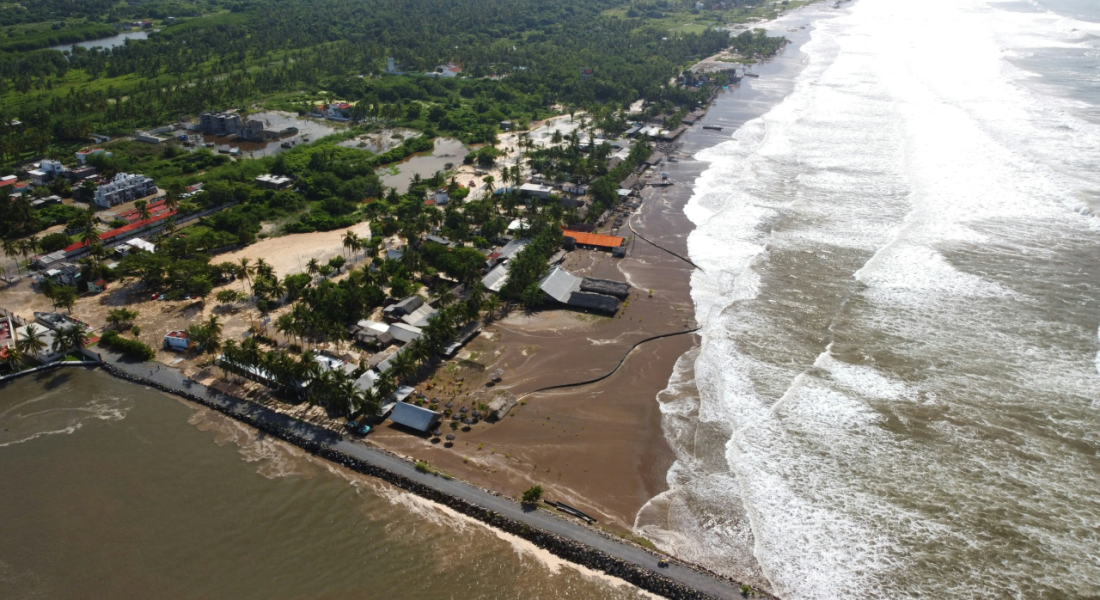
When a disaster hits, people tend to imagine the dramatic parts first: the search crews, the helicopters, the urgency of it all. But behind every rescue effort sits a huge, messy tangle of logistics that decides whether help actually gets where it should. The tricky part is that no two crises look the same. One week it’s flooding, the next it’s a wildfire pushing through dry terrain, and each scenario demands a different mix of tools to keep operations steady.
Over the past few years, a whole wave of disaster relief logistics tools has started to reshape how teams plan, track, and deliver aid. Some focus on mapping damage from above, others help organize supply routes or keep real-time tabs on available resources. None of it is glamorous, but it’s the kind of quietly powerful tech that makes a real difference when time and clarity are in short supply.
1. FlyPix AI
When disaster strikes, we often see response teams struggling to get a clear picture of what has actually changed on the ground. That is the gap we built FlyPix AI to fill. Instead of sorting through endless satellite or drone images by hand, teams use our platform to pick out damaged areas, blocked routes, temporary shelters, and other details that shape how aid can move. Our models highlight the pieces that matter, so logistics planners can make
decisions with a bit more confidence and avoid losing precious time on early image review.
We also know that conditions rarely stay still during a response. A second wave of flooding, shifting terrain, or new hazards can appear overnight. That is why we let users train custom models that match the specifics of their crisis. It helps them track changes, focus on the right details, and keep their plans grounded in what is actually happening. We are not trying to impress anyone with complicated tech. Our aim is simply to reduce the uncertainty that usually slows down the first steps of logistics planning.
Key Highlights:
- AI tools for detecting objects in satellite, aerial, and drone images
- Change tracking for roads, buildings, and high risk areas
- Custom model training for crisis specific needs
- Helps review large image sets without long manual work
- Supports quick situation checks during ongoing response
Who it’s best for:
- Disaster response teams that need fast visual assessments
- Logistics groups planning supply routes or access points
- NGOs tracking damage across wide areas
- Crisis coordinators working with satellite or drone feeds
- Teams that want quicker image review without advanced tech skills
Contact Information:
- Website: flypix.ai
- Email: [email protected]
- LinkedIn: www.linkedin.com/company/flypix-ai
- Address: Robert-Bosch-Str. 7, 64293 Darmstadt, Germany
- Phone: +49 6151 2776497
2. Buske Logistics
Buske Logistics handles disaster response by helping groups move essential supplies through situations where things change fast and access is not always predictable. They step in when teams need help organizing shipments that have to reach communities under pressure, whether the job involves food, medical goods, or basic shelter materials. Their work centers on keeping deliveries moving, even when regions are blocked, damaged, or operating with limited infrastructure.
They also support teams that need temporary storage or better control over what they already have in motion. Since they work with different organizations, they adjust their approach depending on the type of crisis and the conditions on the ground. For teams that need a steady logistics partner during unpredictable events, they give structure to the transport side so responders can stay focused on the field work.
Key Highlights:
- Support for rapid shipments into crisis zones
- Routing and delivery into hard to reach or restricted areas
- Temporary warehousing and staging when supplies need holding
- Help with regulatory documents for emergency cargo
- Coordination with NGOs and government frameworks
Who it’s best for:
- Response teams handling fast moving supply needs
- NGOs managing food, water, or medical shipments
- Agencies working in blocked or damaged regions
- Groups that need consistent routing support across long operations
- Organizations coordinating relief goods across multiple locations
Contact Information:
- Website: www.buske.com
- E-mail: [email protected]
- LinkedIn: www.linkedin.com/company/buske-logistics
- Address: #7 Gateway Commerce Ctr. Edwardsville, IL 62025
- Phone: +1 (618) 931-6091

3. Red Arrow Logistics
Red Arrow Logistics focuses on moving emergency supplies when timing is tight and conditions are unstable. They work with both government and nonprofit groups, helping them ship materials into areas affected by disasters, conflict, or severe shortages. Their teams use a wide network of carriers and transport options to keep goods moving when access routes are limited or shifting. They handle both equipment and smaller essentials, depending on what each situation calls for.
They also help teams navigate international routes or remote locations where coordination can get complicated. With tracking and round the clock operations, they give groups a clearer view of where shipments are and what the next steps look like. For organizations that need transport support across different regions or modes, they provide a steady operational layer that keeps supply flow from slowing down.
Key Highlights:
- Coordination of emergency shipments for equipment and essential goods
- Ability to route goods into remote or conflict affected areas
- Full tracking and visibility for in transit freight
- Ground, air, and ocean transport options
- Support for staging and temporary storage
Who it’s best for:
- NGOs shipping aid into unstable or overseas regions
- Agencies needing time sensitive deliveries
- Teams working across multiple transport modes
- Organizations operating in both domestic and international zones
- Groups that require full shipment visibility during response
Contact Information:
- Website: redarrowlogistics.com
- E-mail: [email protected]
- Facebook: www.facebook.com/redarrowlogistics
- Twitter: x.com/redarrow3pl
- LinkedIn: www.linkedin.com/company/red-arrow-logistics
- Instagram: www.instagram.com/redarrowlogistics
- Address: 13555 SE 36th Street, Ste 235 Bellevue, WA 98006
- Phone: 425.747.7914

4. SnapLogic GenAI App Builder
SnapLogic GenAI App Builder helps teams automate parts of their disaster logistics work so they can keep track of resources and shipments without relying on constant manual updates. They give users tools to build their own automations, like checking supply levels, adjusting routing plans, or distributing tasks across teams. Since it works across existing systems, groups can keep their current setup and layer automation on top of it to speed up decision making.
The platform also supports real time insights, which helps when teams need to understand what supplies they have, what is running low, and where bottlenecks might appear. With predictive features and integrations, they make it easier for responders to plan ahead instead of reacting too late. For crisis operations where information changes quickly, it offers a way to keep logistics organized without slowing down field teams.
Key Highlights:
- Tools for building automations that support disaster logistics
- Helps track supplies and resource movement in real time
- Integrates with existing systems across cloud and on prem setups
- Includes connectors for common workflows and applications
- Supports predictive planning for supply and routing needs
Who it’s best for:
- Disaster teams needing clearer supply tracking
- Organizations looking to automate parts of their logistics
- Groups working with mixed systems and data sources
- NGOs that want fewer manual updates during response
- Teams planning for shifting supply needs across different stages of a crisis
Contact Information:
- Website: www.snaplogic.com
- E-mail: [email protected]
- Facebook: www.facebook.com/SnapLogic
- Twitter: x.com/SnapLogic
- LinkedIn: www.linkedin.com/company/snaplogic
- Instagram: www.instagram.com/snaplogicinc
- Address: 1825 S. Grant St 5th Floor San Mateo, CA 94402
- Phone: 1-888-494-1570

5. Mecalux Intralogistics Systems
Mecalux focuses on the parts of disaster logistics that often get overlooked, especially once relief supplies start flowing into warehouses and temporary storage sites. Their tools and systems help teams keep track of what they have, where it is stored, and how quickly it can be moved out again. They design software and intralogistics setups that make it easier to organize pallets, manage stock rotations, and prepare outbound loads during chaotic periods. Since disaster response requires fast decision making, their systems aim to reduce the time people spend manually sorting and searching through supplies.
They also support teams that need a more structured approach to warehouse operations during emergencies. Their tools help responders run storage spaces more like controlled environments, even if everything around them is unstable. By keeping inventories updated in real time and streamlining the movement of goods inside the warehouse, they give organizations a steadier foundation to work from when demand changes without warning.
Key Highlights:
- Tools for organizing and managing emergency stock in warehouses
- Support for real time inventory visibility during crisis operations
- Systems that help plan and prepare distribution flows in advance
- Solutions for handling fast inflow and outflow of relief goods
- Guidance for improving warehouse safety and performance
Who it’s best for:
- Relief teams managing large volumes of donated or stored goods
- NGOs running temporary or high throughput warehouses
- Government agencies responsible for pre position stock
- Organizations needing better warehouse control during crises
- Groups improving internal logistics for faster field distribution
Contact Information:
- Website: www.mecalux.com
- E-mail: [email protected]
- Facebook: www.facebook.com/Mecalux.Group
- Twitter: x.com/Mecalux_Group
- LinkedIn: www.linkedin.com/company/mecalux
- Address: Silici, 1 08940, Cornellà de Llobregat Barcelona Spain
- Phone: +34 932 616 913
6. Tractel
Disaster response teams rely on tools that let them reach people quickly, even when the environment is unstable or hard to access. Tractel’s rope descent systems are built to support these situations by giving teams a controlled way to move vertically in and out of damaged areas. Instead of depending on improvised lifting methods or equipment that can’t handle uneven ground, they use structured pulley setups, anchor points, and hoist components that allow rescuers to lower supplies, reach trapped people, or lift survivors from below-ground spaces. These systems help teams work with more certainty when buildings have collapsed, when access routes are blocked, or when survivors are in places helicopters or vehicles can’t reach directly.
The systems also help in situations where disasters shift quickly, like during flooding or when structures remain unstable after an earthquake. Responders can move between rooftops, cracked stairwells, and narrow openings by setting up a portable anchor frame or a hand wheel winch, depending on what the situation requires. Since the components can be mixed and matched, teams can adjust their setup based on the location, the load they need to lift, and the condition of the surrounding area. It’s a practical way for responders to stay safe while still reaching people who can’t move on their own.
Key Highlights:
- Rope descent and hoist systems designed for vertical access in damaged or unstable areas
- Portable anchor frames and hand wheel winches for different rescue scenarios
- Suitable for below-ground access, rooftop extractions, and collapsed structures
- Compatible components that can be combined for varied rescue needs
- Supports both rescue operations and supply transport
- Focus on equipment that is simple to carry, set up, and operate
Who it’s best for:
- Disaster response teams working in collapsed or hard-to-reach areas
- Search and rescue groups responding to cave-ins, floods, or earthquakes
- Organizations that need safe vertical access workflows during recovery
- Teams that rely on portable, adaptable hoist systems for field operations
- Agencies needing compliant, structured gear for fall protection and rescue access
Contact Information:
- Website: www.tractel.com
- E-mail: [email protected]
- LinkedIn: www.linkedin.com/company/tractel
- Instagram: www.instagram.com/tractel.official
- Address: 6300 West by Northwest BLVD Suite 100 Houston, Texas 77040
- Phone: +1 800 962 6111
7. Novocargo Disaster Logistics Services
Novocargo focuses on the transport side of disaster logistics, helping teams move goods through situations where access is unpredictable and conditions shift quickly. Their transport options cover land, air, and sea, which gives responders flexibility when roads are blocked or infrastructure is damaged. They support teams that need to reach communities with food, water, medical items, or rescue equipment, and they help choose routes or methods that fit the conditions on the ground.
They also place emphasis on planning and coordination before a crisis occurs. Their approach encourages teams to identify critical resources, prepare alternative routes, and coordinate communication across different actors. Since many disasters create confusion at the start, their tools and logistics support help teams stay organized and avoid sending supplies to the wrong place or duplicating efforts. The focus is on keeping movements predictable even when everything else feels uncertain.
Key Highlights:
- Flexible transport options for hard to access areas
- Support for planning routes and distribution points
- Coordination with local and international actors
- Tools that help teams track and manage inventory movement
- Emphasis on preparation and communication during crises
Who it’s best for:
- Teams needing transport across different terrains
- NGOs delivering food, water, and medical goods
- Agencies planning early stage response routes
- Organizations working in flood, storm, or earthquake zones
- Groups coordinating logistics with multiple partners
Contact Information:
- Website: www.novocargo.com
- E-mail: [email protected]
- LinkedIn: www.linkedin.com/company/novocargo-group
- Address: Coslada, Madrid, Spain, Avda. Fuentemar 20, Ofi. 3.2, 28823
- Phone: +34 916 714 697
8. PRATUS
PRATUS gives disaster response teams a single place to see what is going on and what needs to happen next. They bring together real-time weather data, infrastructure updates, and field information, which helps teams understand the situation faster. Instead of switching between different systems or looking for updates in separate channels, users can view everything through one shared screen inside Microsoft Teams. This helps groups stay on the same page, especially when decisions need to be made quickly.
They also include AI features that support planning and reporting. Teams can generate quick SITREPs, track logistics tasks, and manage resources without digging through scattered files. PRATUS focuses on giving emergency teams a practical way to prepare, coordinate, and adjust their work as conditions change, using tools many organizations already rely on.
Key Highlights:
- Real-time view of weather, risks, resources, and logistics
- Integrated directly into Microsoft Teams and M365
- AI tools for reports, updates, and analysis
- Central place to track tasks, assets, and response status
- Works across planning, operations, and after-action review
Who it’s best for:
- Emergency operations centers using Microsoft tools
- Local and national agencies that need shared situational awareness
- Organizations managing logistics and field coordination
- Teams looking for AI support during high-pressure events
- Groups needing one platform instead of multiple scattered tools
Contact Information:
- Website: pratus.disastertech.com
- E-mail: [email protected]
- Facebook: www.facebook.com/disastertech
- Twitter: x.com/disastertechinc
- Instagram: www.instagram.com/disastertechinc
- Address: 101 N Union St Suite 204, Alexandria, VA 22314
- Phone: (703) 831-1824

9. Sahana EDEN
Sahana EDEN is an open-source system built to help humanitarian teams organize people, supplies, and activities during emergencies. They focus on giving responders a practical set of tools to manage warehouses, track inventory, coordinate volunteers, and map who is doing what in specific locations. Because it is open source, organizations can adjust the system to fit their workflows rather than forcing teams to work around a rigid structure.
They also support crisis communication through mapping, alert management, and situation updates. The platform helps responders maintain visibility over assets, requests, and field actions, which is essential when working with limited resources and unpredictable conditions. Many groups use Sahana EDEN as a backbone for coordinating relief tasks when infrastructure or communications are strained.
Key Highlights:
- Tools for managing assets, inventories, warehouses, and supply requests
- Mapping features to visualize active projects and response teams
- Directories for organizations, facilities, staff, and volunteers
- Open-source system that can be customized for local needs
- Modules for alerts, messages, and situational awareness
Who it’s best for:
- NGOs and community groups needing a flexible disaster management system
- Emergency teams that want full control over data and customization
- Organizations coordinating volunteers, supplies, and field tasks
- Groups working in low-budget or open-source environments
- Agencies that rely on mapping and structured logistics records
Contact Information:
- Website: sahanafoundation.org
- E-mail: [email protected]
- Address: 440 N BARRANCA AVE #9299 COVINA, CA 91723
10. HELM (Humanitarian Enterprise Logistics Manager)
HELM offers a full set of tools for nonprofits and humanitarian groups that manage complex supply chains. They support everything from warehouse operations to international shipping, donor rules, last-mile tracking, and detailed reporting. Many teams use HELM to keep control over donated goods, pharmaceuticals, and mission-critical supplies as they move through different regions and partners.
The platform is built to handle real-world challenges such as compliance rules, customs steps, barcoding, and multi-stage distribution. HELM gives organizations a clear view of where items come from, where they are stored, and where they need to go next. It is designed to help teams stay organized even when they are dealing with multiple countries, donors, or fast-changing field needs.
Key Highlights:
- Full supply chain and warehouse management in one system
- Tools for donations, pharmaceuticals, compliance, and auditing
- Shipment tracking across regions and partners
- Barcoding and mobile device support for field accuracy
- Integrations with ERP, financial systems, and partner platforms
Who it’s best for:
- Nonprofits handling large volumes of donated goods
- Humanitarian groups managing international shipments
- Organizations that need strict compliance and traceability
- Teams working with medical products or regulated items
- Agencies looking for structured workflows across their whole supply chain
Contact Information:
- Website: www.humanitariansoftware.com
- E-mail: [email protected]
- Address: 6th Floor, 2 Kingdom Street, London, W2 6BD
- Phone: +44 203-580-4422
11. Zenventory
Zenventory gives disaster response teams a single place to keep track of their supplies without making the process feel heavier than it already is. They built the platform to help agencies stay organized across many storage sites, which is often where things get messy during fast-moving emergencies. Instead of juggling spreadsheets or losing track of supplies in scattered warehouses, teams use Zenventory to see what they have, where it is, and what is close to expiring. Because everyone works in the same system with no user limits, coordination becomes easier, especially when staff rotate or field crews change.
They also lean into the reality that disaster response is rarely desk-based. The mobile app makes it possible to update stock, check lot numbers, or confirm outgoing shipments while walking through a warehouse or working in the field. Tools for FEFO handling, replenishment, and fleet-related tasks help teams manage the full chain of movement from warehouse to delivery. The focus is not on fancy features but on providing a setup that helps responders avoid stockouts, wasted goods, and slow handoffs.
Key Highlights:
- Supports unlimited locations for scattered emergency storage points
- Unlimited users for large or rotating response teams
- FEFO tracking for perishable goods
- Lot number tracking for recalls or compromised stock
- Mobile app for warehouse and field work
- Tools for warehouse, replenishment, fulfillment, and fleet tasks
Who it’s best for:
- Disaster agencies with storage spread across many locations
- Teams that need simple, shared access instead of siloed workflows
- Groups managing perishable or regulated emergency supplies
- Field crews that need mobile access
- Organizations that want clearer visibility into what is available during an active response
Contact Information:
- Website: www.zenventory.com
- E-mail: [email protected]
- Twitter: x.com/zenventory
- LinkedIn: www.linkedin.com/company/zenventory
- Instagram: www.instagram.com/zenventorysoftware
- Address: 515 E. Grant St. Suite 150 Phoenix, AZ 85004
- Phone: 480-530-2100
12. LogIE by the Logistics Cluster
LogIE is designed for humanitarian responders who deal with constant pressure to share accurate information in chaotic conditions. Instead of relying on scattered emails or outdated sheets, LogIE pulls together logistics data so teams can see the full picture of warehouse capacity, routes, available assets, and supply chain gaps. It was shaped directly by responders, so the layout and workflow feel grounded in how people actually operate during emergencies. LogIE supports coordination between agencies, which is often where communication breaks down during multi-actor response efforts.
The broader Logistics Cluster preparedness initiative adds structure around training, simulations, and local capacity building. Countries use it to map out supply chain weaknesses, test response plans, and bring national responders into the process so they are not reliant on international teams. Integrated mapping and planning tools help highlight risks ahead of time instead of discovering them when a disaster hits. LogIE sits at the center of that work as the place where logistics information is collected, interpreted, and shared.
Key Highlights:
- Central platform for sharing logistics information during emergencies
- Built by and for logistics responders
- Supports planning, mapping, and identifying supply chain gaps
- Helps coordinate multiple agencies in the same environment
- Used in national-level preparedness programs and simulations
Who it’s best for:
- Governments and national responders strengthening local logistics systems
- NGOs working in shared response environments
- Teams managing cross-agency communication
- Groups preparing long-term supply chain plans
- Organizations that rely on real-time logistics visibility during crises
Contact Information:
- Website: www.logcluster.org
- E-mail: [email protected]
- Facebook: www.facebook.com/logcluster
- Twitter: x.com/logcluster
- LinkedIn: www.linkedin.com/in/logistics-cluster
- Instagram: www.instagram.com/logcluster
13. ICRC Inventory Planning Tool (ETH Zurich Collaboration)
The ICRC’s inventory calculator grew out of a need to handle medical supply distribution without falling into the usual pattern of overstocking some warehouses and starving others. Before this, teams often leaned on annual demand estimates, which didn’t match the unpredictable conditions of conflict zones. Working with ETH researchers, they built a tool that adjusts planning to reflect how demand and delivery times actually fluctuate, making it easier to keep stock levels stable without tying up resources unnecessarily.
Once the tool was plugged into their existing logistics system, it changed how planning decisions were made. Instead of reacting to shortages, teams gained clearer visibility into what should be reordered, where buffers were needed, and how to avoid piling up inventory that might expire. This also improved communication with medical staff in the field, since supply patterns became more predictable and data driven. The tool is not flashy, but it gives logistics teams a way to set realistic stock levels in environments where conditions shift without warning.
Key Highlights:
- Adjusts inventory planning based on real demand patterns
- Helps avoid stock imbalances in crisis regions
- Integrated into ICRC’s existing logistics workflow
- Supports data-driven decisions for medical supply distribution
- Improves coordination between logistics and healthcare teams
Who it’s best for:
- Organizations managing medical supplies in unstable regions
- Supply chain teams needing clearer planning workflows
- Groups working with fluctuating demand and variable delivery times
- Warehouses that face waste from expired or underused stock
- Humanitarian agencies modernizing internal logistics processes
Contact Information:
- Website: reliefweb.int
- E-mail: [email protected]
- Facebook: www.facebook.com/reliefweb
- Twitter: x.com/reliefweb
- LinkedIn: www.linkedin.com/company/reliefweb

14. Datex Disaster Relief Technology
Datex focuses on the logistics side of disaster response, especially the messy part where teams try to move supplies into areas that may have damaged roads, disrupted transport, or unstable demand. They work from the idea that technology gives responders a better grip on what is happening in real time, so everyone can plan and move faster. Their tools support tracking inventory, coordinating shipments, and sharing accurate data between agencies, which helps reduce delays when teams are trying to get critical goods to affected communities.
A big part of their approach centers on replacing slow manual processes with automated data capture. Barcode systems, mobile computers, and shared logistics platforms help responders see what stock is available, where it is stored, and how fast it can be moved. It also supports early planning, like staging supplies before hurricanes or estimating demand based on past disasters. The goal is simple enough: make sure emergency goods, equipment, and teams can reach the right place without losing time to confusion or missing information.
Key Highlights:
- Tools for automated data capture with barcodes and mobile devices
- Inventory control that supports multi-site visibility
- Systems that help forecast demand and plan supplies before events
- Real-time communication features to support faster field decisions
- Support for coordinating shipments, assets, and relief equipment
Who it’s best for:
- Emergency response agencies that need organized supply workflows
- NGOs managing stock across multiple regions
- Logistics teams preparing for hurricanes, floods or similar events
- Operations groups that want clearer visibility during disruptions
Contact Information:
- Website: www.datexcorp.com
- E-mail: [email protected]
- LinkedIn: www.linkedin.com/company/datex-corporation
- Address: 10320 49th Street North Clearwater, Florida 33762
- Phone: (727) 571-4159
15. DSV Aid and Relief Logistics
DSV provides logistics services that help humanitarian groups move supplies into tough or unstable environments. They focus on turning complicated transport needs into something more manageable, especially when routes are unreliable or when shipments must be handled with strict conditions, like temperature requirements. Their global network gives them the ability to support operations that range from one-time deliveries to long-term relief efforts.
Their setup includes Control Towers and specialized teams who coordinate shipments, monitor cargo in transit, and help manage risk when entering remote or conflict-hit areas. They also support tasks like chartering emergency transport, managing dangerous goods, or keeping pharma shipments within required temperature ranges. The wider idea behind their approach is to give responders a smoother path from warehouse to field so teams can stay focused on the actual relief work.
Key Highlights:
- End-to-end logistics support for humanitarian operations
- Control Tower oversight for complex or time-sensitive shipments
- Transport solutions for difficult routes and low-infrastructure areas
- Handling options for temperature-controlled and specialized cargo
- Tools for tracking, risk evaluation, and contingency planning
Who it’s best for:
- Organizations delivering aid to conflict or remote regions
- Teams needing temperature-sensitive or regulated transport
- Agencies managing multi-country or long-term relief supply chains
- Groups looking for structured support during emergency deployments
Contact Information:
- Website: www.dsv.com
- E-mail: [email protected]
- Facebook: www.facebook.com/dsv.global
- Twitter: x.com/DSV_global
- LinkedIn: www.linkedin.com/company/dsv
- Instagram: www.instagram.com/dsv_global
- Address: Hovedgaden 630 P.O. Box 210 DK-2640 Hedehusene Denmark
- Phone: +45 43 20 30 40
Conclusion
Disaster logistics will probably never feel simple, but the right tools make the work a lot less chaotic. Each of the platforms in this list tackles a different part of the puzzle, whether it’s keeping track of supplies, coordinating transport across rough terrain, or helping teams understand what they actually need before a crisis escalates. When responders have clear information and a smoother way to move goods, they can focus on the people standing in front of them instead of fighting with spreadsheets or chasing missing trucks.
None of these tools replace experience or good judgment, but they do give teams a head start when every hour counts. And in the middle of a flood, an earthquake, or a long recovery effort, that head start can be the difference between scrambling and actually getting ahead of the situation. As disasters become more frequent and more unpredictable, having practical, dependable logistics support isn’t a bonus anymore. It’s part of the job, and these tools help make that job a little more doable.