
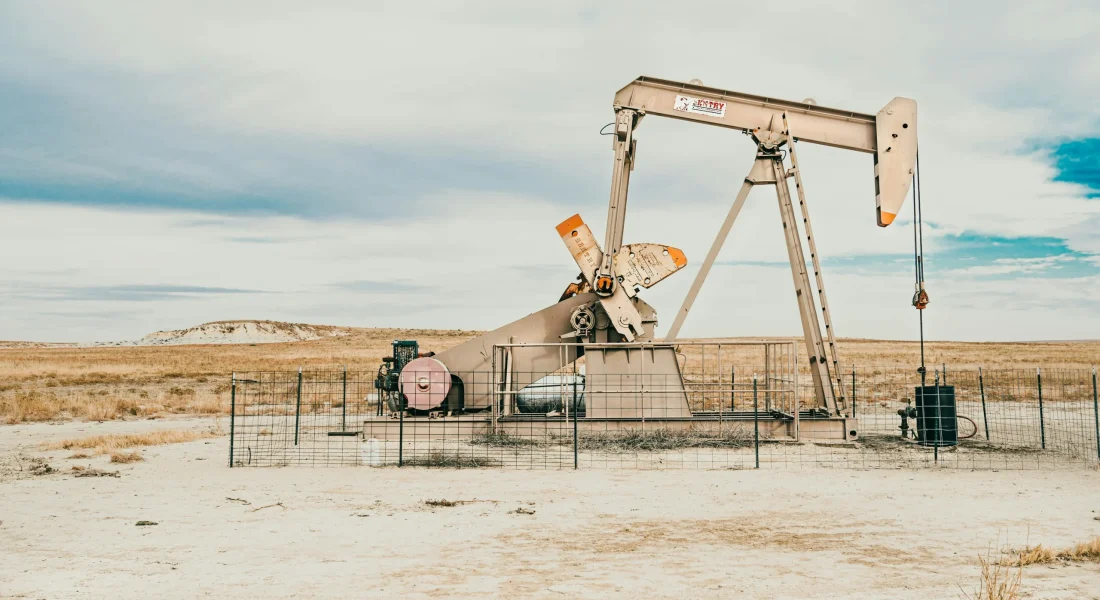
When we talk about resource extraction today, we’re not just referring to digging up minerals or drilling for oil in the same old way. We’re looking at how we can do it smarter, so that nature, communities and future generations don’t pay the full cost. In this article we’ll look at the tools and methods that are helping make extraction more sustainable: from digital monitoring platforms to novel biological techniques, and from circular-economy frameworks to better community engagement. It’s about changing the way extraction happens, not simply making it a little less bad.

1. FlyPix AI
At FlyPix AI, we design tools that make it easier to see how sustainable resource extraction actually plays out on the ground. FlyPix AI uses artificial intelligence to read satellite, drone, and aerial imagery, spotting land changes that might otherwise go unnoticed. The platform helps track areas around mines, quarries, or renewable installations to show how extraction interacts with nearby vegetation, water, or built surfaces. It’s built for real use – no coding needed, just clear data that helps teams keep extraction aligned with sustainability plans.
Our focus is on turning raw imagery into decisions that support sustainable resource extraction. With FlyPix AI, users can train models to recognize what matters for their sites – tailings ponds, access roads, erosion zones – and monitor how those features evolve over time. That visibility helps balance productivity with environmental care, reducing guesswork and helping operations meet compliance and restoration goals. The outcome is practical: better awareness, cleaner data, and a steadier path toward responsible resource use.
Key Highlights:
- AI-driven detection and monitoring for sustainable resource extraction sites.
- No-code tools for training models and analyzing spatial changes.
- Tracks land, vegetation, and water impacts in extraction areas.
- Works with satellite, drone, LiDAR, and hyperspectral data sources.
- Converts visual data into measurable sustainability insights.
Services:
- GeoAI platform for object detection, segmentation, and land-change analysis.
- Custom geospatial projects focused on extraction and restoration workflows.
- Data sourcing from aerial, drone, and satellite providers.
- Model setup and annotation support for specialized site monitoring.
- Ongoing workflow consulting for sustainable resource management.
Contact information:
- Website: flypix.ai
- Email: [email protected]
- LinkedIn: www.linkedin.com/company/flypix-ai
- Address: Robert-Bosch-Str. 7, 64293 Darmstadt, Germany
- Phone: +49 6151 2776497
2. Farmonaut
Farmonaut develops satellite-based tools that help industries see and manage what happens on the land during extraction and production. Their technology combines AI and remote sensing to detect mineral-rich zones, track vegetation health, and monitor environmental change over time. The same system that supports farmers in precision agriculture also serves mining and resource management projects where sustainability is critical. By using Earth observation data, Farmonaut enables smarter exploration and helps reduce unnecessary ground surveys that often disturb natural areas.
In the context of sustainable resource extraction, Farmonaut’s platform helps balance progress with preservation. It allows teams to analyze how mining zones expand, how surrounding ecosystems respond, and where restoration should begin once activity slows down. These insights make it easier to plan extraction responsibly, limit waste, and align field operations with sustainability goals. The result is a more informed approach to managing land and resources – driven by real data, not guesswork.
Key Highlights:
- Uses satellite imagery and AI for mineral detection and land monitoring.
- Supports sustainable resource extraction through remote environmental tracking.
- Reduces the need for manual site exploration and survey disruption.
- Provides real-time insights for agriculture, forestry, and mining sectors.
- Helps align extraction operations with sustainability and restoration goals.
Services:
- Satellite-based mineral detection and exploration mapping.
- Remote sensing and monitoring for environmental impact assessment.
- Carbon footprint and vegetation tracking for land-use planning.
- Data-driven advisory for sustainable farming and mining operations.
- Blockchain-enabled tracking for transparency in resource supply chains.
Contact information:
- Website: farmonaut.com
- E-mail: [email protected]
- Facebook: www.facebook.com/farmonaut
- Twitter: x.com/farmonaut
- Instagram: www.instagram.com/farmonaut
- Address: 2810 N Church St PMB 87609, Wilmington Delaware, USA
- Phone: +1 (669)666-6882
- Play Market: play.google.com/store/apps/farmonaut
- App Store: apps.apple.com/in/app/farmonaut

3. EarthShift Global
EarthShift Global works with industries that depend on resource extraction to build practical sustainability frameworks around their operations. The company focuses on life cycle assessment, technology evaluation, and social impact measurement to help organizations understand the broader consequences of extraction. Its work supports sectors like mining, metals, and oil and gas, offering tools that connect data from the ground to long-term sustainability goals. Instead of viewing extraction as a single stage, EarthShift Global treats it as part of an ongoing process that influences every product’s footprint.
In the context of sustainable resource extraction tools, EarthShift Global develops systems and methods that make environmental performance measurable. The team provides consulting, training, and software that help companies evaluate extraction methods, assess emissions, and manage community impacts. These tools give operators a clearer picture of how their decisions affect resources, allowing them to adjust processes before problems grow. The focus is on creating accountability and structure in an area that’s often hard to quantify.
Key Highlights:
- Supports metals, minerals, and energy industries in building sustainability frameworks.
- Provides life cycle assessment tools for resource extraction processes.
- Integrates environmental, social, and technological evaluation in one system.
- Helps organizations connect extraction data to long-term impact goals.
- Offers training that builds in-house sustainability and assessment capacity.
Services:
- Life Cycle Assessment (LCA) consulting and coaching.
- Social and technology impact assessments for extraction projects.
- Sustainability training for corporate and field teams.
- LCA software tools including EarthSmart and PackageSmart.
- Stakeholder engagement and sustainability communication support.
Contact information:
- Website: earthshift.com
- E-mail: [email protected]
- LinkedIn: www.linkedin.com/company/earthshiftglobal
- Phone: +1 (207) 608-6228
4. MINEYE
MINEYE develops digital tools that connect Earth Observation data with practical mining operations. The project’s main platform, called the Interfacing, Programming and Optimization Platform (IPOP), is designed to combine satellite, airborne, and on-site data into a single system that supports decision-making throughout the mining lifecycle. From early exploration to post-closure monitoring, the platform helps operators track conditions such as mineral potential, land stability, and environmental risk. By integrating multiple data sources, MINEYE enables more responsible and transparent approaches to sustainable resource extraction.
The IPOP platform includes several specialized tools that address different parts of the extraction process. The Mineral Prospectivity Maps help predict where valuable minerals may be located, reducing the need for unnecessary exploration. LiquidEarth, a 3D visualization plugin, allows experts to model underground structures and assess geological uncertainty. Another tool, the Inventory Map and Mining Residues Package, identifies areas with re-mining potential and evaluates the environmental footprint of existing tailings. Together, these tools give mining teams a clearer picture of how to manage resources sustainably, reduce waste, and plan for long-term site recovery.
Key Highlights:
- Combines satellite, airborne, and ground-based data into one platform.
- Supports sustainable resource extraction from exploration to closure stages.
- Includes predictive, 3D, and environmental assessment tools.
- Helps quantify environmental risks and optimize operational planning.
- Encourages data-driven decisions that reduce impact and improve efficiency.
Services:
- IPOP platform for integrated mining data and decision support.
- Mineral Prospectivity Mapping for identifying favorable mineral zones.
- LiquidEarth plugin for 3D modeling and geological collaboration.
- Inventory Map and Mining Residues Package for tailings and re-mining assessment.
- Tools for environmental risk monitoring and post-closure sustainability management.
Contact information:
- Website: mineye-project.eu
- E-mail: [email protected]
- Facebook: www.facebook.com/mineyeproject
- LinkedIn: www.linkedin.com/company/mineyeproject

5. Seequent
Seequent develops digital platforms that help the mining industry understand and manage what lies beneath the surface. The company’s core tool, Seequent Evo, connects geological, geotechnical, and environmental data across every phase of the mining lifecycle. By linking exploration, extraction, and closure data in one place, Evo supports sustainable resource extraction by reducing data silos and improving how decisions are made. The platform helps teams visualize underground conditions, assess risks, and plan extraction activities that balance efficiency with environmental care.
Seequent Evo acts as a hub for data processing, modeling, and collaboration. It integrates inputs from drilling, geophysics, and resource estimation, allowing users to analyze and interpret the subsurface in real time. Its open APIs and cloud computing features enable simulation, 3D visualization, and predictive modeling, which are critical for sustainable extraction planning and tailings management. Through connected workflows, Seequent’s platform helps the industry move toward a more transparent and accountable approach to mining.
Key Highlights:
- Seequent Evo integrates geoscience data for exploration, extraction, and closure stages.
- Provides 3D visualization and modeling for better subsurface understanding.
- Uses cloud-based computing for simulation and machine-learning analysis.
- Supports sustainable resource extraction through data-driven decision-making.
- Enables collaboration with open data formats and connected workflows.
Services:
- Seequent Evo platform for geoscience data management and modeling.
- Geological and geotechnical modeling for mining operations.
- Drillhole and exploration data management tools.
- Resource estimation and grade control workflows.
- Tailings and post-closure monitoring solutions for sustainable site management.
Contact information:
- Website: www.seequent.com
- E-mail: [email protected]
- Facebook: www.facebook.com/seequent.software
- Twitter: x.com/seequentglobal
- LinkedIn: www.linkedin.com/company/seequent

6. GEOVIA
GEOVIA, part of Dassault Systèmes’ 3DEXPERIENCE platform, provides digital tools that connect geology, engineering, and environmental data across the mining lifecycle. The platform helps organizations plan, design, and optimize extraction activities with an emphasis on sustainability. Its virtual twin technology allows teams to build 3D representations of the earth’s surface and subsurface, enabling them to simulate operations and evaluate environmental impact before any ground is disturbed. This approach supports more sustainable resource extraction by improving planning accuracy and reducing unnecessary waste or disturbance.
GEOVIA combines geoscience modeling with engineering and urban planning functions, creating a shared environment where data and decisions remain connected. The tools support different project phases, from geological modeling and mine design to closure and post-closure evaluation. Features like parametric design, scenario analysis, and integrated environmental simulation help users identify efficient extraction options while accounting for ecological and social factors. By centralizing geoscience information, GEOVIA allows teams to maintain consistency across all stages of sustainable resource extraction.
Key Highlights:
- Integrates geology, engineering, and sustainability data in one environment.
- Uses virtual twin technology to simulate mining and urban operations.
- Supports sustainable resource extraction through advanced modeling and planning tools.
- Enables scenario-based analysis for both economic and environmental performance.
- Centralizes collaboration for geoscientists, engineers, and planners.
Services:
- 3DEXPERIENCE GEOVIA platform for mining and urban design.
- Virtual twin modeling for surface and subsurface simulation.
- Mine planning, optimization, and scheduling solutions.
- Geological modeling and geoscience data management.
- Environmental impact evaluation and sustainability integration tools.
- Training and consulting for digital transformation in mining operations.
Contact information:
- Website: www.3ds.com/products/geovia
- E-mail: [email protected]
- Facebook: www.facebook.com/DassaultSystemes
- Twitter: x.com/dassault3DS
- LinkedIn: www.linkedin.com/company/dassaultsystemes
Conclusion
Sustainable resource extraction isn’t about stopping extraction altogether – it’s about doing it with a clearer view of what’s really happening. The tools now being built, from AI-based monitoring platforms to field data systems, give teams that visibility. They turn what used to be static reports into live feedback about how the land, water, and air respond to our work.
What matters most is how these tools get used. Data alone doesn’t make an operation sustainable; action does. When planners, engineers, and environmental teams use the same information, they can make extraction cleaner, faster, and less wasteful. That’s where the real progress lies – not in slogans, but in steady improvements that add up. The next phase of resource extraction isn’t defined by how much we take, but by how well we manage what’s left.