
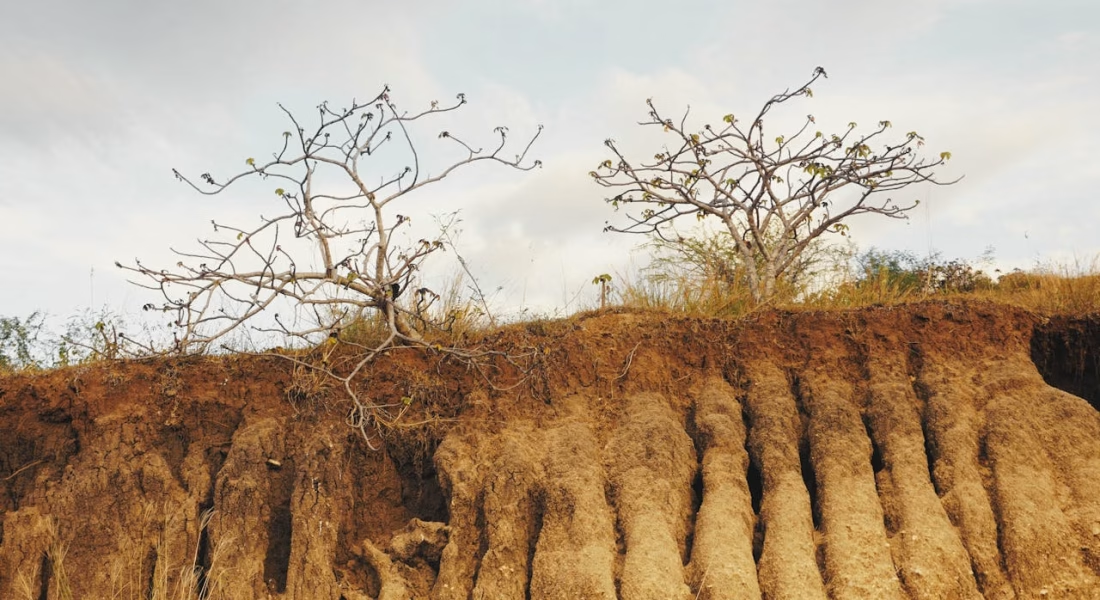
Soil erosion removes topsoil through water, wind, and tillage, degrading land productivity and threatening food security. According to USDA research, erosion decreases U.S. productivity by nearly $44 billion annually, while FAO reports show 1.7 billion people face reduced crop yields due to land degradation. Prevention methods include no-till farming, cover crops, contour farming, and maintaining vegetation cover to protect soil structure.
Soil erosion represents one of the most pressing environmental challenges facing agricultural systems today. The accelerated removal of topsoil—the nutrient-rich surface layer that sustains plant life—occurs through water, wind, and tillage practices.
According to the USDA Natural Resources Conservation Service, soil functions as a living ecosystem teaming with billions of bacteria, fungi, and microbes that form the foundation of agricultural productivity. When erosion strips away this vital resource, the consequences ripple through entire communities.
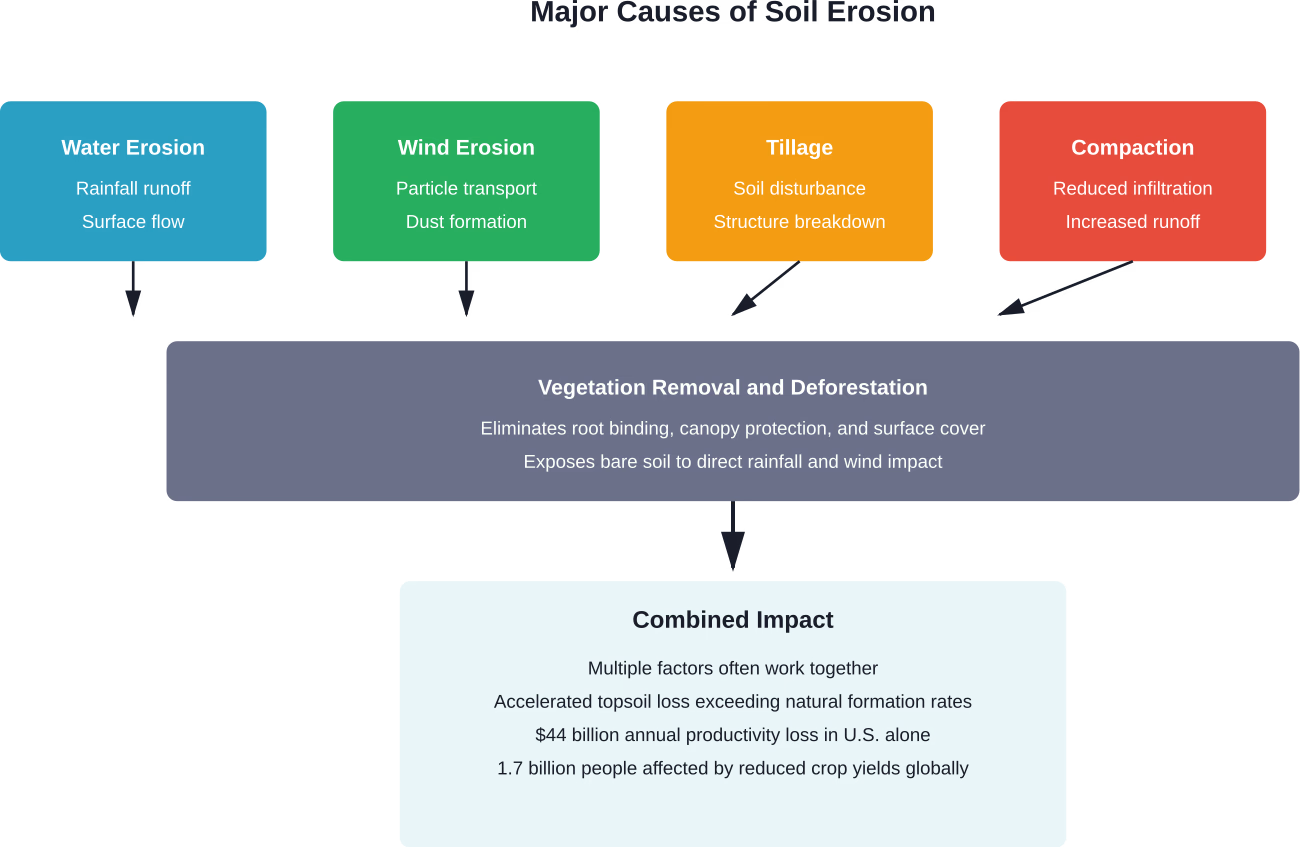
The numbers tell a sobering story. Erosion decreases U.S. productivity by nearly $44 billion each year. Globally, the Food and Agriculture Organization reports that 1.7 billion people live in areas where land degradation cuts crop yields and threatens food security.
But here’s the thing—erosion isn’t inevitable. Understanding how it works and implementing proven prevention methods can protect land, preserve watersheds, and maintain productive soils for future generations.
Understanding What Soil Erosion Actually Means
Soil erosion refers to the accelerated removal of topsoil from land surfaces through natural forces and human activities. The USDA defines it as the physical wear of soil and surface rocks by water and wind.
Not all soil movement constitutes problematic erosion. Geological erosion occurs naturally under all climatic conditions, happening slowly over millennia. The real concern? Accelerated erosion.
According to USGS research, accelerated soil erosion happens when human activities modify soil, vegetation, or climatic conditions, causing erosion rates to exceed natural variability. This distinction matters because management strategies target human-induced acceleration rather than natural processes.
The National Geographic data cited in research indicates that the world’s population depends on just 11% of the planet’s land for food production—and only 3% of Earth’s soils rate as highly productive. When erosion degrades this limited resource, food security hangs in the balance.
Primary Causes of Soil Erosion
Multiple factors drive soil erosion, often working in combination to accelerate topsoil loss.
Water-Related Erosion Factors
Rainfall and runoff cause the most widespread erosion globally. When raindrops hit bare soil, they dislodge particles and create surface sealing that reduces infiltration. Water then flows across the surface, carrying soil particles with it.
The intensity matters more than total rainfall. Short, intense storms generate more erosion than gentle, prolonged rain. Slope gradient amplifies the effect—steeper slopes produce faster water movement and greater erosive force.
According to USDA research, altered watershed hydrology from soil compaction decreases infiltration rates and increases runoff flow, creating conditions that facilitate rapid erosion.
Wind Erosion Mechanisms
Wind erosion predominantly affects arid and semi-arid regions, though it can impact any area with exposed soil and strong winds. The USDA’s Carbon County, Montana Targeted Implementation Plan specifically addresses aggregate instability and wind erosion as primary resource concerns.
Fine soil particles become airborne during wind events, leaving behind coarser materials with reduced fertility. USGS research notes that soil pulverization from off-highway vehicles contributes to dust hazards and respiratory illnesses in downwind communities.
Tillage and Agricultural Practices
Conventional tillage physically moves soil, breaking apart aggregates and exposing bare ground to erosive forces. Penn State Extension research indicates that repeated tillage reduces organic matter, weakens soil structure, and leaves fields vulnerable between planting cycles.
The timing of tillage operations matters significantly. Fall tillage leaves soil exposed throughout winter and early spring when erosive rainfall and wind events commonly occur.
Soil Compaction Issues
Heavy machinery and repeated traffic patterns compress soil, reducing pore space and infiltration capacity. USGS studies on off-highway vehicle impacts show that repeated compaction degrades natural resources through altered hydrology and increased surface runoff.
Compacted soils shed water rather than absorbing it, concentrating flow and intensifying erosion in vulnerable areas.
Deforestation and Vegetation Removal
Vegetation protects soil through multiple mechanisms—roots bind particles together, canopy intercepts rainfall, and plant residue cushions raindrop impact. When vegetation disappears, these protective functions vanish.
FAO data indicates that land degradation caused by human activities, including deforestation, affects crop yields across vast regions. Two-thirds of the 70 million hectares affected by human-induced degradation in the Arab region consists of agricultural land stripped of protective cover.
Types of Erosion Processes
Erosion manifests through distinct processes, each with characteristic patterns and impacts.
Sheet Erosion
Sheet erosion removes thin layers of soil uniformly across a field surface. This subtle form often goes unnoticed until significant topsoil loss has occurred. The uniform removal makes it particularly insidious—farmers may not recognize the problem until yields decline noticeably.
Rill Erosion
Rills are small channels formed by concentrated water flow. These shallow grooves typically remain small enough that normal tillage operations can smooth them out. However, they indicate active erosion that will worsen without intervention.
Gully Erosion
When rills deepen and widen beyond what tillage can repair, they become gullies. These channels dramatically reshape landscapes, creating impediments to machinery movement and removing entire sections of productive land from cultivation.
USGS research on watershed erosion rates developed ranking systems specifically to identify areas where gully formation risk remains high, enabling preventive check-dam placement.
Streambank Erosion
Flowing water undercuts and collapses stream banks, widening channels and depositing sediment downstream. USGS assessments in the Raleigh, North Carolina area evaluated streambank erosion potential to inform management decisions in rapidly developing watersheds.
Environmental and Economic Impacts
The consequences of soil erosion extend far beyond lost topsoil.
Agricultural Productivity Losses
Erosion removes the most fertile soil layer containing concentrated organic matter and nutrients. FAO research indicates that human-induced land degradation reduces crop yields for 1.7 billion people globally.
The Arab region shows particularly alarming patterns. FAO studies reveal that cropland faces exceptional vulnerability, with excessive fertilizer use, pesticide application, soil salinization, and increased erosion all contributing to degradation.
Water Quality Degradation
Eroded sediment ranks as the number one pollutant in waterways. Sediment clouds water, smothers aquatic habitats, and carries attached nutrients and pesticides into streams and lakes.
University of Rhode Island research emphasizes that sediments transported to storm drains and surface waters choke aquatic life and increase water temperatures, disrupting ecosystem function.
Climate Change Connections
Healthy soils sequester carbon, removing it from the atmosphere. When erosion degrades land, it reduces the capacity to function as a carbon sink.
Research indicates soils could potentially sequester enough greenhouse gases annually to equal approximately 5% of all human-made emissions. Better land management that prevents erosion keeps soils intact and maintains this climate regulation function.
Infrastructure Damage
Sediment deposition affects stormwater systems, fills drainage structures, and necessitates costly maintenance. Construction sites with exposed soil create particularly acute problems during storm events.
| Impact Category | Specific Effects | Economic Scale |
|---|---|---|
| Agricultural Productivity | Reduced yields, nutrient loss, crop failure | $44 billion annually (U.S.) |
| Water Quality | Sediment pollution, habitat damage, temperature increase | Leading waterway pollutant |
| Climate Regulation | Reduced carbon sequestration, degraded soil function | Lost capacity for 5% of emissions offset |
| Food Security | Lower crop production, reduced land productivity | 1.7 billion people affected |
| Infrastructure | Drainage system damage, maintenance costs | Variable by region |
Practical Prevention Methods
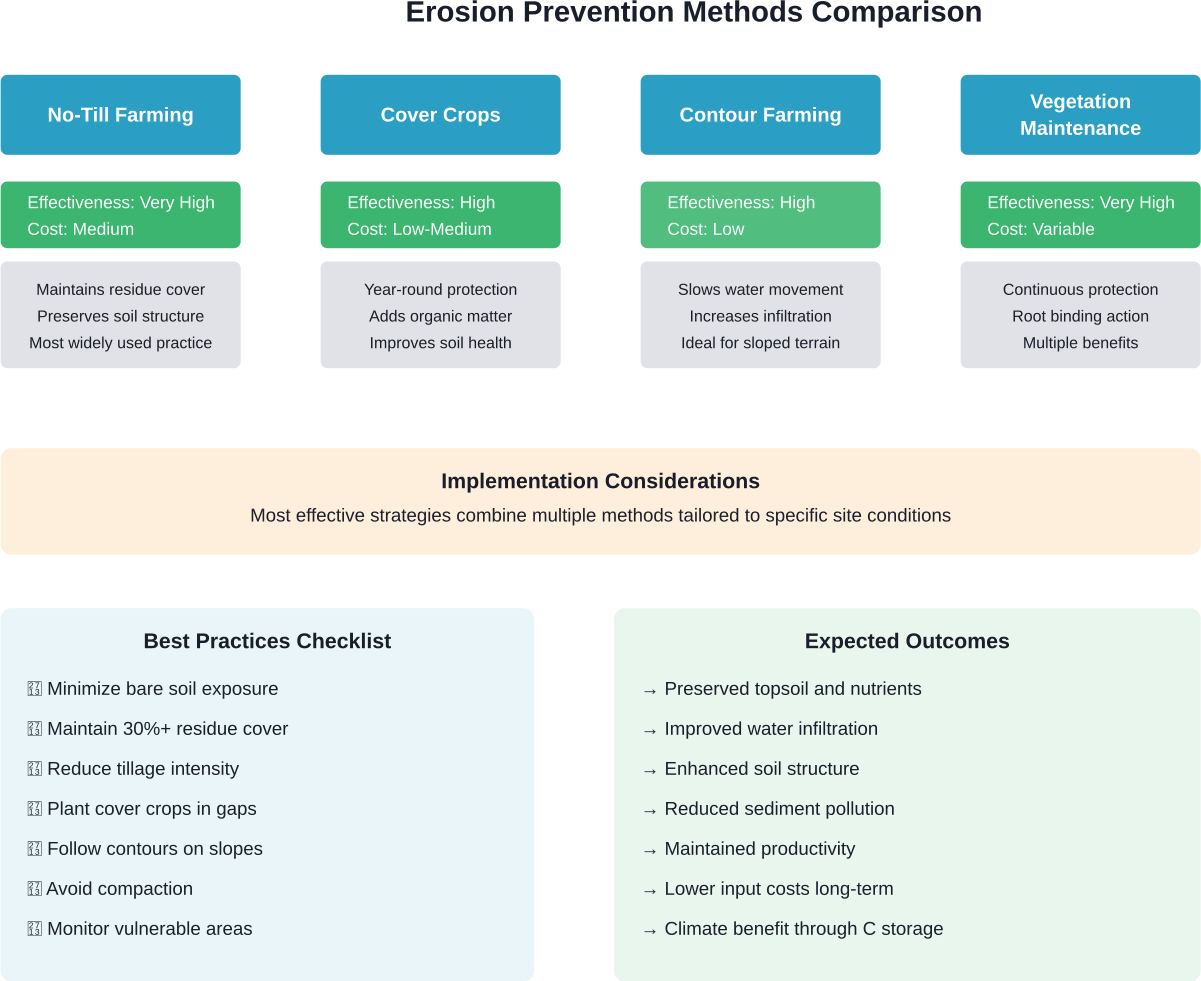
Preventing erosion requires management practices that protect soil structure and maintain ground cover.
No-Till and Reduced Tillage Systems
No-till has become the most widely used conservation practice in Pennsylvania because 60% of Pennsylvania cropland is HEL (Highly Erodible Land). Penn State Extension research shows that no-till drilling wheat into soybean stubble maintains residue cover while eliminating soil movement for excellent erosion control.
No-till drilling allows direct planting into previous crop residue without disturbing soil. This maintains soil structure, preserves organic matter, and keeps protective cover in place throughout the year.
Reduced tillage is only effective if the previous crop left large amounts of crop residue. For example, when using reduced tillage, it is difficult to maintain 30% crop residue after planting into soybean or wheat stubble.
Cover Cropping Strategies
Cover crops protect soil when primary crops aren’t growing. These plants stabilize soil with roots, shield surfaces from raindrop impact, and add organic matter when terminated.
The USDA’s Covering Soil Erosion Targeted Implementation Plan in Carbon County, Montana specifically addresses aggregate instability through strategic cover crop implementation in the Environmental Quality Incentives Program.
Cover crops work year-round. Winter covers protect soil during erosive spring rainfall. Summer covers shield ground between seasons in warm climates.
Contour Farming Practices
Contour farming involves planting perpendicular to slopes rather than up and down. This creates natural terraces that slow water movement and increase infiltration time.
Penn State research identifies contour farming as an effective erosion reduction technique, particularly on undulating landscapes where water flow concentration creates erosion risk.
The practice requires careful planning. Contour lines must follow elevation, and turn areas need management to prevent concentrated flow during equipment operation.
Maintaining Vegetation Cover
The simplest erosion prevention strategy? Keep soil covered by plants/vegetation. University of Delaware Cooperative Extension emphasizes that a crucial role of sustainable sites involves reducing erosion through maintained plant cover.
Options include:
- Permanent vegetation on non-cropped areas
- Crop residue retention between growing seasons
- Mulch application in gardens and landscaped areas
- Strategic planting to minimize bare soil periods
According to University of Rhode Island guidance, keeping land planted and mulched addresses erosion concerns for both plant growth and water quality protection.
Conservation Structures
Physical structures complement management practices in high-risk areas. USGS research developed check-dam placement suitability rankings across the Southern Rockies Landscape Conservation Cooperative using soil databases, topographic features, stream networks, and climatic patterns.
Check-dams slow water movement in channels, capturing sediment and reducing downstream erosion. Terraces break long slopes into shorter segments with reduced gradients.
Erosion Assessment and Monitoring Tools
Modern technology enables proactive erosion management through systematic assessment.
The USDA Natural Resources Conservation Service provides several specialized tools. The Rangeland Hydrology and Erosion Model (RHEM) Web Tool offers science-based technology to model runoff and erosion rates on rangelands while assessing conservation practice effects.
The Revised Universal Soil Loss Equation Version 2 (RUSLE2) estimates soil loss caused by rainfall and associated overland flow. The Water Erosion Prediction Project (WEPP) provides additional modeling capabilities.
These tools help land managers identify high-risk areas before severe erosion develops, enabling strategic prevention investments.

Detect Erosion Early with Geospatial Data
Soil erosion rarely starts with obvious damage – it builds through small shifts in vegetation, surface structure, and land patterns. AI-based analysis of satellite and drone imagery makes it possible to catch those changes early. With tools like FlyPix AI, teams can detect objects, monitor land over time, and identify anomalies that point to erosion risks across large areas without relying only on field checks.
This approach helps prioritize where to act, track how conditions evolve, and adjust land management decisions based on real data rather than assumptions. If you’re working with agricultural land or environmental monitoring, it makes sense to test how this kind of analysis fits your workflow. Reach out to the FlyPix AI team and see how their platform can support early detection and better decision-making.
Regional Considerations and Vulnerable Areas
Erosion risk varies dramatically by location. FAO research highlights the Arab region as exhibiting particularly alarming degradation rates, with cropland facing exceptional vulnerability from fertilizer overuse, pesticide application, soil salinization, and erosion.
Climate change exacerbates existing water scarcity in some regions. The FAO emphasizes that sustainable management of land, soil, and water resources plays a key role in both climate change mitigation and adaptation.
Arid and semi-arid lands face distinct challenges. Desert soils with wind erosion concerns require different management approaches than humid regions where water erosion dominates.
The Role of Soil Health in Erosion Resistance
Healthy soil resists erosion better than degraded soil. The USDA defines soil health as the continued capacity to function as a vital living ecosystem sustaining plants, animals, and humans.
Key soil health indicators affecting erosion resistance include:
- Aggregate stability: Well-formed aggregates resist breakdown from raindrop impact
- Organic matter content: Higher organic matter improves structure and water-holding capacity
- Biological activity: Active soil microbes produce binding compounds that hold particles together
- Infiltration rate: Better infiltration means less surface runoff and reduced erosive force
Management practices that build soil health simultaneously reduce erosion vulnerability. The relationship works both ways—preventing erosion preserves the soil conditions that support continued health.
Taking Action Against Soil Erosion
Soil erosion threatens agricultural productivity, water quality, and climate stability. The scale of impact—$44 billion in annual U.S. losses and 1.7 billion people affected by degraded cropland globally—demands systematic response.
The solutions exist. No-till farming, cover crops, contour farming, and maintained vegetation cover have proven effective across diverse landscapes. These practices protect topsoil, preserve nutrients, reduce sediment pollution, and maintain the soil’s capacity to function as a living ecosystem.
But implementation requires commitment. Land managers, farmers, developers, and policymakers all play roles in preventing accelerated erosion. Assessment tools from USDA and USGS enable strategic planning. Conservation programs provide technical and financial assistance.
The question isn’t whether erosion can be controlled—the methods work. The question is whether adoption will occur quickly enough to protect remaining productive soils. Each season of delayed action means more topsoil lost, more nutrients washed away, and reduced capacity to feed growing populations.
Start by evaluating erosion risk on managed lands. Identify bare soil periods. Consider whether current practices maintain adequate ground cover year-round. Consult local NRCS offices about conservation programs and technical assistance available in specific regions.
Soil health and erosion control represent investments in long-term productivity rather than expenses. The best time to prevent erosion is before it starts—but the second-best time is right now.
Frequently Asked Questions
Water runoff from rainfall represents the primary cause globally, particularly when soil lacks protective vegetation cover. Wind erosion dominates in arid regions. Human activities like intensive tillage, deforestation, and soil compaction accelerate natural erosion rates significantly.
According to USDA data, soil erosion decreases U.S. productivity by nearly $44 billion each year. Globally, the Food and Agriculture Organization reports that 1.7 billion people experience reduced crop yields due to land degradation, representing immense economic impact worldwide.
Complete elimination isn’t realistic since some geological erosion occurs naturally. However, accelerated erosion from human activities can be largely prevented through proper management. No-till farming, cover crops, contour farming, and maintained vegetation cover dramatically reduce erosion rates to near-natural levels.
No-till farming has proven most effective in many agricultural settings, becoming the most widely used conservation practice in regions like Pennsylvania. However, effectiveness depends on site conditions—combining multiple methods like no-till with cover crops typically produces the best results.
Erosion degrades soil’s ability to sequester carbon, reducing its function as a carbon sink. Research indicates soils could potentially sequester greenhouse gases equivalent to about 5% of annual human-made emissions. Better land management that prevents erosion maintains this climate regulation capacity.
Penn State Extension research indicates maintaining 30% crop residue cover after planting provides effective erosion protection. No-till systems easily achieve this threshold. Reduced tillage may struggle to maintain adequate cover when planting into crops that produce less residue, like soybeans or wheat.
University of Minnesota research evaluated erosion control products under natural and artificial rainfall conditions at construction sites. Erosion control blankets and soil stabilizers can provide temporary protection on disturbed areas while vegetation establishes, though establishing permanent cover remains the long-term solution.