
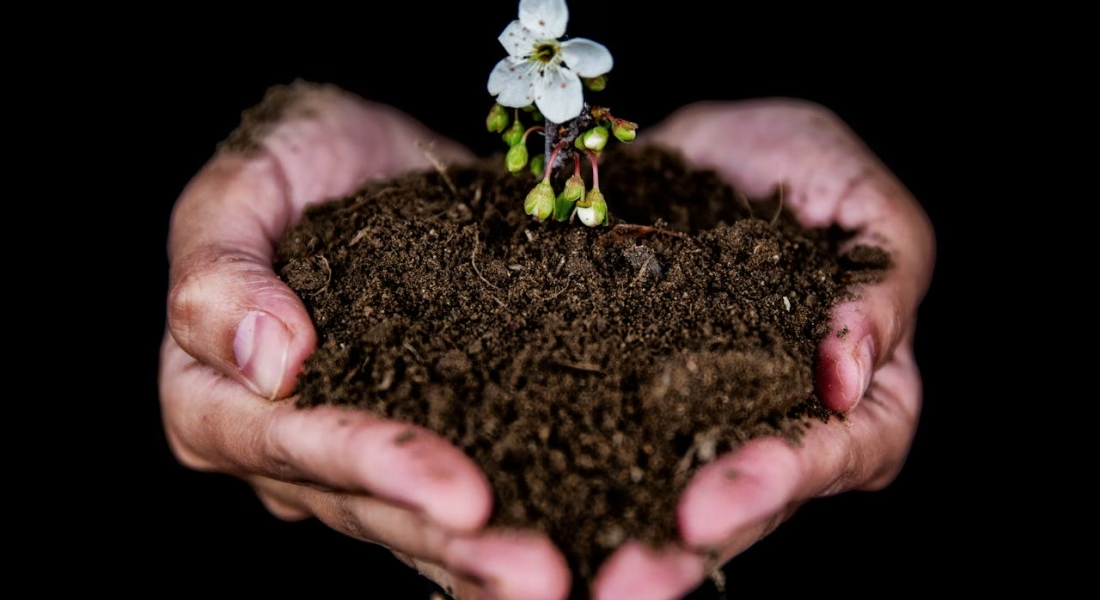
Soil conservation techniques protect and improve soil health through proven methods like cover cropping, reduced tillage, crop rotation, and organic matter management. According to the USDA NRCS, healthy soil functions as a vital living ecosystem that sustains plants, animals, and humans while preventing erosion and maintaining fertility. Implementing these practices requires understanding local soil conditions, farmer education, and long-term commitment to sustainable land management.
Healthy soil isn’t just dirt. It’s a living, breathing ecosystem packed with billions of microorganisms that support plant growth, filter water, and sustain life.
But here’s the problem: soil degradation threatens global food security. Soil degradation is a significant global challenge affecting a substantial portion of the world’s soils, and soil formation is a slow natural process requiring extended time periods.
The good news? Farmers and land managers have access to proven conservation techniques that can reverse this trend. This guide explores the essential practices that preserve soil health and fertility for generations to come.
Understanding Soil Health and Why It Matters
The USDA Natural Resources Conservation Service defines soil health as “the continued capacity of soil to function as a vital living ecosystem that sustains plants, animals, and humans.”
Healthy soil delivers clean air and water, bountiful crops, and resilient agricultural systems. It’s teaming with bacteria, fungi, and other microbes that form the foundation of an elegant symbiotic ecosystem.
When soil health declines, problems cascade rapidly. Erosion accelerates. Nutrient depletion sets in. Water retention capacity drops. Chemical pollution accumulates. The result? Reduced crop yields and increased food insecurity.
That’s why conservation matters. Not just for farmers’ livelihoods, but for everyone who eats food.
The Living Soil Ecosystem
Soil isn’t an inert growing medium. It’s alive with organisms that perform critical functions:
- Decomposing organic matter and cycling nutrients
- Creating soil structure and aggregates that resist erosion
- Filtering and purifying water as it moves through the soil profile
- Storing carbon and mitigating climate change impacts
- Suppressing plant diseases and pests through biological competition
When conservation practices support these organisms, soil health improves. When destructive practices harm them, soil degrades.
Major Threats to Soil Health
Before diving into solutions, understanding the threats helps target conservation efforts effectively.
Soil Erosion
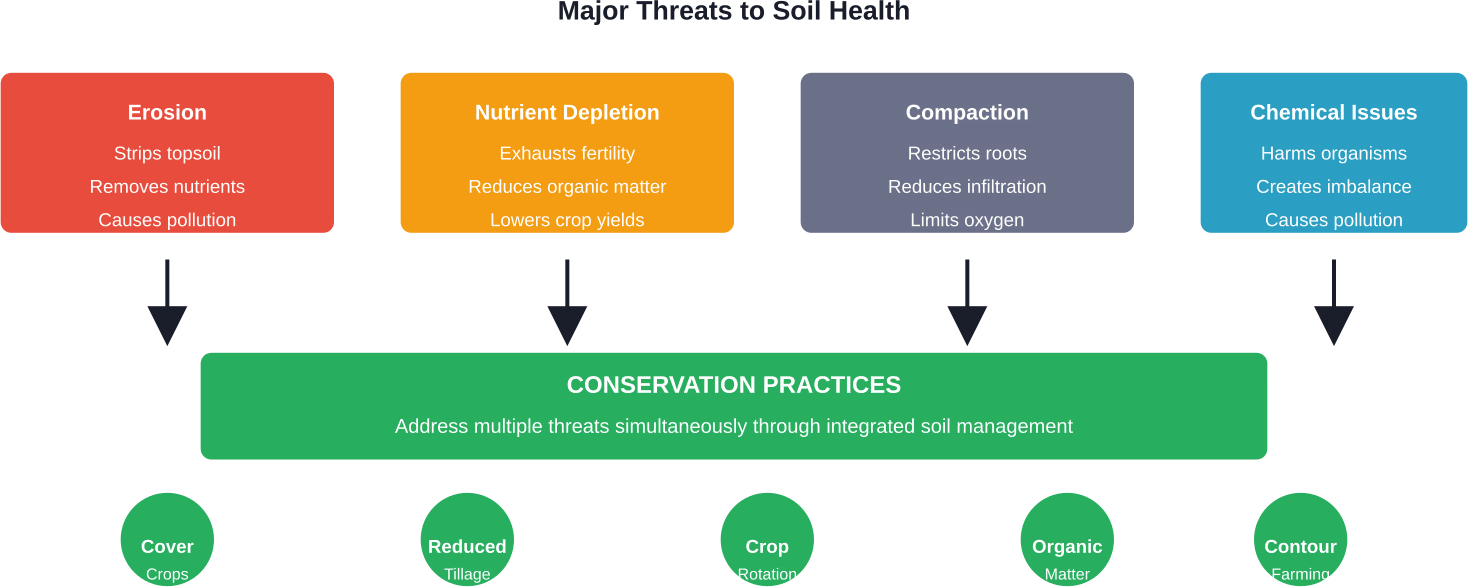
Erosion strips away topsoil—the most fertile layer containing the highest concentration of organic matter and nutrients. Wind and water erosion accelerate when soil lacks protective cover or when tillage breaks down soil structure.
Erosion doesn’t just remove soil. It carries nutrients and agricultural chemicals into waterways, causing downstream pollution problems.
Nutrient Depletion
Continuous cropping without adequate nutrient replacement exhausts soil fertility. While synthetic fertilizers can replace some nutrients, they don’t address the broader soil health picture.
Organic matter loss compounds the problem. Soil organic matter holds nutrients, retains water, and feeds beneficial microorganisms. When it declines, soil quality deteriorates across multiple dimensions.
Compaction and Structure Degradation
Heavy equipment and intensive tillage compact soil and destroy aggregates. Compacted soil restricts root growth, reduces water infiltration, and limits oxygen availability for soil organisms.
Poor soil structure makes erosion worse and creates conditions where crops struggle to thrive.
Chemical Pollution and Imbalance
Overuse of synthetic fertilizers and pesticides can harm beneficial soil organisms and create chemical imbalances. Soil acidification, salt accumulation, and contamination pose long-term threats to soil functionality.
Core Soil Conservation Techniques
Now, let’s explore the proven practices that protect and restore soil health. These techniques work best when combined as part of an integrated conservation system.
Cover Cropping
Cover crops are plants grown specifically to protect and improve soil rather than for harvest. They’re planted during off-seasons when fields would otherwise sit bare.
The benefits are substantial:
- Prevent erosion by keeping living roots in the soil and protective canopy above ground
- Add organic matter when incorporated or left as mulch
- Suppress weeds through competition and allelopathy
- Fix atmospheric nitrogen (legume cover crops)
- Break pest and disease cycles
- Improve soil structure through root action
- Enhance water infiltration and retention
Common cover crop species include cereal rye, hairy vetch, clover, radishes, and oats. Selection depends on climate, soil type, and management goals.
Here’s the challenge though: research from Kentucky State University published in February 2026 found that many farmers try to cover crops but then discontinue the practice. The study tracked year-to-year changes and highlighted that long-term support is critical for adoption success.
Reduced and No-Till Farming
Conventional tillage—plowing and disking soil before planting—disrupts soil structure, kills beneficial organisms, and exposes soil to erosion. It also oxidizes organic matter rapidly, releasing stored carbon.
Reduced tillage and no-till systems minimize or eliminate mechanical soil disturbance. Seeds are planted directly into crop residue from previous harvests.
The advantages include:
- Dramatic reduction in erosion from wind and water
- Higher soil organic matter over time
- Better water infiltration and storage
- Lower fuel and labor costs
- Improved soil structure and aggregate stability
- Increased biological activity in surface layers
That said, transitioning to no-till requires adjustments. Specialized planting equipment is necessary. Weed management strategies must adapt. Some farmers report initial yield reductions during the transition period before soil health improves.
Crop Rotation
Growing the same crop repeatedly on the same field depletes specific nutrients and builds up pests and diseases. Crop rotation breaks these cycles.
Effective rotations alternate between crop families with different nutrient needs, rooting patterns, and pest vulnerabilities. A typical rotation might cycle corn, soybeans, and small grains.
Benefits extend beyond pest control:
- Balances nutrient extraction and replacement
- Improves soil structure through varied root systems
- Reduces reliance on pesticides and fungicides
- Spreads economic risk across multiple crops
- Enhances soil biological diversity
Including legumes in rotations provides natural nitrogen fixation, reducing synthetic fertilizer requirements.
Contour Farming and Terracing
On sloped land, water running downhill carries soil with it. Contour farming and terracing combat this problem by working with the landscape rather than against it.
Contour farming means planting rows perpendicular to the slope rather than up and down hillsides. Each row acts as a small dam, slowing water movement and encouraging infiltration.
Terracing takes this further by creating level benches on steep slopes. The technique has been used for centuries in mountainous regions worldwide.
These practices are particularly important in areas with intense rainfall or vulnerable soils.
Windbreaks and Shelterbelts
In areas prone to wind erosion, rows of trees or shrubs planted perpendicular to prevailing winds provide critical protection. These windbreaks reduce wind speed across fields, preventing soil particles from becoming airborne.
Additional benefits include:
- Reduced moisture loss from evaporation
- Wildlife habitat creation
- Microclimate moderation for crops
- Snow distribution management
Effective windbreaks use multiple rows of mixed species at varying heights to maximize wind reduction.
Organic Matter Management
Soil organic matter is the key to nearly every aspect of soil health. It improves structure, holds nutrients and water, feeds microorganisms, and provides resilience against stress.
Building organic matter requires consistent inputs:
- Crop residue retention rather than removal or burning
- Cover crop biomass incorporation
- Manure and compost application
- Reduced tillage to slow decomposition
The FAO emphasizes that preventing the conversion of high-carbon lands like grasslands, savannas, and peatlands to cropland is equally important. These systems store massive amounts of soil organic carbon that, once lost, takes decades or centuries to rebuild.
Integrated Nutrient Management
Healthy soil needs balanced nutrition. Integrated nutrient management combines organic and inorganic sources strategically.
Key principles include:
- Regular soil testing to identify deficiencies and imbalances
- Matching fertilizer applications to crop needs
- Timing applications to maximize plant uptake and minimize loss
- Using slow-release formulations when appropriate
- Incorporating organic amendments to improve nutrient holding capacity
The goal isn’t to eliminate synthetic fertilizers entirely, but to use them efficiently within a broader soil health strategy.
| Conservation Practice | Primary Benefits | Implementation Complexity | Time to Results |
|---|---|---|---|
| Cover Cropping | Erosion control, organic matter, nitrogen fixation | Moderate | 1-3 years |
| No-Till/Reduced Till | Erosion reduction, fuel savings, structure improvement | Moderate to High | 3-5 years |
| Crop Rotation | Pest control, nutrient balance, risk distribution | Low to Moderate | 1-2 years |
| Contour Farming | Water erosion prevention, infiltration improvement | Moderate | Immediate |
| Organic Matter Addition | Overall soil health, water retention, nutrient capacity | Low to Moderate | 2-4 years |
| Windbreaks | Wind erosion control, moisture conservation | High | 5-10 years |
Choosing the Right Conservation Practices
Not every technique works everywhere. Climate, soil type, topography, crop selection, and economic constraints all influence which practices make sense.
Assess Current Conditions
Start with soil testing. Comprehensive tests reveal pH, nutrient levels, organic matter content, and texture. These baselines guide decision-making and provide benchmarks for measuring improvement.
Walk the fields. Identify erosion patterns, compacted areas, drainage problems, and vegetation stress. Observe where water runs and where it pools.
Prioritize Based on Problems
If erosion is the primary concern, cover crops and reduced tillage should be top priorities. If nutrient depletion dominates, focus on rotation and organic matter management.
Steep slopes demand contour farming or terracing. Wind-prone areas need shelterbelts.
Start Small and Learn
Conservation transitions work best when implemented gradually. Test practices on a portion of the operation before full-scale adoption.
This approach allows learning and adaptation without risking the entire farm’s productivity. It also spreads out equipment investments and knowledge acquisition.
Seek Expert Guidance
The USDA Natural Resources Conservation Service provides technical assistance and sometimes financial support for conservation practice implementation. County extension offices offer localized expertise.
According to the USDA, Conservation Practice Standards are available as primary scientific references. These technical guides are localized for specific geographic areas, ensuring recommendations fit local conditions.
Economic Benefits of Soil Conservation
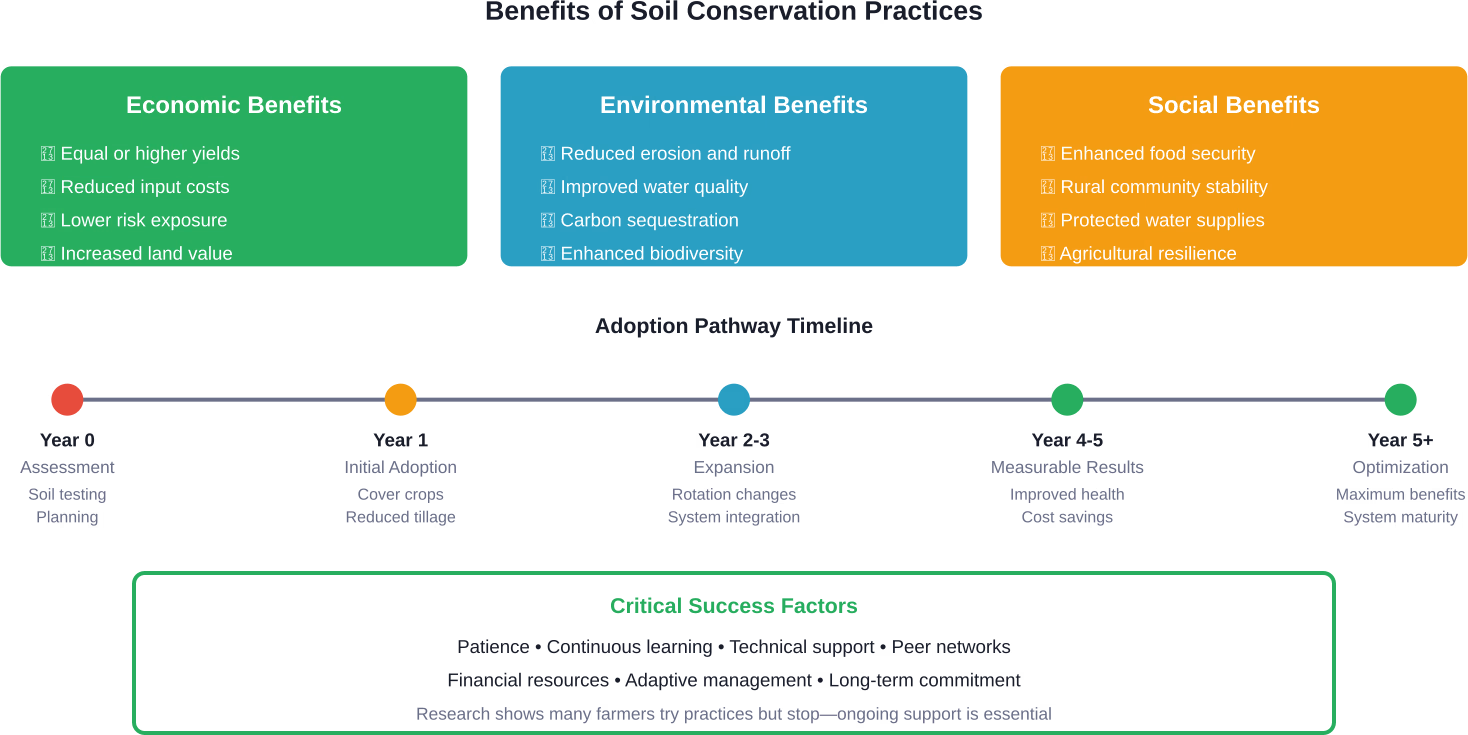
Conservation practices require investment—in equipment, seeds, knowledge, and time. But the economic case is strong.
Increased Profitability
Research has found that yields with conservation practices can equal or exceed those from conventional tillage. Meanwhile, reduced fuel, labor, and input costs improve profit margins.
Healthy soil produces more with less. Better water retention reduces irrigation needs. Improved nutrient holding capacity reduces fertilizer requirements. Enhanced biological activity provides natural pest control.
Risk Reduction
Farms with healthy soil handle weather extremes better. Drought causes less damage when soil holds moisture effectively. Heavy rains cause less erosion when soil structure is strong.
Crop rotation spreads market risk across multiple commodities. Diverse cropping systems show greater stability over time.
Long-Term Asset Value
Soil fertility is a capital asset. Conservation practices build this asset’s value over time. Degraded soil diminishes farm value; healthy soil enhances it.
As awareness of soil health grows, farmland with documented conservation practices may command premium prices.
Environmental and Social Benefits
The advantages extend far beyond individual farms.
Water Quality Protection
Soil conservation dramatically reduces agricultural runoff carrying sediment, nutrients, and pesticides into waterways. This protects drinking water sources, aquatic ecosystems, and recreational waters.
Better infiltration means more water recharges groundwater rather than running off surface waters.
Climate Change Mitigation
Soil stores more carbon than the atmosphere and all plant life combined. Conservation practices, especially those building organic matter and reducing tillage, sequester atmospheric carbon dioxide in soil.
Agriculture can shift from being a net carbon source to a carbon sink through widespread adoption of soil health practices.
Biodiversity Enhancement
Healthy soil ecosystems support diverse microbial communities. Conservation practices that include cover crops, windbreaks, and reduced chemical inputs also provide habitat for beneficial insects, pollinators, and wildlife.
Food Security
Soil is critical to food production globally. With soil degradation a widespread challenge and growing global population, preserving and restoring soil fertility is essential for feeding humanity.
Conservation practices maintain long-term productivity rather than extracting short-term yields at the expense of future capacity.
Overcoming Implementation Challenges
Real talk: adopting conservation practices isn’t always easy. Understanding common obstacles helps overcome them.
Knowledge and Learning Curve
Conservation techniques often differ significantly from conventional practices. Learning new management strategies takes time and sometimes involves trial and error.
Solutions include:
- Attending workshops and field days hosted by extension services
- Joining farmer networks and peer learning groups
- Working with NRCS conservation planners
- Starting with pilot projects before full implementation
Equipment and Financial Investment
No-till planters, cover crop seeders, and specialized equipment represent significant costs. Not every operation can make large capital investments immediately.
Options to address this include:
- USDA cost-share programs that offset conservation practice expenses
- Equipment sharing cooperatives
- Custom operators who provide services without equipment ownership
- Phased implementation that spreads costs over multiple years
Transition Period Challenges
Some conservation practices show reduced yields initially as soil ecosystems adjust. This transition period can create financial stress.
Planning for this reality helps. Setting realistic expectations, maintaining financial reserves, and starting small all mitigate transition risks.
Social and Cultural Factors
A dissertation on Puerto Rican coffee farmers completed at Mississippi State University in 2025 explored how soil ethics influences conservation behavior. The study found that farmers’ decisions are shaped by experiential learning, intuition, social networks, and deeply rooted soil ethics tied to identity, heritage, and resilience.
The research emphasizes that conservation strategies should honor farmers’ lived experiences and values. Peer-led, community-based approaches focusing on trust and local knowledge foster more sustainable adoption than purely technical solutions.
Community discussions around soil conservation reveal varying perspectives. Some farmers express frustration with the economic pressures that make conservation difficult despite understanding its importance. Others emphasize that homeowners with access to chemicals but no education pose significant soil health risks.
The Role of Policy and Support Programs
Individual farmers shouldn’t carry the conservation burden alone. Broader societal benefits justify collective support.
USDA Conservation Programs
The Natural Resources Conservation Service administers several programs providing technical and financial assistance:
- Environmental Quality Incentives Program (EQIP) offers cost-share for conservation practice implementation
- Conservation Stewardship Program (CSP) rewards existing conservation efforts and encourages expansion
- Conservation Reserve Program (CRP) pays farmers to remove environmentally sensitive land from production
Farmers can contact their local USDA Service Center to explore available programs and eligibility.
Extension Services and Education
Land-grant universities and cooperative extension services provide research-based information adapted to local conditions. County extension offices offer soil testing, workshops, demonstrations, and one-on-one consultations.
This educational infrastructure is critical for translating research into practical application.
Private Sector Initiatives
Food companies, retailers, and agricultural input suppliers increasingly recognize that their supply chains depend on soil health. Some offer incentives, premium payments, or technical support for farmers adopting conservation practices.
These market-based approaches complement government programs and can accelerate adoption.
Monitoring Progress and Adaptive Management
Conservation is an ongoing process, not a one-time fix. Regular monitoring allows adaptive management based on results.
Soil Testing Protocols
Regular testing every 2-3 years tracks changes in pH, nutrients, organic matter, and biological activity. Comparing results over time shows whether practices are working.
Advanced testing can assess soil health indicators like aggregate stability, infiltration rates, and microbial biomass.
Visual Observations
Trained eyes can spot improvements: earthworm populations increasing, better soil structure, deeper topsoil, improved water infiltration, stronger crop performance during stress periods.
Walking fields regularly and documenting observations provides valuable qualitative data.
Yield and Economic Tracking
Comparing yields, input costs, and profitability before and after conservation implementation demonstrates economic impact. This data justifies continued investment and guides practice refinement.
Adjusting Practices Based on Results
Not every practice works equally well everywhere. Monitoring reveals what’s effective and what needs adjustment.
Maybe cover crop species need changing. Perhaps tillage can be reduced further. Possibly rotation sequences need tweaking. Adaptive management treats conservation as an evolving system rather than a static prescription.

Turn Crop and Soil Data Into Decisions You Can Act on
Soil conservation usually comes down to timing – noticing where things start to go wrong before it spreads. Instead of relying only on field checks, FlyPix AI works with drone and satellite imagery to highlight patterns across entire fields. It can detect uneven crop growth, vegetation gaps, weed clusters, or early signs of stress – the kinds of signals that often point to underlying soil issues or erosion risks.
Because it processes geospatial data over time, you can see how these patterns shift season to season. That makes it easier to understand where soil degradation might be developing and where conservation efforts are actually working. Instead of guessing, you’re working with clear visual signals that help guide planting, irrigation, and soil protection decisions.
Start using your field data properly – contact FlyPix AI and see what’s really happening in your soil.
Future Directions in Soil Conservation
Conservation science and technology continue advancing. Several emerging trends show promise.
Precision Agriculture Integration
GPS-guided equipment, drone monitoring, and variable rate application allow site-specific management within fields. This precision helps target conservation efforts where they’re most needed and most effective.
Technology platforms can track soil health metrics across farms, providing data-driven insights for management decisions.
Biological Amendments and Microbial Inoculants
Growing understanding of soil microbiology is leading to products designed to enhance beneficial organism populations. While research continues, early results suggest potential for accelerating soil health improvements.
Agroforestry Systems
Integrating trees with crops or livestock creates diverse, multi-layered systems that enhance soil health while diversifying production. Silvopasture, alley cropping, and forest farming represent different agroforestry approaches.
Regenerative Agriculture Movement
Regenerative agriculture emphasizes not just sustaining soil but actively improving it. This philosophy combines conservation practices with holistic management aimed at building soil carbon, biodiversity, and ecosystem function.
Growing consumer interest in regeneratively produced food may create market incentives accelerating adoption.
Taking Action for Soil Health
Soil conservation isn’t optional—it’s fundamental to sustainable agriculture and food security. The practices outlined here work. They’re backed by decades of research and proven in fields around the world.
But knowledge alone doesn’t protect soil. Implementation does.
Start by assessing current conditions through soil testing and field observation. Identify the most pressing problems affecting the operation. Research which conservation practices address those specific issues.
Connect with resources. Contact the local USDA Service Center to explore technical assistance and financial support. Attend extension workshops and field days. Talk with neighboring farmers who’ve adopted conservation practices successfully.
Start small if necessary. Test practices on a portion of the operation. Learn what works in specific conditions. Expand gradually as knowledge and confidence grow.
Remember that soil health improvement is a journey, not a destination. It requires patience, continuous learning, and adaptive management. The research from Kentucky State University showing that farmers often try practices but then stop highlights the importance of long-term commitment and support networks.
The economic, environmental, and social benefits of soil conservation extend far beyond individual fields. Healthy soil produces abundant food, filters clean water, stores carbon, and sustains communities. Degraded soil threatens all of these.
Every farmer who adopts conservation practices contributes to a more resilient and sustainable agricultural system. The time to act is now—before further degradation makes restoration more difficult and expensive.
Soil formation is a slow natural process requiring extended time periods. Each centimeter lost to erosion or degradation represents centuries of natural soil formation. Conservation practices protect this irreplaceable resource and, in many cases, actively restore what’s been damaged.
The future of agriculture depends on the decisions being made today. Choose conservation. Choose soil health. Choose sustainability.
Frequently Asked Questions
Soil conservation involves practices that protect soil from erosion, maintain fertility, and sustain soil health over time. According to the USDA NRCS, healthy soil functions as a vital living ecosystem sustaining plants, animals, and humans. Conservation matters because soil is critical to food production globally, yet soil degradation is a significant challenge threatening food security and environmental quality.
Results vary by practice and starting conditions. Some benefits like erosion reduction from cover crops appear within the first year. Building soil organic matter and structure typically takes 3-5 years of consistent practice. Full system maturity and maximum benefits often require 5-10 years. Patience and long-term commitment are essential for success.
Cover cropping, reduced tillage, and contour farming rank among the most effective erosion prevention methods. Cover crops provide continuous ground cover and root systems holding soil in place. Reduced tillage maintains soil structure and crop residue protection. Contour farming on slopes slows water movement and encourages infiltration. Combining multiple practices provides the strongest protection.
Research has found that yields with conservation practices can equal or exceed conventional tillage yields once systems mature. Some farmers experience temporary yield reductions during the 1-3 year transition period as soil biology adjusts. However, over time, improved soil health typically leads to equal or better yields with lower input costs, improving profitability.
Costs vary widely depending on practices chosen and farm size. Cover crop seed might cost $30-60 per acre. No-till planters represent significant equipment investments but reduce fuel and labor costs. USDA cost-share programs through EQIP and CSP can offset up to 90% of implementation costs for historically underserved farmers under the 2025 Farm Bill extensions. Many practices reduce input expenses over time, providing positive return on investment within 3-5 years.
Absolutely. Many conservation practices scale effectively to operations of any size. Small farms can implement cover cropping, compost additions, and crop rotation with minimal equipment investment. The relative benefits are often greater for small operations since soil health directly impacts productivity and resilience. Extension services and NRCS provide assistance regardless of farm size.
The USDA Natural Resources Conservation Service offers technical assistance through local field offices and financial support through programs like EQIP and CSP. County extension services provide education, soil testing, and management guidance. Many states offer additional conservation programs. Farmers can locate their USDA Service Center online or contact their county extension office to explore available resources and assistance programs.