
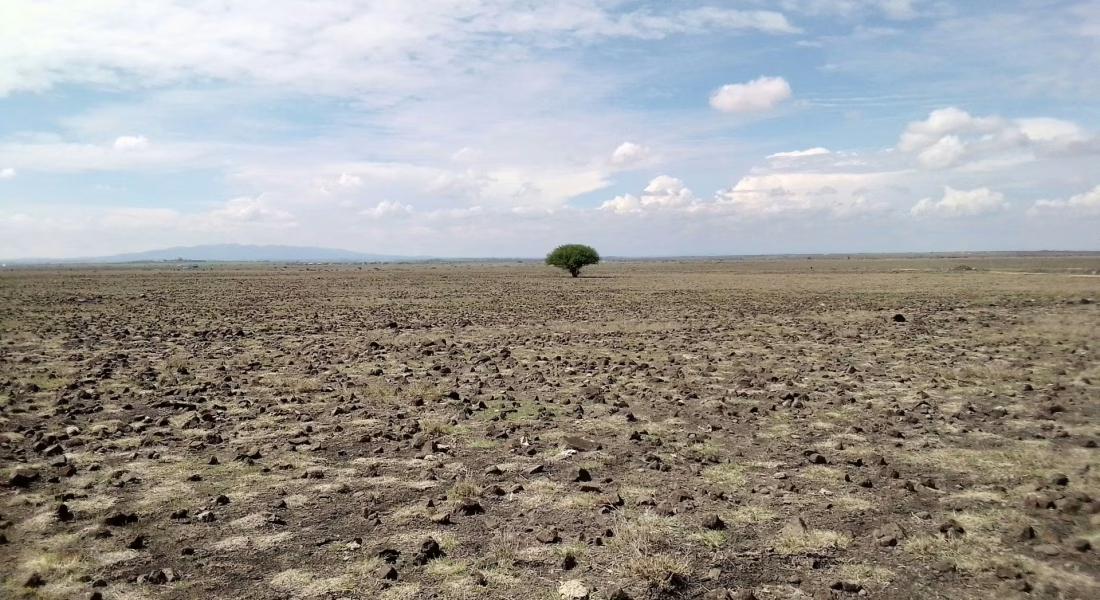
Soil degradation—the decline of soil’s physical, chemical, and biological properties—threatens food security for 1.7 billion people and 95% of agricultural production. Caused by erosion, nutrient depletion, compaction, contamination, and poor land management, degradation undermines crop yields and ecosystem resilience. Recovery solutions include regenerative agriculture, organic amendments, precision farming, and remediation technologies that restore soil health and biological function.
Soil isn’t just dirt. It’s a living ecosystem teeming with billions of microorganisms that form the foundation of terrestrial life. According to the USDA Natural Resources Conservation Service, healthy soil functions as a vital living system that sustains plants, animals, and humans—providing clean air, water, and food security.
But here’s the problem: that foundation is crumbling beneath our feet.
Approximately 33% of the world’s soils are currently classified as moderately to highly degraded. Every five seconds, a soccer pitch-sized area of soil erodes away. The Food and Agriculture Organization reports that land degradation driven by human activity is now reducing crop yields for roughly 1.7 billion people globally.
And it’s getting worse. It is estimated that by 2050 around 90 percent of the Earth’s soils could be degraded.
This isn’t some distant environmental concern. Soil degradation directly impacts food security, biodiversity, water quality, and climate stability. Roughly 95 percent of the food we eat is grown in topsoil that’s being systematically depleted by human activity.
The good news? Recovery is possible when we understand the threats and implement proven solutions.
What Is Soil Degradation?
Soil degradation refers to the decline in soil health—a change in soil status that reduces its capacity to provide goods and services. According to the FAO SOILS PORTAL, degraded soils reach a health status where they no longer provide the normal goods and services of the particular soil in its ecosystem.
Think of it as soil losing its functionality. The physical structure breaks down. Chemical properties become imbalanced. Biological communities collapse.
The USDA defines soil health as the continued capacity of soil to function as a vital living ecosystem. When degradation occurs, that capacity diminishes or disappears entirely.
Degradation manifests in multiple forms:
- Physical deterioration (erosion, compaction, sealing)
- Chemical imbalance (nutrient depletion, acidification, salinization, contamination)
- Biological decline (loss of organic matter, reduced microbial diversity)
What makes this particularly insidious is that degradation often happens gradually. Agricultural land can lose productivity for years before the damage becomes obvious—and by then, recovery becomes exponentially more difficult and expensive.
The Hidden Threats: Major Causes of Soil Degradation
Understanding what drives degradation is the first step toward reversing it. Multiple factors work together to undermine soil health, often reinforcing each other in destructive feedback loops.
Erosion: The Most Visible Threat
Soil erosion represents the physical removal of topsoil by water or wind. It’s the most visible and widespread form of degradation.
Water erosion occurs when rainfall or irrigation runoff carries soil particles away. Without adequate plant cover or soil structure, topsoil washes into streams and rivers. Wind erosion becomes severe in arid regions or areas with exposed, dry soil—particularly after tillage.
Here’s what makes erosion so destructive: it doesn’t just remove soil mass. It selectively removes the finest, most nutrient-rich particles first. Organic matter, which is lighter than mineral particles, erodes away preferentially.
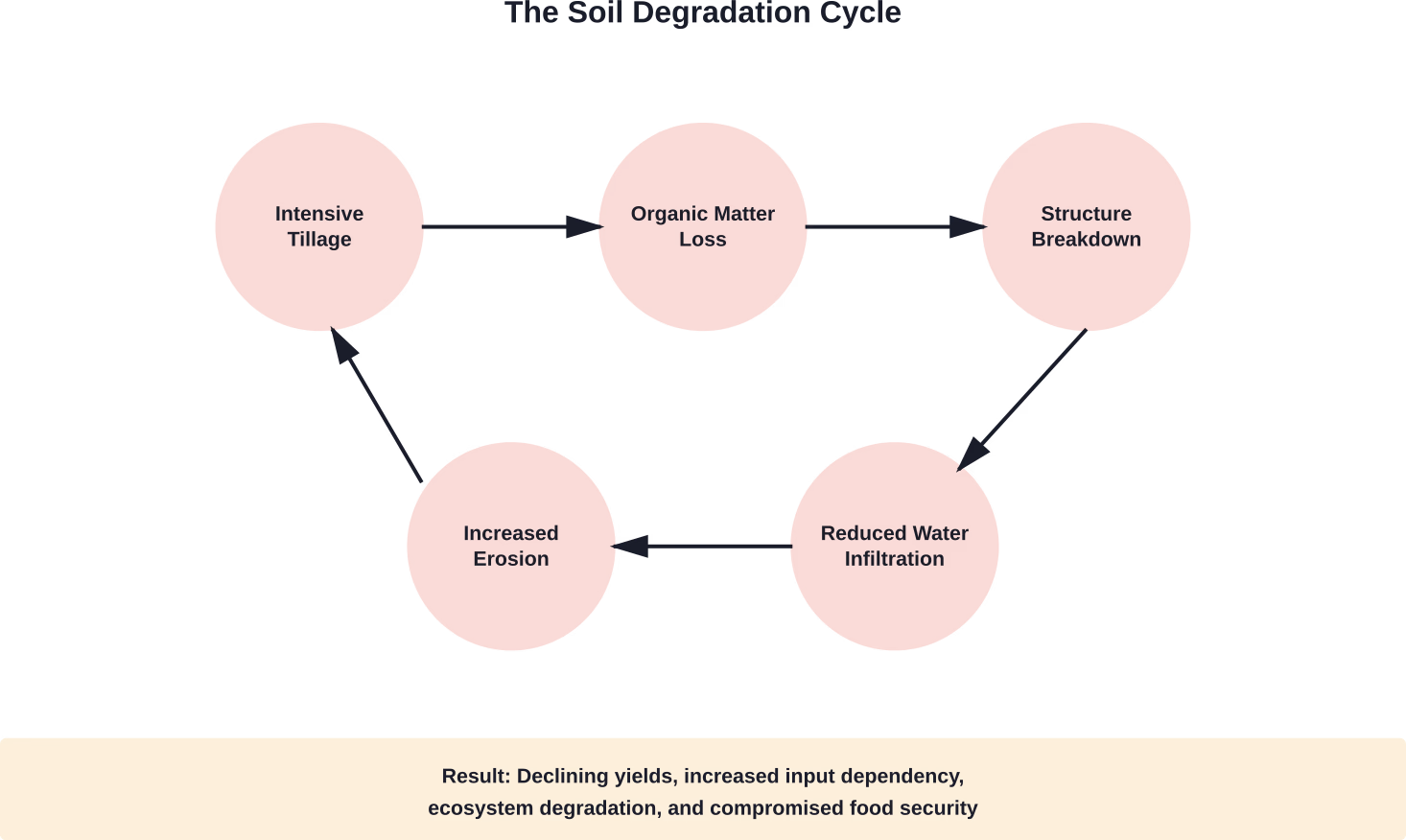
The result? Depleted topsoil, reduced water infiltration, increased runoff, and downstream sedimentation that contaminates waterways.
Agricultural areas are especially vulnerable. Conventional tillage leaves soil bare and unprotected between crop cycles. Steep slopes without terracing accelerate water erosion. Overgrazing removes vegetation that would otherwise anchor soil in place.
Nutrient Depletion and Imbalance
Continuous cropping without adequate nutrient replenishment systematically mines soils of essential elements. Nitrogen, phosphorus, potassium, and micronutrients get extracted with each harvest.
When farmers rely exclusively on synthetic fertilizers to replace these nutrients, they create a dangerous imbalance. Synthetic inputs don’t rebuild organic matter or support soil biology. They provide short-term productivity at the expense of long-term fertility.
According to FAO reports on land degradation in the Arab region, excessive use of fertilizers and pesticides contributes significantly to agricultural land degradation. Overapplication creates nutrient runoff that pollutes waterways while simultaneously acidifying or salinizing soils.
The feedback loop works like this: degraded soil has poor nutrient-holding capacity, requiring more fertilizer application, which further degrades soil structure and biology, which reduces nutrient efficiency, requiring even more inputs.
Soil Compaction
Heavy machinery, intensive tillage, and livestock trampling compress soil particles together. This reduces pore space—the tiny gaps between soil particles that hold air and water.
Compacted soil has several cascading problems:
- Reduced water infiltration (increasing runoff and erosion)
- Limited root penetration (restricting plant growth)
- Poor aeration (suffocating soil organisms and roots)
- Decreased biological activity (reducing organic matter breakdown)
Agricultural intensification has made compaction increasingly common. Larger equipment, more frequent field passes, and wet-season operations all contribute. Once established, compaction is difficult to reverse without targeted intervention.
Salinization
Soil salinization occurs when soluble salts accumulate in the root zone to levels that impair plant growth. According to FAO findings, soil salinization from irrigation practices represents a major degradation factor, particularly in arid and semi-arid regions.
Irrigation with water containing dissolved salts gradually deposits those salts in soil. When water evaporates from the surface or gets taken up by plants, salts remain behind. Without adequate drainage or rainfall to leach salts deeper into the soil profile, they concentrate at the surface.
The Arab region exhibits particularly alarming rates of salinization-driven degradation. Cropland is especially vulnerable when irrigation systems lack proper drainage infrastructure.
Salinized soils lose productivity rapidly. Most crop plants can’t tolerate high salt concentrations. Soil structure also deteriorates as sodium disrupts the clay particles that form stable aggregates.
Contamination
Soil contamination introduces hazardous substances that impair soil function and pose risks to human health and ecosystems. The EPA’s guidance on soil contamination identifies multiple sources:
- Industrial activities (chemical spills, mining operations, manufacturing waste)
- Agricultural chemicals (pesticides, herbicides, excessive fertilizers)
- Petroleum products (leaking storage tanks, spills)
- Heavy metals (lead, mercury, cadmium from various sources)
The EPA’s Hazardous Ranking System evaluates soil contamination based on likelihood of exposure, waste characteristics, and level of contamination. Contaminated sites require specialized remediation technologies to become productive again.
What makes contamination particularly insidious is persistence. Many contaminants remain active in soil for decades. Heavy metals don’t break down at all—they simply accumulate. Petroleum hydrocarbons can migrate through soil profiles, creating expanding zones of damage.
Loss of Organic Matter
Soil organic carbon represents the foundation of soil health. Organic matter—decomposed plant and animal material—improves soil structure, water retention, nutrient availability, and biological activity.
Conventional agricultural practices systematically deplete organic matter:
- Intensive tillage accelerates decomposition
- Removing crop residues eliminates carbon inputs
- Bare fallow periods increase oxidation
- Erosion preferentially removes organic-rich topsoil
When organic matter drops below critical thresholds (typically 2-3% for agricultural soils), soil function collapses. Structure deteriorates, water infiltration decreases, nutrient cycling breaks down, and biological communities crash.
Rebuilding organic matter is possible but slow. It requires years of carbon-positive management to restore what decades of extraction removed.
Biodiversity Loss
Healthy soil contains extraordinary biological diversity—bacteria, fungi, protozoa, nematodes, arthropods, and earthworms. These organisms drive nutrient cycling, organic matter decomposition, soil structure formation, and plant health.
Agricultural intensification threatens this biodiversity through multiple pathways. Pesticides kill non-target organisms. Fungicides eliminate beneficial mycorrhizal networks. Tillage physically destroys habitat and disrupts fungal hyphae. Fertilizer dependency reduces plants’ relationships with nutrient-mobilizing microbes.
The loss of soil biodiversity creates fragile, input-dependent systems. Without biological processes maintaining fertility and structure, agricultural systems require ever-increasing external inputs to maintain productivity.
How Agricultural Practices Threaten Soil Resilience
Agricultural systems dominate human land use globally. According to FAO data, agricultural activities are a major driver of the 33% of global soils classified as degraded.
But not all agricultural practices degrade soil equally. Research published in Nature examining conventional agriculture’s impacts on soil resilience identified specific practices that undermine soil’s capacity to recover from disturbances.
The Tillage Problem
Conventional tillage—plowing and turning soil—has been standard agricultural practice for centuries. It buries weeds, incorporates crop residues, and creates a smooth seedbed.
It also systematically destroys soil structure, accelerates organic matter decomposition, disrupts biological networks, and leaves soil vulnerable to erosion.
Meta-analyses show that reducing tillage intensity benefits soil micro- and mesofauna. No-till and reduced-till systems maintain organic matter levels, preserve soil structure, and support more diverse biological communities.
The catch? Many farmers rely on tillage for weed control and seedbed preparation. Transitioning away requires learning new techniques and sometimes accepting short-term yield reductions while soil biology rebuilds.
Monoculture and Limited Crop Diversity
Growing the same crop repeatedly in the same field—monoculture—simplifies management but damages soil health.
Monocultures extract the same nutrients from the same soil depth year after year. They support narrower microbial communities. They break pest and disease cycles ineffectively. They often require bare fallow periods that accelerate degradation.
Crop rotation and diversification provide natural pathways to maintain soil health. Different crops have different rooting patterns, nutrient demands, and pest pressures. Legumes fix atmospheric nitrogen, reducing fertilizer requirements. Deep-rooted crops break compaction layers and bring nutrients up from subsoil.
Yet economic pressures push farmers toward monoculture. Specialized equipment, established markets, and crop insurance structures all favor simplified rotations—even when they degrade long-term productivity.
Chemical Dependency
Relying exclusively on synthetic inputs creates soil systems that can’t function without constant external support.
Synthetic fertilizers provide nutrients but don’t feed soil biology. Pesticides control pests but eliminate beneficial organisms. Herbicides kill weeds but reduce plant diversity that supports soil food webs.
Research on agricultural practices and soil resilience found that many conventional practices only affect resilience with their long-term repeated use. The damage accumulates gradually, making the causal connection less obvious to practitioners.
Breaking chemical dependency requires rebuilding biological fertility—a process that takes time and management changes most farmers aren’t trained to implement.
The Environmental and Social Consequences
Soil degradation doesn’t stay confined to agricultural fields. The impacts ripple outward, affecting ecosystems, climate, water resources, and human communities.
Food Security Under Threat
The FAO’s State of Food and Agriculture 2025 report delivered a stark warning: land degradation is reducing crop yields for 1.7 billion people. That’s roughly one-fifth of the global population directly experiencing reduced food production from degraded soils.
The problem intensifies as the population grows. Feeding 9-10 billion people by 2050 will require increasing agricultural productivity—but on a shrinking base of healthy, productive soil.
In the Arab region, FAO research found particularly alarming degradation rates. Of 70 million hectares affected by human-induced degradation, over 46 million hectares are agricultural land. Cropland faces extreme vulnerability from excessive fertilizer use, salinization, and pesticide contamination.
As soil loses productivity, farmers face impossible choices: abandon degraded land and clear new areas (accelerating deforestation), intensify inputs on damaged soil (accelerating degradation), or accept declining yields (threatening livelihoods and food security).
Water Quality Degradation
Eroded soil doesn’t disappear—it ends up in waterways. Sediment clouds streams and rivers, smothers aquatic habitat, fills reservoirs, and carries attached nutrients and contaminants.
Nutrient runoff from degraded agricultural soils creates algal blooms that deplete oxygen and create dead zones. The EPA identifies agricultural runoff as a leading source of water quality impairment across the United States.
Contaminated soils leach pollutants into groundwater. Heavy metals, pesticide residues, and other contaminants migrate through degraded soil profiles that lack the filtering capacity of healthy soil structure.
The feedback loop: degraded soil has poor water infiltration, increasing runoff and erosion, which carries more pollutants to waterways, while reducing groundwater recharge that dilutes contaminants.
Climate Change Connections
Soil represents one of Earth’s largest carbon reservoirs. According to FAO analysis, sustainable management of land, soil, and water resources can play a key role in both climate change mitigation and adaptation.
But when degradation depletes soil organic carbon, that carbon enters the atmosphere as CO2. Estimates suggest degraded soils have released 133 billion tonnes of carbon—roughly equivalent to a decade of fossil fuel emissions.
The relationship works both ways. Climate change exacerbates soil degradation through increased drought severity, more intense rainfall events (accelerating erosion), and shifts in temperature that affect organic matter decomposition.
In some areas, climate change intensifies already problematic water scarcity, creating conditions that accelerate salinization and desertification.
Biodiversity Collapse
Healthy soil supports extraordinary biodiversity—not just the microscopic organisms within the soil, but also the plants, insects, birds, and mammals that depend on productive soil ecosystems.
Approximately 33% of the world’s soils are currently classified as moderately to highly degraded, with profound implications for ecosystem stability and resilience. As soil health declines, habitat quality deteriorates for species throughout the food web.
Grassland birds, pollinators, and beneficial insects all depend on the plant communities that healthy soils support. Soil degradation creates cascading losses that extend far beyond agricultural productivity.
Proven Recovery Solutions: Restoring Degraded Soils
Here’s the encouraging news: soil degradation isn’t irreversible. With appropriate interventions, degraded soils can recover—sometimes remarkably quickly.
The USDA emphasizes that soil health restoration focuses on building the continued capacity of soil to function as a vital living ecosystem. Recovery requires addressing physical, chemical, and biological degradation simultaneously.
Regenerative Agriculture Principles
Regenerative agriculture represents a systems-based approach that actively improves soil health rather than merely sustaining it.
Core principles include:
- Minimizing soil disturbance (reducing or eliminating tillage)
- Maximizing crop diversity (complex rotations, cover crops, intercropping)
- Keeping soil covered (living plants or residue year-round)
- Maintaining living roots (extending growing seasons, perennials)
- Integrating livestock (managed grazing that mimics natural systems)
These principles work together to rebuild organic matter, restore biological communities, improve soil structure, and increase resilience.
Regenerative agriculture approaches can provide improvements in soil organic carbon, water infiltration, nutrient cycling, and biological diversity. Many practitioners report reduced input costs, increased drought resilience, and improved long-term productivity.
The transition requires patience. Rebuilding degraded soil takes 3-7 years before benefits fully materialize. But once established, regenerative systems become increasingly productive and resilient.
Cover Cropping and Crop Rotation
Planting cover crops during fallow periods keeps living roots in soil year-round. Those roots:
- Prevent erosion by holding soil in place
- Feed soil biology with root exudates
- Add organic matter when terminated
- Capture and recycle nutrients
- Break pest and disease cycles
- Improve soil structure through root action
Different cover crops provide different benefits. Legumes fix nitrogen. Brassicas break compaction with deep taproots. Grasses build soil structure with fibrous roots.
Complex crop rotations extend these benefits. Rotating between crops with different nutrient demands, rooting depths, and pest pressures maintains soil health while reducing input requirements.
The barriers? Cover crops require additional management and sometimes involve short-term costs. But the long-term soil health benefits typically outweigh initial investments.
Organic Amendments and Composting
Adding organic materials directly rebuilds depleted organic matter. Compost, manure, crop residues, biochar, and other amendments provide carbon that feeds soil biology and rebuilds structure.
High-quality compost delivers multiple benefits simultaneously:
- Increases organic matter content
- Introduces beneficial microorganisms
- Improves water retention
- Provides slow-release nutrients
- Buffers pH extremes
- Reduces soil-borne diseases through competitive exclusion
Application rates matter. Light, frequent additions maintain biological activity. Heavy applications can temporarily overwhelm soil systems or create nutrient imbalances.
Recent advances in soil remediation include utilizing dolomite–sewage sludge mixtures to combat soil degradation, with research demonstrating improvements in soil fertility and ecosystem restoration.
Remediation Technologies for Contaminated Soils
When contamination drives degradation, specialized remediation becomes necessary. The EPA has developed comprehensive guidance on remediation technologies for cleaning up contaminated sites.
Common approaches include:
- Bioremediation: Using microorganisms to break down organic contaminants. Effective for petroleum hydrocarbons, pesticides, and some industrial chemicals.
- Phytoremediation: Using plants to extract, stabilize, or break down contaminants. Certain plant species accumulate heavy metals or metabolize organic pollutants.
- Chemical treatment: Applying substances that neutralize, immobilize, or extract contaminants. Recent innovations include a dolomite–stainless steel slag mixture for petroleum hydrocarbon absorption.
- Soil washing: Physical separation techniques that remove contaminated fine particles or extract pollutants with solutions.
- Thermal treatment: Heating soil to volatilize or destroy contaminants—energy-intensive but effective for persistent pollutants.
The EPA’s contaminant-specific guidance provides detailed protocols for addressing asbestos, lead, dioxins, mercury, metals, pesticides, PCBs, radiation, and volatile organic compounds in soil.
Technology selection depends on contaminant type, concentration, soil properties, site characteristics, and remediation goals.
Erosion Control Measures
Preventing further erosion is essential for allowing recovery processes to work. Multiple techniques provide physical protection:
- Vegetative cover: Establishing permanent or seasonal plant cover protects soil from raindrop impact and wind. Native grasses, cover crops, and perennial vegetation all provide protection.
- Terracing and contouring: Reshaping slopes reduces water velocity and traps sediment. Contour farming follows elevation lines rather than running up and down slopes.
- Mulching: Applying organic materials to bare soil surfaces prevents erosion while adding organic matter. Research on controlling soil erosion after wildfire evaluated chopped wood mulch from burned areas to prevent erosion and guide ecosystem recovery.
- Windbreaks: Tree or shrub barriers reduce wind velocity across vulnerable soil.
- Structural controls: Terraces, check dams, sediment basins, and other structures physically slow water and trap sediment.
The most effective erosion control combines multiple techniques adapted to specific site conditions.
| Recovery Strategy | Primary Benefits | Implementation Timeframe | Best Applications |
|---|---|---|---|
| Cover Cropping | Erosion control, organic matter, biology | Benefits within 1-2 seasons | Annual cropping systems |
| Reduced Tillage | Structure preservation, carbon retention | 3-5 years for full benefits | All agricultural systems |
| Organic Amendments | Carbon addition, nutrient supply | Immediate to 2 years | Depleted or contaminated soils |
| Crop Rotation | Pest management, nutrient cycling | 2-4 years for system benefits | Grain and vegetable production |
| Bioremediation | Contaminant breakdown | Months to years depending on pollutant | Petroleum and organic contamination |
| Managed Grazing | Organic matter, soil disturbance, biology | 2-5 years for measurable change | Grasslands and integrated systems |
Precision Agriculture and Monitoring
Understanding specific degradation patterns enables targeted interventions. Precision agriculture technologies provide detailed soil data:
- Soil testing (physical, chemical, biological properties)
- Electromagnetic induction mapping (identifying compaction zones)
- Remote sensing (vegetation health, organic matter estimation)
- Penetrometer surveys (measuring compaction depth)
- Microbial assays (evaluating biological function)
This information allows farmers to vary management within fields—applying amendments only where needed, targeting specific degradation causes, and monitoring recovery progress.
The USDA’s National Cooperative Soil Survey provides standardized soil classification and mapping that supports site-specific management decisions.

See Early Signs of Soil Degradation Before They Spread
Soil degradation rarely shows up all at once – it starts with small changes like uneven crop growth, thinning vegetation, or patches that don’t respond the same way as the rest of the field. FlyPix AI works with drone and satellite imagery to surface those patterns early. Instead of walking the field and hoping to notice them in time, you get a clear view of where something is starting to shift.
By comparing data over time, it becomes easier to see if those areas are getting worse or improving after changes in farming practices. That helps you focus recovery efforts where they’re actually needed, whether it’s adjusting inputs, improving coverage, or addressing erosion risks. The goal is simple – catch the problem early and act before it turns into long-term damage.
Don’t wait until the damage is obvious – contact FlyPix AI and start spotting soil issues earlier.
Regional Perspectives and Success Stories
Soil recovery isn’t theoretical. Multiple regions have demonstrated that degraded soils can be restored with committed, science-based interventions.
Grassland Restoration in Wisconsin
Audubon’s Conservation Ranching program in Wisconsin demonstrates how managed grazing restores grassland soils while supporting biodiversity. By mimicking natural grazing patterns—high-density, short-duration grazing followed by extended recovery—ranchers rebuild soil organic matter, increase water infiltration, and create habitat for declining grassland bird species.
The approach integrates ecological and economic goals. Healthier soils support more productive pastures, reducing supplemental feed costs while improving wildlife habitat.
Post-Fire Rehabilitation
Wildfires expose soil to extreme erosion risk. Research on controlling soil erosion after wildfire evaluated multiple rehabilitation strategies. Combining native plant seeding with mulch application proved most effective.
Using chopped wood from the burned area as mulch prevents invasive species introduction while providing immediate erosion control. Native seeding establishes long-term vegetation cover. The combination significantly reduces sediment loss while guiding ecosystem recovery.
Addressing Salinization in Arid Regions
The Arab region’s severe salinization problems require integrated solutions. Successful approaches combine:
- Improved irrigation efficiency (drip systems, deficit irrigation)
- Drainage infrastructure installation
- Salt-tolerant crop varieties
- Leaching management during low-evaporation periods
- Organic matter additions to improve soil structure
These interventions don’t reverse salinization overnight. But they stop degradation progression and gradually improve soil conditions over 5-10 year timeframes.
Policy and Investment Needs
Technical solutions exist, but implementation requires supportive policies and adequate investment.
The FAO emphasizes that sustainable management of land, soil, and water resources requires investments and climate finance that remain scarce and inadequate. Current funding levels don’t match the scale of degradation or the urgency of food security threats.
Policy interventions that support soil recovery include:
- Payment programs for ecosystem services (compensating farmers for soil health improvements)
- Technical assistance and education (teaching regenerative techniques)
- Research funding (developing region-specific solutions)
- Regulatory frameworks (preventing practices that accelerate degradation)
- Market incentives (premium pricing for products from regenerated soils)
The USDA’s Natural Resources Conservation Service (NRCS) offers technical and financial assistance to private landowners for soil conservation and improvement.
NRCS offers technical and financial assistance for implementing conservation practices. USDA programs provide assistance for implementing conservation practices including cover crops, reduced tillage, and other soil health measures.
Looking Forward: Building Soil Resilience
The ultimate goal isn’t just recovering degraded soils—it’s building resilient soil systems that maintain health under stress and disturbance.
Soil resilience refers to the capacity to recover from degradation, resist further damage, and maintain function despite changing conditions. Research examining agricultural practices and soil resilience found that management choices profoundly affect this capacity.
Building resilience requires:
- Biological diversity: Complex soil food webs with functional redundancy maintain processes even when specific species decline.
- Organic matter: High carbon content buffers against drought, compaction, erosion, and chemical imbalances.
- Stable structure: Well-aggregated soils resist compaction and erosion while maintaining infiltration and aeration.
- Adaptive management: Monitoring conditions and adjusting practices maintains soil health as circumstances change.
Climate change makes resilience increasingly critical. Soils must withstand more intense storms, longer droughts, and temperature extremes. Degraded soils lack this capacity. Healthy, biologically active soils with high organic matter can adapt and recover.
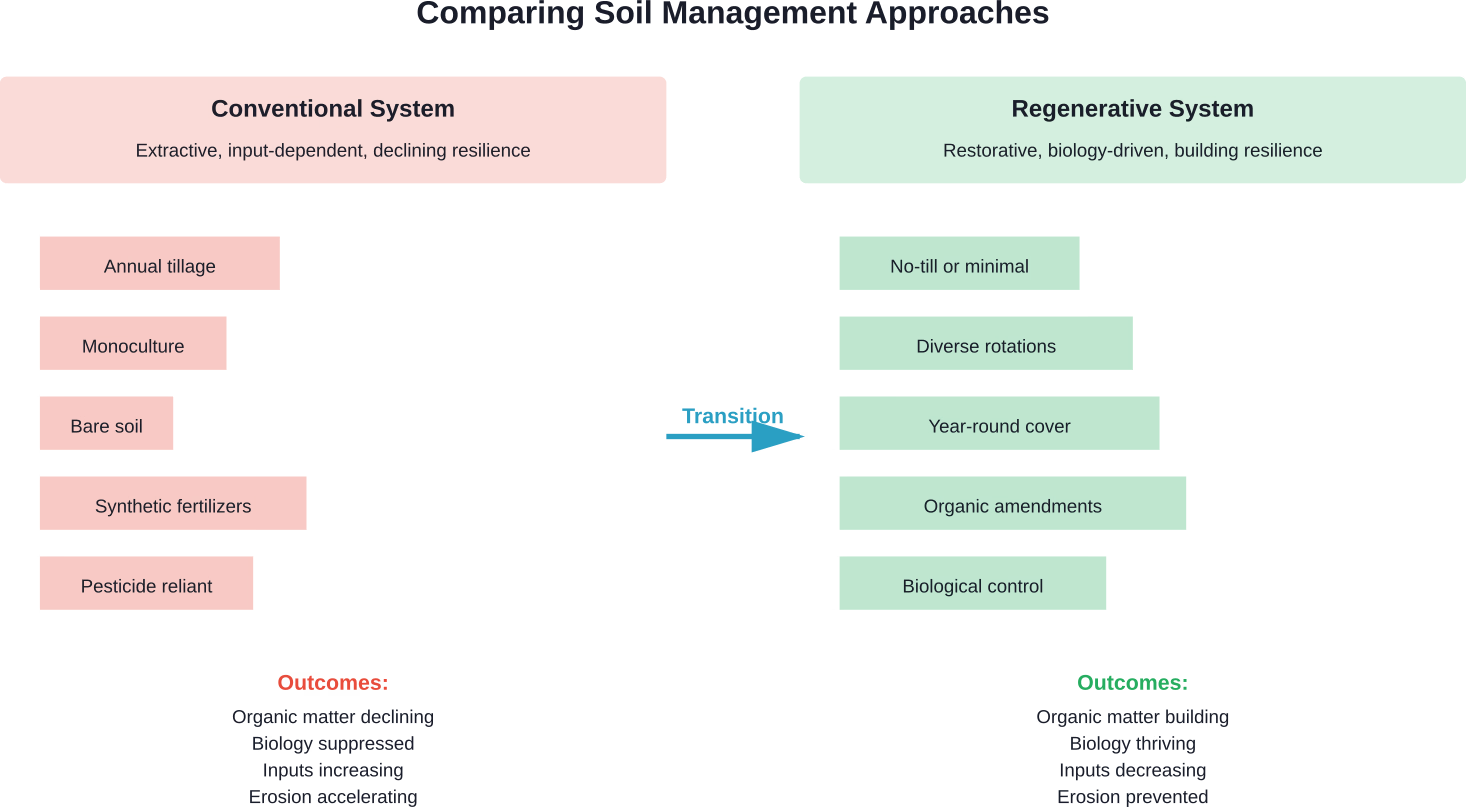
The transition from degradation to resilience won’t happen accidentally. It requires deliberate management focused on biological processes, carbon accumulation, and system complexity rather than short-term yield maximization.
Conclusion: The Path Forward
Soil degradation represents one of the most urgent environmental challenges facing humanity. With 33% of global soils degraded and crop yields declining for 1.7 billion people, the consequences for food security, water quality, biodiversity, and climate stability are profound.
But degradation isn’t inevitable or irreversible.
The technical knowledge exists to restore degraded soils and build resilient systems that sustain productivity indefinitely. Regenerative agriculture, precision management, remediation technologies, and erosion control provide proven pathways from degradation to health.
What’s missing isn’t knowledge—it’s implementation at scale.
Transitioning from extractive to regenerative systems requires support: education for practitioners, technical assistance during transitions, financial incentives that reward soil health improvements, research developing region-specific solutions, and policies that prevent degrading practices while enabling restorative ones.
The USDA emphasizes that soil is not an inert growing medium—it’s a living and life-giving natural resource teaming with billions of organisms forming elegant symbiotic ecosystems. Treating soil as a living system rather than inert substrate fundamentally changes management approaches and outcomes.
As the FAO notes, sustainable management of land, soil, and water resources plays a key role in both climate change mitigation and adaptation. Healthy soils sequester carbon, buffer against drought, reduce flooding, filter water, and support biodiversity.
The choice is clear: continue degrading the soil foundation that sustains 95% of food production, or implement proven solutions that restore productivity, resilience, and ecosystem function.
Every farm, garden, and managed landscape represents an opportunity to reverse degradation. The recovery begins with understanding the threats, implementing appropriate solutions, and committing to long-term soil health as the foundation of sustainable food systems.
The soil beneath our feet isn’t just dirt—it’s the living foundation of terrestrial life. Protecting and restoring that foundation isn’t optional. It’s essential for sustaining food security, ecosystem stability, and human wellbeing for generations to come.
Ready to take action? Start by assessing soil health on land you manage, connect with resources like the USDA NRCS for technical assistance, implement at least one regenerative practice this season, and join the growing community of practitioners rebuilding the living soil that sustains us all.
Frequently Asked Questions
No single factor causes all soil degradation. The primary drivers include intensive agricultural practices (excessive tillage, monoculture, chemical dependency), erosion from water and wind, deforestation, overgrazing, and contamination from industrial or agricultural chemicals. According to the FAO, agriculture is a major driver of the 33% of global soils classified as degraded. The specific cause varies by region—salinization dominates in arid irrigated areas, while erosion predominates on sloped cropland and nutrient depletion affects intensively farmed regions.
Recovery timeframes depend on degradation severity and management intensity. Light to moderate degradation can show improvement within 1-2 years with appropriate interventions like cover cropping and reduced tillage. Full recovery of severely degraded soil typically requires 5-10 years of consistent regenerative management. Rebuilding organic matter from 1% to healthy levels above 3% takes 7-15 years depending on climate, soil type, and management. Heavily contaminated soils may require decades for complete remediation. The key is starting recovery efforts immediately—every season of continued degradation makes restoration more difficult and expensive.
Yes, but restoration becomes progressively more difficult as erosion severity increases. Moderate erosion that has removed inches of topsoil can be reversed through aggressive organic matter addition, erosion control, and biological activation over 5-10 years. Severe erosion exposing subsoil requires longer timeframes and more intensive interventions—sometimes 15-25 years to rebuild functional topsoil. Extreme erosion creating gullies may need physical reconstruction before biological recovery can begin. The USDA emphasizes that stopping further erosion is the essential first step—recovery can’t occur while active erosion continues removing soil faster than formation processes can rebuild it.
The most effective approach combines multiple techniques adapted to site conditions. Vegetative cover provides the most sustainable long-term protection—keeping soil covered with living plants or crop residue year-round prevents raindrop impact and wind scour. On slopes, contour farming and terracing reduce water velocity and trap sediment. Cover crops during fallow periods offer immediate protection while building soil health. For severely degraded or post-fire sites, mulch application provides temporary protection while vegetation establishes. Windbreaks control wind erosion in exposed areas. Research consistently shows that integrated approaches outperform single-technique strategies.
Soil degradation directly reduces agricultural productivity—the land’s capacity to grow food declines as soil health deteriorates. The FAO reports that land degradation is currently reducing crop yields for 1.7 billion people globally. As degradation progresses, farmers must choose between abandoning land (reducing total productive area), intensifying inputs (accelerating degradation while raising costs), or accepting declining yields (threatening livelihoods and food availability). With the global population projected to reach 9-10 billion by 2050, maintaining and restoring soil productivity is essential for food security. The situation is particularly acute in regions like the Arab area, where over 46 million hectares of agricultural land show degradation.
Organic matter functions as the master variable in soil health. It improves virtually every soil property simultaneously—enhancing water retention (organic matter holds 10-20 times its weight in water), increasing nutrient availability (providing slow-release nutrition and supporting nutrient cycling), building stable soil structure (creating aggregates that resist erosion and compaction), feeding soil biology (serving as energy source for microorganisms), and buffering against chemical extremes. Healthy agricultural soils typically contain 3-6% organic matter. When levels drop below 2%, soil function deteriorates rapidly. Recovery strategies prioritize rebuilding organic matter through cover crops, reduced tillage, organic amendments, and keeping living roots in soil year-round.
Chemical fertilizers themselves don’t directly degrade soil, but exclusive reliance on synthetic inputs without organic matter additions creates systems vulnerable to degradation. Synthetic fertilizers provide nutrients but don’t feed soil biology or rebuild organic matter. When farmers use only chemical inputs without cover crops, compost, or crop residues, organic matter declines over time. This reduces soil’s capacity to retain nutrients, requiring ever-increasing fertilizer applications. The FAO identifies excessive fertilizer use as a degradation driver in regions like the Arab area, where overapplication contributes to contamination and imbalance. The solution isn’t eliminating chemical fertilizers but integrating them with organic amendments and practices that maintain soil biology and structure.