
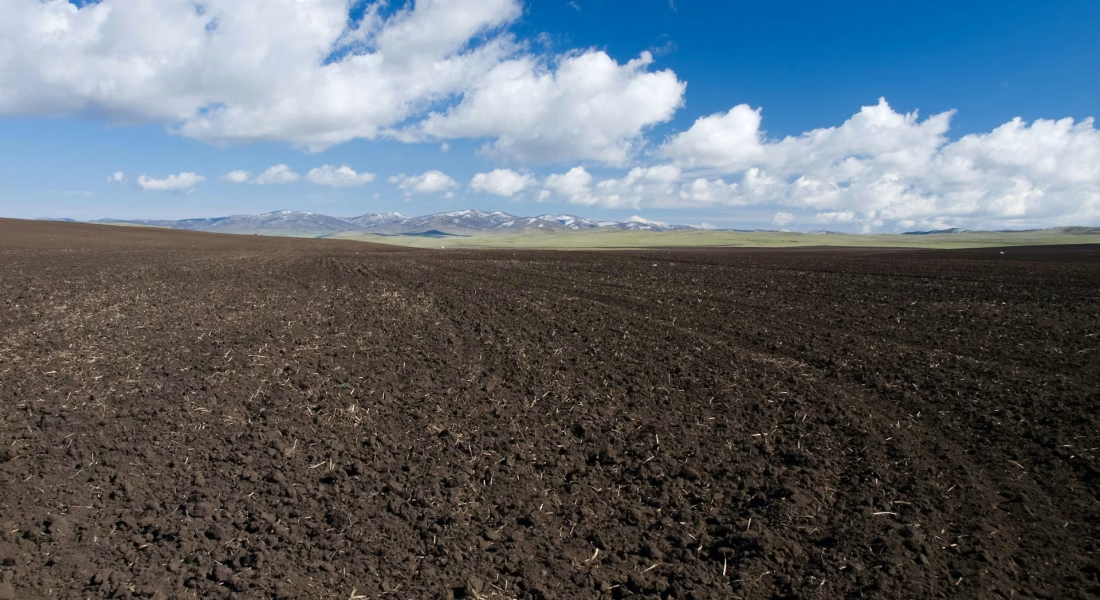
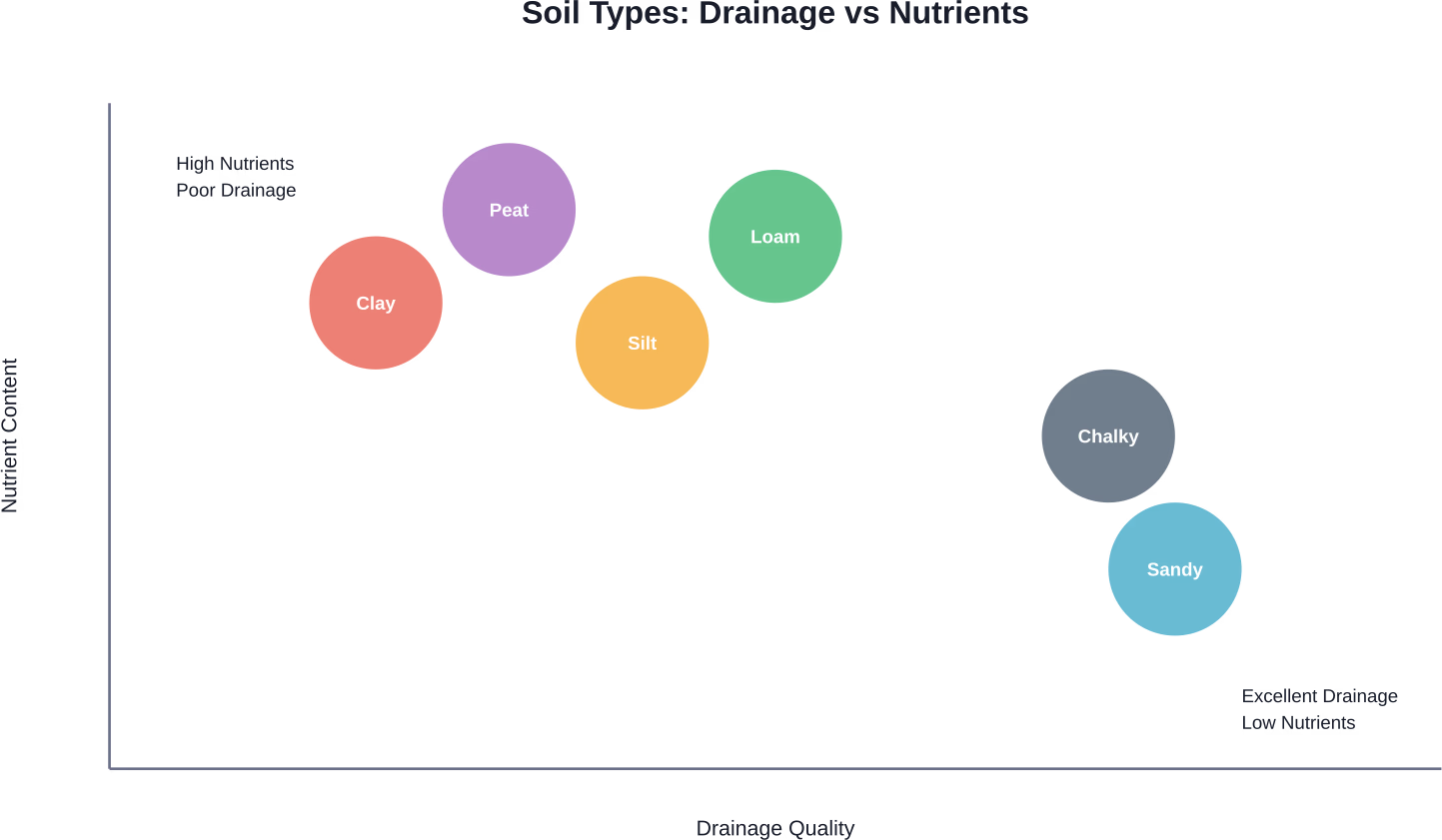
Soil is composed of sand, silt, clay, organic matter, water, air, and living organisms. The main types include sandy soil (excellent drainage but low nutrients), clay soil (nutrient-rich but poor drainage), silt soil (fertile with moderate drainage), loam (ideal balance of all particles), peat soil (high organic content, acidic), and chalky soil (alkaline, free-draining). Understanding soil texture and structure helps determine the best uses for gardening, agriculture, and construction.
Soil isn’t just dirt under our feet. It’s a complex, living ecosystem that determines whether crops thrive or fail, whether gardens flourish or struggle, and whether construction projects stand firm or face structural issues.
According to Cornell Cooperative Extension, soil brings together geology, hydrology, biology, and atmosphere—supporting plants, animals, infrastructure, and human existence. But here’s the thing: not all soil is created equal.
The texture, structure, and composition of soil vary dramatically based on climate, parent material, topography, organisms, and time. These five factors shape the characteristics that make each soil type unique.
What Is Soil? The Foundation Explained
Soil is the loose surface material covering most land. It consists of inorganic particles (minerals) and organic matter, providing structural support for plants while serving as their source of water and nutrients.
But that’s just the basic definition. Real talk: soil is far more complex than a simple mixture.
The Key Components of Soil
Healthy soil contains five essential components working together:
- Mineral particles (sand, silt, clay): Typically 45% of soil volume
- Organic matter: Decomposed plant and animal material, usually 3-6%
- Water: Approximately 25% of soil volume
- Air: Filling pore spaces, around 25%
- Living organisms: Bacteria, fungi, earthworms, insects, and other life forms
Soil organisms are critical for building good soil structure, ensuring air and water movement, decomposing organic materials, and cycling nutrients. Research from the University of Maryland Extension confirms that physical, chemical, and biological factors in soil are all interrelated.
When mineral composition changes, so does structure. When structure improves, biological activity increases. This interconnected system determines whether soil supports healthy plant growth.
Understanding Soil Texture: Sand, Silt, and Clay
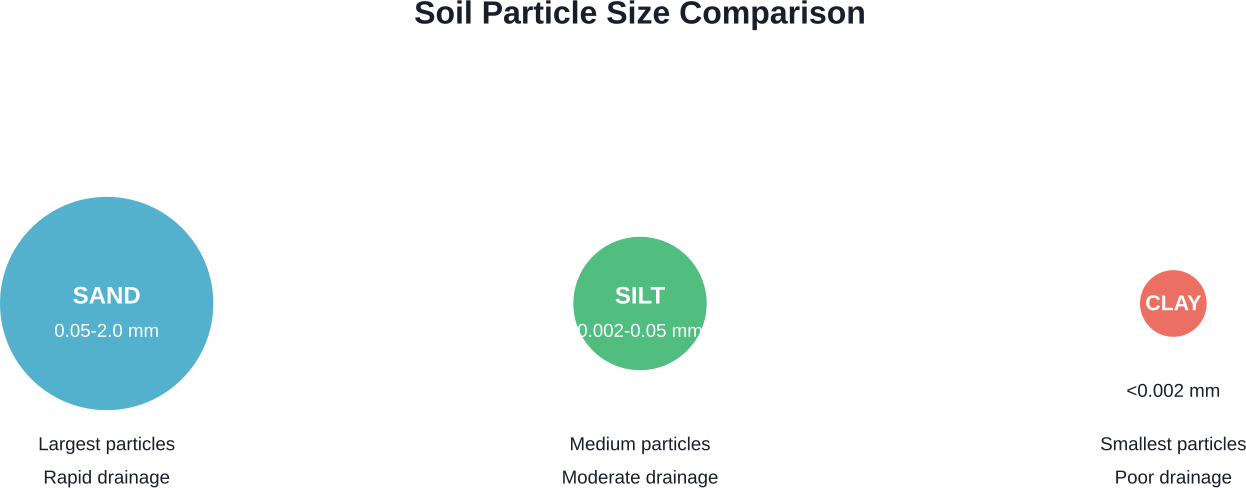
Soil texture refers to the proportion of sand, silt, and clay particles. According to Oregon State University Extension, texture determines drainage, aeration, water-holding capacity, erosion potential, and nutrient storage.
These three particle types differ dramatically in size:
| Particle Type | Size Range | Key Characteristic |
|---|---|---|
| Sand | 0.05 – 2.0 mm | Largest particles, visible to naked eye |
| Silt | 0.002 – 0.05 mm | Medium-sized, smooth texture |
| Clay | Less than 0.002 mm | Smallest particles, sticky when wet |
The size of these particles affects how water moves through soil and how much water soil can hold. Larger particles create bigger pore spaces, allowing rapid drainage. Smaller particles create tiny spaces that grip water tightly.
The Six Main Types of Soil
While soil scientists recognize twelve soil orders in the USDA Soil Taxonomy system, gardeners and land managers typically work with six fundamental soil types based on texture and composition.
1. Sandy Soil
Sandy soil contains at least 85% sand particles. It feels gritty when rubbed between fingers and doesn’t hold shape when squeezed.
Key Features:
- Excellent drainage and aeration
- Warms quickly in spring
- Easy to dig and work with
- Light texture that doesn’t compact easily
Challenges
Water drains so rapidly that nutrients leach away before plants can absorb them. Sandy soils typically have low fertility and require frequent watering and fertilization.
Best Uses
Ideal for root vegetables like carrots, radishes, and potatoes. Works well for drought-tolerant plants including lavender, rosemary, and sedum. In agriculture, sandy soils suit crops that don’t tolerate waterlogging.
Improvement Strategies
Add organic matter regularly—compost, well-rotted manure, or leaf mold. This increases water retention and provides slow-release nutrients. Mulching reduces moisture evaporation.
2. Clay Soil
Clay soil contains at least 25% clay particles. When wet, it feels sticky and moldable. When dry, it becomes hard and cracks.
Key Features:
- High nutrient-holding capacity
- Excellent water retention
- Naturally fertile when properly managed
- Strong structure when in good condition
Challenges
Poor drainage creates waterlogging problems. Clay compacts easily, reducing air spaces and making root penetration difficult. According to Oregon State University Extension research, pugging damage from working wet clay soils can decrease pasture productivity by 20-80% during the following year.
Clay soils are slow to warm in spring and difficult to work when either too wet or too dry.
Best Uses
Supports moisture-loving plants like hostas, daylilies, and willows. In agriculture, clay soils are productive for wheat, soybeans, and corn when properly drained. Clay’s nutrient-holding capacity makes it valuable for long-term fertility.
Improvement Strategies
Add organic matter to improve structure gradually. Gypsum helps break up clay particles and improve drainage. Avoid working clay when wet—this causes severe compaction. Raised beds provide better drainage for gardening applications.
3. Silt Soil
Silt soil has high proportions of medium-sized silt particles. It feels smooth and soapy when wet, like flour.
Key Features:
- Fertile and nutrient-rich
- Good moisture retention without waterlogging
- Smooth, fine texture
- More workable than clay
Challenges
Prone to erosion because particles don’t bind as strongly as clay. Can form a surface crust when exposed to heavy rain, preventing water infiltration and seed emergence. Compacts more easily than sandy soil.
Best Uses
Excellent for most vegetables and flowering plants. Historically, silt-rich floodplain soils supported major agricultural civilizations. Modern farming on silt soils produces high-yielding crops when erosion is controlled.
Improvement Strategies
Protect from erosion with cover crops and mulch. Add organic matter to improve structure and prevent crusting. Avoid tillage when soil is wet.
4. Loam Soil (The Gold Standard)
Loam is a soil texture classification with a range of proportions: approximately 40% sand, 40% silt, and 20% clay, with good organic matter content.
Key Features:
- Perfect balance of drainage and moisture retention
- Good nutrient-holding capacity
- Excellent structure and workability
- Supports diverse plant life
Agriculture Victoria confirms that loam provides structural support for plants while serving as an effective source of water and nutrients. In soil science, loam soils are considered the gardener’s best friend.
Best Uses
Loam supports nearly all plant types. It’s ideal for vegetable gardens, ornamental beds, lawns, and most agricultural crops. This versatility makes loam the most sought-after soil type.
Maintenance
Even loam benefits from regular organic matter additions to maintain structure and fertility. Crop rotation and cover cropping preserve loam quality in agricultural settings.
5. Peat Soil
Peat soil contains high percentages of organic matter—over 20%. It forms in waterlogged conditions where decomposition occurs slowly.
Key Features:
- Very high organic matter content
- Excellent moisture retention
- Naturally acidic (pH 3.5-5.5)
- Dark brown to black color
Challenges
High acidity limits which plants will thrive. Drains poorly in its natural state. When drained for agriculture or gardening, peat soils can subside and release stored carbon.
Best Uses
Perfect for acid-loving plants including blueberries, rhododendrons, azaleas, and heathers. In horticulture, peat-based potting mixes are common, though sustainability concerns have led to alternatives like coco coir.
Improvement Strategies
Add lime to raise pH for plants that need less acidic conditions. Improve drainage with sand or perlite. For environmental reasons, many gardeners now preserve natural peatlands rather than harvesting peat.
6. Chalky Soil
Chalky soil contains calcium carbonate or lime, creating alkaline conditions. It’s often stony with visible white chunks of chalk or limestone.
Key Features:
- Alkaline pH (typically 7.5-8.5)
- Free-draining, sometimes excessively so
- Warms quickly in spring
- Often shallow over bedrock
Challenges
High pH makes iron and manganese less available to plants, causing chlorosis (yellowing leaves). Shallow depth limits root growth. Stones interfere with cultivation.
Best Uses
Suits plants that tolerate or prefer alkaline conditions: lilacs, clematis, dianthus, and many herbs. In agriculture, wheat and barley grow well on chalky soils.
Improvement Strategies
Add organic matter to increase depth and improve water retention. Sulfur or iron sulfate can lower pH slightly, though this requires ongoing applications in highly alkaline soils.
Soil Structure: Why It Matters as Much as Texture
Soil structure refers to how individual particles clump together into aggregates. According to Agriculture Victoria, structure determines pore size, water infiltration rates, root penetration, and aeration.
Good structure creates a balance of large pores (for drainage and air movement) and small pores (for water retention). Poor structure results in compaction, waterlogging, or rapid drying.
Types of Soil Structure
| Structure Type | Description | Common In |
|---|---|---|
| Granular | Small, rounded aggregates; porous | Surface horizons with organic matter |
| Blocky | Angular or subangular blocks | Subsurface horizons |
| Platy | Horizontal layers or plates | Compacted layers |
| Prismatic | Vertical columns | Clay-rich subsurface layers |
| Single grain | No aggregation; loose particles | Sandy soils |
| Massive | No visible structure; solid mass | Heavily compacted soils |
According to research, excessive cultivation, removal of crop residues, and increased traffic contribute to structural decline through compaction—reducing pore size and breaking down aggregates.
Soil Color: What It Reveals About Properties
Soil color provides clues about composition and drainage characteristics. Agriculture Victoria provides this guidance:
| Soil Color | Indication |
|---|---|
| Dark brown to black | High organic matter content (humus) |
| Red | Presence of oxidized iron; free-draining conditions |
| Yellow | Moist conditions; restricted drainage |
| Gray or blue-gray | Waterlogged conditions; reduced (anaerobic) environment |
| White or pale | High salt or calcium carbonate content |
Red soils often indicate well-drained conditions where iron oxidizes freely. This affects phosphorus availability—red soils may bind phosphorus, making it less accessible to plants.
Soil pH and Nutrient Availability
Oregon State University Extension confirms that soil pH affects plant health as much as disease, insect pressure, or drought. The pH scale measures acidity or alkalinity.
Most plants thrive in slightly acidic to neutral pH (6.0-7.0). But certain plants have specific requirements:
- Acid-loving plants (blueberries, rhododendrons, azaleas): pH 4.5-5.5
- Most vegetables and flowers: pH 6.0-7.0
- Alkaline-tolerant plants (clematis, dianthus): pH 7.0-8.0
The availability of key nutrients—nitrogen, phosphorus, and potassium—is influenced by pH. At extreme pH levels (below 5.5 or above 8.0), many nutrients become chemically bound and unavailable to plants.
Testing soil pH before planting helps determine whether amendments are needed.
Soil Drainage Classifications
The Natural Resources Conservation Service recognizes seven drainage classifications. Understanding drainage helps predict waterlogging risks, select appropriate plants, and design infrastructure.
| Classification | Description | Agricultural Impact |
|---|---|---|
| Excessively drained | Water removed very rapidly | Requires frequent irrigation; low fertility |
| Somewhat excessively drained | Water removed rapidly | Drought-prone; suitable for drought-tolerant crops |
| Well drained | Water removed readily but not rapidly | Ideal for most crops |
| Moderately well drained | Water removed somewhat slowly | Suitable for most crops with some limitations |
| Somewhat poorly drained | Water removed slowly | Requires drainage improvements for many crops |
| Poorly drained | Water removed very slowly | Severely limits crop selection |
| Very poorly drained | Water at or near surface most of year | Requires extensive drainage or wetland management |
Some practitioners report extensive drainage challenges on agricultural land with clay layers requiring significant infrastructure investment.
Practical Applications: Matching Soil to Purpose
For Gardening and Landscaping
Successful gardening starts with understanding existing soil and either improving it or selecting appropriate plants.
Quick soil texture test:
- Take a handful of moist (not wet) soil
- Squeeze it into a ball
- Observe: Does it hold shape? Does it feel gritty, smooth, or sticky?
- Try rolling it into a ribbon between your palms
Sandy soil won’t hold shape. Clay soil forms a long ribbon. Loam holds shape but crumbles with light pressure.
For Agriculture
Crop selection depends heavily on soil type and drainage. According to USGS hydrogeologic research, wells in sandy aquifer materials such as the Marshall Sandstone can produce 300 to 1,000 gallons per minute, but pumping in excess of 3,000 gallons per minute can produce significant aquifer drawdown.
Farmers must balance soil capabilities with water availability. Sandy soils require more frequent, lighter irrigation. Clay soils need less frequent but carefully timed watering to avoid waterlogging or surface crusting.
For Construction and Engineering
ASTM International provides standardized test methods for soil properties relevant to construction, including swell potential, bearing capacity, and compaction characteristics.
Clay soils with high plasticity can expand significantly when wet, damaging foundations. Sandy soils provide excellent bearing capacity but may require stabilization for certain applications.

Match Soil Types with What Actually Happens in Your Field
Different soil types behave differently, but in practice the boundaries are rarely clean. One part of the field holds moisture, another dries out faster, and some areas just don’t respond the same way. FlyPix AI works with drone and satellite imagery to highlight those differences visually – showing patterns in crop growth, vegetation density, and stress signals across the field. These patterns help you understand how soil variability is affecting results, not just what the soil map says.
Because the platform tracks changes over time, you can see how different zones react to inputs, weather, or planting decisions. That makes it easier to adjust how you treat each area instead of applying the same approach everywhere. Instead of relying only on soil classification, you’re working with real field behavior captured through imagery and analyzed automatically.
Stop relying on assumptions about your soil – contact FlyPix AI and see how your fields actually behave.
Improving Soil Health: Universal Principles
Regardless of soil type, certain practices improve soil health across the board.
The University of Maryland Extension identifies four key principles:
- Minimize disturbance: Excessive tillage destroys soil structure and harms organisms
- Maximize soil cover: Mulch, cover crops, and plant residues protect against erosion and temperature extremes
- Maximize biodiversity: Diverse plants support diverse soil organisms
- Maximize living roots: Keep roots in the soil year-round when possible
These practices increase soil organic matter, improve structure, boost biological activity, and enhance nutrient cycling.
The Role of Organic Matter
Adding organic matter improves every soil type. In sandy soil, it increases water and nutrient retention. In clay soil, it improves drainage and workability. In silt soil, it reduces crusting and erosion.
Organic matter sources include:
- Compost (fully decomposed plant and animal materials)
- Well-rotted manure
- Leaf mold
- Cover crops and green manures
- Mulches (wood chips, straw, grass clippings)
Some practitioners report that mushroom substrate amendments may enhance soil microbial activity.
Soil Testing: The Foundation of Informed Decisions
Oregon State University Extension emphasizes that not all soil tests are created equal. Laboratory methods must be calibrated for local soil conditions to provide accurate results.
A comprehensive soil test typically measures:
- pH level
- Nutrient content (nitrogen, phosphorus, potassium, and micronutrients)
- Organic matter percentage
- Cation exchange capacity (CEC)
- Salinity (electrical conductivity)
Testing before amending soil prevents costly mistakes. Over-application of lime, for example, can raise pH too high, creating new nutrient deficiencies.
For garden applications, test every 2-3 years. For agriculture, annual testing helps track changes and adjust management practices.
Common Soil Problems and Solutions
Compaction
Symptoms include poor drainage, stunted root growth, and puddles that persist after rain.
Solutions: Avoid working soil when wet. Add organic matter. Use deep-rooted cover crops to break up compacted layers. For severe cases, mechanical aeration or subsoiling may be necessary.
Poor Drainage
Symptoms include standing water, gray or mottled soil color, and sulfur smell.
Solutions: Install drainage tiles or french drains. Create raised beds. Add coarse organic matter to heavy soils. In agricultural settings, land grading may be required.
Nutrient Deficiency
Symptoms vary by nutrient but include yellowing leaves, poor growth, and reduced yields.
Solutions: Test soil to identify specific deficiencies. Apply appropriate fertilizers or organic amendments. Address pH issues that may be locking up nutrients.
High Salinity
Symptoms include white crusty deposits on soil surface and burnt leaf edges.
Solutions: Improve drainage to flush salts. Apply gypsum (calcium sulfate) to displace sodium. Choose salt-tolerant plants for affected areas.
Looking Forward: Soil Health for the Future
Soil represents one of Earth’s most critical resources. According to Cornell Cooperative Extension, soil brings together geology, hydrology, biology, and atmosphere—supporting the environment, clean water, plants, animals, infrastructure, and human existence.
Understanding soil types and their characteristics empowers better decisions for gardening, agriculture, construction, and land management. Each soil type offers unique benefits and challenges.
Sandy soils drain well but require frequent inputs. Clay soils hold nutrients but need careful moisture management. Loam provides the ideal balance most gardeners seek. Silt offers fertility with moderate drainage. Peat suits acid-loving plants. Chalky soils support alkaline-tolerant species.
But here’s what matters most: healthy soil isn’t about achieving the perfect texture. It’s about managing what exists with practices that build structure, increase organic matter, support biological diversity, and maintain proper pH and nutrients.
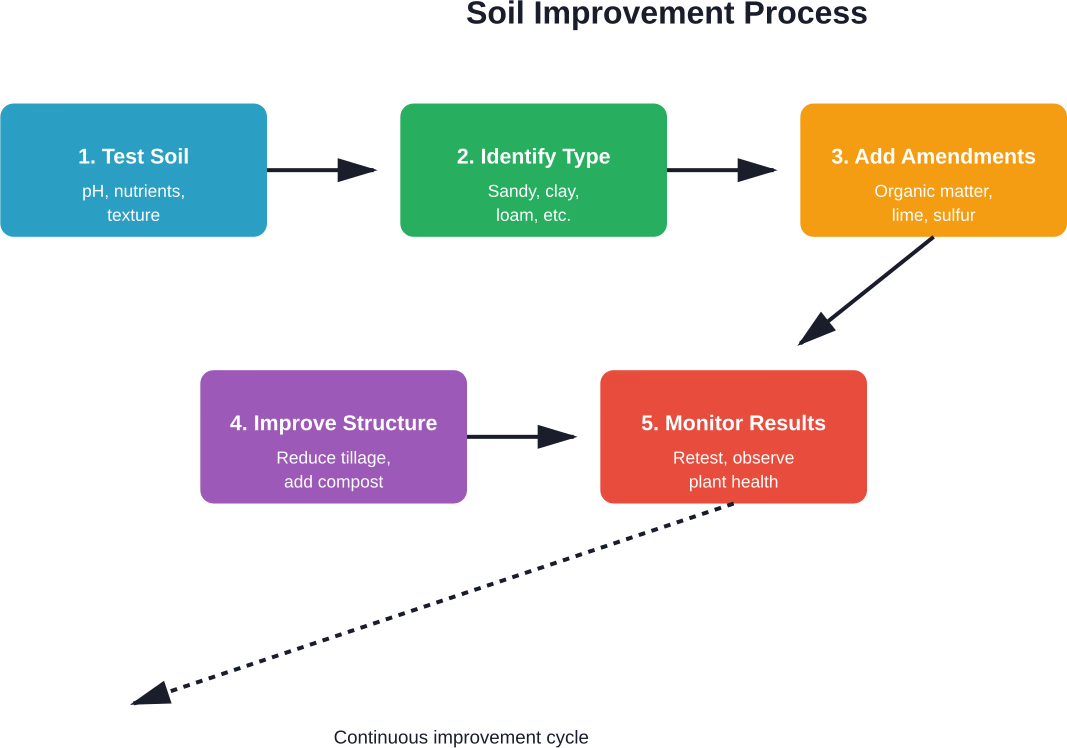
Start by testing soil to understand current conditions. Identify soil type through texture analysis. Add appropriate amendments based on test results and plant needs. Implement practices that minimize disturbance and maximize soil cover. Monitor results and adjust approaches over time.
Soil improvement is a journey, not a destination. Each season provides opportunities to enhance soil health, leading to stronger plant growth, reduced input requirements, and more sustainable land management.
Take the first step today: learn what soil type exists on the land being managed, understand its strengths and limitations, and begin making improvements that will pay dividends for years to come.
Frequently Asked Questions
Loam soil is universally considered the best for gardening because it balances drainage, moisture retention, and nutrient availability. Loam contains approximately 40% sand, 40% silt, and 20% clay with good organic matter content. This combination supports the widest variety of plants with minimal amendment needs.
Conduct a simple texture test: Take moist soil, squeeze it into a ball, and observe its behavior. Sandy soil feels gritty and won’t hold shape. Clay soil feels sticky, forms a tight ball, and can be rolled into a long ribbon. Silt soil feels smooth like flour and forms a ball that crumbles easily. For precise analysis, send samples to a soil testing laboratory.
Soil texture (the proportion of sand, silt, and clay) cannot be practically changed—it would require mixing massive amounts of material. However, soil structure, fertility, and drainage can be dramatically improved through organic matter additions, proper management, and time. Focus on working with existing soil rather than trying to fundamentally transform it.
Soil pH controls nutrient availability. Most essential nutrients become less accessible to plant roots at extreme pH levels (below 5.5 or above 8.0). Different plants evolved in different conditions, so some thrive in acidic soil while others need alkaline conditions. Testing pH and adjusting it to match plant needs prevents nutrient deficiencies even when nutrients are present in soil.
Add organic matter annually for best results. In vegetable gardens, work compost into beds each spring before planting. For established perennial beds and landscapes, apply 2-3 inches of compost or mulch as a top dressing once or twice yearly. Soil organisms continuously break down organic matter, so regular additions maintain structure and fertility.
Clay soil isn’t bad—it’s simply different. Clay holds nutrients better than sandy soil and provides consistent moisture, making it highly productive when properly managed. The key is avoiding compaction by never working clay when wet, adding organic matter regularly, and choosing plants suited to heavier soils. Many successful gardens and farms operate on clay soils.
Sandy soil has large pore spaces between particles. When water drains through these large spaces, it carries dissolved nutrients downward beyond root zones—a process called leaching. Additionally, sandy soil typically has low organic matter content and low cation exchange capacity, meaning it holds fewer nutrients in the first place. Frequent organic matter additions and lighter, more frequent fertilizer applications help compensate.