
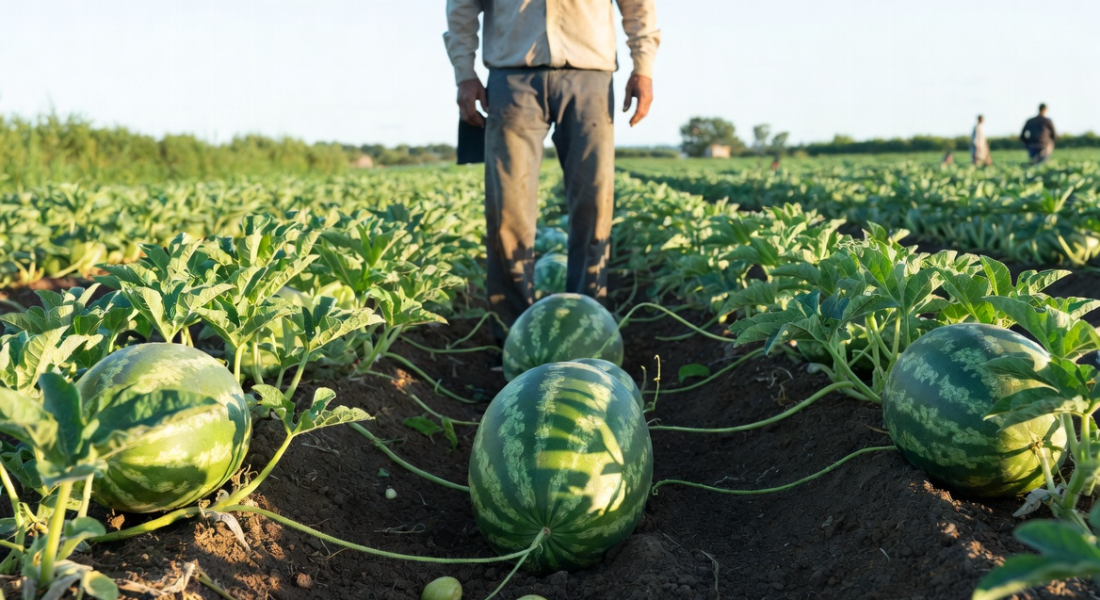
Quick Summary: Growing watermelon successfully requires warm soil (70–95°F), full sun, consistent watering until two weeks before harvest, and proper spacing. Start seeds 1–1.5 inches deep after the last frost, provide balanced fertilization with reduced nitrogen near fruiting, and harvest when the ground spot turns creamy yellow. With the right techniques, home gardeners can achieve yields comparable to commercial operations.
Watermelon season represents the peak of summer gardening. Those massive, sweet fruits demand patience and technique, but the payoff beats anything from a grocery store.
The difference between mediocre melons and outstanding ones often comes down to a handful of critical decisions. Soil temperature, spacing, water management, and harvest timing separate casual growers from those consistently pulling prize-worthy fruits.
Here’s what actually works, based on research from extension programs and growers who’ve cracked the code.
Understanding Watermelon Growth Requirements
Watermelons aren’t subtle about their preferences. They want heat, space, and sunshine without compromise.
Soil temperature matters more than calendar dates. Seeds germinate when soil reaches 70°F, but optimal growth occurs between 75–85°F. Planting into cold soil invites rot and disease before seeds ever sprout.
Full sun means eight-plus hours of direct sunlight daily. Anything less produces smaller fruits with diluted sweetness. The plants essentially convert sunshine into sugar, so more light equals better flavor.
Soil Preparation and Structure
Watermelons thrive in well-drained soil with a slightly acidic to neutral pH. Heavy clay that holds water creates problems; sandy loam provides ideal conditions.
Before planting, work organic matter into the top 8–12 inches. Compost improves drainage in clay soils and increases water retention in sandy ones. Note that compost won’t replace dedicated fertilization for reliable nutrient availability.
Raised beds or mounded rows solve drainage issues in areas with heavy rainfall. Elevation keeps developing fruits above standing water, reducing disease pressure.
Seeding Depth and Germination Success
Oregon State University trials tested multiple seeding depths to find optimal germination rates. Seeds never received irrigation or watering-in after planting.
After two weeks, 88% of holes showed germination at 0.5-inch and 1-inch depths, while 94% germinated at 1.5-inch depth. The difference wasn’t statistically significant, but the deeper planting showed slightly better performance.
The takeaway? Plant seeds 1–1.5 inches deep for reliable emergence. Deeper placement provides better soil contact and moisture access during the critical germination window.
Direct Seeding vs. Transplants
Most commercial growers and experienced gardeners direct seed watermelons rather than starting transplants. The tap root grows aggressively and resents disturbance.
Direct seeding works when soil temperature stays consistently above 70°F. In shorter growing seasons, transplants started indoors gain 2–3 weeks of growth, but handle them carefully during the transition.
Plant 2–3 seeds per location, then thin to the strongest seedling once true leaves appear. This ensures at least one viable plant per spot even if germination isn’t perfect.
Spacing and Plant Density
Watermelon vines sprawl aggressively. Crowded plants compete for nutrients and sunlight, producing smaller fruits and increasing disease risk.
Traditional spacing recommendations suggest 5–6 feet between plants in rows spaced 6–8 feet apart. That works for standard varieties in large gardens.
But here’s where commercial research offers insights. Trials on grafted watermelons in California established 4.5 feet as the industry standard for in-row spacing. At that spacing, each acre requires only 1,400 plants, representing a 35% reduction compared to nongrafted production, without yield loss.
The principle applies to home gardens: proper spacing reduces input costs and disease pressure while maintaining or improving yield per plant.
Container Growing Considerations
Growing watermelons in containers presents space challenges but remains achievable with compact varieties.
Use containers holding at least 10 gallons, though 15–20 gallons produces better results. Smaller pots restrict root development, stressing plants and limiting fruit size.
Bush varieties like Cal Sweet Bush offer the best container performance. Oregon State trials showed this variety averaging 10.5 pounds per fruit with marketable yields of 10.7 tons per acre across five trials. In containers, expect smaller individual fruits but reasonable production from healthy plants.

Analyze Field Imagery Faster With FlyPix AI
FlyPix AI helps teams analyze satellite, aerial, and drone images with AI. The platform can detect, outline, and monitor visible objects in geospatial images, which is useful when large areas need to be reviewed without slow manual work.
For growers, this can support faster checks of crop areas, field layout, and visible changes from above.
Need Faster Image Analysis?
FlyPix AI can help with:
- analyzing drone, aerial, and satellite imagery
- detecting visible objects and patterns
- training custom AI models for specific tasks
- reducing manual review of field images
👉 Try FlyPix AI to analyze geospatial imagery faster.
Watering Strategy: When to Water and When to Stop
Watermelon irrigation strategy shifts dramatically as fruits mature. Early growth demands consistent moisture; final ripening requires restraint.
During vegetative growth and flowering, provide 1–2 inches of water weekly. Drip irrigation or soaker hoses deliver moisture without wetting foliage, reducing disease risk.
Here’s the critical shift: stop or dramatically reduce watering two weeks before anticipated harvest. Watermelons are already 92% water at maturity. Continued irrigation during final ripening causes fruits to absorb excess moisture beyond maximum capacity, splitting the rinds as they literally burst at the seams.
Recognizing Water Stress vs. Normal Wilting
Watermelon leaves naturally wilt slightly during peak afternoon heat, even with adequate soil moisture. This is normal thermal wilting, not drought stress.
Check soil moisture 4–6 inches deep before watering. If it feels moist, the apparent wilting is just the plant’s response to heat and will reverse as temperatures cool.
True water stress appears as persistent wilting that doesn’t recover overnight, combined with dry soil throughout the root zone.
Fertilization and Nutrient Management
Watermelons are heavy feeders early in growth but benefit from modified nutrition as fruiting begins.
Nitrogen drives vegetative growth—vines, leaves, and stems. Early in the season, adequate nitrogen establishes vigorous plants. But excessive nitrogen during fruit set and development produces lush vines at the expense of fruit quality and quantity.
Research from North Carolina State and University of Florida recommends balanced fertilization initially, then reducing nitrogen as plants begin flowering and setting fruit.
| Growth Stage | Nitrogen Need | Phosphorus/Potassium |
|---|---|---|
| Planting to vine development | Moderate to high | Balanced |
| Flowering and fruit set | Reduced | Increased emphasis |
| Fruit development to harvest | Minimal | Maintained |
Nitrogen Source Considerations
Nitrogen comes in multiple forms: nitrate, ammonium, and urea. Each behaves differently in soil.
In cold, fumigated, or strongly acidic soils, mineralization rates decrease. Under such conditions, 25%–50% of nitrogen should come from nitrate sources for more reliable availability, according to University of Florida guidelines.
Most home gardeners achieve good results with balanced vegetable fertilizers applied according to package directions, with reduced frequency once fruits begin sizing.
Pollination Management
Watermelons require pollination to set fruit. Each plant produces separate male and female flowers, and pollen must transfer between them.
Male flowers appear first, usually 7–10 days before female flowers open. Female flowers are distinguishable by the small, swollen ovary at the base—this becomes the fruit if pollination succeeds.
Bees and other pollinators typically handle this task. But if pollinator activity seems low, hand pollination ensures fruit set.
Hand Pollination Technique
Hand pollination takes minutes and guarantees successful fruit development in questionable conditions.
Early morning works best, when flowers first open and pollen is most viable. Identify a fresh male flower and remove it from the plant. Peel back the petals to expose the pollen-covered anther.
Gently brush the anther against the stigma in the center of a female flower. The stigma appears as a raised, sticky structure. Contact between anther and stigma completes pollination.
One male flower contains enough pollen for 2–3 female flowers.
Supporting Developing Fruits
Heavy watermelons resting directly on soil face several risks: rot, pest damage, and uneven ripening.
Cradling fruits prevents these issues. Place cardboard, straw, or wooden boards beneath developing melons once they reach softball size.
This barrier breaks contact with damp soil, preventing soft spots and rot. It also creates uniform ripening by preventing the ground-contact side from staying pale while the top colors.
Some growers use old t-shirts or mesh slings to support fruits on trellised vines. The support distributes weight, preventing premature vine separation.
Yield Expectations and Variety Performance
Realistic yield expectations help set appropriate spacing and resource allocation.
Texas A&M AgriLife Extension reported that producers in the Rio Grande Valley typically achieve yields around 50,000 pounds per acre on average. That’s roughly 25 tons per acre under optimal commercial conditions.
Oregon State trials documented strong performance from specific varieties. Yellow Doll watermelon, a smaller-fruited type, produced marketable yields of 12.7 tons per acre and 3.4 pounds per fruit across five trials. In their best trial at OSU VRF, yields reached 20.2 tons per acre.
Cal Sweet Bush, mentioned earlier, averaged 10.7 tons per acre with 1,500 fruits at 10.5 pounds each across trials.
Home gardeners typically see 2–4 large watermelons per plant with standard varieties, or 5–8 smaller melons with mini or icebox types.
Pest and Disease Scouting
Regular scouting catches problems before they devastate crops. Walk through plantings at least twice weekly during active growth.
Common watermelon pests include cucumber beetles, aphids, and squash bugs. Cucumber beetles transmit bacterial wilt, making them particularly problematic. Yellow-striped or spotted beetles feeding on leaves, flowers, or fruits signal the need for intervention.
Aphids cluster on new growth and vine tips, sucking sap and potentially transmitting viruses. A strong water spray dislodges light infestations; heavier pressure may require insecticidal soap or other treatments.
Fungal Disease Prevention
Powdery mildew, downy mildew, and anthracnose cause the most common fungal issues in watermelons.
Prevention beats treatment. Space plants properly for air circulation, avoid overhead watering, and remove infected leaves promptly.
Fungal diseases spread rapidly in humid conditions with poor air movement. Morning watering allows foliage to dry during the day, reducing infection risk.
Harvest Timing: The Make-or-Break Decision
Harvesting too early produces hard, flavorless melons. Waiting too long results in overripe, mealy flesh.
Several indicators signal ripeness. The most reliable is the ground spot—the area where the fruit rests on the ground. As the melon matures, this spot transitions from white to creamy yellow. That color shift indicates ripeness.
The tendril nearest the fruit stem also provides clues. When it turns brown and dries, harvest time approaches. Some varieties show this change a few days before peak ripeness, others right at it.
Thumping melons produces a deep, hollow sound when ripe versus a bright, metallic ping when immature. This takes practice to distinguish reliably.
Post-Harvest Handling
Cut fruits from vines with pruning shears rather than pulling to avoid damaging the plant.
Whole watermelons can be stored at room temperature for about a week or refrigerated for up to two weeks. Cut watermelon should be stored in an airtight container in the refrigerator and used within 3–4 days.
Container and Small-Space Adaptations
Limited space doesn’t eliminate watermelon growing, it just requires variety selection and training techniques.
Compact bush varieties and mini “icebox” types produce smaller vines and fruits suitable for containers and small gardens. Sugar Baby, Bush Sugar Baby, and the Cal Sweet Bush mentioned earlier perform well in restricted spaces.
Vertical Growing Strategies
Trellising watermelon vines saves ground space but demands fruit support. Even small watermelons strain vines if left unsupported.
Use sturdy trellises rated for substantial weight. As fruits develop, create slings from fabric, mesh, or old t-shirts. Tie slings to the trellis structure, cradling each melon securely.
Vertical growing improves air circulation and makes pest inspection easier. But it requires more intensive management than ground-level sprawling.
Economic Considerations for Growers
Commercial watermelon production faces economic pressures that inform home garden efficiency too.
Rising costs push growers toward efficiency measures that home gardeners can adapt. The grafted watermelon research showing 35% plant reduction at 4.5-foot spacing translates to material savings. Fewer plants mean less seed cost, less transplant labor, and reduced fertilizer and pest control inputs per unit area.
Home gardeners won’t see these exact savings, but the principle holds: proper spacing and variety selection optimize resource use.
Common Mistakes to Avoid
Certain errors consistently undermine watermelon success. Awareness prevents repeating them.
- Planting too early ranks as the most common mistake. Cold soil stalls germination or kills seeds. Wait until soil temperatures consistently stay above 70°F, even if that means delaying planting.
- Overcrowding plants creates competition and disease pressure. Resist the urge to pack more plants into limited space.
- Inconsistent watering stresses plants and reduces yields. Establish a watering schedule and stick with it through fruit development, then taper off before harvest.
- Harvesting prematurely wastes the entire growing season. When in doubt, wait another day or two. Overripe melons still taste decent; underripe ones never improve.
Conclusion
Growing exceptional watermelons combines timing, space management, water strategy, and patience. The fundamentals—warm soil, full sun, proper spacing, and balanced nutrition—create the foundation for success.
Research from extension programs confirms what experienced growers know: small adjustments in seeding depth, spacing, and irrigation timing produce measurable yield improvements. The 94% germination rate at 1.5-inch depth, the 35% plant reduction with proper spacing, and the critical water cutoff before harvest all translate to better fruits.
But technique alone doesn’t guarantee success. Observation matters. Watch plants respond to watering, notice when vines seem crowded, check ground spots as harvest approaches. Each growing season teaches lessons that make the next one more productive.
Start with one or two plants if space is limited. Master the basics on a small scale before expanding. The difference between an average watermelon and an outstanding one often comes down to just a few key decisions made at the right time.
Ready to grow your best watermelons yet? Apply these pro tips this season and taste the difference proper technique makes.
Frequently Asked Questions
Most watermelon varieties mature 70–90 days from germination to harvest. Mini varieties tend toward the shorter end (70–75 days), while large heirloom types may need 85–90 days. Growing degree days (accumulated heat) matter more than calendar days. Cool weather extends the time to maturity, while consistent heat accelerates development.
Watermelons require full sun—at least 8 hours of direct sunlight daily—for optimal growth and sugar production. Partial shade reduces fruit size, delays maturity, and produces less sweet melons. If the only available space receives some shade, choose the sunniest spot possible and expect reduced performance compared to full-sun locations.
Standard large-fruited varieties typically produce 2–4 watermelons per plant under good growing conditions. Smaller icebox and mini varieties can produce 5–8 fruits per plant. The exact number depends on variety genetics, growing conditions, fertility, water availability, and whether the gardener thins fruits to promote larger individual melons.
Several factors prevent fruit set. Insufficient pollinator activity means flowers aren’t getting pollinated—try hand pollination. Excessive nitrogen produces vigorous vines at the expense of flowering and fruiting. High temperatures above 90°F during flowering can cause flower drop. Plants may also be too young; male flowers appear first, with female flowers following 7–10 days later.
Generally speaking, there’s no need to remove early flowers unless plants are severely stressed or undersized. The plant will naturally abort fruits it can’t support. Some growers remove the very first few fruits on large-fruited varieties to encourage stronger vine development before heavy fruiting, but this isn’t necessary for most home garden situations.
Sweetness is primarily genetic, but growing conditions influence sugar development. Full sun exposure maximizes sugar production. Consistent watering during fruit development, then reduced water in the final 2 weeks, concentrates sugars. Harvesting at peak ripeness ensures maximum sugar content—melons don’t sweeten after picking. Excessive nitrogen fertilization during fruiting can reduce sweetness, so limit nitrogen once fruits begin developing.
Seeds from store-bought watermelons may or may not produce viable plants. Most commercial watermelons are F1 hybrids; seeds from these won’t grow true to type and often produce inferior fruits. Seedless watermelons produce white, immature seeds that won’t germinate. If the watermelon is an open-pollinated or heirloom variety, seeds should grow, but most grocery store melons are hybrids. For reliable results, purchase seeds from reputable sources.