
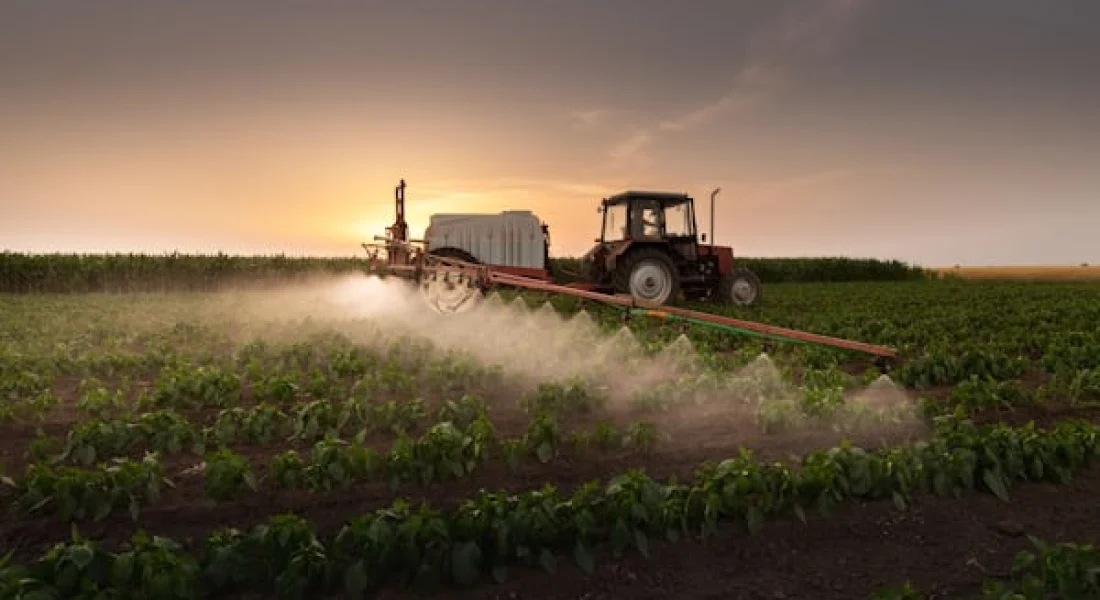
Quick Summary: Nitrogen fertilizers supply essential nutrients that plants cannot obtain from air or soil alone, dramatically boosting crop yields and feeding billions worldwide. However, improper application leads to environmental damage including water pollution, greenhouse gas emissions, and soil degradation. Strategic use following the 4 R’s framework—right source, rate, timing, and placement—maximizes benefits while minimizing harm.
Nitrogen is everywhere. It makes up about 78% of Earth’s atmosphere, yet plants can’t use it in gaseous form. That’s the paradox farmers have wrestled with for centuries—until synthetic nitrogen fertilizers changed everything.
In 2023, agriculture, food, and related industries contributed $1.530 trillion to U.S. gross domestic product (GDP), a 5.6 percent share. A massive chunk of that success traces back to one innovation: converting atmospheric nitrogen into forms crops can actually absorb.
But here’s the thing—nitrogen fertilizers are both agriculture’s greatest tool and its biggest environmental challenge. Used wisely, they feed billions. Applied carelessly, they poison waterways and accelerate climate change.
So what makes nitrogen fertilizers work? And how can farmers maximize benefits while dodging the environmental pitfalls?
What Makes Nitrogen Essential for Plants
Nitrogen isn’t just important for plant growth. It’s absolutely critical.
Plants use nitrogen to build proteins, enzymes, and chlorophyll—the green pigment that captures sunlight for photosynthesis. Without adequate nitrogen, plants stay stunted with pale, yellowing leaves. Growth slows to a crawl.
The challenge? While nitrogen gas (N₂) floods the atmosphere, that triple-bond molecular structure is incredibly stable. Plants lack the enzymes to break it apart and use it directly.
In natural systems, certain bacteria perform “nitrogen fixation”—converting atmospheric N₂ into ammonia (NH₃) and other reactive forms. Legumes like soybeans and clover host these bacteria in root nodules, creating their own nitrogen supply. Most crops don’t have this luxury.
That’s where fertilizers enter the picture. They deliver nitrogen in forms plants can immediately absorb: nitrate (NO₃⁻), ammonium (NH₄⁺), and urea that breaks down into ammonium.
How Nitrogen Fertilizers Are Made
Modern synthetic nitrogen fertilizers rely on the Haber-Bosch process, developed in the early 1900s. This industrial method combines atmospheric nitrogen with hydrogen (usually from natural gas) under extreme heat and pressure, producing ammonia.
From there, manufacturers convert ammonia into various products:
- Urea—the most widely used nitrogen fertilizer globally
- Ammonium nitrate—popular in regions with strict storage regulations
- Ammonium sulfate—adds sulfur alongside nitrogen
- Anhydrous ammonia—the most concentrated form, injected directly into soil
The modern-day synthetic nitrogen fertilizer sector is responsible for 1.31 gigatons of CO₂ equivalent emissions annually—more than aviation and shipping combined. Production accounts for only one-third of these emissions; the majority come from field application and subsequent soil reactions.
Real talk: the energy intensity of this process is staggering. Natural gas provides both the heat and the hydrogen feedstock, tying fertilizer costs directly to energy markets.
Types of Nitrogen Fertilizers and Their Uses
Nitrogen fertilizers come in multiple forms, each with distinct characteristics affecting handling, application timing, and crop response.
Synthetic Nitrogen Fertilizers
These dominate modern agriculture. While the exact percentage of nitrogen in synthetic fertilizers varies by product, a typical range is 26–32% for synthetic fertilizers.
- Urea is the workhorse—affordable, high-analysis (46% N), and easy to transport. But it requires careful management. Surface-applied urea converts to ammonia gas, and without incorporation or rainfall, 20-40% can volatilize and disappear into the air.
- Ammonium nitrate provides both quick-release nitrate and slower-release ammonium. Half the nitrogen is immediately available; the other half converts through soil bacteria. This split delivery reduces leaching risk compared to straight nitrate sources.
- Anhydrous ammonia packs the highest nitrogen concentration at 82%, making it cost-effective per pound of N. The catch? It’s a pressurized liquid requiring specialized injection equipment and safety protocols.
Organic Nitrogen Sources
Animal manure, compost, and crop residues release nitrogen gradually as soil organisms decompose organic matter. This slow-release pattern matches crop uptake better than synthetic sources, reducing loss potential.
The downside? Nitrogen concentration is low (typically 2-5%), and exact nutrient content varies by source, age, and storage method. Farmers can’t apply organic sources with the same precision as synthetics.
According to the Food and Agriculture Organization, agrifood system policies should encourage organic nitrogen fertilizers to enhance sustainability—but practical challenges around timing, volume, and nutrient consistency remain real barriers.

Turn Aerial Images Into Usable Data With FlyPix AI
FlyPix AI uses AI agents to inspect and process geospatial images at scale. It can identify and outline objects in dense visual scenes, and users can train custom models without needing deep AI knowledge.
For farming teams, this can help review visible field variation, crop areas, and land changes after different treatments or growing conditions.
Need a Faster Way to Review Field Images?
FlyPix AI can help with:
- processing aerial and satellite images
- detecting visible changes across land areas
- creating custom AI models for image analysis
- cutting down manual annotation work
👉 Try FlyPix AI to review geospatial data faster.
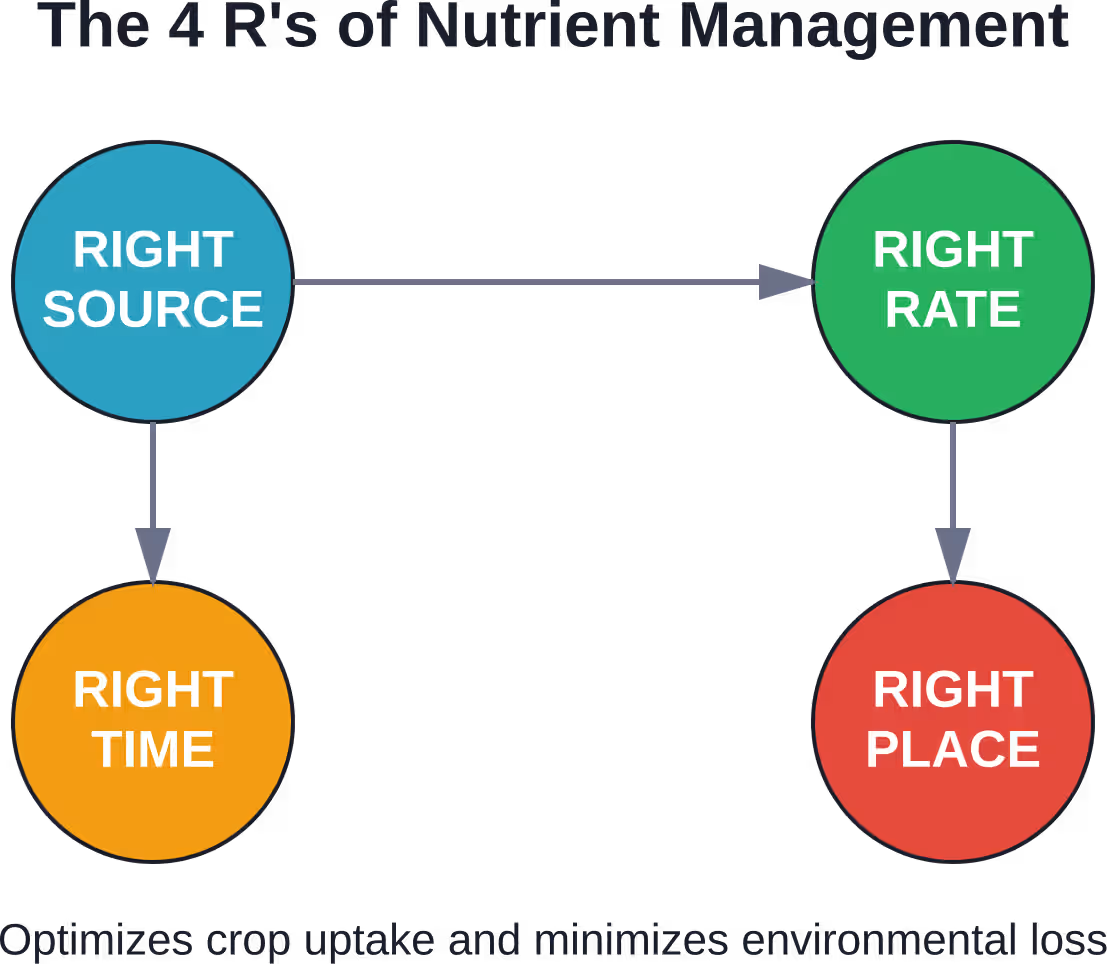
The 4 R’s Framework For Nitrogen Management
Sound familiar? The concept is straightforward but powerful: apply the right product, at the right rate, at the right time, in the right place.
This framework, widely promoted by nutrient management researchers and extension services, addresses the core problem with nitrogen fertilizers—they’re mobile. Nitrogen moves through soil as water-soluble nitrate or escapes as gas. Poor timing or placement means crops never see the nutrients, and the environment absorbs the consequences.
Right Source
Match the fertilizer form to crop needs and soil conditions. Cool soils favor ammonium forms over nitrate because nitrification slows down. Acidic soils benefit from nitrate sources that don’t further lower pH.
Controlled-release products—coated urea or nitrification inhibitors—extend nitrogen availability, reducing the need for multiple applications. The trade-off is higher cost per pound of N.
Right Rate
This is where many operations go wrong. More isn’t better beyond the crop’s actual requirement.
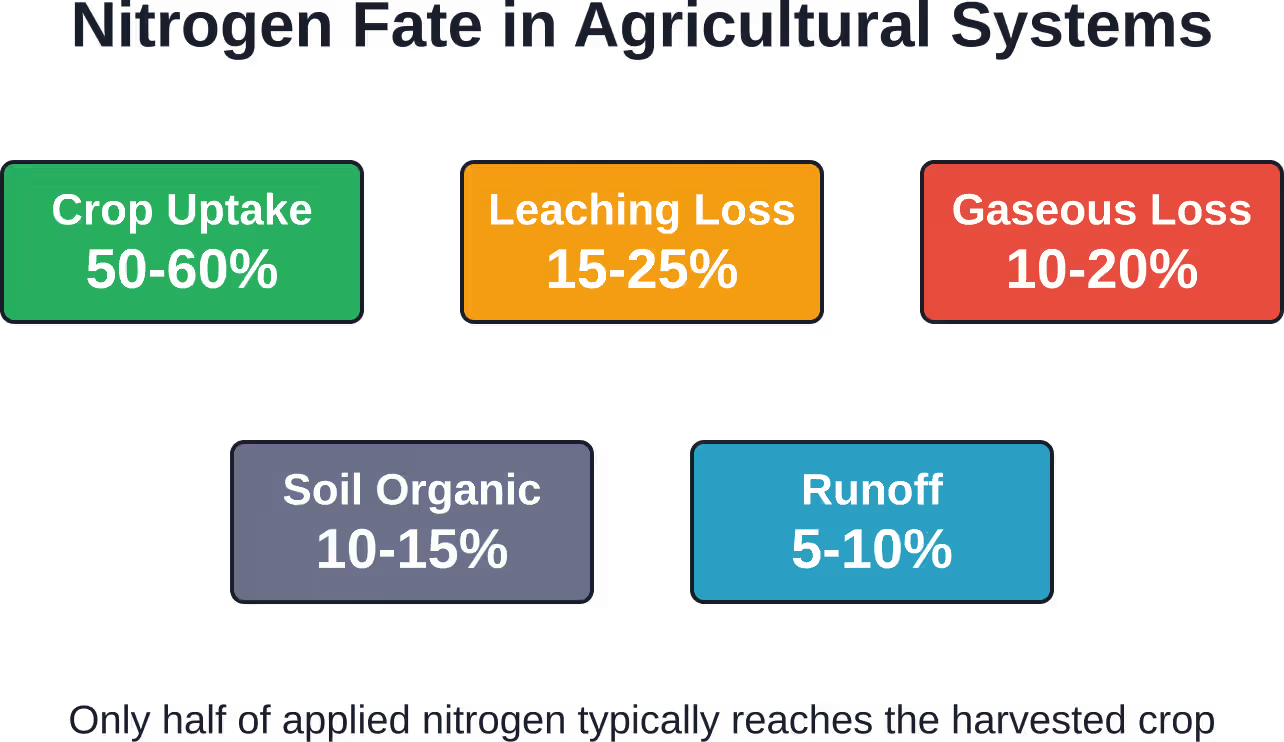
Research from the University of Florida shows that applying 220 lb N per acre produces corn yields comparable to 300 lb N per acre—a 26% reduction in fertilizer use without sacrificing yield. Nitrogen agronomic recovery efficiency typically ranges between 50%, meaning 30-40% of applied nitrogen never makes it into harvested grain.
Soil testing, yield goals, and realistic yield history should drive rate decisions. For corn with yield potential of 180–200 bushels per acre, nitrogen requirements fall between 246–274 lb per acre.
Right Time
Apply nitrogen when crops can use it immediately. Fall applications in humid regions invite leaching losses over winter. Spring or split applications—some at planting, more at side-dress—synchronize supply with peak demand.
During the growing season, soil microorganisms convert ammonium to nitrate through a process called nitrification. The soil conditions most favorable to this conversion include a soil pH of 7, moisture at 50% of the soil’s water-holding capacity, and warm temperatures.
The catch? Nitrate is highly mobile. Heavy rain after application pushes it below the root zone before crops can capture it.
Right Place
Placement affects both efficiency and crop safety. Broadcasting nitrogen on the surface increases volatilization losses. Incorporating fertilizer—through tillage or injection—keeps it in the root zone.
Subsurface fertilizer application at planting (starter fertilization) improves early-season nutrient uptake. Research shows that fertilizer banded 5 cm to the side and 5 cm below the seed at planting increased corn yield by 5.2% on average compared to broadcast applications.
Avoid placing high rates of nitrogen too close to seed. Ammonia and urea can damage germinating seedlings if concentration spikes in the seed zone.
Environmental Impact and Nitrogen Loss Pathways
Agriculture is the largest source of nitrous oxide (N₂O), a greenhouse gas roughly 300 times more potent than CO₂. A majority of agricultural N₂O comes from soils receiving fertilizer and manure. The largest emissions generally come from wet soils where oxygen-starved bacteria convert nitrate into nitrogen gases.
According to EPA guidance, excess nitrogen and phosphorus contaminate many U.S. water bodies. Nitrogen runoff fuels algae blooms that deplete oxygen and create “dead zones” in coastal waters.
| Loss Pathway | Primary Form | Conditions Favoring Loss | Mitigation Strategy |
|---|---|---|---|
| Leaching | Nitrate (NO₃⁻) | Heavy rainfall, sandy soils, excess application | Split applications, controlled-release products |
| Volatilization | Ammonia (NH₃) | Surface application, warm weather, alkaline soil | Incorporation, urease inhibitors |
| Denitrification | Nitrous oxide (N₂O), N₂ | Waterlogged soils, high temperatures | Drainage management, avoid over-application |
| Runoff | Soluble N forms | Sloped fields, heavy rain soon after application | Buffer strips, timing applications before moderate rain |
But wait—there’s another piece to this puzzle. At the crop’s R5 dent stage, 50–70% of corn’s nitrogen content comes from remobilized N that the plant stored earlier. This internal recycling underscores the importance of adequate early-season nitrogen without excessive late-season applications when uptake slows.
Practical Application Methods for Different Crops
Row Crops (Corn, Cotton, Soybeans)
Pre-plant applications work for stable nitrogen forms like anhydrous ammonia in cool conditions. Corn responds well to split applications—30-40% at planting as starter, the remainder at V6-V8 growth stages when demand accelerates.
Side-dress applications target the period just before rapid nitrogen uptake begins. This timing minimizes loss windows while ensuring supply meets peak demand.
Small Grains (Wheat, Barley)
Early spring topdressing catches wheat coming out of dormancy. A second application at jointing or early boot stage supports grain fill.
Dense canopies in small grains capture broadcast applications reasonably well, but timing remains critical—late applications shift protein content without boosting yield.
Permanent Crops (Orchards, Vineyards)
Fertigation—injecting fertilizer through irrigation systems—offers precise control and frequent small doses that match uptake patterns. This method works especially well for high-value permanent plantings where infrastructure investment pays off over decades.
Nitrogen Use Efficiency and Economic Considerations
Here’s the thing though—farmers don’t just care about environmental outcomes. Economics drive decisions on the ground.
Nitrogen use efficiency (NUE) captures how much applied nitrogen ends up in harvested crop. Global average NUE hovers around 40-50%, meaning half the fertilizer never contributes to yield. Improving efficiency by even 10 percentage points saves money and reduces environmental impact simultaneously.
The short answer? Improved efficiency translates directly to profit.
Consider a 1,000-acre corn operation applying 200 lb N per acre. nitrogen fertilizer represents a substantial input cost for large corn operations. Boosting nitrogen use efficiency could maintain yields while reducing application rates and associated costs.
Practices that improve nitrogen use efficiency also help reduce emissions of nitrous oxide according to the USDA Climate Hubs. Environmental protection and economic return align when nutrient management improves.
Emerging Technologies and Precision Agriculture
Variable rate application technology allows farmers to adjust nitrogen rates across fields based on soil type, topography, and yield potential. GPS-guided equipment applies more fertilizer in productive zones, less in marginal areas.
Remote sensing through satellites and drones detects nitrogen deficiency before visible symptoms appear. Normalized Difference Vegetation Index (NDVI) and similar metrics guide in-season corrective applications targeting only deficient areas.
Enhanced efficiency fertilizers—products with nitrification inhibitors, urease inhibitors, or polymer coatings—slow nitrogen release and conversion, keeping nutrients available longer while reducing loss windows. These products typically cost more than conventional fertilizers but often pay for themselves through improved efficiency.
Biological products promise to enhance nitrogen fixation or improve root nitrogen capture. While interest is high, field performance remains inconsistent, and these products work best as complements to—not replacements for—sound agronomic practices.
Regional Considerations and Climate Factors
Nitrogen management strategies that work in Iowa won’t necessarily succeed in Arizona. Climate, soil type, and water availability dictate which approaches make sense.
In arid and semi-arid regions, irrigation timing controls nitrogen availability. Fertigation systems deliver small, frequent doses that match crop demand and minimize leaching since water movement is entirely controlled.
Humid regions face greater leaching risk from unpredictable rainfall. Split applications and controlled-release products become more critical. Cover crops capture residual soil nitrogen after harvest, preventing off-season leaching and recycling nutrients back when terminated before the next crop.
Cold climates slow microbial activity and nitrification. Spring applications of ammonium forms outperform fall applications of any form because nitrogen stays put until crops can use it.
Regulatory Landscape and Future Outlook
Growing environmental concerns are driving policy changes around nitrogen fertilizer use. Some regions now mandate nutrient management plans for operations above certain acreage thresholds.
The EPA collaborates with partners to explore ways of reducing nitrogen entering estuaries and freshwater ponds to protect coastal waters. Buffer strips, constructed wetlands, and other edge-of-field practices filter runoff before it reaches waterways.
Economic pressure to reduce input costs aligns with environmental goals. As nitrogen prices climb alongside energy costs, efficiency becomes both an environmental imperative and a financial necessity.
According to the FAO, nitrogen use efficiency must be improved to reduce harm to human and environmental health. Sustainable nitrogen management in agrifood systems requires integrating agronomic, economic, and environmental objectives.
Conclusion
Nitrogen fertilizers fundamentally changed agriculture, enabling farmers to produce more food on less land than ever imagined a century ago. That productivity supports a global population pushing 8 billion and counting.
But the environmental cost of inefficient nitrogen use is real and mounting. Water pollution, greenhouse gas emissions, and ecosystem damage trace directly back to nitrogen losses from agricultural fields.
The path forward isn’t retreating from nitrogen fertilizers—it’s using them smarter. Following the 4 R’s framework, leveraging precision agriculture tools, and matching applications to actual crop demand protects both profitability and environmental health.
For operations looking to tighten nitrogen management, start with the basics: soil test, calibrate rates to realistic yield goals, split applications to match crop uptake, and incorporate or inject rather than broadcasting. These steps cost little or nothing to implement while delivering immediate economic and environmental returns.
Agriculture’s fertilizer challenge isn’t technical—the solutions exist. It’s operational, requiring knowledge, attention to detail, and willingness to manage nitrogen as the valuable, mobile, and consequential input it truly is.
Frequently Asked Questions
No single “best” exists—it depends on crop type, soil conditions, and management system. Urea offers the most nitrogen per dollar for broadcast applications. Anhydrous ammonia provides the highest concentration for operations with injection equipment. Controlled-release products work well for high-value crops or situations where multiple applications aren’t practical. Match the fertilizer form to specific field conditions rather than choosing based on product alone.
Application rates depend on crop type, yield goal, soil organic matter, and previous crop. For corn with yield potential of 180–200 bushels per acre, nitrogen requirements typically range from 246–274 lb per acre. Soil testing, realistic yield history, and accounting for nitrogen credits from manure, legumes, or organic matter should guide rate decisions. Over-application wastes money and increases environmental risk without boosting yields.
Apply nitrogen when crops can use it immediately. For corn, split applications work well—30-40% at planting and the remainder at V6-V8 growth stages. Small grains benefit from early spring topdressing and a second application at jointing. Avoid fall applications in humid regions where winter leaching is significant. Timing applications to match crop demand windows maximizes uptake and minimizes loss.
Yes, when mismanaged. Excess nitrogen leaches into groundwater, contaminates drinking water supplies, and fuels algae blooms that create dead zones in coastal areas. Agriculture is the largest source of nitrous oxide, a potent greenhouse gas. However, following nutrient management best practices—right source, rate, timing, and placement—dramatically reduces environmental impact while maintaining productivity. The solution isn’t eliminating nitrogen fertilizers but using them more efficiently.
Synthetic fertilizers are manufactured through industrial processes, primarily the Haber-Bosch method, delivering concentrated, immediately available nitrogen. Organic sources like manure and compost release nitrogen slowly as soil organisms decompose organic matter, providing gradual nutrient supply. Synthetics offer precision and convenience but require careful management to prevent losses. Organic sources improve soil health over time but contain lower, more variable nitrogen concentrations, making rate calculations challenging.
Multiple strategies boost efficiency: split applications that match crop uptake patterns, subsurface placement rather than broadcasting, controlled-release products that extend availability, soil testing to calibrate rates, and cover crops that capture residual nitrogen. Variable rate technology adjusts applications based on field variability. Even incremental improvements—raising efficiency from 50% to 60%—significantly reduce costs and environmental impact while maintaining yields.
Most crops benefit from nitrogen fertilizer, but requirements vary dramatically. Legumes like soybeans, peas, and alfalfa fix atmospheric nitrogen through root nodule bacteria, reducing or eliminating fertilizer needs. High-demand crops like corn and cotton require substantial nitrogen inputs. Small grains fall in between. Soil organic matter mineralization provides some nitrogen naturally, but intensive cropping quickly depletes this supply. Site-specific evaluation—considering crop type, soil organic matter, and previous crops—determines actual fertilizer needs.