
Quick Summary: Organic fertilizers feed soil microbes that nourish plants slowly over time, building soil health but costing more upfront. Synthetic fertilizers deliver nutrients directly to plants with precision and speed, at lower cost per unit, but can degrade soil biology and structure over years. Most commercial operations blend both strategically: synthetic for immediate needs, organic for long-term soil investment.
Choosing between organic and synthetic fertilizers isn’t a simple good-versus-evil decision. Both have roles in modern agriculture, and the right choice depends on time horizon, budget, crop type, and soil condition.
This guide cuts through marketing claims and presents what actually happens in the field—supported by university research, EPA data, and commercial grower experience.
How Each Type Actually Works
Understanding the fundamental difference between organic and synthetic fertilizers starts with how nutrients reach plant roots.
Synthetic Fertilizers: Direct Chemical Feeding
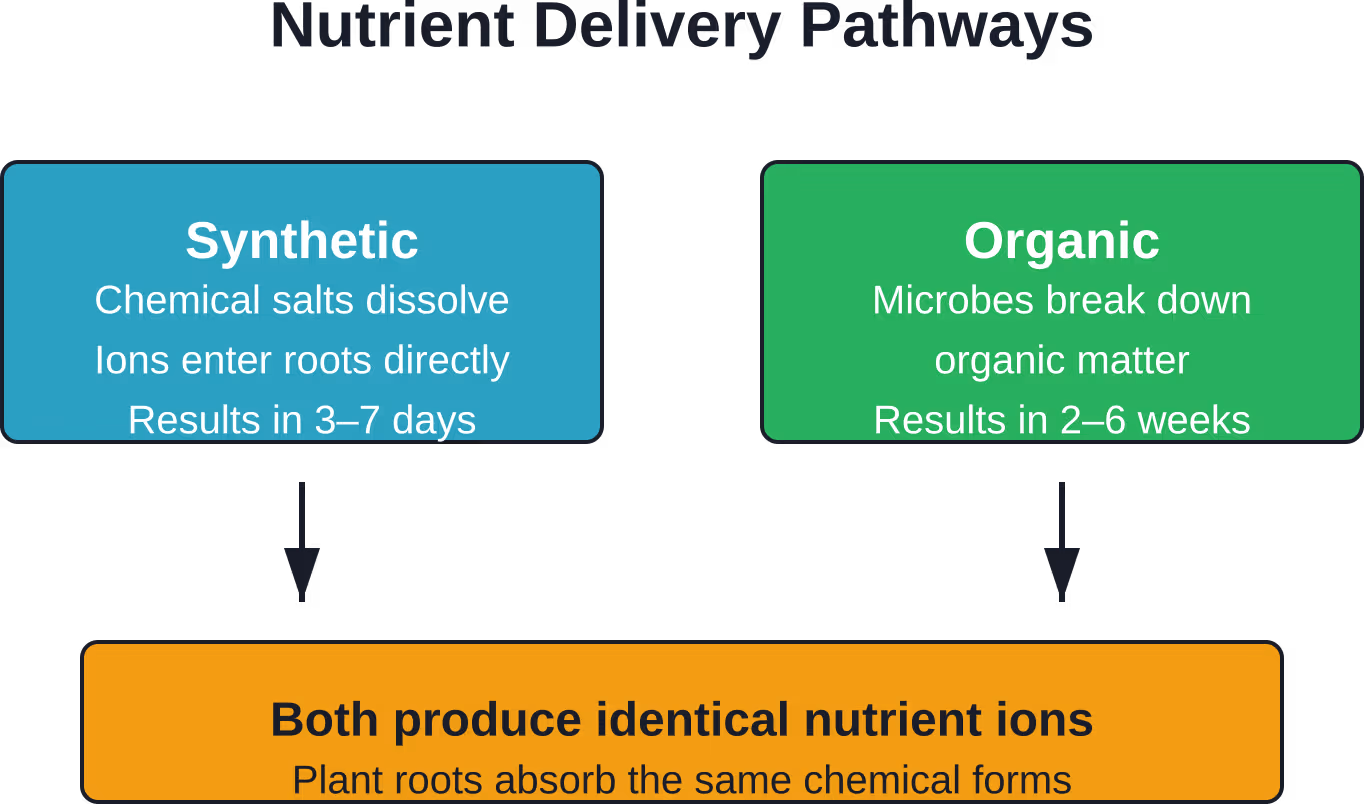
Synthetic fertilizers contain mineral salts manufactured through chemical processes. When dissolved in soil water, nitrogen, phosphorus, and potassium ions move directly into root cells.
The nutrient forms are identical to what plants absorb naturally—roots can’t distinguish between nitrogen from urea and nitrogen from decomposed manure once it’s in nitrate form.
Common synthetic sources include urea (46% nitrogen), anhydrous ammonia (82% nitrogen), monoammonium phosphate (50–52% P₂O₅), diammonium phosphate (47% P₂O₅), and potassium chloride (60–62% K₂O).
Results appear fast—often within days. A bag labeled 20-10-5 contains exactly 20% nitrogen, 10% phosphorus, and 5% potassium, every batch, every time.
Organic Fertilizers: Feeding Soil Biology First
Organic fertilizers—composted manure, blood meal, bone meal, fish emulsion—contain nutrients locked in organic molecules. Plants can’t absorb them directly.
Soil bacteria and fungi must decompose the material first, breaking proteins and complex compounds into simple ions. This biological process takes weeks to months, depending on temperature, moisture, and microbial population.
Blood meals and chicken feather meals supply up to 12% nitrogen. Bone meal releases 11–30% P₂O₅ slowly over the season. Fish meal provides 6–12% nitrogen plus 3–7% phosphorus.
The nutrient concentration is lower, so more bulk material moves per acre. But the decomposition process feeds soil organisms, building populations of beneficial microbes season after season.

Analyze Field Imagery Faster With FlyPix AI
FlyPix AI helps teams analyze satellite, aerial, and drone images with AI. The platform can detect, outline, and monitor visible objects in geospatial images, which is useful when large land areas need to be reviewed without slow manual work.
For farming teams, this can support faster checks of visible crop response, field variation, and land changes from above.
Need Faster Image Analysis?
FlyPix AI can help with:
- analyzing drone, aerial, and satellite imagery
- detecting visible objects and patterns
- training custom AI models for specific tasks
- reducing manual review of field images
👉 Try FlyPix AI to analyze geospatial imagery faster.
Cost Comparison: What Growers Actually Pay
Price per bag tells only part of the story. Real cost includes application labor, equipment, storage, and nutrient concentration.
Purchase Price Per Unit of Nitrogen
Synthetic nitrogen costs less per pound of actual nutrient. A ton of urea (46% N) delivers 920 pounds of nitrogen. A ton of blood meal (12% N) delivers 240 pounds.
To supply the same nitrogen to a field, operations need roughly four times the volume of organic material. That means more truck trips, more storage space, more spreader runs.
Organic phosphorus sources like bone meal cost more per unit P₂O₅ than MAP or DAP, though the gap narrows when factoring in soil-building benefits over multiple seasons.
Application and Equipment Costs
Synthetic fertilizers spread easily with standard equipment. The concentrated formulas mean fewer passes across the field.
Organic materials often need specialized spreaders for bulky, variable-moisture products. Composted manure clumps differently than pelletized poultry litter. Some materials require incorporation to prevent nutrient volatilization.
Labor costs rise when handling higher volumes, though many organic materials double as soil amendments, reducing the need for separate compost or gypsum applications.
| Cost Factor | Organic | Synthetic |
|---|---|---|
| Price per ton | Higher per ton, lower NPK concentration | Lower, concentrated formulas |
| Volume per acre | Higher—more material hauled and spread | Lower—less bulk to handle |
| Application equipment | May need specialized spreaders for bulk | Standard equipment handles easily |
| Storage requirements | More space, moisture control needed | Compact, stable, easy to store |
| Multi-year soil benefit | Builds organic matter, reduces future inputs | No residual soil improvement |
Soil Health: The Long-Term Reality
Here’s where the trade-offs become stark. Short-term cost savings from synthetic fertilizers can create long-term soil degradation that eventually costs more to fix.
What Happens to Soil Biology
Soil contains billions of bacteria, fungi, protozoa, and other organisms per gram. These microbes form networks that cycle nutrients, suppress disease, and build soil structure.
Repeated synthetic fertilizer use—especially without organic matter additions—reduces microbial populations. Research shows drops of 60–80% after just a few seasons of exclusive synthetic feeding.
Plants become dependent on chemical inputs because the biological systems that normally supply nutrients collapse. Pest and disease pressure often increase as beneficial microbes decline.
Organic fertilizers feed microbes directly. Decomposition builds humus, stable organic matter that holds water and nutrients. Soil structure improves, aggregates form, and porosity increases.
Nutrient Pollution and Environmental Impact
The EPA identifies dead zones as a significant water quality problem, with the largest dead zone in the United States—about 6,500 square miles—located in the Gulf of Mexico and occurring annually as a result of nutrient pollution from the Mississippi River Basin. Multiple estuaries show adverse impacts from nitrogen and phosphorus pollution.
Both organic and synthetic fertilizers contribute to runoff when overapplied or applied before heavy rain. Excess nitrogen and phosphorus cause an overgrowth of algae in a short period of time, called algae blooms. The overgrowth of algae consumes oxygen and blocks sunlight from underwater plants, making it impossible for aquatic life to survive.
Synthetic fertilizers pose higher leaching risk because all nutrients dissolve immediately. Organic sources release slowly, giving plants more time to absorb before nutrients move past the root zone.
Health consequences due to marine-borne pathogens in the U.S. have annual costs on the order of US$900 million, covering lost wages, healthcare, and premature death.
Responsible nutrient management—soil testing, split applications, cover cropping—matters more than fertilizer type alone. But organic materials carry lower immediate leaching risk.
Salt Accumulation
Synthetic fertilizers are salts—literally. Excess application leaves salt residues that accumulate in soil, especially in arid climates or under irrigation.
Salt buildup raises soil electrical conductivity, making it harder for roots to pull water from soil. Plants show drought stress even when moisture is present. Yields drop.
Organic fertilizers add minimal salts. The slow release prevents spikes in soil solution concentration.
Nutrient Release Timing and Precision
Timing nutrient availability to match crop demand maximizes uptake and minimizes loss.
Synthetic: Immediate and Controllable
Synthetic fertilizers deliver nutrients on demand. Split applications—small doses timed to growth stages—match supply to plant needs precisely.
This control matters for high-value crops with tight harvest windows or specific quality targets. Controlled-release coatings extend availability, though at higher cost.
The downside: if rain follows application before roots absorb nutrients, leaching losses spike. Timing and weather forecasting become critical.
Organic: Slow and Steady
Organic materials release nutrients gradually as microbes work. This matches well with perennial crops and long-season vegetables that feed steadily over months.
The slow release buffers against leaching but limits flexibility. Can’t push a quick growth spurt before harvest or correct a sudden deficiency in days.
Warm soil temperatures speed microbial activity and nutrient release. Cold spring soil slows everything down, sometimes leaving transplants starved during establishment.
Practical Application Differences
Field realities shape fertilizer choice as much as agronomic theory.
Consistency and Predictability
Synthetic formulas don’t vary. Every bag of 46-0-0 urea contains 46% nitrogen, whether purchased in March or September, from Minnesota or Mississippi.
Organic materials vary by batch. Poultry litter ranges from 2-4% nitrogen depending on bedding type, bird age, and storage conditions. Compost nutrient content shifts with feedstock and composting process.
Commercial organic growers send samples to labs for every batch, adjusting application rates accordingly. That adds cost and complexity.
Certification and Regulatory Requirements
Organic certification under USDA National Organic Program rules prohibits most synthetic fertilizers. Approved materials appear on the National List—mainly natural minerals and biological products.
Conventional operations face fewer restrictions but must follow state nutrient management regulations, especially near sensitive waters. Some states cap nitrogen rates or mandate soil testing intervals.
Both systems require record-keeping: what was applied, when, where, and how much. Organic certification adds annual inspections and material source documentation.
When to Use Each Approach
Most commercial operations don’t choose sides—they blend strategies.
Situations Where Synthetic Makes Sense
Rapid correction of deficiencies identified by tissue testing. A nitrogen-starved corn crop at V6 stage needs fast delivery.
Precision fertigation systems that deliver small, frequent doses through drip lines. Controlled release prevents waste.
High-density production where space limits organic matter incorporation. Greenhouse benches and hydroponic systems have no soil to build.
Budget constraints in startup years when cash flow limits input spending. Lower cost per nutrient unit stretches dollars.
Situations Where Organic Excels
Long-term soil building programs on degraded ground. Eroded fields with low organic matter need biological rebuilding, not just NPK.
Perennial crops—orchards, vineyards, berries—where soil health determines productivity over decades. Initial investment pays back across many seasons.
Operations targeting premium organic markets where certification requires approved inputs. Market price premiums offset higher input costs.
Livestock-integrated farms generating manure that needs productive use. On-farm nutrient cycling closes loops and reduces purchased inputs.
The Hybrid Strategy
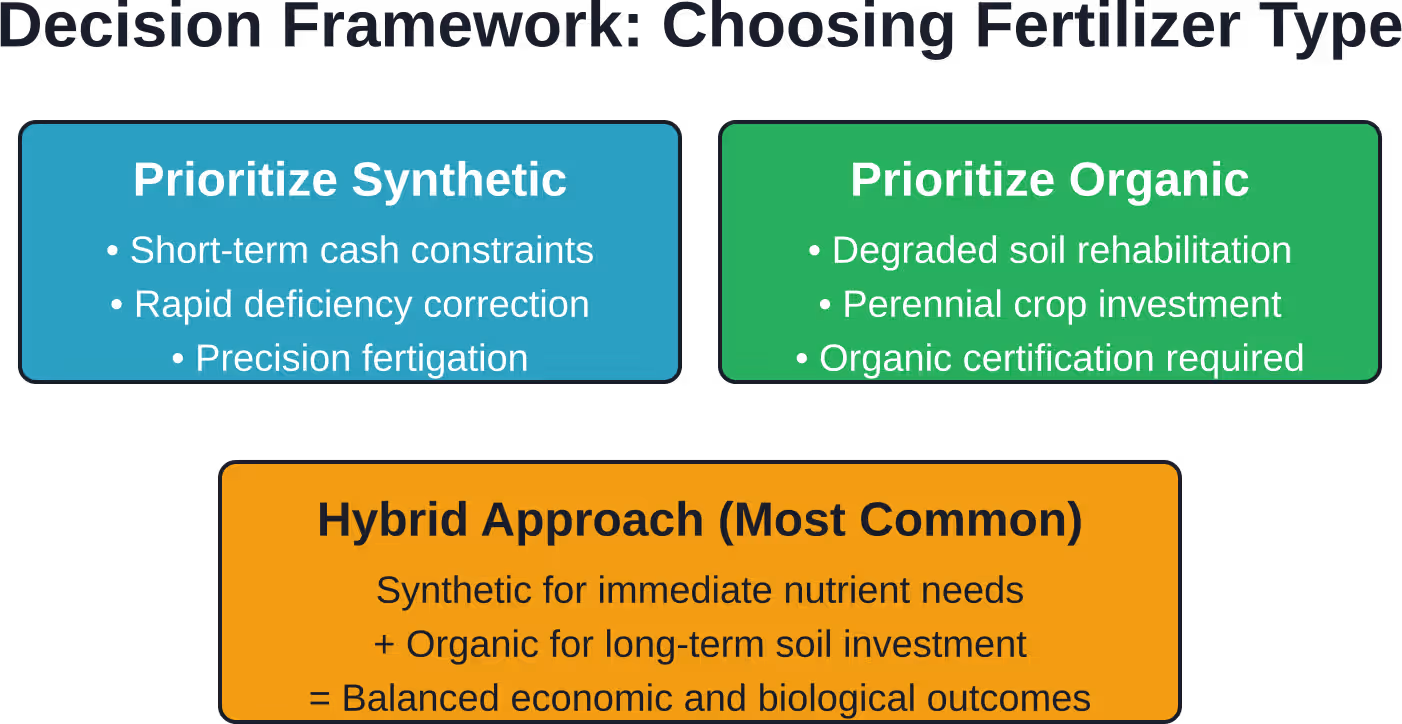
Many growers use synthetic nitrogen for fast-growing annuals while building soil organic matter with compost, cover crops, and manure between cash crops.
This captures immediate cost savings and yield response from synthetic precision while investing in long-term soil quality.
Over time, healthy soil biology reduces total fertilizer needs. Improved nutrient cycling and water retention cut input costs as soil function improves.
Environmental Sustainability Considerations
Agriculture contributes to nutrient pollution when nitrogen and phosphorus aren’t fully utilized by crops. Both fertilizer types carry environmental responsibility.
Runoff and Water Quality
Excess nutrients from any source reach waterways through runoff and leaching. The EPA identifies agriculture as a significant contributor to downstream water quality problems.
Dead zones form where oxygen levels drop too low for aquatic life. Algal blooms create thick mats that block sunlight and consume oxygen when they decompose.
Best management practices matter more than fertilizer type: soil testing to match rates to crop needs, split applications to reduce single-dose quantities, cover crops to capture residual nutrients, and buffer strips to filter runoff.
Greenhouse Gas Emissions
Synthetic nitrogen fertilizer production requires significant energy, mostly from natural gas.
Field emissions from soil microbes converting nitrogen compounds produce nitrous oxide, a greenhouse gas 300 times more potent than CO₂. Both organic and synthetic nitrogen can drive these emissions when overapplied.
Organic systems building soil carbon can offset some emissions through carbon sequestration, though the net climate impact depends on total system management.
Making the Switch: Transition Considerations
Shifting from exclusive synthetic use to organic inputs requires planning.
Year-One Reality
Soil biology takes time to rebuild. Fields transitioning from long-term synthetic use have depleted microbial populations that need recovery before organic materials release nutrients efficiently.
Expect lower yields during the first transition year while biological systems reestablish. Some growers phase the transition over three to five years, gradually increasing organic percentages while reducing synthetic.
Cover crop adoption increased in Northeast states, partly driven by growers building biology to support reduced synthetic inputs.
Equipment and Infrastructure
Bulk organic materials need different handling than bagged synthetic products. Manure spreaders, compost turners, and storage facilities require capital investment.
Some growers partner with livestock operations for manure access or contract with compost producers for delivered product, avoiding the need for on-farm production infrastructure.
Bulk Purchasing: What Commercial Buyers Need to Know
Large-scale operations buying by the truckload face different considerations than garden-center shoppers.
Organic Material Sourcing
Consistent supply matters. Composted poultry litter might be abundant in Arkansas but scarce in North Dakota. Transportation costs increase with distance, eroding economic advantages.
Certification documentation: OMRI-listed or NOP-compliant materials require paper trails proving approved sourcing. Suppliers must provide batch analysis and compliance certificates.
Minimum order quantities: bulk organic suppliers often require full truckload orders. Storage capacity becomes a constraint for smaller operations without covered barns or large yards.
Price Negotiation and Contracts
Synthetic fertilizer pricing fluctuates with energy markets and global demand. Forward contracts lock in prices but require capital commitment months before application.
Organic materials show more stable pricing, less tied to fossil fuel costs. Local sourcing reduces transportation sensitivity to fuel price swings.
Multi-year contracts with organic suppliers secure supply and smooth pricing. Some manure and compost operations offer application services bundled with product cost.
Choosing Your Path Forward
The organic versus synthetic debate isn’t really a debate—it’s a spectrum of management choices.
Short-term economics favor synthetic precision. Long-term soil health and sustainability favor organic investment. Most successful operations blend both strategically, matching tools to specific situations.
Start with soil testing. Know what’s actually in the ground before adding anything. Track organic matter percentage over time—it’s the single best indicator of soil health trajectory.
Consider crop value and rotation. High-value perennials justify organic investment more readily than low-margin commodity annuals. But even commodity systems benefit from periodic organic matter additions to maintain productivity.
Look beyond single-season costs. Soil degradation creates a debt that must eventually be repaid, often at higher cost than preventing it. Building soil biology now reduces input needs and risk later.
The right fertilizer program fits the specific soil, crop, climate, and business model. There’s no universal answer, but understanding how each type works—and what it costs in both dollars and soil health—leads to better decisions for any operation.
Frequently Asked Questions
Synthetic fertilizers don’t poison soil, but exclusive long-term use without organic matter additions degrades soil structure and biology. The damage is reversible through organic matter incorporation and reduced tillage, though recovery takes multiple seasons. Soil testing guides rehabilitation programs.
Plants absorb identical nutrient ions regardless of source—roots can’t distinguish organic from synthetic nitrogen once it’s in nitrate form. Short-term growth may be faster with synthetic due to immediate availability. Long-term productivity often improves with organic programs because of enhanced soil health, water retention, and biological disease suppression.
Nutrient release from organic materials depends on temperature, moisture, and microbial activity. Expect two to six weeks for noticeable plant response in warm soil conditions. Cold soil slows decomposition significantly. Fast-acting organic sources like blood meal release quicker than slower materials like bone meal.
USDA organic certification prohibits most synthetic fertilizers. Allowed materials include certain mined minerals (rock phosphate, sulfate of potash) and microbial inoculants. The National List details approved and prohibited substances. Farmers must submit organic system plans documenting fertility management to maintain certification.
Home vegetable gardens benefit from organic approaches that build soil over years. Compost, aged manure, and organic fertilizers improve structure, water retention, and biological activity in beds used repeatedly. Synthetic fertilizers work for quick correction of deficiencies or container growing where soil building isn’t relevant. Many gardeners blend both: compost for base fertility, synthetic for mid-season boosts.
Organic fertilizers reduce immediate leaching risk because nutrients release slowly, giving plants more time to absorb them. However, overapplication still causes runoff—excess nitrogen and phosphorus reach waterways regardless of source. Soil testing, appropriate rates, and timing applications to avoid heavy rain matter more than fertilizer type alone.
Initial organic costs run higher per unit of nutrient, but soil health improvements accumulate. After three to five years, many operations report lower total input costs as improved soil function reduces fertilizer needs. The break-even point depends on initial soil condition, crop type, and management intensity. Degraded soils see faster payback from soil building investment.