
Quick Summary: Potash fertilizers supply potassium (K), a macronutrient essential for crop yield, disease resistance, and water regulation. The main types—potassium chloride (MOP), potassium sulfate (SOP), and potassium-magnesium sulfate—are chosen based on soil type, crop sensitivity, and nutrient needs. Proper soil testing, timing, and application methods ensure efficient use while minimizing environmental impact.
Walk into any agricultural supply store and you’ll see bags labeled with three-number ratios—5-15-10, 12-11-2, 16-16-16. The third number represents potassium, often sold as potash fertilizer. But what exactly is potash, and why does every commercial farm and backyard garden need it?
Potassium is one of three primary macronutrients plants extract from soil. Crops remove substantial amounts of potassium during growth, and unlike nitrogen, which microbes can fix from the atmosphere, potassium must be replenished through fertilization. Without adequate potassium, even nitrogen-rich soil produces weak stems, poor yields, and disease-prone plants.
What Is Potash Fertilizer?
The term “potash” dates back to the 14th century, when farmers boiled wood ash in large iron pots. Water evaporated, leaving behind potassium-rich residue—literally “pot ash.” Modern potash fertilizers come from underground mineral deposits or brine solutions, not wood ash, but the name stuck.
Fertilizer labels display three numbers—nitrogen (N), phosphorus (P), and potassium (K). A fertilizer labeled 5-15-10 contains 5% nitrogen, 15% phosphorus, and 10% potassium. Every 10 pounds of this material delivers 0.5 pounds of nitrogen, 1.5 pounds of phosphorus, and 1 pound of potassium.
Potash specifically refers to water-soluble potassium compounds. The nutrient exists in various chemical forms, each suited to different crops and soil conditions.
Why Plants Need Potassium
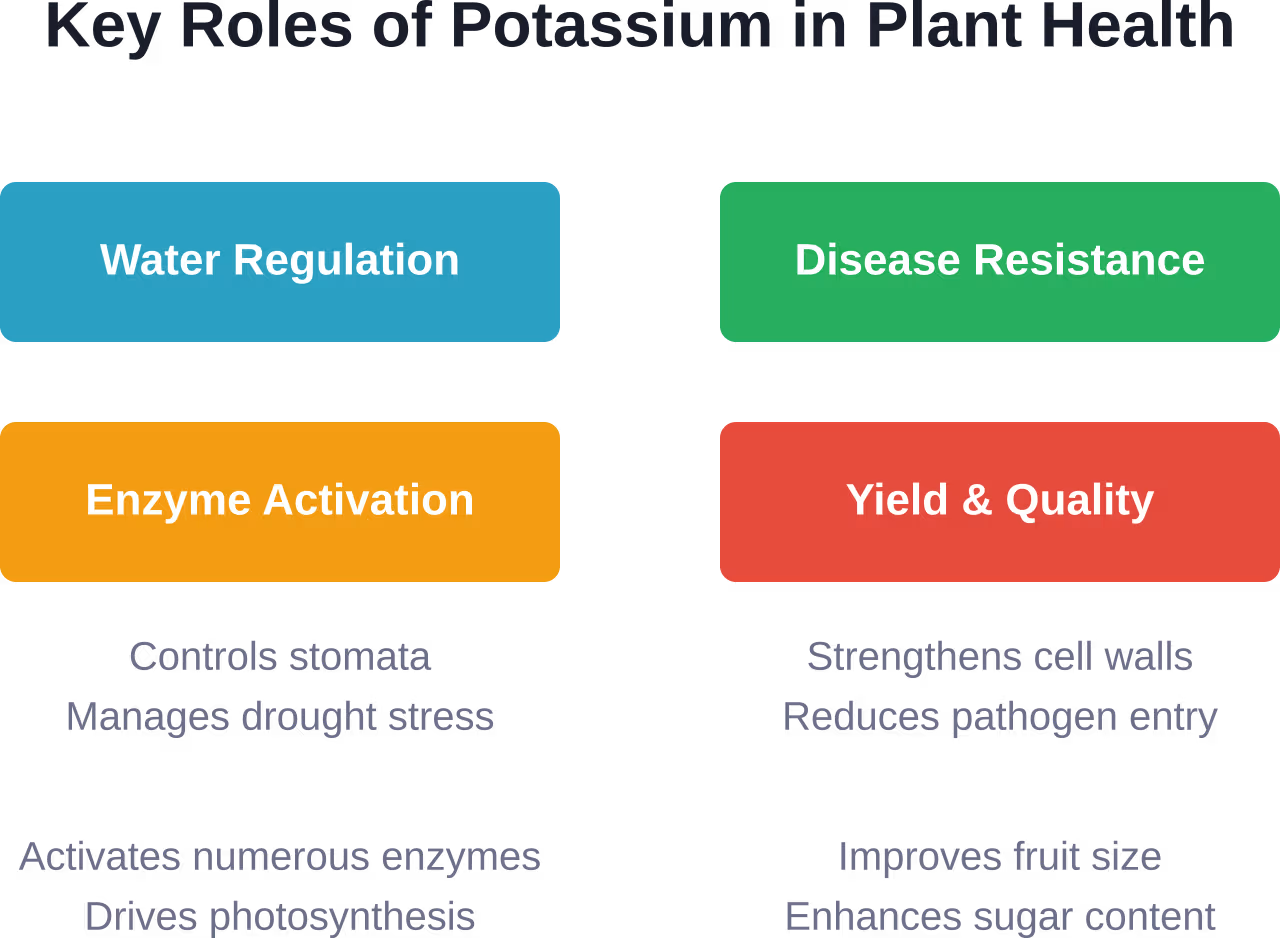
Potassium activates numerous enzymes (reported in scientific literature as over 60) that regulate photosynthesis, protein synthesis, and starch formation. It controls the opening and closing of stomata—tiny pores on leaves that regulate water loss and gas exchange. When potassium levels drop, plants can’t efficiently manage water stress.
Here’s what adequate potassium does:
- Strengthens cell walls and stems, reducing lodging (stalk breakage)
- Improves drought tolerance by enhancing water uptake and retention
- Boosts disease resistance by thickening cell membranes
- Increases fruit size, color, and sugar content
- Enhances cold hardiness in perennial crops
Potassium-deficient plants show yellowing and browning along leaf edges, stunted growth, and weak root systems. Fruit and grain crops produce smaller yields with inferior quality.

Analyze Field Imagery Faster With FlyPix AI
FlyPix AI helps teams analyze satellite, aerial, and drone images with AI. The platform can detect, outline, and monitor visible objects in geospatial images, which is useful when large field areas need to be reviewed without slow manual work.
For potash fertilizer use, this can support faster checks of visible crop response, field variation, and land changes from above.
Need Faster Image Analysis?
FlyPix AI can help with:
- analyzing drone, aerial, and satellite imagery
- detecting visible objects and patterns
- training custom AI models for specific tasks
- reducing manual review of field images
👉 Try FlyPix AI to analyze geospatial imagery faster.
Types of Potash Fertilizers
Three main forms dominate the agricultural market. Each has distinct advantages depending on crop type and soil chemistry.
Potassium Chloride (Muriate of Potash, MOP)
This is the most common and cost-effective potash source, containing 60–62% potassium. It’s mined from underground deposits or extracted from brine.
MOP works well for most field crops—corn, wheat, soybeans—that tolerate chloride. It’s less suitable for chloride-sensitive crops like potatoes, tomatoes, tobacco, and many fruits. Excess chloride can accumulate in soil, affecting flavor and reducing quality in sensitive varieties.
Potassium Sulfate (Sulfate of Potash, SOP)
SOP is a smaller market segment, accounting for about 10% of the global potash market, and contains 50–52% potassium with chloride content below 3%. It’s the preferred choice for chloride-sensitive crops—tomatoes, potatoes, almonds, leafy greens like spinach and lettuce.
The sulfur component provides a dual benefit. Many soils are sulfur-deficient, and SOP addresses both potassium and sulfur needs simultaneously. This type maintains a neutral pH, making it gentler on young seedlings and reducing the risk of seedling burn.
Potassium-Magnesium Sulfate (Sul-Po-Mag, K-Mag)
This fertilizer supplies potassium, magnesium, and sulfur. It’s ideal for soils deficient in magnesium—common in sandy, acidic soils or fields with long cropping histories.
Sul-Po-Mag works particularly well for crops with high magnesium requirements, such as cole crops (cabbage, broccoli), peppers, and certain tree fruits.
Other Potassium Sources
Organic growers and small-scale gardeners use alternative materials:
- Kelp meal: 4%–13% potassium, slow-release
- Wood ash: 3%–7% potassium, raises soil pH
- Granite meal: 3%–6% potassium, extremely slow-release
- Greensand: 5% potassium, releases over several years
These organic sources release potassium slowly as soil microbes break down organic matter. They’re less concentrated than mineral forms, requiring larger application volumes.
| Fertilizer Type | Potassium Content | Chloride Level | Best For |
|---|---|---|---|
| Potassium Chloride (MOP) | 60–62% | High (~47%) | Field crops, tolerant varieties |
| Potassium Sulfate (SOP) | 50–52% | Low (<3%) | Sensitive crops, premium produce |
| Sul-Po-Mag | 22% | Low | Magnesium-deficient soils |
| Kelp Meal | 4–13% | None | Organic systems, slow-release |
| Wood Ash | 3–7% | None | Acidic soils, gardens |
How to Apply Potash Fertilizer
Effective potassium management starts with soil testing. Soil test results indicate current potassium levels and guide application rates. Regular soil testing is recommended, ideally in fall or early spring before planting.
Application Timing
Potassium doesn’t leach as readily as nitrogen, but it’s not completely immobile either. Sandy soils with low organic matter can lose potassium through leaching. In peanut production on low-K sandy soils, 50%–70% of applied K leaches away with rainfall or irrigation events.
Best timing depends on crop type:
- Annual crops: Apply at or just before planting. For high-demand crops (corn, cotton, vegetables), split applications—half preplant, half at early growth stages.
- Perennial crops: Apply in early spring as growth resumes, or in fall after harvest. Fruit trees and berries benefit from fall application, allowing roots to absorb nutrients during dormancy.
- Pastures and hay: Apply after each cutting to replenish removed potassium.
Application Methods
- Broadcasting: Spreading fertilizer evenly across the soil surface, then incorporating with tillage. This method works well for establishing uniform nutrient levels across large fields. It’s less efficient than banding but simpler for large-scale operations.
- Banding: Placing fertilizer in concentrated bands near the seed row or root zone. Banding increases early-season availability and reduces fixation in high-clay soils. It’s particularly effective for row crops.
- Fertigation: Injecting soluble potassium through irrigation systems. This allows precise timing and placement, especially in high-value crops like vegetables and orchards. Potassium nitrate and potassium sulfate dissolve readily for fertigation.
- Foliar application: Spraying diluted potassium solutions on leaves. This provides quick correction of acute deficiencies but can’t replace soil applications for meeting full seasonal requirements. Foliar potassium helps during critical growth stages—flowering, fruit set—when demand spikes.
Calculating Application Rates
Soil test recommendations specify pounds of potassium per acre (or per 1,000 square feet for gardens). Fertilizer labels show the percentage of potassium as K₂O (potash).
Here’s a practical example: A soil test recommends applying 100 pounds of potassium per acre. Using potassium chloride (60% K₂O):
100 ÷ 0.60 = 167 pounds of potassium chloride per acre
For a fertilizer labeled 12-11-2 (2% potassium), delivering 3 pounds of nitrogen per 1,000 square feet requires 25 pounds of fertilizer. That same 25 pounds delivers only 0.5 pounds of potassium—often insufficient. Matching nitrogen, phosphorus, and potassium needs usually requires multiple fertilizer sources or blended formulas.
Environmental Considerations
Potassium doesn’t cause the same environmental problems as nitrogen and phosphorus. It doesn’t volatilize into the atmosphere or trigger algae blooms in waterways. However, overapplication wastes money and can leach into groundwater in sandy soils.
Best practices for sustainable potash use:
- Apply based on soil test results, not guesswork
- Use precision agriculture tools (GPS-guided spreaders, variable-rate technology) to match application rates to soil variability within fields
- Avoid applying before heavy rain events on sandy or sloped land
- Incorporate surface-applied fertilizer when possible to reduce runoff
- Monitor leaf tissue tests mid-season to confirm adequate uptake
Nutrient management planning helps balance productivity with environmental stewardship. Applying only what crops need protects water quality and reduces input costs.
Recognizing Potassium Deficiency
Visual symptoms appear when soil potassium can’t meet plant demand. Look for:
- Yellowing or browning leaf margins (“firing”), starting with older leaves
- Weak, thin stems prone to lodging
- Poor root development
- Small, shriveled fruit or grain
- Increased susceptibility to disease and drought stress
Symptoms often appear during rapid growth phases (vegetative stage, fruit development) when demand peaks. Sandy soils, fields with high clay content that fix potassium, and intensively cropped land show deficiencies most often.
Leaf tissue testing confirms deficiency. Collect samples from recently matured leaves during active growth. Lab analysis compares nutrient concentrations to sufficiency ranges for each crop.
Conclusion
Potash fertilizers deliver the potassium crops need to produce high yields, resist disease, and tolerate environmental stress. Choosing the right form—MOP for cost-efficiency in tolerant crops, SOP for sensitive varieties, Sul-Po-Mag for magnesium-deficient soils—maximizes effectiveness.
Soil testing removes guesswork. Apply potash at rates that match crop removal and build deficient soils gradually. Proper timing and placement improve uptake efficiency, reducing waste and environmental impact.
Whether managing thousands of acres or a backyard garden, understanding potash fertilizers ensures plants get the potassium they need when they need it. Start with a soil test, select the appropriate potash source, and watch crops thrive.
Frequently Asked Questions
Potassium is the chemical element (K). Potash refers to potassium-containing fertilizers, specifically water-soluble potassium compounds like potassium chloride or potassium sulfate. The terms are often used interchangeably in agriculture.
Yes. Excess potassium reduces uptake of magnesium and calcium through nutrient antagonism. High rates in sandy soils also increase leaching. Apply based on soil test recommendations to avoid imbalances and waste.
It depends on crop type and soil. Annual vegetables and field crops typically need yearly applications. Perennial crops (orchards, vineyards) may need potash every 2–3 years if soil tests remain adequate. Test soil regularly to guide timing.
Potassium chloride and potassium sulfate are mined minerals, not chemically synthesized, so some organic certification programs allow them. However, most certified organic systems prefer slower-release sources like greensand, kelp meal, or compost. Check specific certification standards.
Root crops (potatoes, carrots, beets), fruit crops (tomatoes, peppers, melons), and legumes (beans, peanuts) have high potassium requirements. Grasses and cereals need moderate amounts. Leafy greens vary—some, like lettuce, are sensitive to chloride and perform best with SOP.
Potassium chloride has a slight acidifying effect over time. Potassium sulfate is pH-neutral. Wood ash, an organic potassium source, raises pH significantly. Choose the form based on current soil pH and crop needs.
Most potash fertilizers mix well with nitrogen and phosphorus sources. Avoid mixing calcium-containing fertilizers (like calcium nitrate) with potassium sulfate or Sul-Po-Mag in concentrated liquid solutions—they can precipitate. For dry blends, physical mixing is generally safe.