
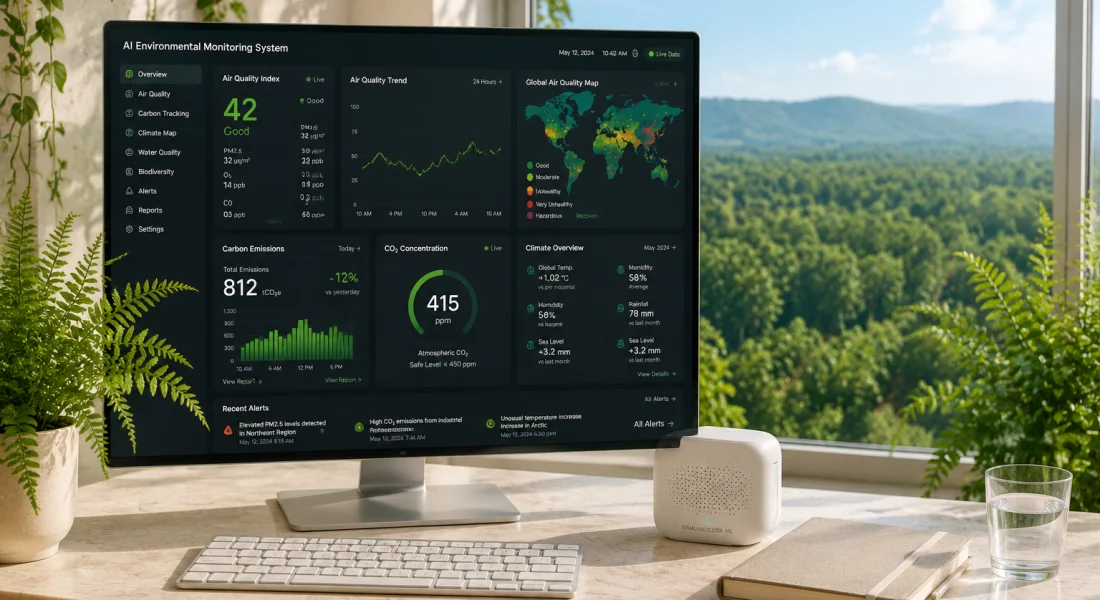
Quick Summary: Sapphire Software Solutions is primarily an IT staffing and services company based in Dublin, CA and Ashburn, VA, not a vendor of AI environmental monitoring software. No evidence of an environmental monitoring product exists on their official website. This review clarifies the confusion with similarly-named AI platforms like BluSapphire (cybersecurity) and AgileBlue’s Sapphire AI (threat detection).
The search for AI environmental monitoring tools brings up some interesting confusion around the name “Sapphire.” After investigating Sapphire Software Solutions directly, one thing becomes clear: this isn’t an environmental monitoring company.
So what’s happening here?
The confusion stems from multiple technology companies using “Sapphire” in their branding—some in cybersecurity, some in staffing, and the broader context of AI being applied to environmental monitoring by completely different organizations. This review cuts through that confusion and examines what Sapphire Software Solutions actually offers, then explores what real AI environmental monitoring looks like in 2026.
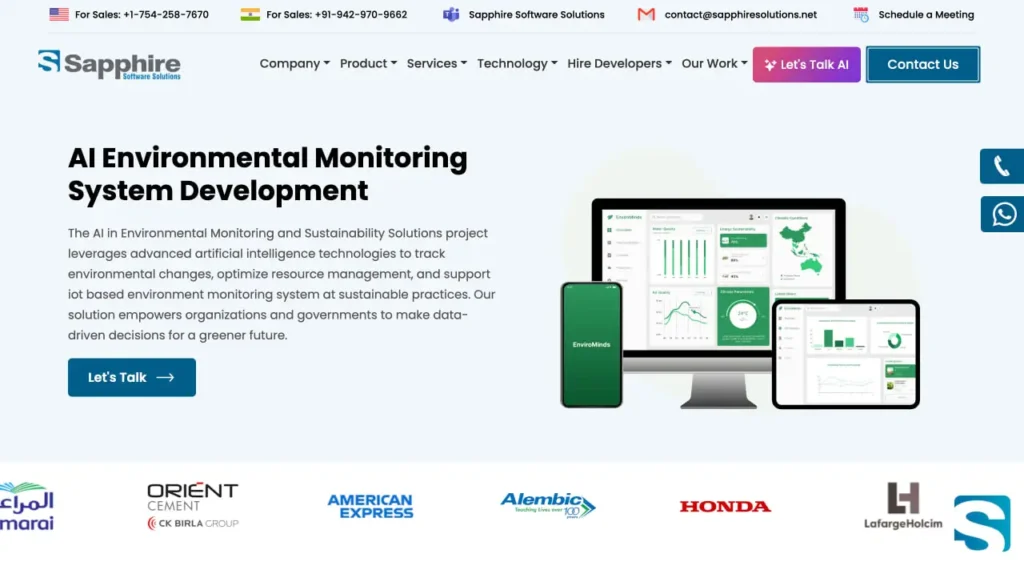
What Sapphire Software Solutions Actually Does
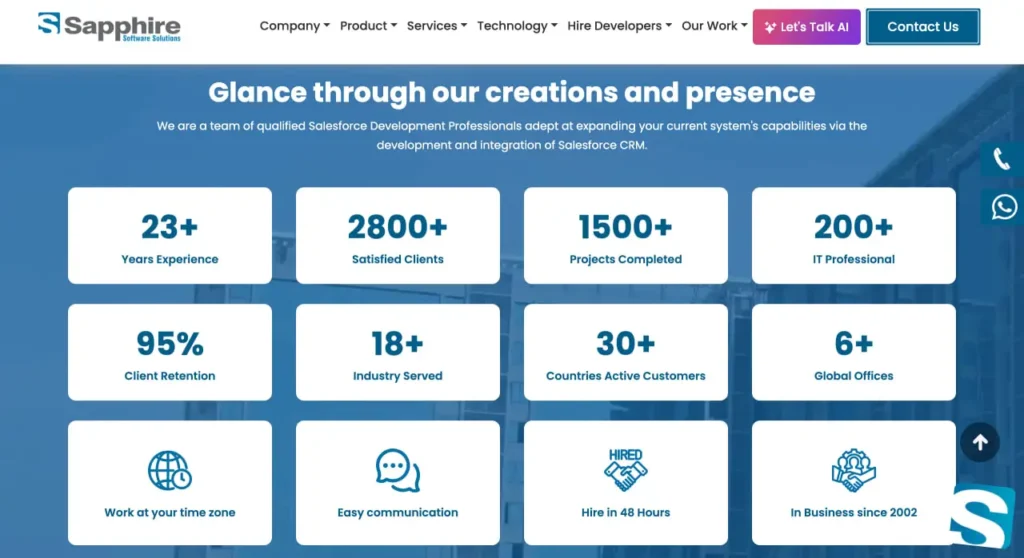
According to the official Sapphire Software Solutions website, the company describes itself as “a leading global IT staffing, executive search and services company.” Their headquarters are located at 11501 Dublin Blvd., Suite 200, Dublin, CA 94568, with an additional office at 20130 Lakeview Center Plaza, Suite 400, Ashburn, VA 20147.
Their core business focuses on:
- IT staffing for Fortune 2000 firms and small-to-mid-sized businesses
- Executive search services in the technology sector
- Recruiting for SAP specialists (ABAP, SD, FI/CO, MM, PP, APO, CRM)
- Systems analyst and architect placement
- Infrastructure and communications technology roles
The official careers page lists job requirements for positions like Systems Analyst (requiring a Master’s degree in Management Information System, Engineering Management, Information Technology, or related fields) and Architect roles. Contact information routes to HR Manager Santosh Kumar.
Here’s the thing though—nowhere on their official site is there mention of environmental monitoring software, AI-powered environmental tools, or sustainability platforms.
The Sapphire Name Collision Problem
The technology sector has a “Sapphire” problem. Multiple distinct companies and products share this name, creating market confusion that makes research surprisingly difficult.
| Company/Product | Industry | Core Function |
|---|---|---|
| Sapphire Software Solutions | IT Staffing | Recruitment and executive search |
| Sapphire AI (AgileBlue) | Cybersecurity | Threat detection and response |
| BluSapphire | Cybersecurity | AI-native SIEM platform |
| SapphireIMS | IT Management | Infrastructure monitoring |
AgileBlue’s Sapphire AI, for example, is a cybersecurity brain that “automatically detects, investigates, and responds to threats in real-time.” It boasts 90% automated Level 1 and Level 2 triage and 48% faster response to real threats. That’s impressive for security operations—but it’s not environmental monitoring.
BluSapphire operates in a similar space, describing itself as “a vendor-neutral Agentic AI SOC platform that unifies SIEM, EDR, SOAR and threat intelligence in one platform.” Trusted by 400+ enterprises across BFSI, healthcare, manufacturing, government, and technology sectors, BluSapphire replaces legacy SIEM platforms at 80% lower total cost of ownership.
Both are sophisticated AI platforms. Neither monitors environmental data.
Real AI Environmental Monitoring in 2026
Now, this is where it gets interesting. AI absolutely is transforming environmental monitoring—just not through Sapphire Software Solutions.
According to research from Stanford University, Brown University, and Planet Labs published in November 2025, AI models can now verify and measure carbon stored in forests using satellite imagery. Testing and comparing AI models builds trust in their ability to map natural climate solutions, which could “transform how companies and countries track — and pay for — nature’s help with combating climate change.”
MIT CSAIL researcher Justin Kay has developed computer vision algorithms that monitor how vulnerable ecosystems change. As reported on November 3, 2025, these AI methods make data analysis more efficient, including approaches that help conservationists choose which model to use on particular datasets.
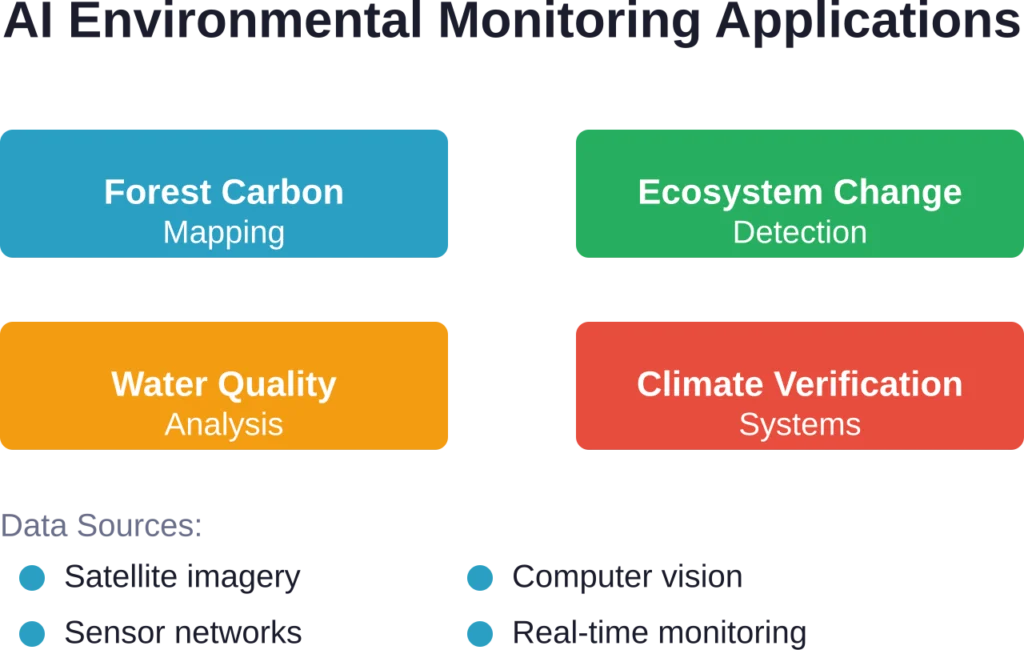
The technical standards community has weighed in as well. IEEE has published research on explainable AI for water quality monitoring and responsible artificial intelligence for Earth observation. These aren’t theoretical exercises—they’re frameworks being deployed in the field.
The AI Governance Context
Environmental monitoring sits within a broader AI governance landscape that’s maturing rapidly. According to Grand View Research data cited on IEEE’s standards website (published November 17, 2025), the AI governance market is worth $227.6 million and is estimated to grow 35.7% over the next five years.
That growth reflects something critical: organizations worldwide are realizing that ethical AI frameworks matter. Not just for compliance—though regulatory frameworks with significant compliance requirements focus attention on responsible AI implementation—but for building trustworthy technology.
The short answer? Environmental monitoring AI needs governance frameworks just like any other high-stakes application.
The U.S. Environmental Protection Agency has been active in this space. Following Executive Order 14110 on “Safe, Secure, and Trustworthy Development and Use of Artificial Intelligence,” federal agencies released their AI Compliance Plans and compliance structures in 2024, and established data governance coordination on August 25, 2023 (per its Data Governance page).
EPA Administrator Lee Zeldin’s “Powering the Great American Comeback” initiative has focused on data center resources and Clean Air Act guidance, launched December 11, 2025. While not specifically about environmental monitoring AI, these frameworks shape how agencies approach AI deployment in environmentally-sensitive contexts.
What Environmental Monitoring Software Actually Looks Like
Real environmental monitoring platforms share common characteristics that Sapphire Software Solutions simply doesn’t exhibit:
- Sensor integration: Direct connection to IoT devices, weather stations, water quality sensors, air quality monitors
- Geospatial analysis: GIS integration, satellite imagery processing, location-based data visualization
- Real-time data pipelines: Continuous ingestion and processing of environmental telemetry
- Compliance reporting: EPA, Clean Air Act, Clean Water Act reporting modules
- Predictive analytics: ML models forecasting pollution events, ecosystem changes, climate impacts
- Alert systems: Threshold monitoring with automated notifications for environmental exceedances
Companies building these systems typically have environmental science teams, partnerships with research institutions, and case studies demonstrating ecosystem impact measurement. They publish white papers on sensor calibration, data fusion techniques, and validation methodologies.
Sapphire Software Solutions has none of this. Their expertise is placing qualified IT professionals—Systems Analysts, Architects, SAP specialists—into organizations that need those skills.
The IT Staffing vs. Software Product Distinction
This distinction matters more than it might seem at first glance.
IT staffing companies connect talent with opportunity. They maintain networks of professionals, understand skill requirements, and facilitate placements. Their value proposition centers on recruitment efficiency, candidate quality, and cultural fit.
Software product companies build, deploy, and support technology solutions. They develop codebases, maintain infrastructure, provide customer support, and iterate on features based on user feedback.
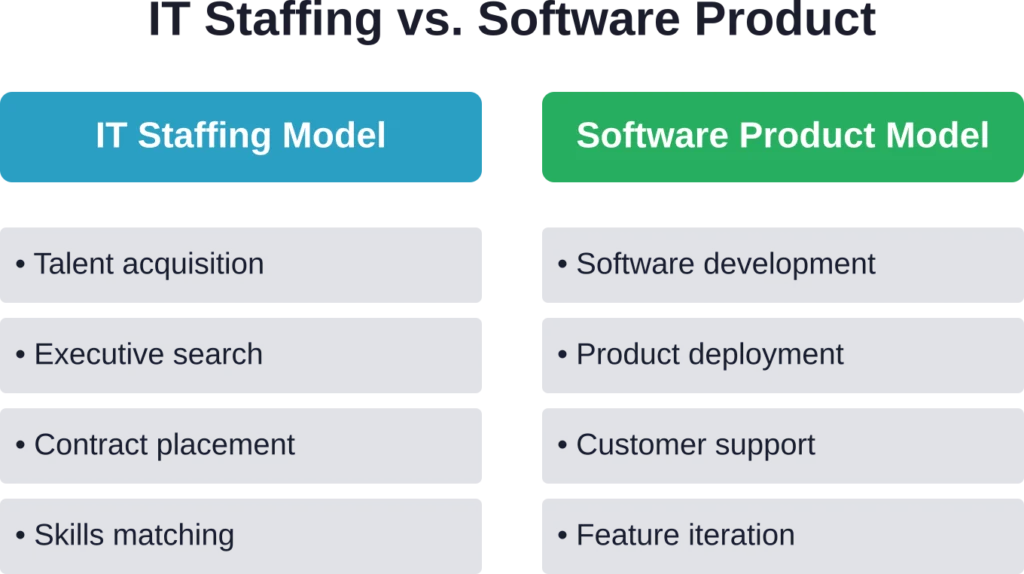
These business models occasionally intersect—a staffing firm might place developers at an environmental monitoring company, for instance. But they’re fundamentally different operations requiring different expertise, infrastructure, and go-to-market strategies.
Sapphire Software Solutions operates squarely in the first category. Their website’s careers section, job requirements listing degrees in Computer Science, Electronics, Engineering, and Information Technology, and contact routing to HR managers all point to a staffing operation.
Could Sapphire Software Solutions Build Environmental Monitoring Tools?
Theoretically? Sure. They have access to IT talent and could assemble a team to build environmental software.
Practically? There’s no evidence they’ve done so.
Building domain-specific AI tools requires more than general software engineering capability. Environmental monitoring demands:
- Environmental science expertise to validate data models
- Regulatory knowledge for compliance frameworks
- Field testing relationships with conservation organizations or government agencies
- Sensor hardware partnerships or integration agreements
- Geospatial data licensing and processing infrastructure
Companies serious about this space publish case studies, attend environmental conferences, contribute to standards bodies, and maintain documentation that demonstrates their environmental credentials.
A search through Sapphire Software Solutions’ online presence reveals none of these markers. No environmental case studies. No conservation partnerships. No sensor integration documentation.
Alternative AI Environmental Monitoring Platforms to Consider
Organizations actually looking for AI-powered environmental monitoring should investigate platforms that demonstrate clear environmental focus:
| Capability | Key Features | Typical Use Cases |
|---|---|---|
| Satellite-based monitoring | Computer vision, change detection, carbon mapping | Deforestation tracking, carbon credit verification |
| Water quality systems | Sensor integration, real-time alerts, compliance reporting | EPA reporting, pollution event detection |
| Air quality platforms | Multi-sensor fusion, predictive modeling, public dashboards | Clean Air Act compliance, public health monitoring |
| Ecosystem health tools | Biodiversity tracking, habitat mapping, conservation analytics | Wildlife management, habitat restoration |
Research from institutions like Stanford University, MIT CSAIL, and Brown University points toward computer vision approaches for ecosystem monitoring. IEEE standards work on explainable AI for water quality and responsible AI for Earth observation provides frameworks for evaluating vendor claims.
When evaluating environmental monitoring platforms, look for validation from recognized environmental organizations, peer-reviewed publications, and regulatory agency partnerships. Check whether the vendor has environmental scientists on staff, not just software engineers.
Review Environmental Sites with FlyPix AI
AI Environmental Monitoring System by Sapphire Software Solutions is connected with environmental tracking and monitoring workflows. FlyPix AI can add a visual layer to this work by helping teams analyze satellite, drone, and aerial imagery to review visible site conditions, land features, and changes across monitored areas.
FlyPix AI can support image-based environmental review tasks such as:
- Detecting visible waste, debris, objects, or surface-level changes
- Segmenting land, vegetation, water, roads, or built areas
- Comparing imagery across different dates to monitor visible changes
- Training custom AI models for specific environmental features
Contact FlyPix AI to discuss how geospatial image analysis can support environmental site monitoring.
The Broader Context: AI in Environmental Applications
Real talk: AI is making genuine contributions to environmental monitoring and conservation. Just not through every company with “AI” in their marketing.
Stanford’s work on forest carbon verification using satellites and AI demonstrates the technology’s potential. MIT CSAIL’s computer vision algorithms for vulnerable ecosystem monitoring show how AI can make conservation work more efficient.
These aren’t incremental improvements. Being able to verify carbon storage claims transforms carbon credit markets from trust-based systems to data-driven ones. Automating ecosystem change detection lets conservationists cover far more ground than manual analysis ever could.
But wait. That potential only materializes when AI expertise combines with genuine environmental domain knowledge.
Generic AI platforms retrofitted for environmental use tend to miss crucial domain-specific requirements. Sensor calibration protocols for water quality differ fundamentally from those for air quality. Carbon accounting methodologies have strict verification requirements that general-purpose analytics platforms don’t address.
The environmental monitoring AI that works comes from teams that understand both the technology stack and the environmental science.
What Sapphire Software Solutions Could Offer Environmental Organizations
Here’s where Sapphire Software Solutions might actually add value to environmental monitoring projects: talent placement.
Organizations building environmental AI platforms need skilled professionals. Data scientists who can build ML models. Systems architects who can design scalable data pipelines. SAP specialists for enterprise resource planning integration in large environmental management systems.
Sapphire Software Solutions recruits exactly these skill sets. Their focus on SAP expertise (ABAP, SD, FI/CO, MM, PP, APO, CRM) could support environmental consulting firms implementing enterprise management systems. Their systems analyst and architect placement services could help environmental tech startups scale their teams.
So while Sapphire doesn’t build environmental monitoring tools, they could help environmental organizations find the talent to build those tools internally.
That’s a legitimate value proposition—just a completely different one than selling environmental monitoring software.
Frequently Asked Questions
No. According to their official website, Sapphire Software Solutions is an IT staffing and executive search company based in Dublin, CA and Ashburn, VA. They recruit IT professionals for client organizations but don’t develop or sell environmental monitoring software.
Multiple technology companies use “Sapphire” in their names, creating search confusion. BluSapphire and AgileBlue’s Sapphire AI are cybersecurity platforms, not environmental tools. The name collision causes search engines to surface unrelated companies when users look for environmental monitoring solutions.
Legitimate AI environmental monitoring comes from organizations like Planet Labs (satellite-based forest monitoring), research groups at Stanford University and MIT CSAIL (computer vision for ecosystems), and specialized vendors focused on water quality, air quality, or conservation analytics. Look for vendors with environmental science teams and regulatory agency partnerships.
Check for peer-reviewed publications, partnerships with environmental organizations or government agencies, case studies demonstrating ecosystem impact measurement, and staff credentials in environmental science. Legitimate vendors publish technical documentation on sensor integration, data validation methodologies, and compliance reporting frameworks.
IT staffing firms like Sapphire Software Solutions recruit and place technology professionals into client organizations. Software product companies build, deploy, and support technology solutions. Staffing firms focus on talent acquisition and skills matching, while product companies focus on software development and customer support.
Yes, but indirectly. Environmental organizations building AI monitoring platforms need skilled IT professionals—data scientists, systems architects, SAP specialists for enterprise integration. Sapphire Software Solutions could help these organizations find qualified talent, even though they don’t build environmental software themselves.
Effective platforms integrate sensor networks (IoT devices, weather stations, water/air quality monitors), provide geospatial analysis capabilities (GIS integration, satellite imagery processing), offer real-time data pipelines, include compliance reporting modules for EPA and Clean Air/Water Acts, and feature predictive analytics with automated threshold alerts.
Moving Forward: Finding the Right Environmental Monitoring Solution
The market for AI-powered environmental monitoring is growing rapidly, driven by climate change urgency, regulatory pressure, and improving technology capabilities.
But that growth attracts companies making ambitious claims without the domain expertise to back them up. Generic AI platforms rebranded for environmental use. Cybersecurity tools confused with conservation software. Staffing firms mistaken for product vendors.
Cutting through the noise requires due diligence. Verify that vendors have environmental credentials, not just AI buzzwords. Look for published validation from environmental organizations or academic institutions. Check whether the team includes environmental scientists who understand the domain-specific challenges.
For organizations considering environmental monitoring investments, start with clear requirements. What environmental parameters need tracking? What compliance frameworks must be met? What data sources will feed the system? What decision-making will the platform support?
Match those requirements against vendor capabilities systematically. Request demonstrations with actual environmental data, not generic datasets. Ask for customer references from similar environmental contexts. Verify integration capabilities with existing sensor infrastructure and reporting systems.
The AI governance market’s projected growth of 35.7% over the next five years signals that organizations are taking trustworthy AI seriously. Environmental monitoring—with its high-stakes implications for ecosystems, compliance, and public health—deserves the same rigorous evaluation approach.
Sapphire Software Solutions may not offer environmental monitoring software, but the broader lesson holds: verify claims, check credentials, and demand evidence before committing to any environmental AI platform.
Sound familiar? It should. It’s the same principle that drives responsible AI governance across every domain where AI impacts critical systems and vulnerable populations—including the ecosystems that support all of us.
Ready to explore legitimate environmental monitoring options? Start with research institutions publishing validated methodologies, check IEEE standards for responsible AI in Earth observation, and investigate vendors with demonstrated environmental science expertise and regulatory compliance capabilities.