
Quick Summary: Modern agriculture faces critical challenges including climate change, soil degradation, water scarcity, and the need to feed 9.7 billion people by 2050 with a 70% increase in food production. Technology solutions such as precision agriculture, AI-driven irrigation systems, biotechnology, drones, and IoT sensors are transforming farming by improving yields 20-30%, reducing water consumption by 35%, and cutting pesticide use by 40-50%. These innovations enable sustainable farming practices that address environmental concerns while boosting productivity and profitability.
Agriculture stands at a crossroads. The global food system faces mounting pressure from climate extremes, resource depletion, and a population that won’t stop growing. By 2050, feeding 9.7 billion people will require a 70% increase in food production—on essentially the same amount of farmland we have today.
But here’s the thing: farming isn’t just about producing more. It’s about producing smarter.
Technology is reshaping agriculture faster than most people realize. From sensors buried in soil to satellites monitoring crop health from space, digital innovation is solving problems that have plagued farmers for generations. And the results? They’re measurable, significant, and increasingly accessible.
The Scale of Modern Agricultural Challenges
Understanding the problem is the first step toward solving it. Global agricultural production has grown fourfold from 1961 to 2020, with gross value jumping from $1.1 trillion to $4.3 trillion according to the USDA Economic Research Service. That sounds impressive until you consider what it took to get there—and what we’re asking agriculture to do next.
Climate change isn’t a distant threat. It’s here, affecting growing seasons, rainfall patterns, and temperature extremes right now. Farmers are dealing with droughts that last longer, floods that arrive without warning, and pest populations that migrate to regions they never occupied before.
Soil degradation presents another crisis. Decades of intensive farming have depleted nutrients, eroded topsoil, and reduced the land’s natural fertility. Water scarcity compounds these issues—agriculture already accounts for roughly 70% of global freshwater use, and many regions are running dry.
Then there’s the economic pressure. In the United States, 86% of farms are classified as small family operations. These farms control 41% of agricultural land but produce only 17% of total agricultural value, according to USDA data. They’re also carrying $504 billion in total farm sector debt as of 2021, projected to reach a record $624.7 billion in 2026
The challenge isn’t just environmental or economic—it’s both, simultaneously, with no simple solutions.
Precision Agriculture: Farming with Data-Driven Accuracy
Precision agriculture represents one of the most transformative shifts in modern farming. Instead of treating entire fields uniformly, farmers can now manage each square meter according to its specific needs.
The technology stack includes GPS guidance systems, IoT sensors, drones with multispectral cameras, and variable rate technology (VRT) that adjusts inputs on the fly. These tools collect massive amounts of data—soil moisture levels, nutrient content, pest presence, crop vigor—and turn it into actionable intelligence.
The impact on productivity is substantial. Studies show precision agriculture improves yields by 20-30% while cutting input costs by similar margins. For corn production in the U.S. Midwest, VRT systems have demonstrated yield improvements around 22% with fertilizer reductions of 15%.
Digital Sensors and Real-Time Monitoring
Ground-based sensors have become agriculture’s nervous system. They monitor soil conditions continuously, tracking moisture, temperature, pH, and nutrient levels. This data flows to farmers’ smartphones or computers, creating a real-time picture of field conditions.
Cornell University’s experimental vineyard in Portland, New York—the university’s first living laboratory for precision agriculture—demonstrates how sensor networks support sustainable farming. The facility pioneers autonomous systems and data-driven viticulture practices that are now being adopted across New York and Pennsylvania grape industries.
Real talk: sensors don’t replace farmer knowledge. They amplify it. A farmer who knows their land intimately can now back up intuition with hard data, making decisions that optimize both productivity and sustainability.
Tile Drainage and Field Management
Infrastructure improvements matter too. Tile drainage systems—perforated pipes buried beneath fields to remove excess water—have been around for decades, but recent data quantifies their impact more precisely.
Cornell research analyzing 337 corn grain fields (with 3 years of data) found that tiled fields yielded an average of 23 bu/acre more than non-tiled fields. For soybeans, the advantage was 9 bu/acre across 308 fields. Only 10% of corn fields and 12% of soybean fields in the study had tile drainage, suggesting significant room for expansion.
Tile drainage works by improving root zone conditions, reducing waterlogging, and allowing earlier field access after rainfall. The yield stability it provides becomes increasingly valuable as weather patterns grow more erratic.
Drones and Aerial Surveillance
Agricultural drones have moved from experimental novelty to standard equipment remarkably fast. These aerial platforms carry multispectral and thermal cameras that detect crop stress invisible to the human eye.
Chlorophyll content, water stress, disease symptoms, and pest infestations all produce distinct spectral signatures. Drones capture this data across entire fields in minutes, creating detailed maps that guide targeted interventions.
Early detection is the key advantage. Spotting a disease outbreak when it affects 2% of a field instead of 20% means the difference between minor treatment and major loss. The same applies to nutrient deficiencies, irrigation problems, and pest pressure.
Drone data also feeds into broader farm management systems, creating historical records that reveal patterns over seasons and years. This temporal analysis helps farmers understand field variability and optimize long-term management strategies.

Automate Geospatial Image Review With FlyPix AI
FlyPix AI helps teams detect, monitor, and inspect objects in satellite, aerial, and drone imagery. It is used across industries including agriculture, forestry, infrastructure, construction, and government work.
For agriculture teams, this can support faster visual checks across large areas and make field monitoring less dependent on manual image review.
Need Faster Geospatial Analysis?
FlyPix AI can help with:
- reviewing large image datasets
- detecting objects and visual patterns
- training models for specific inspection needs
- supporting field and land monitoring workflows
👉 Try FlyPix AI to automate image analysis.
Smart Irrigation: Doing More with Less Water
Water is agriculture’s most critical input—and its scarcest. Traditional irrigation often applies water uniformly across fields, regardless of actual plant needs or soil variability. That wastes water, energy, and money.
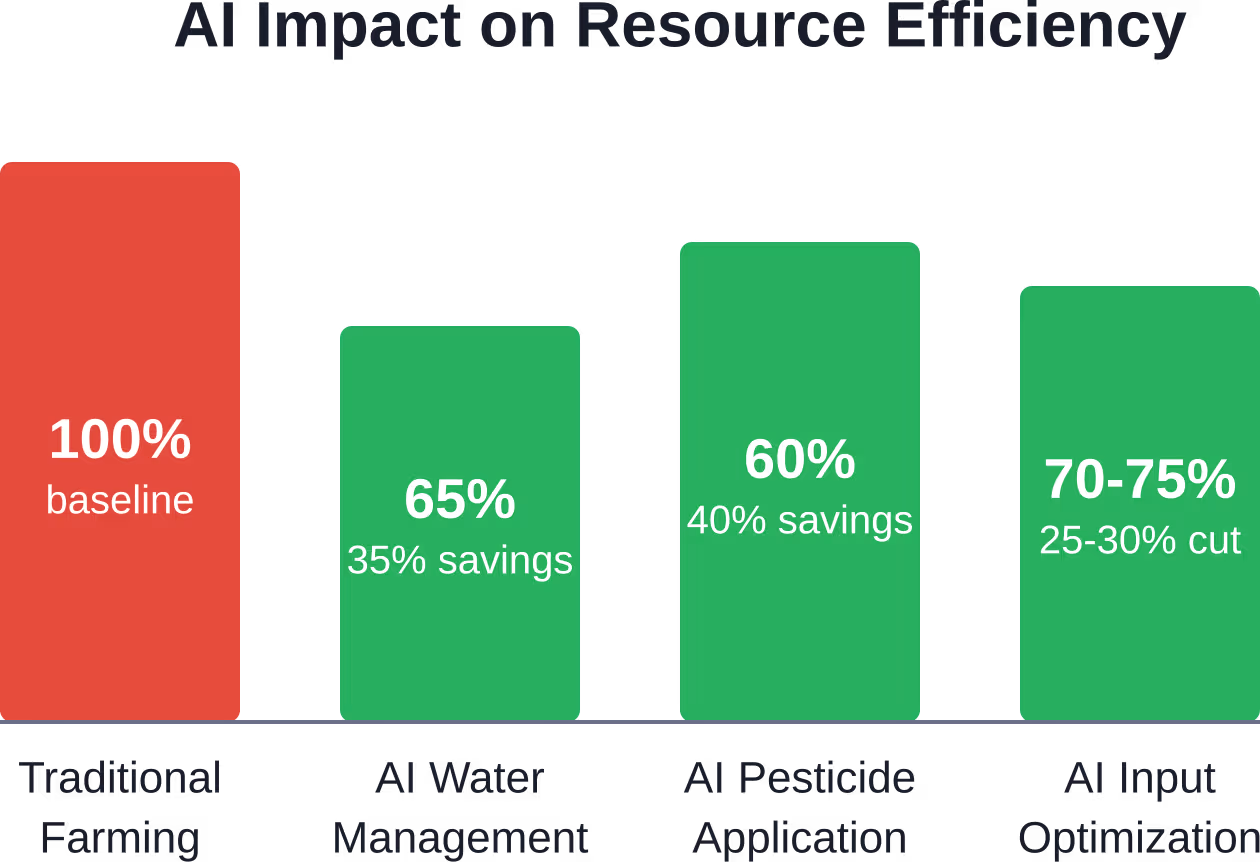
AI-driven irrigation systems have reduced water consumption by 35% while maintaining or improving yields. These systems integrate soil moisture sensors, weather forecasts, evapotranspiration models, and crop stage data to determine exactly when and where irrigation is needed.
The technology operates autonomously. Sensors detect moisture levels, algorithms calculate optimal application rates, and automated valves deliver precise amounts to specific zones. Farmers can monitor and adjust everything from a smartphone.
In regions facing critical water scarcity, these efficiency gains aren’t just about cost savings—they’re about survival. Agriculture that uses 35% less water can continue operating where traditional methods would fail.
Biotechnology and Genetic Innovation
Genetic improvement has driven agricultural productivity for millennia, but modern biotechnology accelerates the process dramatically. Gene editing tools like CRISPR allow precise modifications that would take decades through conventional breeding.
Bt cotton, engineered to produce its own insecticide, has been reported to reduce pesticide use by approximately 50% in regions like India. Drought-tolerant corn varieties maintain yields through dry spells that would devastate traditional hybrids. Disease-resistant crops reduce the need for fungicides and extend growing possibilities into previously unsuitable regions.
The environmental benefits extend beyond reduced chemical use. Crops that produce more per acre require less land expansion into natural habitats. Varieties that fix nitrogen more efficiently reduce fertilizer runoff into waterways. Heat-tolerant genetics help agriculture adapt to climate change rather than simply suffering through it.
Regulatory debates continue around genetic modification, but the technology’s potential to address food security while reducing environmental impact is increasingly difficult to dismiss.
Artificial Intelligence and Machine Learning Applications
AI doesn’t just collect data—it finds patterns humans would miss. Machine learning models trained on thousands of fields can predict optimal planting dates, forecast disease outbreaks, recommend fertilizer rates, and estimate yields weeks before harvest.
The adoption of AI in farming has led to a 20-30% reduction in overall input costs by optimizing when and where resources are applied. Instead of calendar-based applications, AI systems respond to actual field conditions and predictive models.
Computer vision applications identify individual weeds among crops, enabling targeted herbicide application or mechanical removal. This reduces chemical use by up to 90% compared to blanket spraying while maintaining weed control effectiveness.
Predictive analytics help farmers manage risk. Weather pattern analysis, market forecasting, and pest migration models inform decisions about crop selection, insurance coverage, and marketing timing. The goal isn’t eliminating risk—that’s impossible—but making it manageable.
Fleet Management and Automated Equipment
Modern farms operate fleets of expensive machinery—tractors, combines, sprayers, planters. Keeping this equipment running efficiently represents a major management challenge and cost center.
Fleet management technology tracks equipment location, fuel consumption, maintenance needs, and operator performance in real time. GPS systems prevent overlaps and gaps during field operations. Telematics data identifies inefficient practices and predicts maintenance requirements before breakdowns occur.
Automation is advancing rapidly. Autonomous tractors handle repetitive tasks like tillage and spraying without human operators. Robotic systems perform precise operations like thinning, weeding, and even harvesting specialty crops. These technologies address labor shortages while improving consistency and reducing compaction damage from heavy equipment.
The economic case for automation depends on farm size and crop type, but the trajectory is clear. As technology costs decline and labor availability tightens, automated equipment adoption will accelerate.
Controlled Environment Agriculture
Growing food indoors—in greenhouses, vertical farms, or hydroponic facilities—represents a fundamentally different approach. Controlled environment agriculture (CEA) eliminates weather variability, extends growing seasons, reduces pest pressure, and enables production near urban consumption centers.
The USDA Economic Research Service notes that growing public and private investments in alternative food production systems are leading to innovations in CEA. These systems include well-established greenhouse operations and emerging vertical farming enterprises.
CEA isn’t suitable for all crops—staple grains remain field-grown—but for high-value vegetables, herbs, and specialty crops, the economics increasingly work. Year-round production, dramatically reduced water use, and elimination of pesticides create value that offsets higher energy and capital costs.
As urban populations grow and supply chain resilience becomes priority, CEA will likely play an expanding role in food systems. The technology is still maturing, but the concept is proven.
Addressing Soil Health and Nutrient Management
Healthy soil is the foundation of agriculture. Years of intensive farming have damaged soil structure, reduced organic matter, and created nutrient imbalances that can lower productivity and increase environmental impact.
Use Data to Understand Soil Conditions
Technology now makes soil management more precise. Grid sampling systems can measure nutrient levels across different parts of a field, showing where soil is deficient and where it already has enough.
This helps farmers avoid treating the whole field the same when conditions vary from one area to another.
Apply Fertilizer More Precisely
Variable-rate application helps match fertilizer use to actual soil needs. GPS-guided spreaders adjust rates based on soil test maps, applying more where nutrients are lacking and less where levels are already adequate.
This supports better crop nutrition while reducing runoff, leaching, and unnecessary input costs.
Support Long-Term Soil Recovery
Conservation agriculture practices, such as minimal tillage, cover cropping, and diverse crop rotations, help rebuild soil health over time.
Technology can support these practices through precise planting equipment, drone imagery for monitoring cover crop growth, and data systems that track long-term changes in soil quality.
Economic Viability and Adoption Barriers
Technology solves problems on paper. But does it work economically for actual farmers?
The answer depends on farm size, crop type, and current practices. Precision agriculture technology requires significant upfront investment—GPS systems, sensors, software subscriptions, and modified equipment. For large-scale operations, the ROI is usually clear. Yield improvements of 20-30% and input savings of similar magnitude pay for technology quickly.
Small family farms face tougher economics. These operations, which represent 86% of U.S. farms, often lack the capital for major technology investments. They also tend to have less technical expertise and support infrastructure.
Several factors influence adoption rates. Technology that integrates with existing equipment is easier to implement than systems requiring wholesale replacement. Solutions that demonstrate clear, rapid payback attract more interest than those with benefits accruing over many years. Farmer-friendly interfaces matter—complex systems that require IT expertise won’t see broad adoption regardless of their technical capabilities.
Education and demonstration are critical. Farmers adopt technology they’ve seen working on neighbor farms far more readily than solutions promoted only through marketing. Extension programs, grower networks, and on-farm research trials play essential roles in technology diffusion.
| Technology Category | Typical Investment | Payback Period | Best Suited For |
|---|---|---|---|
| GPS Guidance Systems | Moderate | 2-4 seasons | All farm sizes |
| Variable Rate Technology | Moderate-High | 3-5 seasons | Medium-large operations |
| Soil Sensors & IoT | Low-Moderate | 1-3 seasons | High-value crops, all sizes |
| Agricultural Drones | Moderate | 2-4 seasons | Medium-large farms |
| AI Analytics Platforms | Low (subscription) | 1-2 seasons | All farm sizes |
| Automated Equipment | Very High | 5-8 seasons | Large operations |
Climate Resilience Through Technology
Climate change represents agriculture’s most profound long-term challenge. Temperature extremes, shifting precipitation patterns, and more frequent severe weather events all threaten food production stability.
Technology can’t stop climate change, but it can help agriculture adapt. Weather monitoring networks and predictive models give farmers advance warning of adverse conditions. Crop genetics tailored for heat tolerance, drought resistance, or flood survival extend production possibilities into more challenging environments.
Precision irrigation maintains productivity during dry spells. Tile drainage prevents waterlogging during excessive rainfall. Data analytics identify optimal planting windows that account for changing seasonal patterns. These adaptations won’t work everywhere—some regions will become unsuitable for current crops regardless of technology—but they buy time and preserve productivity where farming remains viable.
The FAO’s engagement with private sector partners through its Private Sector Advisory Group has focused on aligning climate action with innovation in agrifood systems transformation. These collaborations between public institutions and technology companies accelerate the development and deployment of climate-smart solutions.
Sustainable Intensification: Producing More with Less Impact
Agriculture faces twin demands: produce more food, but do it more sustainably. This seems contradictory until you realize that efficiency improvements serve both goals simultaneously.
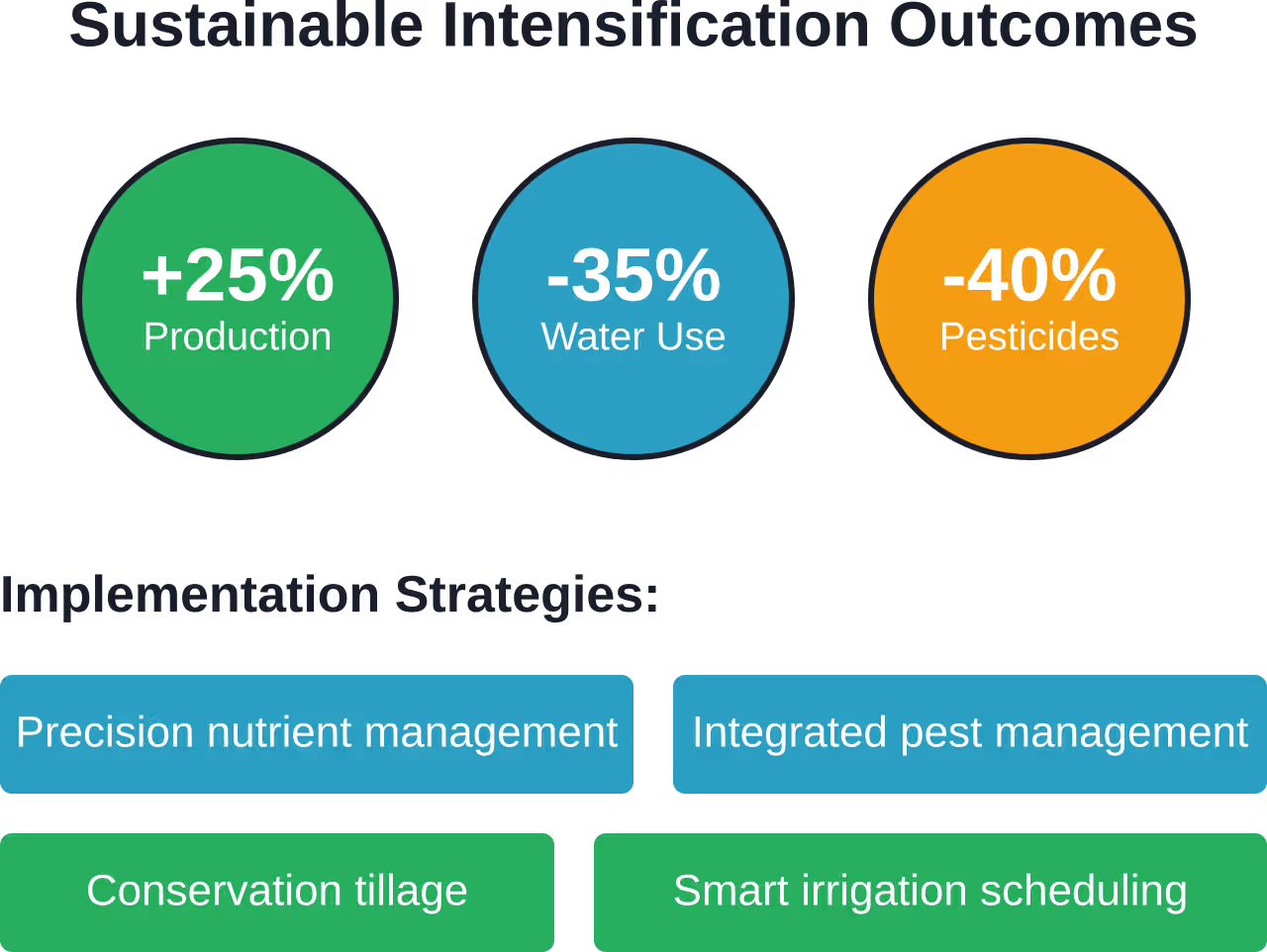
Sustainable intensification means increasing yields per acre while reducing environmental footprint per unit of production. Technology is the primary tool making this possible. Precision agriculture applies inputs exactly where needed, eliminating waste. Integrated pest management uses multiple tactics—biological controls, resistant varieties, targeted applications—to protect crops with minimal chemical use.
The data supports this approach. Production has surged by 25% in regions implementing comprehensive technology packages, while pesticide usage has dropped 40% and water consumption fallen 35%. These aren’t trade-offs—they’re synergies enabled by smarter management.
Conservation agriculture practices work similarly. Reduced tillage preserves soil structure, retains moisture, and sequesters carbon while maintaining yields. Cover crops prevent erosion, improve soil health, and reduce fertilizer needs. Technology supports these practices through specialized equipment and monitoring systems that optimize their implementation.
The Human Element: Farmer Engagement and Technology Design
Technology succeeds only when farmers actually use it. That sounds obvious, but it’s frequently overlooked by developers who prioritize technical capabilities over user experience.
Research from the University of Florida emphasizes the importance of centering farmers in technology development. Engagement shouldn’t be an afterthought—it should guide design from the beginning. What problems do farmers actually prioritize? What interfaces do they find intuitive? What level of technical support do they need?
Successful agricultural technology shares common characteristics. It solves real problems farmers care about. It integrates smoothly with existing workflows rather than demanding complete operational redesign. It provides value quickly enough that farmers see returns before their patience runs out. And it’s supported by education, troubleshooting resources, and responsive customer service.
Technology that ignores these principles—no matter how sophisticated—tends to sit unused. Community discussions frequently mention expensive systems purchased with enthusiasm but abandoned after frustrating implementation experiences.
Extension programs bridge the gap between technology potential and practical application. On-farm demonstrations, farmer networks, and educational workshops help growers understand what technology can do and how to use it effectively. This support infrastructure is as important as the technology itself.
Future Trajectories and Emerging Solutions
Agricultural technology continues evolving rapidly. Several trends look particularly promising for addressing ongoing challenges.
- Artificial intelligence capabilities are expanding from data analysis into autonomous decision-making. Future systems won’t just recommend actions—they’ll execute them, continuously optimizing crop management with minimal human intervention. This autonomous agriculture could dramatically improve efficiency while reducing labor requirements.
- Robotics are becoming more capable and affordable. Specialized robots for weeding, thinning, harvesting, and crop monitoring are transitioning from research projects to commercial products. As costs decline, these tools will reach more farmers and crop types.
- Biological innovations complement mechanical ones. New nitrogen-fixing microbes could reduce fertilizer needs. Beneficial insects and microbial pesticides offer alternatives to synthetic chemicals. Gene editing continues producing varieties with enhanced resilience, nutrition, and productivity.
- Digital integration is deepening. Individual technologies—sensors, drones, GPS systems—are connecting into comprehensive farm management platforms that orchestrate all operations from a unified interface. This integration multiplies individual technologies’ value by enabling system-level optimization.
But here’s the thing—technological capability doesn’t guarantee adoption. Future solutions must remain economically viable, user-friendly, and aligned with farmer priorities. The most sophisticated system means nothing if it sits in a barn because it’s too complex or expensive for practical use.
Policy and Infrastructure Needs
Technology can’t operate in a vacuum. Supportive policies and infrastructure are essential for realizing its potential.
- Rural broadband access remains inadequate across much farming regions. IoT sensors, cloud-based analytics, and real-time monitoring all require reliable internet connectivity. Without it, many precision agriculture tools simply can’t function. Expanding rural broadband infrastructure should be a policy priority.
- Financial support mechanisms help farmers adopt technology. Tax incentives for precision agriculture equipment, cost-share programs for conservation technology, and low-interest loans for farm modernization all reduce adoption barriers, especially for smaller operations.
- Research funding drives innovation. Public investment in agricultural technology research—through land-grant universities, USDA programs, and international organizations—creates foundational knowledge that enables private sector development. This public-private partnership model has proven highly effective.
- Regulatory frameworks need updating for emerging technologies. Gene editing regulations, autonomous equipment standards, and data privacy protections for farm information all require thoughtful policies that enable innovation while addressing legitimate concerns.
Moving Forward: Agriculture’s Technology-Enabled Future
Agriculture stands at a defining moment. The challenges are real, significant, and urgent. Climate change isn’t waiting. Water resources are depleting. Soil health continues declining in many regions. And the global population keeps growing with expectations for abundant, affordable food.
But the solutions are equally real. Precision agriculture, AI-driven management, smart irrigation, biotechnology, drones, sensors, and automation aren’t theoretical concepts—they’re working technologies delivering measurable results on commercial farms right now.
The path forward requires continued innovation, certainly. But it also demands better technology deployment, farmer education, supportive policies, and infrastructure investment. The tools exist. Making them accessible and practical for diverse farm operations is the remaining work.
Look, farming has always been about adapting to challenges. Farmers have dealt with unpredictable weather, pest pressures, and market volatility for thousands of years. What’s different now is the sophistication of available tools and the urgency of global food security needs.
Technology won’t solve every agricultural problem automatically. Farmer knowledge, experience, and decision-making remain irreplaceable. But technology can amplify that expertise, turning individual observations into field-wide insights, converting intuition into optimized action, and transforming traditional practices into sustainable, productive systems capable of feeding a growing world.
The future of agriculture is being written today—in experimental vineyards in New York, on precision-managed farms in the Midwest, in AI development labs, and on millions of farms worldwide where growers are testing, adapting, and improving these technologies for real-world conditions.
That future is neither guaranteed nor automatic. It requires investment, innovation, education, and commitment from farmers, technologists, policymakers, and society. But the trajectory is promising, the tools are increasingly effective, and the potential to create truly sustainable, productive agriculture is within reach.
The question isn’t whether technology can help solve agriculture’s problems. The data makes that clear. The question is how quickly we can scale proven solutions, support farmer adoption, and build the infrastructure needed to realize that potential across diverse agricultural systems worldwide.
Frequently Asked Questions
Agriculture faces interconnected challenges including climate change impacts, soil degradation, water scarcity, and the need to increase production 70% by 2050 to feed 9.7 billion people. Economic pressures, labor shortages, and regulatory complexity compound these environmental issues. Small family farms, which represent 86% of U.S. operations, struggle particularly with high debt levels and low profit margins.
Precision agriculture technologies typically improve yields by 20-30% compared to traditional uniform management, according to multiple studies. Specific improvements vary by crop and technology—Cornell research found tiled fields yielded an average of 23 bu/acre more corn and 9 bu/acre more soybeans than non-tiled fields. Variable rate technology for corn shows approximately 22% yield improvements in Midwest operations.
Affordability depends on the specific technology and farm circumstances. GPS guidance systems and subscription-based analytics platforms have moderate costs and relatively quick payback periods suitable for small operations. IoT soil sensors work well for high-value crops at any scale. Expensive equipment like autonomous tractors remains economically viable only for larger farms. Cost-share programs and equipment leasing can help smaller operations access technology.
AI-driven irrigation systems have reduced water consumption by 35% by integrating soil moisture sensors, weather forecasts, evapotranspiration models, and crop growth stage data to determine precise irrigation timing and amounts. These systems apply water only when and where needed, eliminating the waste inherent in calendar-based or uniform irrigation schedules. Automated valves deliver specific volumes to different field zones based on actual conditions.
Computer vision systems that identify individual weeds enable targeted herbicide application, reducing usage by up to 90% compared to broadcast spraying. Biotechnology solutions like Bt cotton have reduced pesticide use by approximately 50% in regions like India.
Controlled environment agriculture (CEA) works economically for high-value crops like vegetables, herbs, and specialty produce where year-round production, reduced water use, and pesticide elimination create value offsetting higher energy and capital costs. CEA isn’t suitable for staple grains, which remain field-grown. Economic viability improves near urban markets where reduced transportation costs and premium pricing for locally-grown produce enhance margins. The USDA notes growing investment in CEA innovation.
Major barriers include high upfront costs, especially for small operations carrying significant debt; lack of technical expertise and training; inadequate rural broadband for connectivity-dependent systems; integration challenges with existing equipment; unclear return on investment timelines; and insufficient local support for troubleshooting. Technology complexity and poor user interfaces also limit adoption. Extension programs, farmer networks, and on-farm demonstrations help overcome these barriers by providing education and proof of concept.