

Quick Summary: AgriPilot.ai is an AI-powered farming platform designed to help agricultural operations optimize crop monitoring, resource management, and decision-making through machine learning and data analytics. The tool leverages satellite imagery, IoT sensors, and predictive models to provide real-time insights for precision agriculture. While specific pricing and feature details remain limited in public sources, the platform represents the growing trend of AI integration in sustainable farming practices.
Farming technology has shifted dramatically over the past decade. What once relied purely on experience and manual observation now integrates artificial intelligence, satellite data, and predictive analytics.
AgriPilot.ai enters this competitive landscape as an AI-driven solution for precision agriculture. But does it deliver measurable value, or is it just another tech platform promising transformation without substance?
This review examines AgriPilot.ai’s capabilities, compares it against established competitors, and evaluates whether the platform justifies adoption for modern farming operations.
What Is AgriPilot.ai?
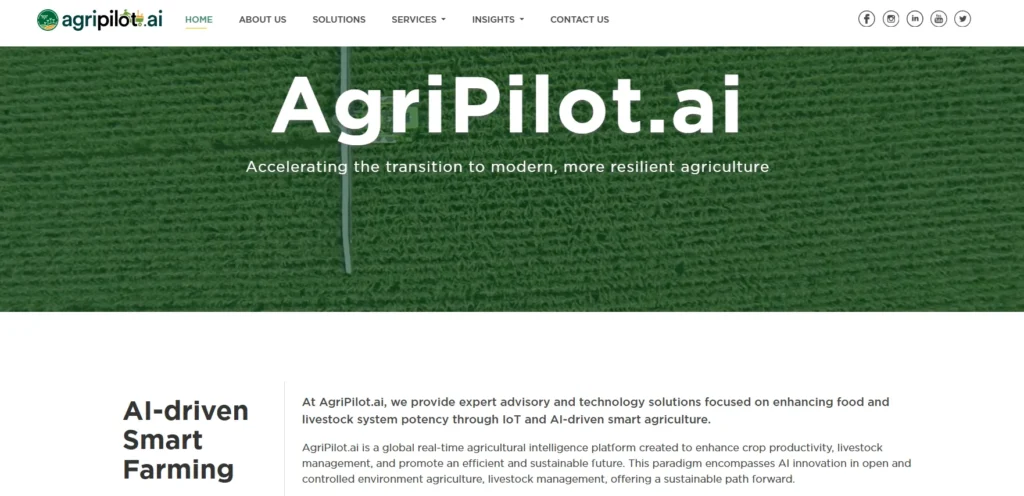
AgriPilot.ai is a next-generation farming intelligence platform that applies machine learning algorithms to agricultural data. The system processes inputs from multiple sources—satellite imagery, ground sensors, weather stations, and historical yield records—to generate actionable recommendations.
The platform targets commercial farming operations seeking to reduce input costs, improve crop yields, and minimize environmental impact through data-driven decision-making.
According to the official AgriPilot.ai website, the platform focuses on delivering AI and ML farming solutions designed for agricultural excellence. However, detailed public documentation about specific features, pricing tiers, and integration capabilities remains somewhat limited compared to more established competitors.
Core Technology Foundation
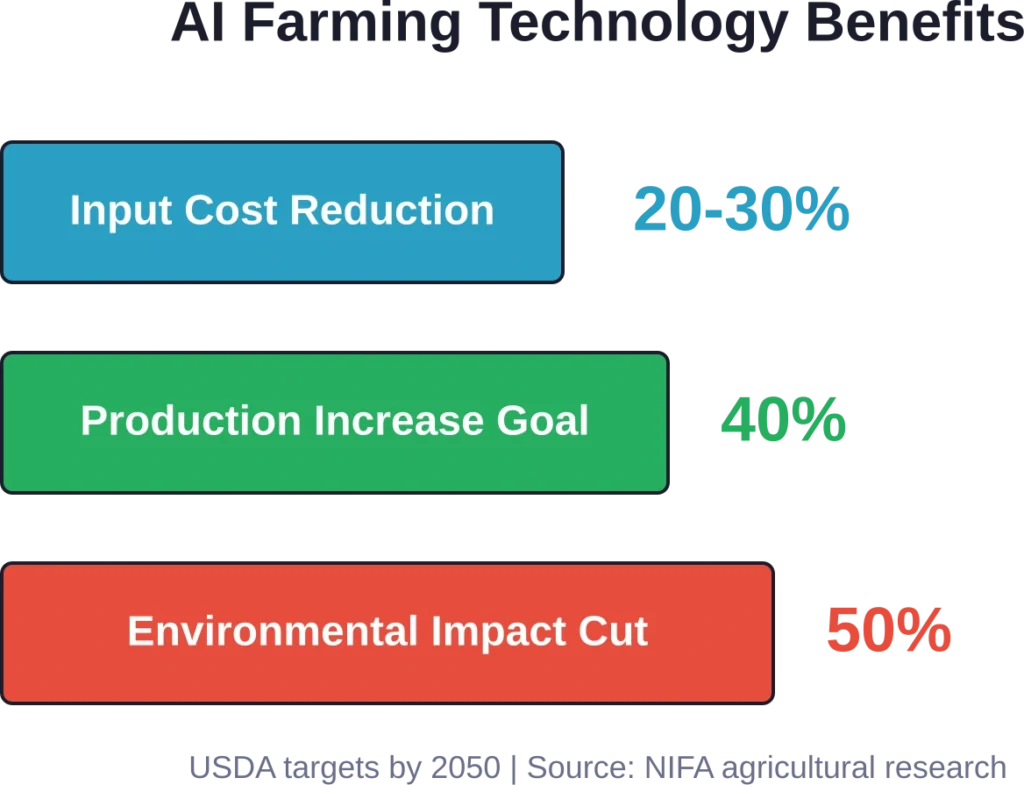
The platform builds on advances in computer vision, machine learning, and edge computing—technologies that NIFA (National Institute of Food and Agriculture) identifies as critical for meeting the USDA’s ambitious 2050 targets of a 40% production increase with 50% environmental impact decrease.
These technologies enable computer systems to perform tasks traditionally requiring human intelligence, including pattern recognition in crop health, predictive modeling for pest outbreaks, and optimization algorithms for resource allocation.
Real talk: the theoretical foundation is solid. The question becomes whether AgriPilot.ai’s implementation delivers practical results in field conditions.
Key Features and Capabilities
Based on available information and comparison with similar platforms in the precision agriculture space, AgriPilot.ai appears to offer several core capabilities.
Crop Health Monitoring
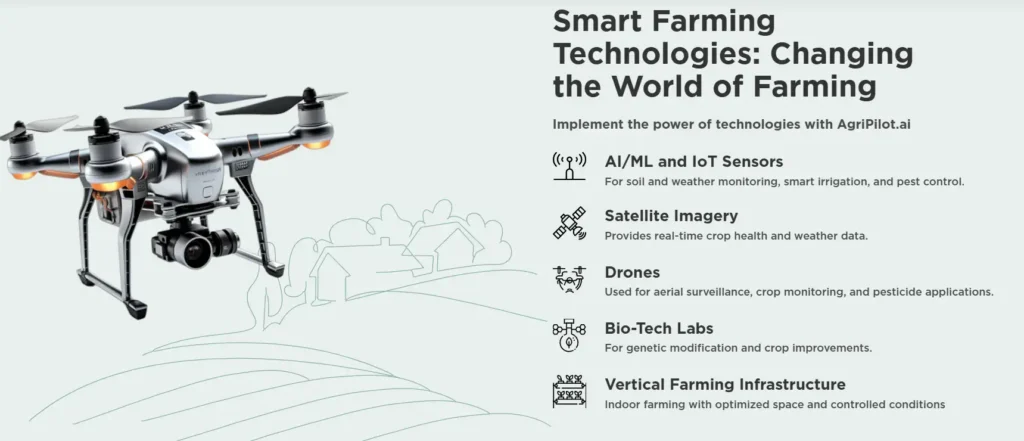
The platform likely employs satellite imagery analysis and potentially drone-based imaging to assess crop conditions across large acreages. This typically involves spectral analysis—examining how plants reflect different wavelengths of light to identify stress, disease, or nutrient deficiencies before they’re visible to the naked eye.
Competitor platforms like FlyPix AI report accuracy rates up to 85% in crop monitoring applications. Whether AgriPilot.ai achieves comparable precision isn’t publicly documented, though the underlying technology should theoretically support similar performance levels.
Predictive Analytics
Machine learning models can forecast yield potential, predict optimal harvest timing, and identify emerging pest or disease threats. These predictions draw from historical data patterns, current field conditions, and regional agricultural trends.
According to NIFA research on precision agriculture adoption, stakeholders have varying expectations for ROI from different technologies, with established solutions like variable rate technology showing 72% positive ROI expectations. That strong track record for proven technologies demonstrates the value proposition, but it requires quality data inputs and proper system calibration.
Resource Optimization
Precision agriculture platforms excel at targeted resource application—applying water, fertilizer, and pesticides only where needed rather than uniformly across entire fields. This approach cuts waste and protects profit margins in an industry where economics exhibit notoriously narrow margins.
IEEE technical reports from May 2026 emphasize that precision fertilizer technology using real-time soil data can protect against fertilizer shortages while boosting yields. This capability becomes increasingly critical as global supply chains face disruptions.
Data Integration and Compatibility
Modern farming operations already use various technologies—GPS-guided equipment, weather stations, soil sensors, yield monitors. A new platform must integrate with existing systems rather than requiring complete infrastructure replacement.
According to NIFA research on connected edge computing for AI-based agroecosystems, effective platforms should offer flexible connectivity to different AI agricultural platforms including cloud services from IBM, Amazon AWS, and Microsoft Azure. This connectivity enables cost-effectiveness and operational flexibility.
Whether AgriPilot.ai provides this level of integration flexibility isn’t explicitly documented in available sources. Prospective users should verify compatibility with their existing technology stack before committing.
How AgriPilot.ai Compares to Competitors
The precision farming software market has matured significantly, with established players offering proven capabilities. Here’s where AgriPilot.ai fits in the competitive landscape.
Established Alternatives
Several platforms have documented track records and transparent pricing:
| Platform | Starting Price | Key Strength |
|---|---|---|
| FlyPix AI Starter | ~€50–100/user/month | 85% accuracy crop monitoring, 50 credits (~1 gigapixel) |
| OneSoil Satellite PRO | Depends on field area | Comprehensive satellite indexes, field comparison tools |
| Croptracker GAP Audit | From ~$30–50/month | Quality control and compliance tracking |
| Croptracker Quality Control | From ~$300–450/month | Enterprise-grade quality management |
These platforms publish clear pricing and feature specifications. AgriPilot.ai’s competitive positioning remains less transparent, which creates uncertainty for operations conducting cost-benefit analysis.
Feature Parity Assessment
Top-tier precision farming platforms typically include:
- Real-time crop health monitoring with satellite and/or drone imagery
- AI-powered predictive analytics for yield forecasting
- Automated alerts for pest, disease, and stress detection
- Variable rate application maps for inputs
- Historical data tracking and comparison
- Mobile access for field-level decision making
- Integration with farm management systems
Based on AgriPilot.ai’s positioning as a next-generation AI/ML solution, the platform should theoretically offer most of these capabilities. However, without detailed feature documentation or user testimonials, confirming specific functionality requires direct contact with the provider.
Market Positioning Challenge
Here’s the thing though—the precision agriculture market faces significant adoption barriers. According to the 2022 Precision Agriculture Dealership Survey cited in NIFA research, stakeholders have lower expectations for positive ROI from emerging technologies compared to established solutions.
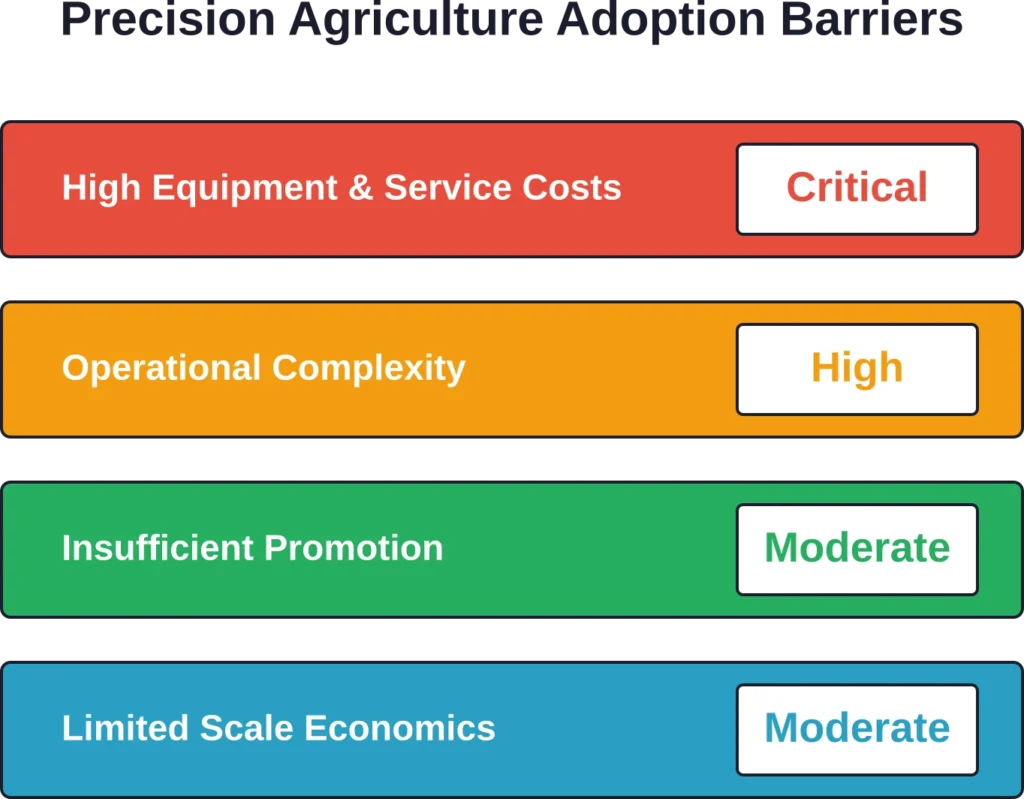
Only 20% of producers believe UAV imagery delivers positive ROI, while 72% see value in variable rate technology for fertilizer application. This skepticism stems from high equipment prices, operational difficulty, and insufficient promotion.
For AgriPilot.ai to overcome this barrier, the platform needs to demonstrate a clear value proposition with transparent pricing and proven results. Limited public information makes that evaluation difficult for prospective customers.

Analyze Agricultural Images with FlyPix AI
AgriPilot.ai is tied to AI-supported agriculture and field workflows. FlyPix AI fits the image-analysis side of this work by helping teams use satellite, drone, and aerial imagery to detect objects, segment field areas, and review visible land conditions.
FlyPix AI can support agriculture-related image analysis tasks such as:
- Detecting visible features across fields, roads, buildings, or farm areas
- Segmenting vegetation, land cover, water, or infrastructure areas
- Comparing field imagery over time to track visible changes
- Building custom AI models for project-specific agricultural features
Contact FlyPix AI to discuss how geospatial image analysis can support agricultural image review.
Technology Adoption Considerations
Implementing AI-driven farming tools involves more than software subscription costs. Several factors determine whether adoption delivers actual value.
Operation Scale Requirements
According to NIFA research, precision agriculture technology adoption is most common on larger operations where hardware and technical support costs spread over more acres. In South Dakota, which leads PA technology adoption at 53%, implementation concentrates on large-scale farms.
Smaller operations face cost-effectiveness challenges. A platform subscription might cost the same whether managing 100 acres or 10,000 acres, but the per-acre value proposition differs dramatically.
Data Quality Dependencies
Machine learning models are only as good as their training data. An AI system trained primarily on corn and soybean operations in the Midwest might perform poorly for specialty crops in different climates.
Effective platforms require:
- Historical yield data for the specific operation
- Accurate soil maps and testing results
- Calibrated sensor inputs
- Regional pest and disease databases
- Local weather station integration
Operations lacking this foundational data infrastructure won’t extract full value from AI analytics, regardless of platform sophistication.
Technical Expertise Requirements
One common challenge: many precision agriculture platforms assume technical proficiency that farm operators may not possess. User interfaces designed by software engineers don’t always align with agricultural workflows.
NIFA emphasizes that cost-effective and easily operable technologies are essential for encouraging broader adoption. Platforms requiring extensive training or technical support create barriers that limit practical utility.
How AgriPilot.ai addresses usability isn’t well documented. The platform’s accessibility for non-technical users remains an open question worth investigating during evaluation.
Pricing and Value Proposition
Cost structure represents a critical consideration for any farm management technology. Unfortunately, AgriPilot.ai doesn’t publish transparent pricing on readily accessible channels.
Information Gap
Unlike competitors that list subscription tiers and per-acre costs, AgriPilot.ai appears to use a contact-based sales model. This approach might work for enterprise customers with complex requirements, but it creates friction for operations conducting preliminary evaluation.
For comparison, established platforms range from €200 annually for basic satellite monitoring to several hundred dollars monthly for comprehensive management suites. Without published pricing, potential customers can’t perform initial cost-benefit analysis.
ROI Calculation Factors
Evaluating return on investment for precision agriculture technology involves multiple variables:
| Factor | Impact on ROI | Measurement Challenge |
|---|---|---|
| Input cost reduction | Direct savings on fertilizer, water, pesticides | Requires baseline consumption data |
| Yield improvement | Additional revenue from increased production | Weather variability complicates attribution |
| Labor efficiency | Reduced scouting time, optimized operations | Difficult to quantify opportunity cost |
| Risk mitigation | Early pest/disease detection prevents losses | Prevented losses are counterfactual |
Operations seeing 20–30% input cost reductions can justify significant technology investments. But achieving those results requires proper implementation, quality data, and operational discipline—not just software subscription.
Total Cost of Ownership
Platform subscription represents only part of the financial commitment. Additional costs include:
- Hardware sensors and connectivity infrastructure
- Staff training and learning curve productivity losses
- Data management and storage requirements
- Ongoing technical support and troubleshooting
- Integration with existing farm management systems
Without clear pricing documentation, assessing whether AgriPilot.ai offers competitive total cost of ownership becomes speculative rather than analytical.
Implementation and Support
Software capabilities matter less than successful deployment. Even sophisticated AI platforms deliver zero value if implementation fails.
Onboarding Process
Effective precision agriculture platforms provide structured onboarding that includes:
- Initial field mapping and boundary definition
- Historical data import and validation
- Sensor calibration and connectivity testing
- User training on core workflows
- Baseline establishment for comparison metrics
This process typically requires several weeks to months before the system generates reliable insights. Operations should budget time for proper setup rather than expecting immediate results.
Technical Support Availability
Agricultural operations don’t pause for technical difficulties. When planting or spraying windows open based on weather conditions, equipment must function reliably.
Critical support considerations include:
- Response time guarantees for urgent issues
- Availability during peak agricultural seasons
- Regional expertise matching local crop systems
- Communication channels (phone, email, chat)
- Self-service documentation and troubleshooting resources
AgriPilot.ai’s support infrastructure isn’t publicly documented. Prospective users should request specific service level agreements before committing.
Update and Improvement Cadence
AI systems improve through continuous learning and model refinement. Platforms should regularly update algorithms based on expanding datasets and new research.
NIFA research on AI-based agroecosystems emphasizes that edge computing devices need flexible Over-The-Air programmable capabilities. This allows platforms to deploy improvements without requiring hardware replacement or manual updates.
Whether AgriPilot.ai provides automatic updates and continuous improvement isn’t clearly documented in available sources.
Use Case Scenarios
Different agricultural operations have distinct needs. A platform excelling for large-scale commodity crops might perform poorly for specialty agriculture.
Large-Scale Row Crop Operations
Corn, soybean, wheat, and cotton operations covering thousands of acres represent the primary target market for most precision agriculture platforms. These operations benefit from:
- Variable rate fertilizer application across soil zones
- Satellite-based crop health monitoring replacing manual scouting
- Yield prediction for marketing and storage planning
- Historical trend analysis for continuous improvement
The scale economics work clearly here—even modest per-acre improvements generate substantial aggregate value.
Specialty Crop Production
Vegetables, fruits, nuts, and other high-value crops face different challenges than commodity agriculture. These operations prioritize:
- Quality prediction and grading optimization
- Harvest timing for market window maximization
- Disease detection in high-density plantings
- Compliance documentation for food safety standards
AI platforms trained primarily on commodity crops may lack models optimized for specialty production systems. Whether AgriPilot.ai supports diverse crop types isn’t explicitly documented.
Livestock Integration
According to NIFA research on precision agriculture in animal production, current technologies allow monitoring individual animal feed consumption, movement, temperature, lameness, milk production, and weight gain. These narrow profit margins make individual animal performance critically important.
Some agricultural platforms integrate crop and livestock management. AgriPilot.ai provides dedicated livestock management capabilities through its specialized ‘Livestock Pilot’ module, designed for tracking animal populations, automated monitoring, precision feeding, disease detection, and milking system efficiency.
Organic and Regenerative Systems
Organic certification prohibits synthetic inputs, while regenerative agriculture prioritizes soil health and ecosystem services. These approaches need different decision support than conventional production.
Platform considerations for alternative systems include:
- Weed detection for mechanical control timing
- Cover crop biomass assessment
- Soil organic matter trend monitoring
- Biodiversity and beneficial insect tracking
Most precision agriculture platforms optimize conventional input management. Whether AgriPilot.ai supports organic and regenerative decision-making represents an important question for operations using these systems.

Data Privacy and Security
Agricultural data represents valuable intellectual property. Yield maps, input application records, and operational details reveal competitive information that farm operations may want protected.
Data Ownership Questions
Critical privacy considerations include:
- Who owns field-level data collected through the platform?
- Can the provider aggregate and sell anonymized data to third parties?
- What happens to stored data if the operation cancels subscription?
- Are data sharing permissions granular and controllable?
Some platforms claim ownership of aggregated insights derived from user data, even if individual operations retain ownership of their specific records. This distinction matters for operations concerned about competitive intelligence.
Security Infrastructure
Cloud-based agricultural platforms handle sensitive information requiring robust security:
- Encryption for data in transit and at rest
- Multi-factor authentication for user access
- Regular security audits and penetration testing
- Compliance with agricultural data privacy frameworks
- Disaster recovery and backup procedures
AgriPilot.ai should provide clear documentation about security measures, but this information isn’t prominently available in public sources. Operations handling sensitive data should request detailed security specifications.
Regulatory Compliance
Agricultural operations increasingly face data reporting requirements for environmental compliance, subsidy programs, and carbon credit verification. Platforms should facilitate rather than complicate regulatory compliance.
Useful capabilities include automated report generation, audit trail maintenance, and export formats compatible with government systems. Whether AgriPilot.ai provides these compliance tools requires verification.
Future Development and Sustainability
Technology platforms require ongoing investment and development. A solution that’s competitive today might become obsolete without continuous improvement.
Market Viability
The precision agriculture market has seen consolidation, with larger companies acquiring innovative startups. Operations investing in platform adoption face risk if their chosen provider exits the market or gets acquired with discontinuation of product lines.
Established platforms with diversified revenue streams and substantial user bases demonstrate greater sustainability than new entrants. AgriPilot.ai’s market position and financial backing aren’t publicly documented, making long-term viability assessment difficult.
Technology Roadmap
According to NIFA research, meeting USDA’s 2050 agriculture goals requires combining Big Data, Internet of Things, Information and Communications Technologies, and technologies yet to be developed. Effective platforms should demonstrate clear development roadmaps aligned with these industry directions.
Key emerging capabilities include:
- Enhanced edge computing for real-time field decisions
- Improved sensor fusion combining multiple data sources
- Robotic integration for automated implementation of AI recommendations
- Carbon accounting and climate impact modeling
- Supply chain traceability and blockchain integration
Whether AgriPilot.ai actively develops these capabilities or focuses on current feature optimization isn’t clearly communicated in available materials.
Community and Ecosystem
Successful agricultural technology platforms build ecosystems including equipment manufacturers, input suppliers, agronomists, and research institutions. These partnerships enable broader functionality and knowledge sharing.
Platform ecosystem indicators include:
- Published API documentation for third-party developers
- Integration marketplace with partner applications
- User community forums and knowledge bases
- Research partnerships with agricultural universities
- Case studies and testimonials from diverse operations
Limited public information about AgriPilot.ai’s ecosystem development suggests either early-stage market presence or deliberate focus on direct customer relationships rather than platform ecosystem building.
Practical Recommendations
Based on available information, here’s practical guidance for operations considering AgriPilot.ai or similar platforms.
Evaluation Process
Before committing to any precision agriculture platform:
- Request detailed product demonstrations using actual field data, not generic examples
- Obtain transparent pricing including all implementation, training, and ongoing costs
- Verify compatibility with existing equipment and software systems
- Contact current users for unfiltered feedback about real-world performance
- Negotiate pilot programs testing the platform on limited acreage before full deployment
- Review contracts carefully regarding data ownership and exit provisions
Don’t rely solely on marketing materials or theoretical capabilities. Insist on practical validation relevant to specific operations.
Alternative Approaches
Precision agriculture technology adoption doesn’t require all-or-nothing commitment. Incremental approaches reduce risk:
- Start with free or low-cost satellite monitoring services to establish baseline data
- Implement single-purpose solutions for highest-priority challenges before comprehensive platforms
- Leverage university extension programs offering precision agriculture consulting
- Join farmer networks sharing experiences with different technology platforms
- Focus on data infrastructure development before investing in analytics platforms
Operations with limited precision agriculture experience might gain more value from simpler, proven solutions than cutting-edge AI platforms requiring sophisticated data inputs.
Success Factors
Technology alone doesn’t deliver results. Successful precision agriculture adoption requires:
| Success Factor | Why It Matters | Common Mistake |
|---|---|---|
| Management commitment | Requires time investment, workflow changes | Delegating to staff without leadership buy-in |
| Quality baseline data | AI models need historical context | Expecting insights without data foundation |
| Realistic expectations | Benefits accrue over multiple seasons | Expecting immediate ROI in first year |
| Actionable focus | Data without implementation changes nothing | Collecting insights but not modifying practices |
The most sophisticated platform delivers zero value if recommendations don’t translate into operational changes. Focus on platforms that fit existing decision-making workflows rather than requiring complete operational restructuring.
Industry Context and Trends
Understanding broader agricultural technology trends helps evaluate individual platforms like AgriPilot.ai within market context.
Government Investment in AI Agriculture
Federal support signals long-term sector commitment. In 2024, NIFA awarded $280,307 to Kansas State University to address growing demands for a food industry workforce skilled in smart technology. These educational investments indicate sustained industry direction toward AI integration.
Similarly, connected edge computing research projects like the South Dakota State University initiative (running through November 2025) develop foundational technologies that commercial platforms will eventually incorporate.
This research pipeline suggests continued AI agriculture advancement regardless of individual platform success or failure.
Adoption Rate Trajectory
South Dakota leads precision agriculture adoption at 53%, but that still means nearly half of operations in a progressive state haven’t implemented these technologies. National adoption rates lag considerably behind leading regions.
Barriers to adoption—high costs, operational complexity, uncertain ROI—affect all platforms including AgriPilot.ai. Success requires addressing these fundamental challenges, not just offering technically sophisticated features.
Sustainability Imperatives
The USDA’s ambitious 2050 targets of a 40% production increase with 50% environmental impact decrease create clear policy direction favoring precision agriculture. These goals are mathematically impossible without significant technology adoption.
This policy environment suggests increasing regulatory and subsidy support for precision agriculture technology. Platforms demonstrating environmental benefit documentation might access funding sources unavailable to conventional approaches.
Whether AgriPilot.ai positions itself for sustainability program participation isn’t documented in available sources, but this represents potential competitive differentiation.
Frequently Asked Questions
AgriPilot.ai is an artificial intelligence platform designed for precision agriculture applications. The system uses machine learning algorithms to analyze agricultural data from satellites, sensors, and other sources to provide farming recommendations. Core capabilities likely include crop health monitoring, yield prediction, resource optimization, and decision support for farming operations seeking to improve productivity while reducing input costs.
AgriPilot.ai doesn’t publish transparent pricing on publicly accessible channels. This contrasts with competitors that offer clear subscription tiers ranging from €200 annually for basic satellite monitoring to several hundred dollars monthly for comprehensive management platforms. Prospective users need to contact AgriPilot.ai directly for pricing information specific to their operation size and requirements. When evaluating costs, remember to include hardware, training, and integration expenses beyond the software subscription itself.
Specific crop compatibility information for AgriPilot.ai isn’t extensively documented in publicly available sources. Most precision agriculture platforms optimize for large-scale commodity crops like corn, soybeans, wheat, and cotton where development investment delivers the broadest market. Specialty crops, organic systems, and regenerative agriculture approaches may require different analytical models. Operations growing non-commodity crops should verify that AgriPilot.ai has appropriate algorithms and training data for their specific production systems before adoption.
Direct comparison proves difficult due to limited public information about AgriPilot.ai’s specific features and pricing. Established competitors offer documented capabilities—FlyPix AI reports 85% accuracy in crop monitoring with pricing starting at €100/user/month, while OneSoil’s Satellite PRO plan costs €200/year for comprehensive satellite analysis. AgriPilot.ai positions itself as a next-generation AI/ML solution, but without detailed feature documentation or user testimonials, quantitative performance comparison requires direct evaluation through product demonstrations and pilot testing.
Data privacy and ownership policies for AgriPilot.ai aren’t prominently documented in publicly available materials. Agricultural data represents valuable intellectual property, making ownership questions critical. Key issues include whether the platform provider can aggregate and sell anonymized data, what happens to stored information after subscription cancellation, and how granular data sharing controls are. Operations concerned about data privacy should request explicit documentation about ownership rights, security measures, and third-party sharing policies before providing field-level information to any agricultural technology platform.
Precision agriculture technology generally delivers clearest ROI for larger operations where fixed costs spread across more acres. Research shows that even in South Dakota, which leads adoption at 53%, implementation concentrates on larger farms. Small operations face cost-effectiveness challenges unless platforms offer very low subscription costs or target high-value specialty crops where per-acre returns justify technology investment. Without published AgriPilot.ai pricing, assessing small-farm viability requires direct consultation. Smaller operations might consider starting with free or low-cost alternatives before investing in comprehensive AI platforms.
Specific technical requirements for AgriPilot.ai aren’t extensively documented. Generally, precision agriculture platforms require internet connectivity, compatible devices for field access, and integration with existing farm management systems. Implementation success depends on quality baseline data including historical yields, soil maps, and calibrated sensors. Staff must understand how to interpret AI recommendations and translate insights into operational changes. Platforms requiring extensive technical expertise create adoption barriers, but AgriPilot.ai’s usability for non-technical users isn’t well documented. Prospective users should request detailed technical specifications and evaluate interface design during product demonstrations.
Conclusion
AgriPilot.ai enters a competitive precision agriculture market with solid technological foundations but limited public documentation. The platform leverages proven AI and machine learning approaches that research demonstrates can reduce input costs and support the agricultural sector’s ambitious sustainability goals.
However, several factors complicate evaluation. The absence of transparent pricing makes cost-benefit analysis difficult. Limited public case studies and user testimonials prevent validation of real-world performance claims. Sparse technical documentation leaves questions about crop compatibility, integration capabilities, and usability unanswered.
These information gaps don’t necessarily indicate platform deficiencies. AgriPilot.ai may simply target enterprise customers through direct sales rather than self-service evaluation. But for operations conducting due diligence, the lack of readily available information creates friction.
Prospective users should approach AgriPilot.ai evaluation systematically—requesting detailed demonstrations with actual field data, obtaining transparent pricing for complete implementation costs, verifying compatibility with existing systems, and negotiating pilot programs before full deployment.
The broader precision agriculture market continues maturing, with government research investment, improving technology accessibility, and clear policy direction toward AI adoption. Whether AgriPilot.ai emerges as a leading platform depends on execution factors not fully visible in current public information.
For operations ready to implement precision agriculture technology, established platforms with documented track records, transparent pricing, and proven results currently offer lower-risk entry points. AgriPilot.ai may represent an excellent solution for specific use cases, but validating that fit requires direct engagement with the provider.
Ready to explore precision agriculture options? Contact AgriPilot.ai directly for customized demonstrations and pricing, compare multiple platforms systematically, and start with pilot implementations that prove value before enterprise-wide deployment. The technology works—choosing the right platform for a specific operation determines whether ROI is captured.