
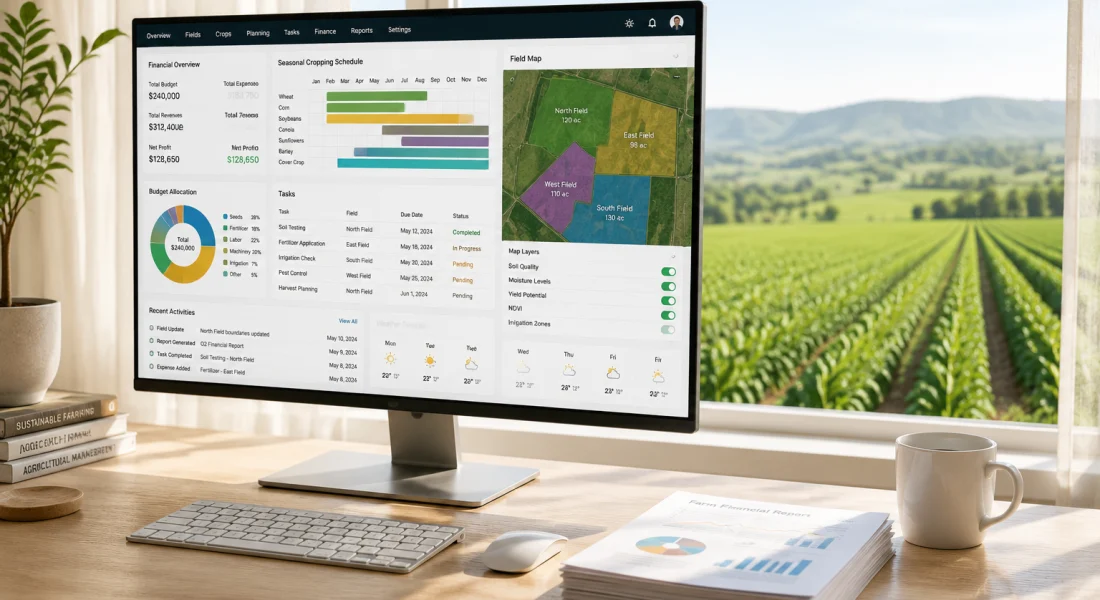
Quick Summary: Agworld is a collaborative farm management software platform designed for growers, agronomists, and service providers seeking centralized data, compliance tools, and planning capabilities. It offers features like field mapping, budgeting, label libraries, and integrations with third-party apps, with a focus on regulatory compliance—particularly for California operations. Pricing details are not publicly listed on the official website, so prospective users should contact Agworld directly for custom quotes based on farm size and requirements.
Farm management software has evolved from simple record-keeping into sophisticated platforms that handle everything from pre-season planning to harvest analytics. Agworld positions itself as a collaborative solution that connects growers, agronomists, and service providers in a unified digital ecosystem.
But does it live up to the hype? Let’s break down what Agworld offers, where it shines, and where other tools might fit better.
What Is Agworld?
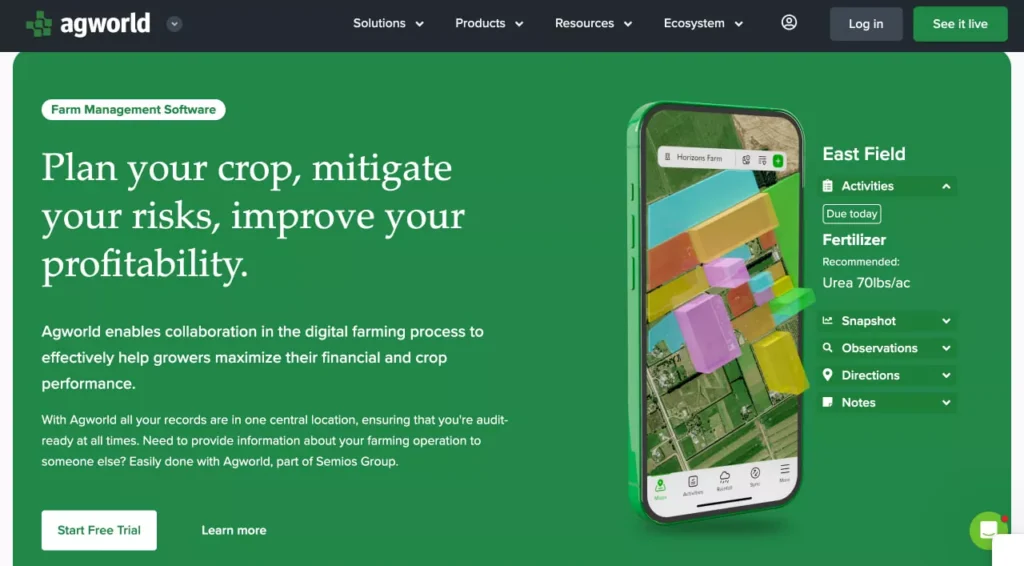
Agworld is a cloud-based farm management information system (FMIS) built around collaboration and data centralization. According to the official website, it enables users to plan crops, mitigate risks, and improve profitability by keeping all farm records in one central location.
The platform serves over 60,000 farms globally, with particularly strong adoption in California, Australia, and New Zealand. It’s designed for operations that need audit-ready records, detailed budgeting, and seamless communication between field teams and advisors.
Unlike labor-specific tools such as PickApp, Agworld focuses on full-farm planning and agronomic decision support rather than piece-rate tracking or workforce management.
Core Features That Matter
Agworld’s feature set centers on three pillars: planning, execution, and performance analysis.
Pre-Season Planning and Budgeting
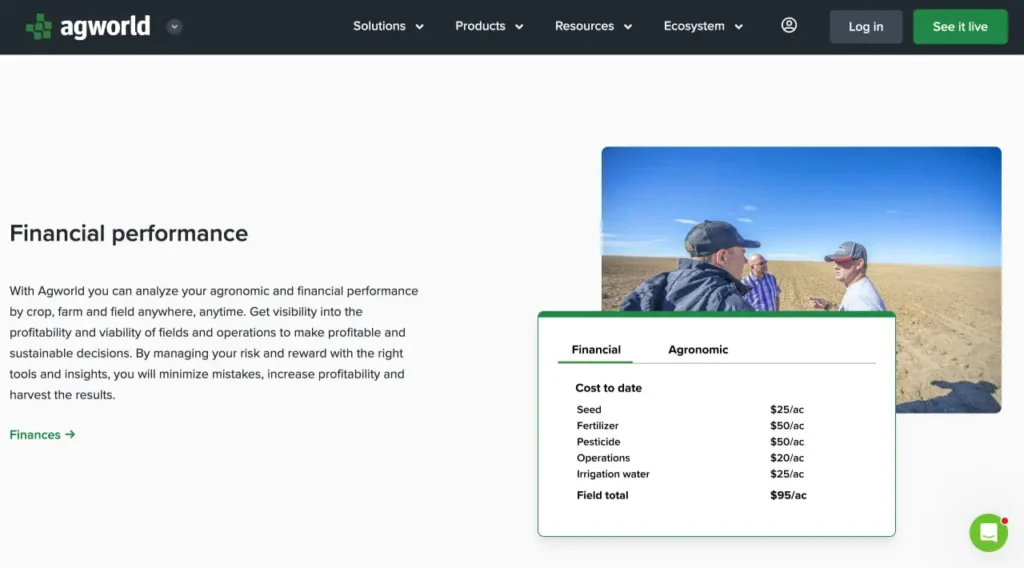
The planning module allows growers to map fields, build application plans, and generate detailed budgets before the season starts. Official field snapshots show cost breakdowns like fertilizer at $52/ac, pesticide at $50/ac, and operations at $20/ac, totaling $11,400 for a given field.
This level of granularity helps operations forecast expenses and adjust plans before committing resources.
In-Season Execution and Compliance
Once the season begins, Agworld tracks activities, records applications, and maintains compliance documentation. California growers benefit most here—Agworld recently rolled out compliance features specifically for strict regulatory environments.
The platform includes a label and Safety Data Sheet (SDS) library, re-entry interval (REI) tracking, and activity logs that support audit requirements. New Zealand users also gained REI rule enforcement updates as of recent platform releases.
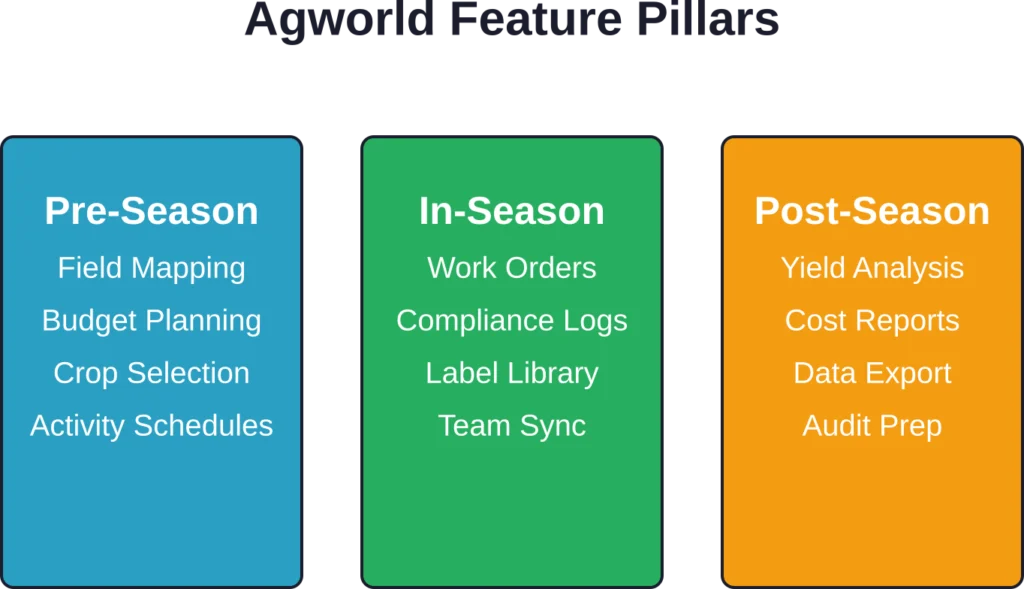
Data Management and Integrations
Agworld emphasizes data ownership and transparency. According to the company’s Chief Strategy Officer, Agworld is not controlled by equipment manufacturers or input suppliers, and user data remains under the grower’s control.
Recent integrations include PIPA (announced May 2026), which allows seamless transfer of field boundaries between platforms. Agworld also partners with FarmReady for add-on apps like Shed (inventory management) and Bolt (equipment tracking).
Shed recently added document recognition, letting users photograph delivery dockets and invoices to attach directly to inventory receipts—a time-saver for compliance documentation.
Connect Farm Planning with Geospatial Image Outputs
Farm planning and reporting become easier when field records are backed by consistent geospatial data. FlyPix AI helps teams turn satellite, drone, aerial, LiDAR, SAR, and multispectral imagery into structured outputs for detection, segmentation, classification, and change monitoring. For workflows connected to Agworld, it can support field review, land classification, visible feature detection, and preparation of geospatial datasets for planning or reporting.
FlyPix AI can help farm planning teams with:
- Segmenting fields, zones, and visible surface features
- Classifying land cover and land use from imagery
- Detecting objects or mapped features across farm areas
- Monitoring visible changes between image captures
👉Reach out to FlyPix AI to discuss geospatial image outputs for your farm planning workflow.
Who Actually Uses Agworld?
Agworld’s user base skews toward mid-to-large commercial operations that work closely with agronomists or PCAs (Pest Control Advisors). Community discussions and case studies highlight users like Wysocki Family Farms, Morrison Farms, and Payne Brothers Ranches—operations that value detailed analytics and regulatory compliance.
Bob Payne of Payne Brothers Ranches notes that Agworld’s analytical capabilities provide confidence in crop decisions and peace of mind that critical data is accessible for any report.
Morrison Farms in Washington found that Agworld saved time on record-keeping after struggling with less user-friendly alternatives that actually increased administrative burden.
Agworld vs. Labor-Focused Alternatives
Here’s where Agworld’s positioning becomes clear: it’s not a labor management tool. Comparisons with PickApp reveal the difference—PickApp offers QR-code scan-and-go tracking, piece-rate automation, and real-time worker productivity metrics with 99% accuracy claims.
Agworld handles work orders, but doesn’t provide the granular labor tracking that labor-intensive operations (berries, vegetables, orchards) require. For those farms, a combination approach—Agworld for agronomic planning plus a dedicated labor tool—might be necessary.
| Feature | Agworld | Labor-Focused Tools |
|---|---|---|
| Field Planning | Advanced budgeting and mapping | Basic or none |
| Compliance Tracking | Label library, REI, audit logs | Limited |
| Worker Productivity | General work orders | Piece-rate, QR scan, real-time |
| Cost Analysis | Per-acre breakdowns, crop budgets | Labor cost focus only |
| Integrations | PIPA, FarmReady, soil sampling | Payroll, time clock systems |
Mobile Experience
Agworld offers Android and iOS apps with over 1,000+ downloads on Google Play. The mobile interface supports field data capture, map viewing, and communication tools, though user reviews suggest the experience is functional rather than exceptional.
Field teams can log activities from anywhere, but the platform’s strength remains its desktop planning and reporting capabilities.
Pricing and Getting Started
Agworld doesn’t publish pricing on its website. Based on industry patterns, farm management platforms typically charge per-acre annual fees or tiered subscriptions based on farm size and user count.
Prospective users should contact Agworld directly for a custom quote and demo. The company offers data migration support for operations switching from legacy software like AgCommander or other FMIS platforms.
Potential Drawbacks
No tool fits every operation. Agworld’s complexity can be overkill for small farms or those without dedicated agronomic advisors. The learning curve is real—operations report needing time to fully adopt the platform and train staff.
And for labor-intensive farms, Agworld won’t replace purpose-built workforce management tools. It’s a planning and compliance platform first, not a labor productivity solution.
Final Verdict
Agworld excels at what it’s designed for: collaborative farm management with strong compliance features and detailed planning tools. Operations that work with agronomists, need audit-ready records, or manage complex crop rotations will find real value here.
But it’s not a one-size-fits-all solution. Labor-intensive farms should evaluate whether they need a dedicated workforce tool alongside Agworld. Small operations might find simpler (and cheaper) alternatives sufficient.
The platform’s transparency around data ownership and its ongoing development (including recent PIPA integration and compliance upgrades) suggest a company committed to evolving with grower needs.
For operations ready to invest in centralized farm data and agronomic decision support, Agworld remains one of the most comprehensive options available in 2026. Visit the official Agworld website to request a demo and discuss pricing for your specific operation.
Frequently Asked Questions
Agworld doesn’t publish pricing publicly. Contact their sales team for a custom quote based on farm size, user count, and feature requirements. Pricing typically follows per-acre annual fees or tiered subscription models.
Agworld handles general work orders but doesn’t offer the granular piece-rate or QR-scan tracking that labor-intensive operations need. For detailed workforce management, tools like PickApp are purpose-built for that use case.
Yes. Agworld serves over 60,000 farms globally, with strong adoption in Australia, New Zealand, and North America. Recent updates include compliance features for New Zealand REI rules and integrations relevant to multiple regions.
Agworld’s mobile apps allow some offline data capture, but the platform is primarily cloud-based. Field teams should expect to sync data when connectivity is available rather than relying on full offline functionality.
According to Agworld’s Chief Strategy Officer, the company is transparent about data ownership: growers retain control of their data. Agworld is not owned by equipment manufacturers or input suppliers, which maintains independence from potential conflicts of interest.
Yes. Agworld supports data migration from legacy platforms including field boundaries, soil sampling, zone data, customer formulas, and yield data. The company provides migration support to ensure smooth transitions from tools like AgCommander or FarmLogs.
Agworld integrates with PIPA for field boundary transfers, FarmReady apps (Shed for inventory, Bolt for equipment), and soil sampling platforms. The company continues adding integrations based on user feedback and industry needs.