
Quick Summary: Arbor tools span multiple categories from Milwaukee’s QUIK-LOK hole saw arbor systems designed for fast bit changes, to Arbortech’s BA200X cordless landscaping saws for cutting roots and turf, to specialty bushcraft knives. This review covers the most popular arbor tool systems in 2026, examining performance, value, and real-world applications across drilling, landscaping, and cutting tasks.
The arbor tool landscape has evolved dramatically. What once meant a simple threaded shaft for mounting hole saws now encompasses sophisticated quick-change systems, battery-powered landscaping equipment, and precision cutting implements.
This review breaks down the major categories competing for attention in workshops and job sites. From speed-focused drilling arbors to heavy-duty landscaping systems, the right choice depends entirely on the work at hand.
Milwaukee QUIK-LOK Hole Saw Arbor System
Milwaukee’s QUIK-LOK represents their answer to the frustration of changing hole saws mid-job. The 7/16-inch arbor set launching October 2025 promises faster changes compared to traditional threaded arbors.
The system uses a spring-loaded locking collar instead of the conventional set screw and thread arrangement. Push the collar back, slide the hole saw onto the arbor, release—and the tool locks in place. Removal works the same way.
Real talk: the speed advantage shows up most clearly when switching between multiple hole saw sizes on the same job. For single-hole tasks, the time savings matter less. But for electrical work, HVAC installations, or cabinet mounting where diameter changes happen constantly, the QUIK-LOK system cuts changeover time noticeably.
Universal Compatibility Claims
Milwaukee positions this as universally compatible with standard hole saws. Testing across brands shows the system works with most major manufacturers’ hole saws, though some cheaper off-brand options may have arbor holes that don’t align perfectly with the locking mechanism.
The 7/16-inch shank fits standard drill chucks. Depth capacity handles material up to standard residential wall thickness plus margin.
Arbortech ALLSAW BA200X Landscaping System
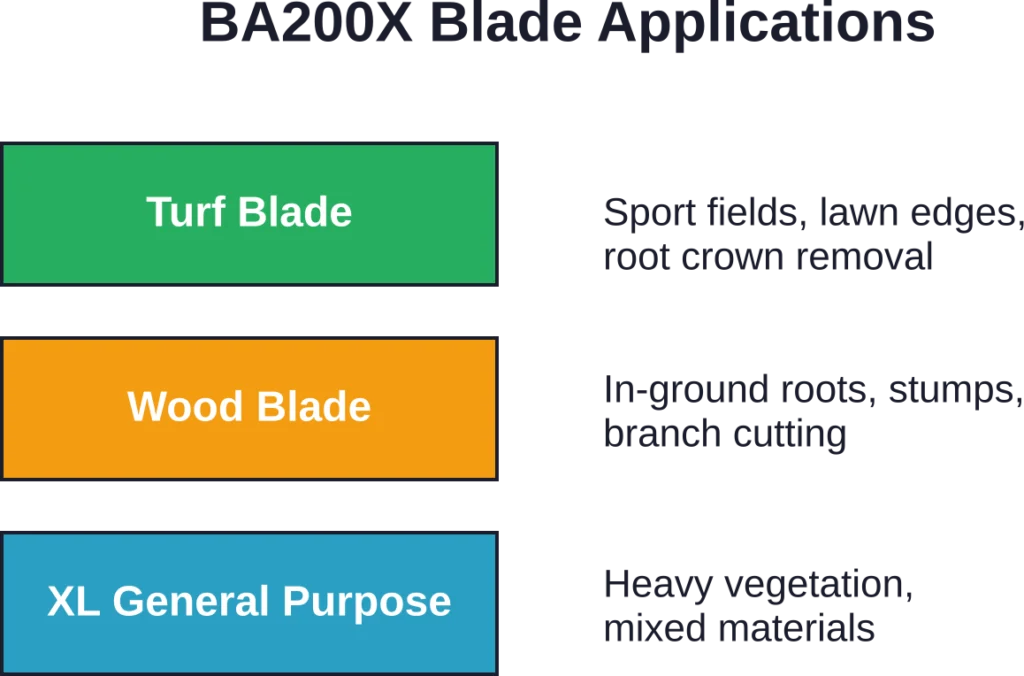
The BA200X sits in a completely different category—this is a DEWALT cordless-powered cutting system designed specifically for landscaping applications. The kit typically includes turf and wood blades.
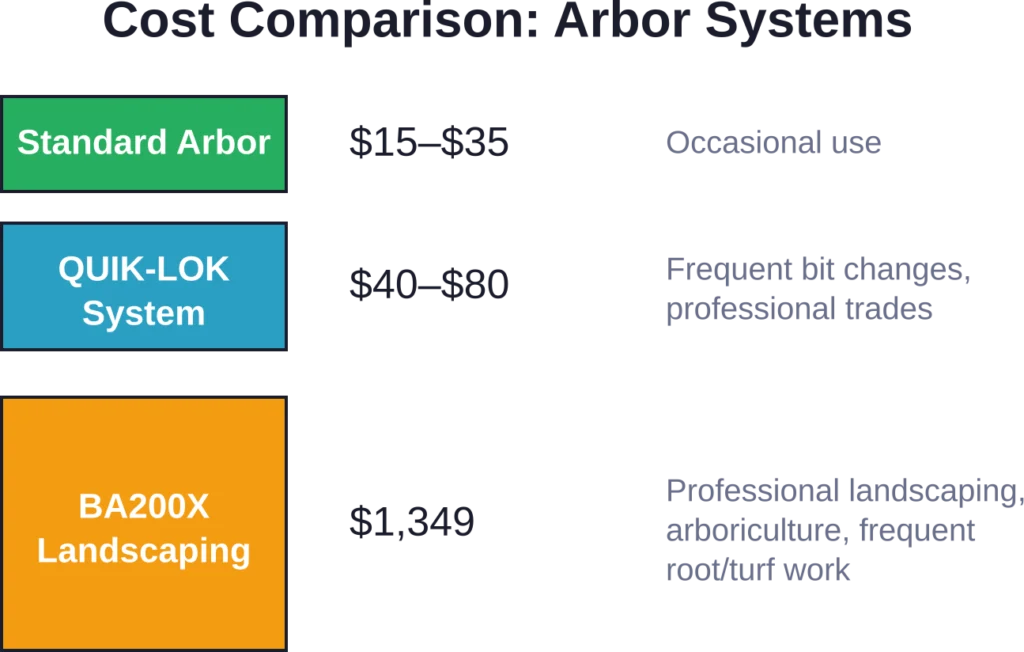
At $1,349.00 RRP, this represents serious investment. But the system addresses a genuine problem: cutting in-ground tree roots and managing turf across varied terrain without dragging gas equipment.
Turf Blade Performance
The turf blade handles sod removal, edge trimming, and root crown work. The design keeps blade contact shallow, reducing turf damage when working near established plantings.
For sports field maintenance or landscape renovation projects, the cordless operation means no extension cords and no gas fumes. Battery runtime depends on DEWALT’s 20V MAX batteries—heavier cutting drains faster, but most landscape tasks allow strategic battery swapping.
Wood Blade Capabilities
This is where the BA200X justifies its price for arborists and landscape contractors. Cutting in-ground roots without excavation saves hours on removal projects. The wood blade cuts through roots up to several inches in diameter.
The system won’t replace a stump grinder for large removals. But for cleanup work, root pruning, or preparing sites for replanting, it fills the gap between hand tools and full-size equipment.
Analyze Land, Assets, and Infrastructure With FlyPix AI
Organizations responsible for managing large areas often need a practical way to monitor conditions and detect changes over time. FlyPix AI provides tools for processing geospatial imagery and identifying relevant objects and features automatically.
Need Better Geospatial Visibility?
FlyPix AI can help with:
- aerial and satellite image analysis
- infrastructure monitoring
- asset detection and tracking
- automated image classification
👉 Try FlyPix AI to explore geospatial monitoring solutions.
Comparing Arbor Systems Across Categories
Here’s the thing though—calling these all “arbor tools” obscures how different their applications really are.
| System Type | Primary Use | Price Range | Best For |
|---|---|---|---|
| Milwaukee QUIK-LOK | Hole saw mounting | $40–$80 | Electricians, installers, carpenters |
| Arbortech BA200X | Landscaping cuts | $1,349 | Arborists, landscape contractors |
| Standard threaded arbor | Hole saw mounting | $15–$35 | Occasional users, single-size tasks |
| Specialty bushcraft arbor | Precision carving | $120–$200 | Woodworkers, craftspeople |
The Milwaukee system competes directly with traditional threaded arbors. The Arbortech BA200X competes with gas-powered landscaping equipment and manual root cutting tools. They share the “arbor” name but solve completely different problems.
Is the Quick-Change Speed Worth the Premium?
For the Milwaukee QUIK-LOK specifically, the value calculation comes down to job frequency. Electricians running conduit through multiple wall cavities multiple times per week see payback quickly. DIY users drilling three holes twice a year won’t notice the investment.
Community discussions suggest the system holds up well under professional use. The locking mechanism stays secure through repeated changes, and compatibility issues remain rare with name-brand hole saws.
But traditional threaded arbors still work. They cost less. And for many users, the 30 seconds spent threading a hole saw on doesn’t materially slow the work.
Landscaping System Value Proposition
At $1,349.00 RRP, the BA200X demands serious utilization to justify purchase. Landscape contractors working multiple properties see faster returns than homeowners tackling one yard.
The cordless convenience matters most in residential settings where generator noise creates problems or where power access requires long extension runs. For commercial sites with accessible power, corded alternatives cost less.
That said, rental equipment costs add up. Contractors working root removal or turf renovation multiple times monthly hit break-even within months rather than years.
Safety Considerations Across Arbor Tools
The ANSI Z133 Safety Standard governs tree care operations involving aerial lifts and electrical hazards, though most arbor drilling work falls under general power tool safety guidelines. For landscaping systems like the BA200X cutting roots near underground utilities, locating services before cutting remains critical.
Blade guard design on the BA200X keeps hands clear of the cutting edge during operation. The cordless design eliminates cord snagging risks but increases importance of battery charge monitoring—losing power mid-cut creates awkward situations.
For hole saw arbors, the primary risks involve kickback when breaking through material and contact with the spinning pilot bit. Standard drill safety practices apply: secure workpieces, maintain stable footing, keep hands clear of the cutting path.
Real-World User Experiences
Community discussions and reviews suggest the QUIK-LOK system saves noticeable time on multi-hole jobs for professional users.
The BA200X system includes multiple blade options designed for different cutting conditions. Using the turf blade on heavy roots or the wood blade on fine turf creates suboptimal results. Matching blade to task matters.
One interesting data point from knuckleboom crane operations: in 500 residential pull-ins evaluated for weight distribution, proper load spreading prevented damage in all but a handful of cases. The lesson applies to moving landscaping equipment across finished surfaces—weight distribution matters.
Frequently Asked Questions
Speed of bit changes. The spring-loaded collar eliminates threading time, most beneficial when switching between multiple hole saw sizes on the same job. For single-hole tasks, the advantage disappears.
Not for large stumps. The system handles in-ground root cutting, root crown removal, and smaller diameter wood. Full stump grinding requires dedicated equipment. The BA200X fills the gap between hand tools and full-size grinders.
Most major brands work fine. Some cheaper off-brand hole saws may have arbor holes that don’t align perfectly with the locking mechanism. Testing before purchase prevents compatibility issues.
Runtime depends on cutting intensity and DEWALT 20V MAX battery capacity. Heavy root cutting drains faster than turf work. Most landscape tasks allow strategic battery swapping. Contractors typically keep multiple charged batteries on hand.
Generally speaking, no. DIY users drilling occasional holes won’t recoup the premium through time savings. Professional tradespeople working daily see faster payback. Standard threaded arbors handle light-duty work fine at lower cost.
Eye protection, hearing protection, gloves, and sturdy footwear minimum. Long pants and sleeves protect against debris. For root cutting, ensure underground utilities are located before starting work. The cordless design eliminates cord risks but requires attention to battery charge levels.
Light roots, yes. But the blade design optimizes for shallow turf work. Switching to the wood blade for roots produces better results and extends turf blade life. Using the right blade for each task matters more than trying to make one blade do everything.
Final Assessment
Arbor tools defy single-category review because the term spans such different applications. The Milwaukee QUIK-LOK delivers clear value for professionals making frequent bit changes. Standard arbors remain perfectly adequate for occasional users.
The Arbortech BA200X justifies its premium price for landscape contractors and arborists working root removal and turf renovation regularly. Homeowners tackling one-time projects should consider rental rather than purchase.
Match the tool to the work frequency. Speed advantages only matter if you encounter the situation often enough for accumulated time savings to justify higher initial cost. For weekly use, premium systems pay back. For annual use, standard equipment works fine.
Check manufacturer specifications for current pricing and feature availability—both Milwaukee and Arbortech update their product lines regularly, and specifications change. The right arbor tool depends entirely on what you’re cutting, how often, and whether speed advantages translate into actual productivity gains for your specific applications.