

Most companies sit on more visual data than they realize. Product photos, security footage, drone images, scanned documents, it all adds up quickly. The problem isn’t access. It’s that this data rarely gets used beyond its original purpose.
Image recognition changes that. It allows businesses to turn images and video into something measurable: signals, patterns, alerts, and decisions. What once required manual review can now be handled at scale, often in near real time.
This article looks at how image recognition is actually used in business, not in theory, but in day-to-day operations. Where it fits, what problems it solves, and how teams can apply it in a way that delivers real value instead of another unused tool.
Why Visual Data Is Hard to Use Without Automation
Visual data is unstructured by default. Unlike spreadsheets or databases, images do not come with predefined fields. A photo of a warehouse shelf does not tell you how many items are missing unless someone looks at it.
That manual step is where most bottlenecks appear. Human review is slow and inconsistent. Two people may interpret the same image differently. Fatigue affects accuracy. And as volume grows, review often becomes selective instead of comprehensive.
Image recognition helps close this gap by turning visual input into structured signals. Counts, labels, alerts, classifications. Once images are translated into data, they can be integrated into reporting systems, dashboards, or automated actions. This shift is what unlocks business value. Not the image itself, but what it becomes once processed.
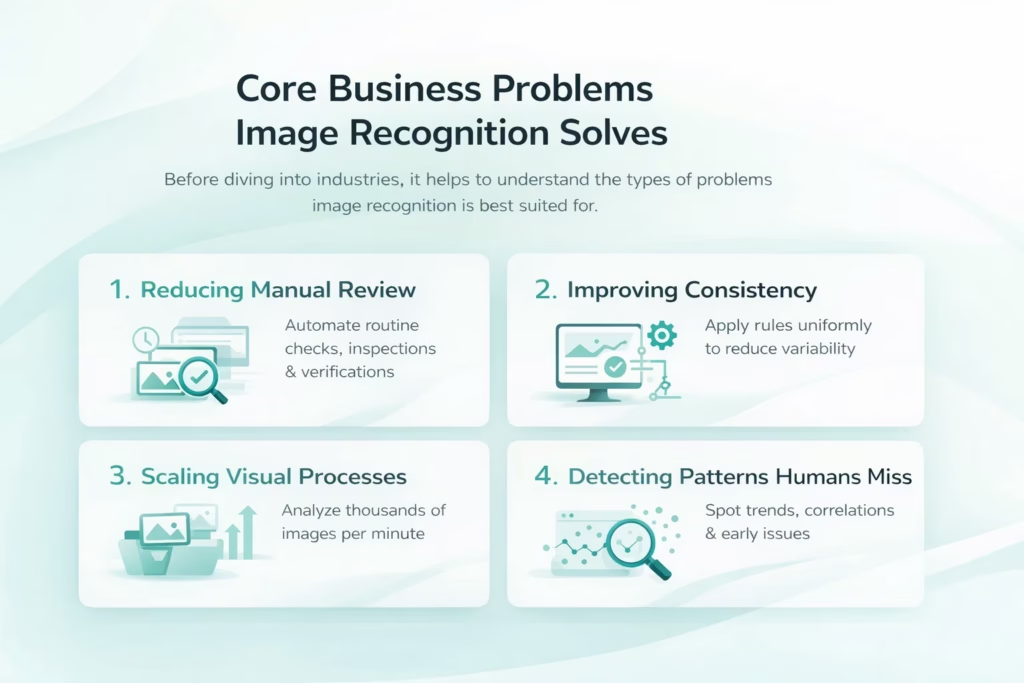
Core Business Problems Image Recognition Solves
Before diving into industries, it helps to understand the types of problems image recognition is best suited for.
1. Reducing Manual Review
Many teams spend hours reviewing images or video to confirm routine conditions. Safety checks, quality inspections, inventory verification. Image recognition automates large portions of this work, allowing people to focus on exceptions instead of normal cases.
2. Improving Consistency
Rules applied by software do not change from one day to the next. When properly trained and monitored, image recognition systems apply the same criteria across all inputs. This reduces variability in inspections, audits, and assessments.
3. Scaling Visual Processes
Processes that depend on human vision do not scale well. Image recognition allows businesses to process thousands of images per minute, making it possible to expand operations without growing review teams at the same rate.
4. Detecting Patterns Humans Miss
Some patterns are subtle or only visible across large datasets. Image recognition can identify trends over time, correlations across locations, or early signs of problems that are easy to overlook in individual images.

How FlyPix AI Applies Image Recognition
At FlyPix AI, we help teams work with large volumes of geospatial imagery without getting stuck in manual review. Satellite images, drone footage, and aerial photos carry valuable signals, but analyzing them by hand does not scale.
Our platform uses AI agents to detect and outline objects in complex geospatial images, turning hours of annotation into seconds. Users can train custom models without deep AI knowledge and integrate results into existing workflows with minimal setup.
FlyPix is used across construction, agriculture, infrastructure, and environmental projects where speed and consistency matter. We focus on removing repetitive visual work so teams can act on insights faster and move projects forward with confidence.
Retail and Ecommerce: From Images to Revenue Signals
Retail is one of the most active adopters of image recognition, largely because visual data already sits at the center of the business.
Product Catalog Management
Large catalogs often suffer from inconsistent tagging. Colors, styles, materials, and attributes are applied unevenly, especially when products come from multiple suppliers.
Image recognition can analyze product images and assign standardized attributes automatically. This improves search accuracy, filters, and recommendations without requiring manual tagging for every item.
Visual Search
Customers increasingly expect to search using images rather than keywords. Image recognition allows ecommerce platforms to match uploaded photos with visually similar products, improving discovery and reducing friction in the buying journey.
Shelf Monitoring in Physical Stores
In physical retail, cameras combined with image recognition can track shelf conditions. Out of stock items, misplaced products, and planogram compliance can be monitored automatically, reducing reliance on manual checks.
Customer Behavior Analysis
Without identifying individuals, image recognition can analyze movement patterns, dwell time, and interactions with displays. These insights help retailers optimize layouts, staffing, and promotions based on actual behavior rather than assumptions.
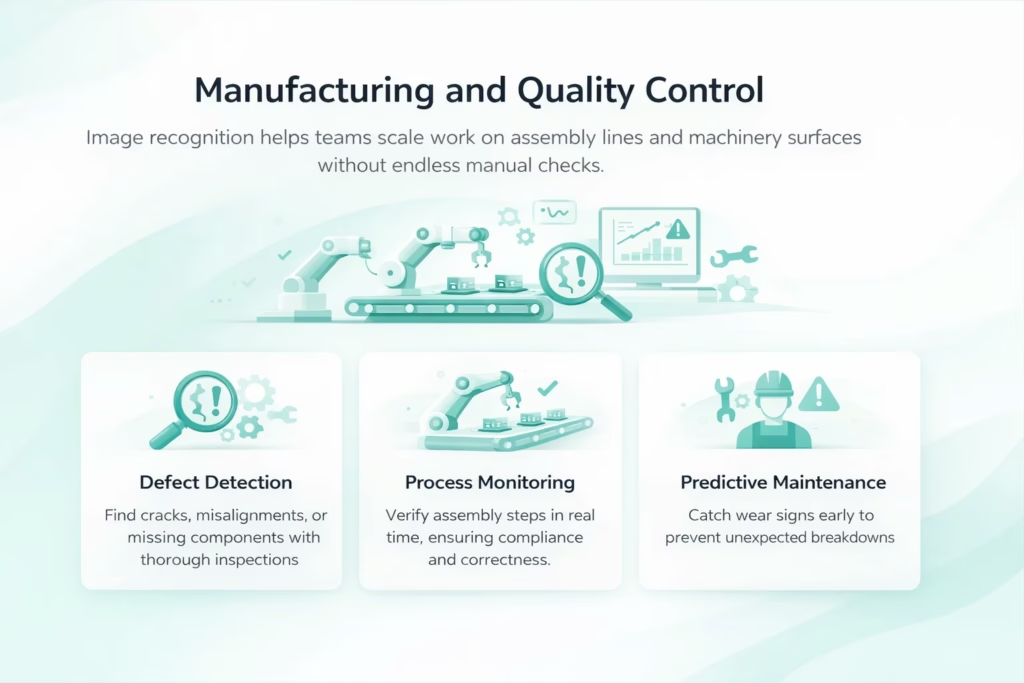
Manufacturing and Quality Control
Manufacturing environments generate constant visual signals from assembly lines, finished products, and machinery surfaces. Image recognition helps teams scale that work without relying on endless manual checks.
- Defect detection: Spot cracks, misalignments, surface inconsistencies, or missing components and inspect every unit, not just random samples
- Process monitoring: Verify steps in real time, like correct component placement, safety gear compliance, and whether machines stay within expected visual conditions
- Predictive maintenance: Catch early signs of wear like corrosion, leaks, or abnormal motion before they turn into downtime and rushed repairs
Healthcare and Medical Imaging
Healthcare is one of the most sensitive areas for image recognition, and also one of the most impactful when applied carefully.
Medical Image Analysis
Image recognition supports clinicians by highlighting areas of interest in X-rays, MRIs, CT scans, and pathology slides. It does not replace diagnosis, but helps prioritize cases and reduce oversight.
Workflow Efficiency
By automating parts of image review, healthcare providers reduce the time specialists spend on routine assessments. This helps manage workloads and shorten turnaround times for patients.
Consistency and Documentation
Automated analysis provides standardized measurements and annotations, which improves consistency across cases and supports clearer documentation.
Ethical oversight and validation remain essential, but when used as an assistive tool, image recognition adds meaningful value.
Logistics, Warehousing, and Supply Chains
Supply chains depend on visibility. Image recognition improves that visibility without requiring manual reporting at every step.
- Inventory Tracking. Cameras combined with image recognition can count items, verify pallet conditions, and track movement through facilities. This reduces discrepancies between physical and digital inventory records.
- Damage Detection. Images of packages or containers can be analyzed for signs of damage. Issues are flagged immediately, improving accountability and reducing disputes between parties.
- Safety Monitoring. Image recognition can detect unsafe behaviors or conditions in warehouses. Blocked exits, improper lifting, missing protective gear. Alerts help prevent accidents before they happen.
Infrastructure, Construction, and Field Operations
Industries that operate across large physical spaces benefit from visual automation.
Progress Monitoring
Drone or site images can be analyzed to track construction progress against plans. Changes are documented objectively, supporting better project management and reporting.
Asset Inspection
Bridges, roads, power lines, pipelines. Image recognition helps identify cracks, vegetation encroachment, corrosion, or structural changes that require attention.
Environmental Monitoring
In agriculture, forestry, and environmental management, image recognition identifies crop health issues, land use changes, or ecological risks at scale.
Security and Surveillance
Security systems generate massive volumes of video, most of which is never reviewed unless something goes wrong.
Event Detection
Image recognition can flag unusual activity, unauthorized access, or movement patterns that deviate from normal behavior. This allows security teams to respond faster and more selectively.
Access Control Support
Facial recognition and object detection are used in controlled environments to support identity verification and access management, often alongside other authentication methods.
Privacy Considerations
Security use cases demand strict governance. Clear rules around data retention, access, and transparency are essential to maintain trust and regulatory compliance.
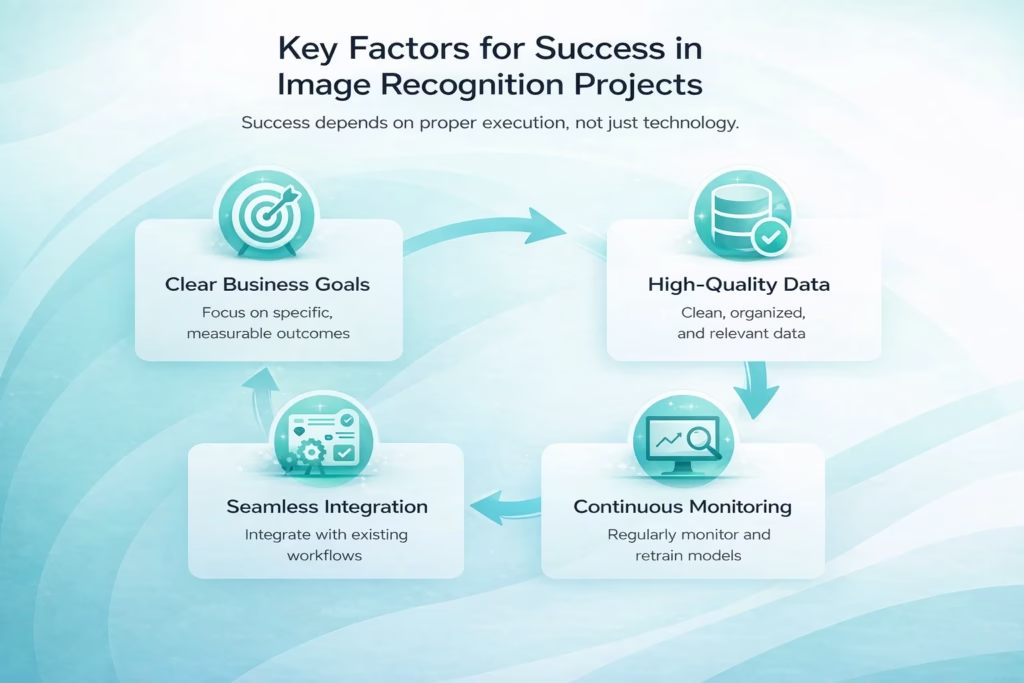
What Makes Image Recognition Projects Succeed or Fail
Technology alone does not guarantee results. The difference between success and frustration often comes down to execution.
- Clear business goals. Projects that start with vague objectives tend to stall. Strong implementations focus on specific outcomes, such as reducing inspection time, improving accuracy, or cutting manual workload.
- Data quality and relevance. Models trained on poor or inconsistent data produce unreliable results. Collecting, cleaning, and labeling the right data is often the most time-consuming step, but also the most critical.
- Integration into existing workflows. Image recognition should support current systems, not replace them overnight. Results need to flow into tools teams already use, whether that’s dashboards, alerts, or operational software.
- Ongoing monitoring. Visual environments change. Lighting, layouts, products, and behavior evolve over time. Models need regular monitoring and periodic retraining to stay accurate and useful.
Building or Buying Image Recognition Solutions
Businesses typically face a choice between developing a custom solution and using a ready-made platform. Custom systems are designed around specific use cases and environments, which allows for deeper integration and greater flexibility. At the same time, they require ongoing technical expertise, maintenance, and long-term investment.
Prebuilt platforms take a different approach. They reduce time to deployment and make image recognition more accessible, especially for common or well-defined use cases. These solutions can be easier to start with, but they may offer limited customization compared to a fully tailored system.
The right option depends on factors such as scale, operational complexity, and the level of internal expertise available to support the solution over time.
Conclusion
Image recognition is no longer experimental. It is a practical tool that helps businesses work faster, more consistently, and with greater visibility across operations.
The real value comes from applying it thoughtfully. Focusing on concrete problems. Using high-quality data. Integrating outputs into real workflows. And maintaining oversight as systems evolve.
For companies willing to invest in doing it right, image recognition turns visual data into a steady source of insight and efficiency, not just another folder of images no one has time to review.
FAQ
In business, image recognition is used to analyze photos or video and turn visual information into structured data. It helps companies automate inspections, monitor conditions, detect patterns, and support decisions without relying on constant manual review.
Image recognition focuses on identifying what appears in an image, such as objects, defects, or patterns. Computer vision is the broader field that includes image recognition along with tasks like object tracking, segmentation, motion analysis, and scene understanding.
Image recognition works best where visual checks are frequent, repetitive, or hard to scale. Common examples include quality control, inventory monitoring, safety inspections, asset condition tracking, and customer behavior analysis.
In most cases, it does not replace people but reduces manual workload. It handles routine checks and large volumes of data, while humans focus on exceptions, decisions, and oversight where judgment is required.
Accuracy depends on data quality, training diversity, and operating conditions such as lighting or camera placement. Well-maintained systems often exceed 90 percent accuracy, but ongoing monitoring and retraining are essential to maintain performance.