
Quick Summary: Leaf blight is a serious fungal or bacterial disease affecting crops, lawns, and ornamental plants, causing spotted, discolored foliage that can lead to significant yield losses. Treatment requires proper pathogen identification, cultural practices like crop rotation and sanitation, fungicide or bactericide applications, and preventive measures including resistant varieties and proper spacing. Early detection and integrated management strategies are essential to minimize economic damage.
When dark lesions appear across plant foliage, spreading rapidly and compromising plant health, leaf blight has likely taken hold. This disease strikes fear into commercial growers and home gardeners alike, capable of devastating entire crops if left unchecked.
The challenge? Leaf blight isn’t caused by a single pathogen. Multiple fungi and bacteria trigger these symptoms, and effective treatment depends entirely on identifying the specific culprit.
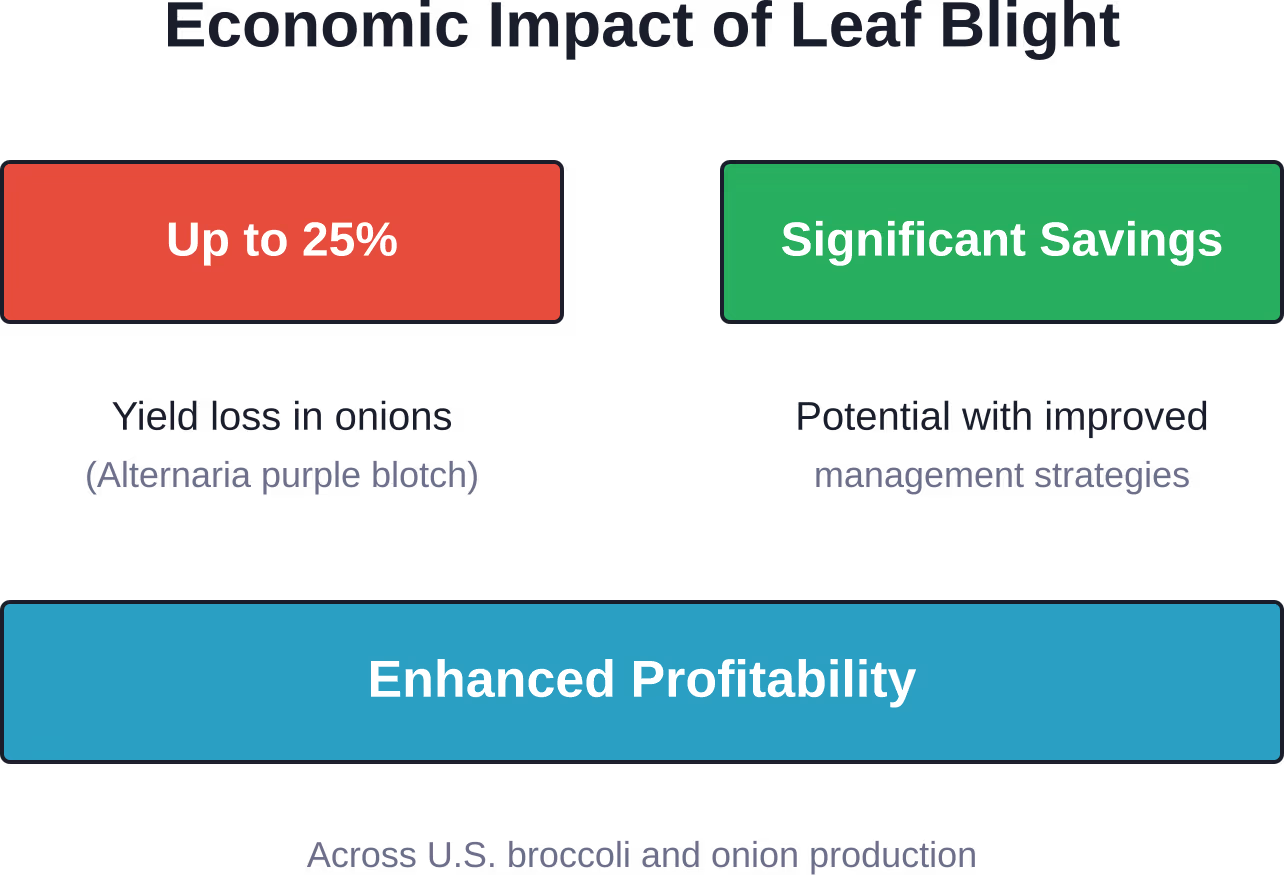
Here’s the thing though—proper management can dramatically reduce losses. Research on Alternaria brassicicola management in broccoli suggests improved strategies can significantly reduce losses, with potential savings across U.S. broccoli production areas.
What Is Leaf Blight?
Leaf blight encompasses a group of plant diseases characterized by rapid tissue death, discoloration, and lesion formation on foliage. Both fungal and bacterial pathogens cause these symptoms, attacking a wide range of host plants from agricultural crops to turfgrass.
The disease manifests differently depending on the pathogen involved. Fungal blights typically produce distinct spotted patterns with defined borders, while bacterial blights often create water-soaked lesions that spread more irregularly.
Environmental conditions play a massive role. Most leaf blight pathogens thrive in relative humidity above 80% and temperatures between 82–86°F (28–30°C). Cool, wet springs particularly favor bacterial blights, especially following late frosts or winter injury.
Common Leaf Blight Pathogens
Different crops face different threats. Understanding which pathogens attack which plants guides treatment decisions.
| Host Plant | Fungal Pathogens | Bacterial Pathogens |
|---|---|---|
| Rice | Alternaria padwickii, Helminthosporium oryzae, Alternaria alternata | Xanthomonas oryzae pv. oryzae |
| Onion | Botrytis squamosa, Alternaria porri | Pseudomonas species |
| Broccoli | Alternaria brassicicola, Alternaria alternata | — |
| Lilac | — | Pseudomonas syringae pv. syringae |
| Blueberry | Alternaria tenuissima | Various species |
Recognizing Leaf Blight Symptoms
Early detection makes treatment far more effective. But symptoms vary by pathogen and crop.
Fungal leaf blights generally start as small, circular spots that enlarge and coalesce. These lesions often show concentric rings—target-like patterns that indicate fungal growth stages. As disease progresses, leaves yellow, wither, and drop prematurely.
Bacterial blights look different. Water-soaked areas appear first, usually starting at leaf margins or tips. These lesions expand rapidly in humid conditions, turning brown or black. Unlike fungal spots, bacterial blights often lack defined borders and may produce bacterial ooze in moist conditions.
On turfgrass, leaf blight manifests as irregular brown patches that spread across lawns. Ascochyta leaf blight, common in late spring and early summer, creates straw-colored areas with dark fungal bodies visible on affected blades.
Economic Impact
The financial stakes are considerable. Yield losses attributed to Alternaria purple blotch are reported to approach 25%, according to extension research. In severe cases, commercial farms can experience up to half yield loss across affected fields.
When melon crops contract leaf blight, the disease typically doesn’t directly infect fruit. However, leaf loss diminishes harvests by reducing plant vigor and exposing fruit to sunscald damage.

Turn Crop Images Into Usable Data With FlyPix AI
FlyPix AI uses AI agents to inspect and process geospatial imagery at scale. The platform can identify objects and patterns in dense visual scenes, which helps teams review land and crop conditions more efficiently.
For leaf blight concerns, this can help farmers review field variation and visible crop changes before deciding where closer field scouting is needed.
Need a Faster Way to Review Field Images?
FlyPix AI can help with:
- processing aerial and satellite images
- detecting visible changes across land areas
- creating custom AI models for image analysis
- cutting down manual annotation work
👉 Try FlyPix AI to review geospatial data faster.
How To Treat Leaf Blight
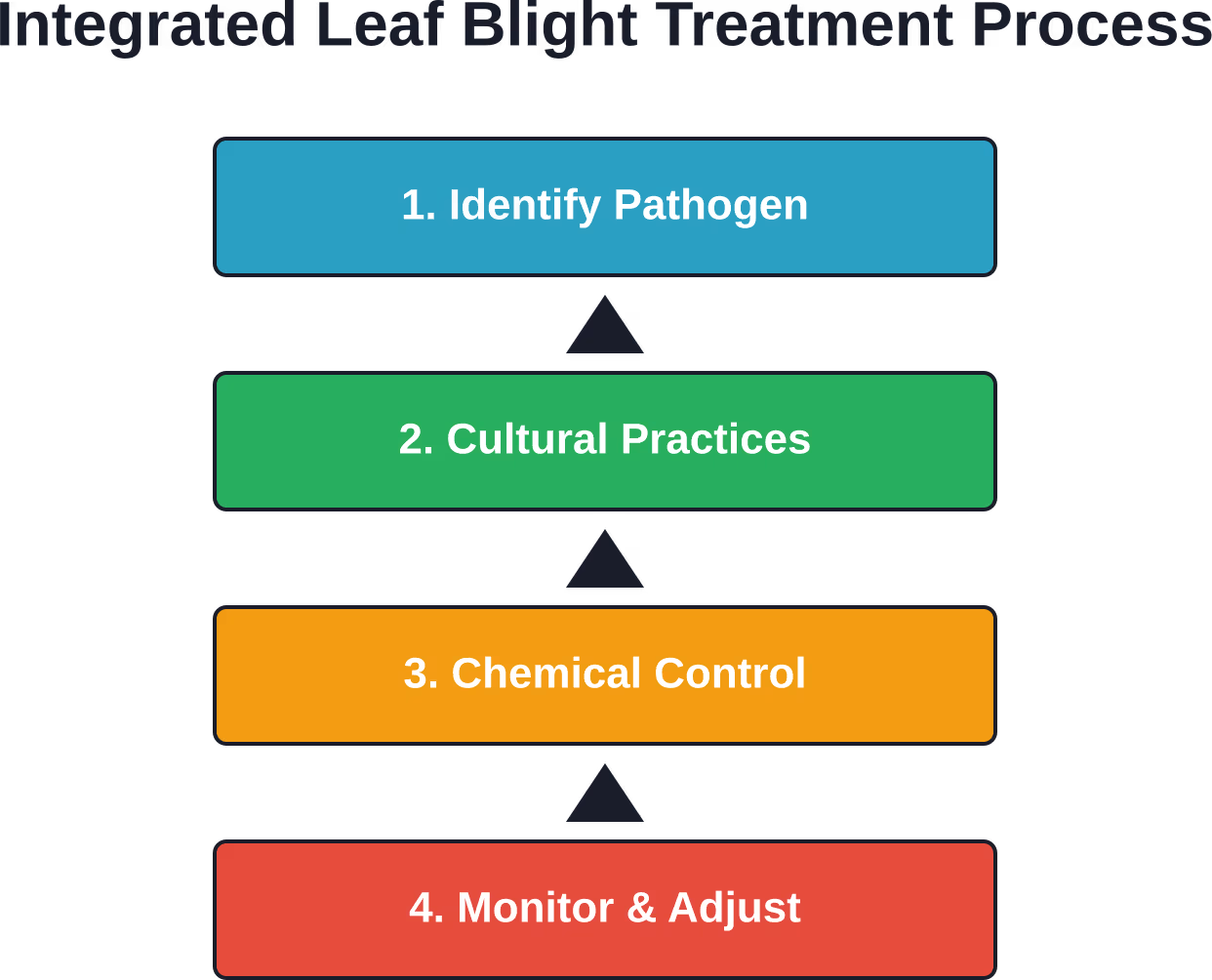
Treatment success hinges on accurate pathogen identification. Fungal and bacterial blights require completely different management approaches.
Step One: Identify the Pathogen
Don’t guess. Visual diagnosis helps narrow possibilities, but laboratory confirmation ensures appropriate treatment. Contact local extension services for diagnostic assistance—most offer affordable testing for commercial growers and homeowners.
Look for these distinguishing features:
- Fungal blights produce spores visible as fuzzy growth or dark specks within lesions
- Bacterial blights create slimy bacterial ooze when squeezed or in humid conditions
- Fungal spots typically show concentric rings; bacterial lesions spread irregularly
- Time of symptom appearance matters—bacterial blights favor cool, wet springs
Cultural Management Practices
These practices form the foundation of any blight management program. They work for both fungal and bacterial diseases.
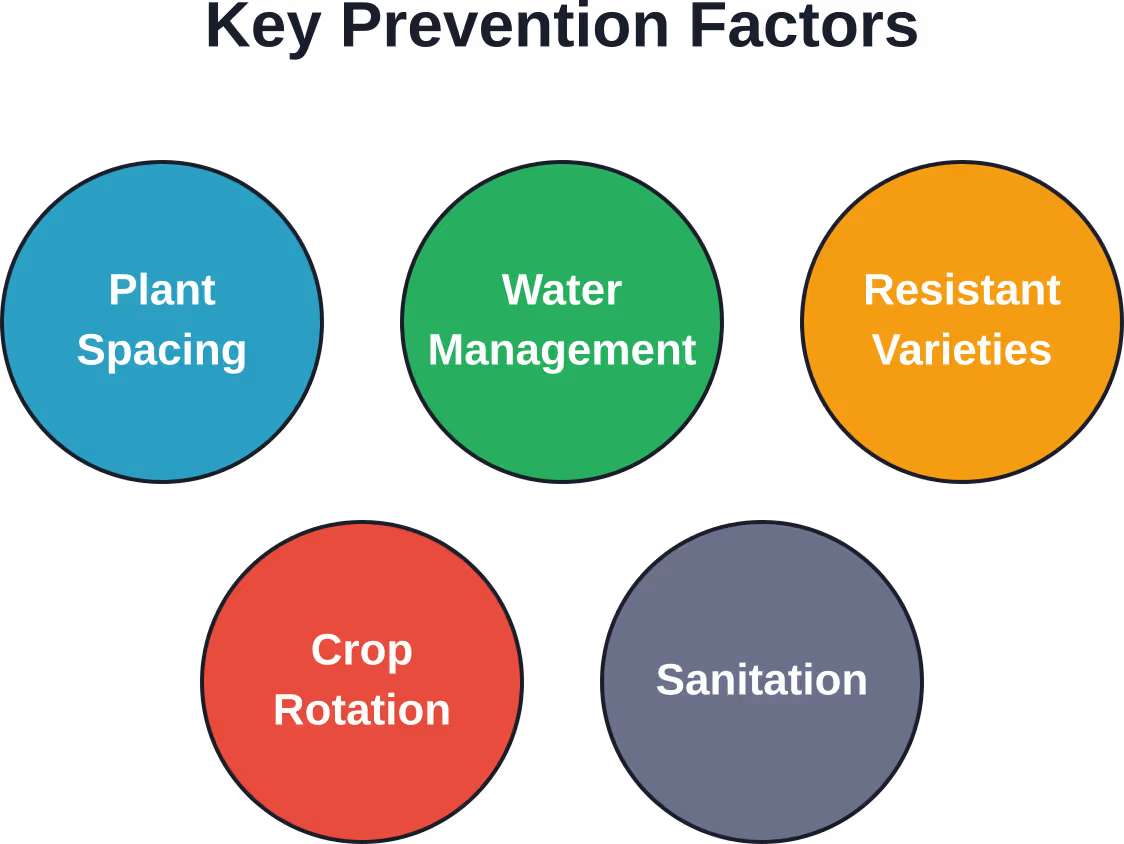
- Sanitation: Remove and destroy infected plant material immediately. Don’t compost diseased foliage—pathogens survive and reinfect next season. According to extension guidance on disease management, fields should be inspected periodically, and plants with more than 50% mortality should be dug out and destroyed.
- Crop Rotation: Avoid planting susceptible crops in the same location for at least two to three years. Many blight pathogens persist in soil and plant debris.
- Improve Air Circulation: Proper plant spacing and pruning reduce humidity around foliage. Dense canopies trap moisture, creating ideal conditions for pathogen spread.
- Water Management: Irrigate early in the day so foliage dries quickly. Avoid overhead irrigation when possible—drip systems keep leaves dry. Never work with plants when foliage is wet, as this spreads pathogens mechanically.
- Resistant Varieties: Select cultivars bred for disease resistance when available. Susceptibility varies dramatically among varieties.
Chemical Control: Fungicides
For fungal leaf blights, fungicides provide effective control when integrated with cultural practices.
Timing is everything. Preventive applications before disease appears work far better than attempting to cure established infections. Apply fungicides at first symptom appearance and continue on a regular schedule based on label recommendations and disease pressure.
But here’s where it gets complicated. Fungicide resistance has emerged in multiple leaf blight pathogens. Global monitoring data as of 2026 shows that the G143A mutation, conferring resistance to QoI fungicides, is now present in over 38% of Alternaria brassicicola isolates found in non-crop reservoirs. Screening of isolates also identified some with reduced sensitivity to certain fungicide classes.
Resistance management strategies:
- Rotate between fungicide classes—don’t use the same mode of action repeatedly
- Tank-mix fungicides with different modes of action
- Follow label rates precisely—under-dosing accelerates resistance
- Limit total applications per season
Common fungicide classes for leaf blight include:
- Chlorothalonil (broad-spectrum protectant)
- Strobilurins (QoI fungicides)
- DMI fungicides (sterol inhibitors)
- SDHI fungicides (succinate dehydrogenase inhibitors)
- Copper-based products (also effective against bacteria)
Chemical Control: Bactericides
Bacterial blights are tougher to manage chemically. Options are limited compared to fungicides.
Copper-based bactericides offer the primary chemical control. Products containing copper hydroxide, copper sulfate, or Bordeaux mixture can suppress bacterial populations when applied preventively. Once bacterial populations explode during infection, chemical control becomes far less effective.
Antibiotics like streptomycin are registered for certain bacterial diseases but face regulatory restrictions and resistance concerns. Use only when specifically labeled for the crop and pathogen involved.
Prevention Strategies
Preventing leaf blight beats treating established infections every time. The economic benefits are clear—modified fungicide spray programs could significantly reduce foliar disease severity and head rot compared with grower standard practices.
Site Selection and Preparation
Start with the growing environment. Avoid low-lying areas where moisture accumulates and air stagnates. Good drainage is non-negotiable for blight-prone crops.
Soil health matters too. Balanced nutrition produces vigorous plants better able to withstand pathogen pressure. Excessive nitrogen creates lush, succulent growth that’s more susceptible to infection.
Planting Practices
Use certified disease-free seed and transplants. Many leaf blight pathogens spread through contaminated planting material.
Proper spacing prevents humidity buildup. Crowded plantings create microclimates ideal for pathogen development. Follow recommended spacing for each crop.
Monitoring and Early Detection
Scout fields and gardens regularly during favorable disease conditions. Early detection allows intervention before pathogens spread widely.
Weather-based disease forecasting helps time preventive sprays. Many extension services offer prediction models for specific diseases in local areas.
Weed Management
Weeds harbor leaf blight pathogens between crop cycles. Research on Alternaria brassicicola found that isolates collected from weeds can carry fungicide resistance mutations, serving as reservoirs that reinfect crops.
Control weeds in and around production areas. This reduces pathogen populations and improves air circulation.
Special Considerations for Lawn Blight
Ascochyta leaf blight commonly affects turfgrass in late spring and early summer. Treatment differs slightly from agricultural crops.
Cool-season grasses like perennial ryegrass, tall fescue, and Kentucky bluegrass are particularly susceptible. Symptoms appear as straw-colored patches with dark brown margins.
Treatment approach:
- Raise mowing height to reduce stress—never remove more than one-third of blade length
- Apply balanced, slow-release fertilizer to promote recovery
- Water deeply but infrequently—frequent shallow watering favors disease
- Improve drainage in problem areas
- Fungicides containing azoxystrobin or propiconazole can provide control during active outbreaks
Real talk: many lawn blights resolve on their own once environmental conditions shift. Turfgrass often recovers without intervention if proper cultural practices are followed.
When To Call Professionals
Some situations demand expert assistance. Large commercial operations should establish relationships with certified crop advisors and plant pathologists.
Seek professional help when:
- Disease symptoms don’t match common descriptions
- Multiple treatment attempts fail to slow disease spread
- Large-scale outbreak threatens significant economic loss
- Regulatory requirements mandate professional diagnosis
University extension services provide diagnostic labs, disease forecasting, and research-based recommendations. Many offer these services free or at minimal cost.
Conclusion
Leaf blight poses a serious threat to agricultural productivity and plant health, but it’s far from unbeatable. Success requires accurate pathogen identification, integration of cultural and chemical controls, and—most importantly—preventive thinking.
The research is clear: improved management strategies deliver substantial economic benefits. But reactive treatment of established disease costs more and works less effectively than prevention.
Start with resistant varieties when available. Implement proper spacing, irrigation, and sanitation practices. Monitor regularly during favorable disease conditions. Act quickly at first symptom appearance.
Consult local extension services for region-specific guidance and diagnostic support. They offer research-based recommendations tailored to specific crops, pathogens, and environmental conditions in each area. Taking advantage of these resources dramatically improves treatment outcomes and prevents costly mistakes.
Frequently Asked Questions
The fastest effective treatment combines immediate removal of infected plant material with preventive fungicide or bactericide application to healthy tissue. However, speed matters less than accuracy—identifying whether the pathogen is fungal or bacterial determines which products will actually work. Fungicides won’t control bacterial blights, and vice versa.
Absolutely. Leaf blight pathogens spread through water splash, wind, contaminated tools, and physical contact with infected foliage. Bacterial blights spread particularly rapidly in wet conditions. Fungal spores can travel significant distances on air currents. Isolation and sanitation are critical once disease appears.
Not exactly. Leaf spot and leaf blight exist on a severity spectrum. Leaf spots are discrete, localized lesions. Blight describes more aggressive, spreading tissue death that can kill entire leaves or branches. The same pathogen may cause spots in early infection stages and develop into blight as disease progresses.
Timeline varies dramatically by pathogen, host plant, and environmental conditions. Some aggressive bacterial blights can kill young seedlings within days during favorable conditions. Mature woody plants like hazelnuts may take years to die from eastern filbert blight. Most herbaceous crops experience progressive decline over weeks to months if disease remains unmanaged.
Organic-approved treatments have varying effectiveness. Copper-based products work well for bacterial blights and some fungal diseases. Biological fungicides containing Bacillus species show promise but generally provide less consistent control than synthetic fungicides. Cultural practices—sanitation, rotation, resistant varieties—remain the most reliable organic management tools.
Most leaf blight pathogens survive winter in infected plant debris, on perennial hosts, or in soil. Fungal spores and bacterial cells enter dormant states that tolerate freezing. This is why fall sanitation and debris removal are so important—they eliminate pathogen reservoirs that would reinfect crops the following season.
For annual crops and herbaceous plants, removal and destruction is often the best approach once more than 50% of tissue is infected. The plant won’t recover enough to produce meaningful yield, and it serves as an infection source. For valuable perennial plants and trees, aggressive pruning of infected branches combined with fungicide treatment may save the plant if less than half the canopy is affected.