
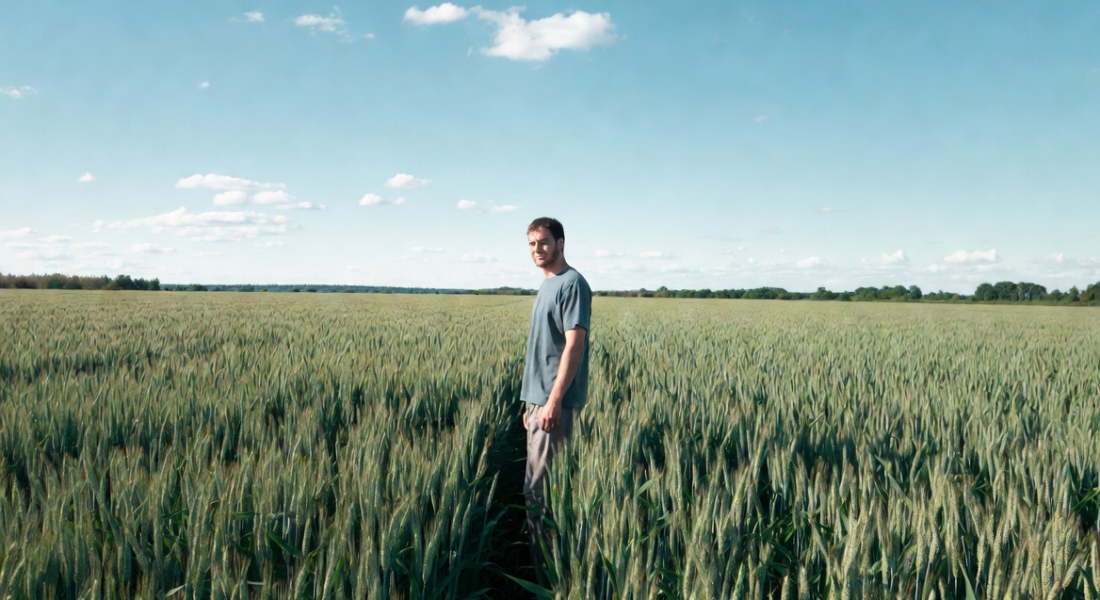
Quick Summary: Monoculture farming is the agricultural practice of growing a single crop species on the same land year after year. While it dominates modern agriculture—with monoculture plots covering 80% of arable land worldwide and significant acreage in the United States—this system brings significant trade-offs between production efficiency and environmental sustainability.
Drive through rural America today and you’ll see the same pattern repeating for miles. Endless rows of corn stretching to the horizon. Vast soybean fields that seem to go on forever. Massive wheat expanses painted across the landscape.
This is monoculture farming in action—the dominant agricultural model that feeds much of the world. But it’s also one of the most controversial practices in modern agriculture.
In 2025, Illinois planted 10.7 million acres of corn and nearly 10.4 million acres of soybeans. The next most-planted crop? Wheat, at just 840,000 acres. That massive gap tells the story of modern American agriculture in a single statistic.
Here’s the thing though—this efficiency-driven model comes with hidden costs that are becoming harder to ignore.
What Is Monoculture Farming?
Monoculture farming is the practice of growing a single crop species on the same plot of land, year after year, without rotation. It’s the agricultural equivalent of putting all your eggs in one basket.
But wait. There’s a subtle distinction worth understanding.
Monocropping is actually an extreme sub-practice of monoculture. With monoculture, farmers grow the same crop species but might rotate it among different fields across seasons. Monocropping? That’s planting the exact same crop in the exact same field, season after season.
The scale of this practice is staggering. Monoculture plots cover 80% of arable land worldwide. In the United States, that translates to significant acreage dedicated to single-crop production.
Corn and soybeans dominate American monoculture landscapes, but the pattern extends globally. In 2022, just ten crops dominated 63% of global farmland. Rice paddies across Asia, cotton fields throughout the American South, wheat expanses in the Great Plains—all examples of monoculture at work.
Real talk: monoculture wasn’t always the norm. Traditional farming practices involved diverse crop mixes, companion planting, and natural rotation systems. The shift toward monoculture accelerated dramatically after the Green Revolution and the Federal Agricultural Improvement and Reform Act of 1996, which restructured agricultural subsidies.
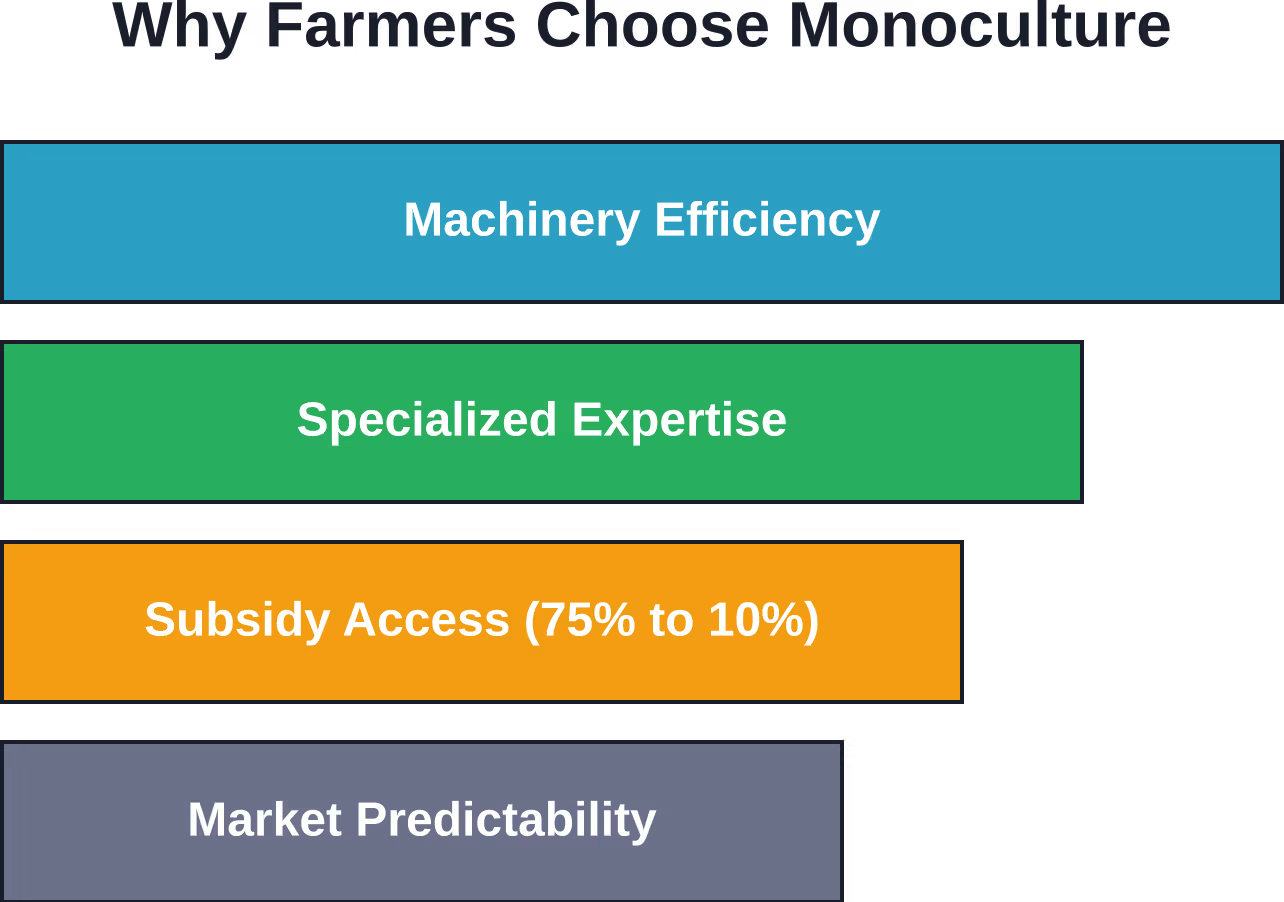
Since 1995, 78% of farm subsidies have gone to just 10% of farms—typically those growing commodity crops in monoculture systems. These payments incentivized specialization over diversity.
Why Monoculture Farming Became Dominant
The rise of monoculture farming wasn’t accidental. It was driven by clear economic and practical advantages that made sense on paper—and still do, for many operations.
Operational Efficiency at Scale
Growing just one crop species in a field enables farmers to use specialized machinery. Planting equipment calibrated for corn doesn’t need adjustment between rows. Harvesters configured for wheat can run continuously without recalibration.
This efficiency matters enormously when you’re working thousands of acres. Time saved during planting and harvesting translates directly to reduced labor costs and faster turnaround between growing seasons.
Equipment investments also make more financial sense. Instead of maintaining diverse machinery for multiple crop types, farms can optimize for a single system. That tractor attachment designed specifically for soybean rows gets used constantly, not sitting idle half the season.
Simplified Management and Expertise
Managing one crop means developing deep expertise in that specific plant. Farmers become specialists rather than generalists, learning every nuance of their chosen crop’s needs.
Pest management strategies become standardized. Fertilization schedules get refined over years of experience. Irrigation timing becomes predictable. There’s no mental switching between the different requirements of multiple species.
Supply chain relationships also simplify. A corn farmer develops strong connections with corn seed suppliers, corn-specific fertilizer distributors, and corn buyers. Those relationships strengthen over time, often leading to better pricing and terms.
Economic Predictability
Commodity crops grown in monoculture systems benefit from established futures markets. Farmers can lock in prices months before harvest, reducing uncertainty and enabling better financial planning.
Government support programs overwhelmingly favor commodity monocultures. Crop insurance, disaster payments, and direct subsidies flow primarily to corn, soybeans, wheat, cotton, and rice operations.
Processing infrastructure is also concentrated around these crops. Grain elevators, cotton gins, and processing facilities cluster in monoculture regions, creating reliable local markets with minimal transportation costs.

Analyze Geospatial Images Faster With FlyPix AI
FlyPix AI helps teams analyze satellite, aerial, and drone images with AI. It can detect, outline, and monitor visible objects in geospatial images, which makes it useful for tracking crop areas, field changes, land use, and other patterns that are hard to review manually at scale.
For monoculture farming, this can support a clearer view of large, uniform fields and help teams spot changes earlier instead of relying only on manual inspection.
Need Faster Field Analysis?
FlyPix AI can help with:
- analyzing drone, satellite, and aerial imagery
- detecting visible objects and field patterns
- training custom AI models for specific land-use needs
- reducing manual work in crop and terrain monitoring
👉 Try FlyPix AI to review your field imagery faster.
The Advantages of Monoculture Farming
Despite the criticism monoculture farming receives, it offers tangible benefits that explain its widespread adoption. These aren’t theoretical advantages—they’re real operational improvements that impact farm profitability.
Maximized Production Yields
When conditions are right, monoculture systems can produce impressive yields. Every square foot of land contributes to the same harvest, maximizing output per acre for that specific crop.
There’s no space “wasted” on companion plants or diverse species that might yield less market value. For commodity crops with strong demand, this maximization approach makes economic sense.
Genetic optimization also works better in monoculture contexts. Seed companies can develop varieties tailored precisely to specific growing conditions, pushing yield boundaries when those varieties are planted en masse.
Reduced Labor Requirements
Labor costs represent a major expense for agricultural operations. Monoculture farming dramatically reduces the skilled labor needed compared to diverse farming systems.
Workers don’t need to identify different plant species, apply varied treatments, or manage complex rotation schedules. Training becomes simpler, and seasonal labor can be deployed more efficiently.
Harvest timing is also simplified. Instead of staggered harvests for multiple crops, the entire operation focuses on a single harvest window. This allows for concentrated labor deployment during critical periods.
Lower Initial Knowledge Barriers
New farmers or those transitioning operations face a steep learning curve. Monoculture farming reduces that complexity by focusing expertise on a single crop system.
Extension services, agricultural universities, and industry resources are heavily oriented toward major commodity crops. Finding research-backed guidance for corn or soybeans is straightforward. Finding similar resources for diverse polyculture systems? Much harder.
Peer learning also works more effectively in monoculture regions. Neighboring farms face similar challenges and can share solutions that directly apply to each other’s operations.
Infrastructure and Market Access
The infrastructure supporting monoculture crops is well-established and reliable. Grain elevators are positioned within reasonable transportation distances of major growing regions. Processing facilities operate at scale with predictable capacity.
Marketing channels are also clearly defined. Commodity exchanges provide transparent pricing. Futures markets allow risk management. Buyers are readily identifiable, and contracts are standardized.
This infrastructure advantage creates a self-reinforcing cycle. The more farmers grow a particular monoculture crop, the more infrastructure develops to support it, which in turn makes that crop more attractive to additional farmers.
The Environmental and Agricultural Costs
Now, this is where it gets complicated. The same characteristics that make monoculture farming efficient also create significant problems—some immediate, others developing slowly over decades.
Soil Degradation and Nutrient Depletion
Growing the same crop repeatedly exhausts specific soil nutrients. Corn, for example, is a heavy nitrogen feeder. Plant it in the same field year after year, and nitrogen levels plummet unless replaced with synthetic fertilizers.
Fertilizer represents a significant portion of operating costs in corn and wheat farming. That’s a substantial expense driven largely by soil depletion from continuous monoculture.
Soil structure also suffers. Diverse plant root systems—some shallow, some deep, some fibrous, some tap-rooted—create varied soil architecture that improves water retention and prevents compaction. Monoculture roots follow identical patterns, creating uniform soil conditions that degrade over time.
Organic matter declines in monoculture systems that don’t incorporate crop residues or diverse biomass. This reduces the soil’s water-holding capacity, increases erosion vulnerability, and diminishes the microbial communities essential for nutrient cycling.
Increased Pest and Disease Vulnerability
The corn blight of 1970 demonstrates monoculture vulnerability in stark terms. The blight wiped out 15% of North American corn crops in a single season. Its impact was so widespread because 70% of the corn crop was the same high-yield variety, making the entire system defenseless against this pathogenic substance.
When pests or diseases find a suitable host in a monoculture field, they’ve essentially discovered an all-you-can-eat buffet stretching for miles. There are no barrier crops, no resistant varieties interrupting their spread, and no natural predators that depend on plant diversity.
This vulnerability drives increased pesticide use. Chemical applications that might be minimal in diverse systems become essential in monocultures just to maintain viable yields. And pests adapt, developing resistance that requires ever-stronger chemical interventions.
Water Pollution and Resource Contamination
Heavy fertilizer use in monoculture systems doesn’t stay in the fields. Nitrogen and phosphorus run off into waterways, creating algal blooms that suffocate aquatic ecosystems.
Some U.S. wells exceed healthy nitrate levels as a consequence of agricultural runoff, representing a significant water quality concern. These aren’t just environmental statistics. They represent real health risks for rural communities depending on well water.
Pesticide contamination follows similar patterns. Herbicides and insecticides applied to massive monoculture fields migrate through soil into groundwater or wash into streams during rainfall. The concentrations might be low in any single application, but the cumulative effect across hundreds of thousands of acres becomes significant.
Biodiversity Collapse
Monoculture farming creates what ecologists call “biological deserts.” Fields that once supported hundreds of plant species, dozens of bird species, and countless insects and soil organisms now host a single crop and the hardy pests that exploit it.
This isn’t just about losing pretty wildflowers. Biodiversity loss cascades through ecosystems. Fewer plant species mean fewer insect species. Fewer insects mean fewer birds. Degraded soil microbial communities mean reduced nutrient cycling and carbon sequestration.
The impact extends beyond field boundaries. When monoculture dominates regional landscapes, wildlife populations decline across entire ecosystems. Pollinators lose forage diversity. Predatory insects that control pests naturally disappear. The web of ecological relationships that supports agricultural productivity gradually unravels.
How U.S. Farms Actually Operate
Here’s something that might surprise you. According to USDA Economic Research Service data, relatively few farms produce just one crop—despite the prevalence of monoculture practices.
Less than 5% of the value of corn production occurs on farms that produce only corn. More than half occurs on farms that produce at least two crops in addition to corn. Soybeans show a similar pattern, often grown in rotations with corn.
Among major field crops, rice and hay demonstrate the most specialized production, with 30% and 33% of the value of production, respectively, occurring on farms that raised only that crop.
So what’s happening? Many farms practice field-level monoculture—growing single crops in individual fields—while maintaining farm-level diversity across multiple fields. This hybrid approach captures some monoculture efficiencies while reducing some risks.
Crop Rotation Adoption Is Increasing
Over the last two decades, there’s been a significant increase in double cropping and cover cropping on corn, soybean, and cotton fields. The biggest percentage increase has been observed on cotton fields, rising from 15% of acres in double cropping or cover cropping in 2003 to 32% by 2019.
Cover crop adoption is also climbing. U.S. cropland area planted to cover crops increased 17% between 2017 and 2022, from 15,390,674 acres to 17,985,831 acres. That represents 4.7% of total cropland in 2022—still a small fraction, but growing.
Cover crops provide living, seasonal soil cover between the planting of two cash crops. Benefits include improved soil health and water quality, weed suppression, and reduced soil erosion.
Regional differences in cover crop use relate to climate, soils, cropping systems, and state incentive programs. Maryland has the highest rate of cover crop use, driven by programs encouraging farmers to improve Chesapeake Bay water quality.
Texas experienced the largest absolute increase in cover crop acreage, jumping more than 50% from 1,014,145 acres in 2017 to 1,550,789 acres in 2022.
Alternatives and Solutions to Monoculture
The problems with monoculture farming are clear. But what are the realistic alternatives? Several approaches show promise, though each comes with its own trade-offs and challenges.
Crop Rotation Systems
Crop rotation—planting different crops in sequence on the same field—addresses many monoculture problems while maintaining operational efficiency. A corn-soybean rotation, for example, allows nitrogen-fixing soybeans to replenish soil depleted by nitrogen-hungry corn.
Farms with combinations of crops can benefit economically from diversifying against income risks and can realize agronomic improvements from rotations that reduce pest infestations and improve soil quality.
But here’s the catch. As research from Turkey’s 2020 crop rotation policy demonstrates, rotations can create unintended consequences. When Turkey mandated that farmers couldn’t receive support payments if they planted the same crop in the same plot for three consecutive years, monoculture practices did decrease significantly.
However, since farmers began burning their fields after the primary crop was harvested to prepare for the secondary crop, the number of agricultural fires tripled. The environmentally friendly policy unexpectedly created new pollution problems by not considering farmers’ behavioral constraints.
Polyculture and Intercropping
Polyculture systems grow multiple crop species simultaneously in the same field. This mimics natural ecosystems and can produce remarkable results. Research suggests polycultures can produce significantly more food per acre than monocultures in certain contexts.
Intercropping—planting complementary crops together—allows one species to benefit another. Tall corn can provide shade for shade-tolerant beans. Nitrogen-fixing legumes can feed adjacent grain crops. Aromatic herbs can repel pests from vulnerable vegetables.
The challenge? Polyculture systems are management-intensive. They require deep ecological knowledge, careful species selection, precise timing, and often hand labor for harvesting different crops with different maturity schedules.
Mechanization becomes complicated when multiple species grow together. Equipment designed for uniform corn rows doesn’t work in diverse polyculture systems. This limits scalability and increases labor costs.
Integrated Pest Management
Integrated Pest Management (IPM) approaches reduce chemical dependence in monoculture systems by combining biological controls, habitat management, and targeted chemical use only when necessary.
Beneficial insects can be introduced or encouraged to control pest populations. Trap crops can lure pests away from primary crops. Monitoring systems can identify pest pressure before it reaches economic thresholds, allowing precise intervention rather than preventive blanket spraying.
IPM doesn’t eliminate monoculture but makes it more sustainable by reducing its most damaging inputs. Many conventional farms are adopting IPM principles as chemical costs rise and resistance develops.
Conservation Agriculture Practices
Conservation agriculture combines several practices to protect soil health within monoculture frameworks. These include:
- No-till or reduced-till farming that minimizes soil disturbance and preserves soil structure
- Permanent soil cover through crop residues or cover crops that protect against erosion
- Strategic crop rotation that breaks pest and disease cycles
- Precision agriculture technologies that optimize input use and reduce waste
Soil tillage and crop rotation are production practices that influence properties of soil health, such as nutrient run-off and soil carbon. Intensive tillage has long been part of crop farming, but conservation tillage approaches are gaining adoption as farmers recognize long-term productivity benefits.
| Approach | Advantages | Challenges | Adoption Level |
|---|---|---|---|
| Crop Rotation | Improved soil health, pest control, moderate mechanization | Requires multiple equipment sets, complex planning | Moderate (growing) |
| Polyculture | Maximum biodiversity, higher yields possible, minimal inputs | Labor-intensive, difficult to mechanize, high knowledge requirements | Low (niche markets) |
| Cover Cropping | Soil protection, nutrient retention, erosion control | Additional seed costs, timing complexity, regional limitations | Low (4.7% of cropland) |
| Conservation Tillage | Soil structure preservation, carbon sequestration, reduced labor | Specialized equipment needed, weed management challenges | Moderate (increasing) |
| Integrated Pest Management | Reduced chemical use, cost savings, resistance management | Monitoring requirements, ecological knowledge needed | Moderate (selective adoption) |
The Economic Reality of Transitioning
Understanding the problems with monoculture is one thing. Actually transitioning away from it? That’s where theory meets the harsh reality of agricultural economics.
Financial Barriers
Farmers operating in monoculture systems have invested heavily in specialized equipment. A corn operation might have hundreds of thousands of dollars in corn-specific planters, cultivators, and harvesters. Switching to diverse crops means either finding new uses for that equipment or accepting its depreciation as sunk costs.
New equipment purchases for alternative crops represent major capital outlays. Few farmers have the financial cushion to invest in new systems while continuing to service debt on existing equipment.
Subsidy structures also heavily favor monoculture commodity crops. Since 1995, 78% of subsidies have gone to just 10% of farms—overwhelmingly those growing corn, soybeans, wheat, cotton, and rice in monoculture systems. Farmers transitioning to diverse systems often lose subsidy eligibility.
Knowledge and Learning Curves
Switching from monoculture to diverse systems isn’t just buying different seeds. It requires developing entirely new skill sets and knowledge bases.
Extension services and agricultural research focus predominantly on commodity monocultures. Finding research-backed guidance for alternative systems is challenging. Peer networks are limited. Trial and error becomes necessary, and errors can mean financial losses a farm might not survive.
The learning curve extends beyond the farmer. Equipment dealers, agronomists, crop consultants, and other service providers are all oriented toward monoculture systems. Building a support network for alternative approaches takes time and effort.
Market Infrastructure Gaps
Even if a farmer successfully grows diverse crops, marketing them presents challenges. Commodity crop infrastructure is robust—grain elevators, standardized contracts, transparent pricing, reliable buyers. Alternative crop infrastructure? Often minimal or nonexistent.
Small-scale diverse operations often need to develop direct marketing channels, navigate farmers’ markets, build wholesale relationships, or establish CSA (Community Supported Agriculture) programs. These marketing approaches require different skills and significant time investments.
Processing infrastructure can also be limiting. A farmer growing heritage grains might struggle to find nearby mills. Specialty vegetable growers might lack access to washing, packaging, and cold storage facilities.
Regional and Global Perspectives
Monoculture farming isn’t uniquely American, though the U.S. practices it at impressive scale. Different regions face different monoculture challenges and opportunities.
European Approaches
European agriculture has moved somewhat faster toward diversification, driven by stronger environmental regulations and Common Agricultural Policy reforms that incentivize ecological practices.
Many European countries have implemented greening requirements that mandate crop diversification, ecological focus areas, and permanent grassland protection. While enforcement and effectiveness vary, these policies have pushed more farmers toward rotation and mixed systems.
The European focus on regional food systems and protected designations of origin also supports diverse agriculture by creating premium markets for specialized crops that don’t fit monoculture models.
Developing World Contexts
In many developing regions, smallholder farmers never fully adopted monoculture systems. Traditional polyculture practices persist, often out of necessity rather than environmental philosophy.
These systems provide important lessons about sustainable diverse agriculture at scale. However, they’re also under pressure. Export-oriented agriculture and development programs often push monoculture adoption as a path to modernization and increased income.
The tension between maintaining traditional diverse systems and accessing global commodity markets creates difficult choices for farmers and policymakers in developing regions.
Technology’s Role in Sustainable Agriculture
Emerging technologies might help bridge the gap between monoculture efficiency and sustainable diversity. Several developments show particular promise.
Precision Agriculture Tools
GPS-guided equipment, soil sensors, and drone monitoring enable more precise input application in monoculture systems. Fertilizer and pesticides can be applied exactly where needed rather than broadcast uniformly, reducing waste and environmental impact.
Variable-rate technology allows single passes across fields to apply different input levels based on real-time soil conditions. This maintains monoculture efficiency while reducing the environmental footprint.
Data Analytics and Decision Support
Agricultural data platforms are becoming sophisticated enough to help farmers manage complex rotation systems. Software can track field histories, recommend rotation schedules, predict pest pressure, and optimize planting timing across diverse crops.
These tools lower the knowledge barriers that make diverse systems challenging. They don’t eliminate the learning curve, but they compress it significantly compared to learning through trial and error alone.
Robotic and Automated Systems
Developing robotic systems for weeding, harvesting, and crop monitoring could make polyculture systems more economically viable. Unlike conventional machinery that requires uniform fields, robots can potentially navigate diverse plantings and harvest multiple species.
This technology is still emerging, and costs remain prohibitive for most operations. But the trajectory suggests that mechanization—currently a major barrier to diverse agriculture—might eventually support it.
What Farmers Can Do Now
For farmers currently operating monoculture systems, complete transformation isn’t the only option. Incremental changes can reduce negative impacts while maintaining economic viability.
Start with Field Margins
Converting field edges to native plantings or diverse cover doesn’t significantly reduce productive acreage but creates biodiversity corridors. These margins support beneficial insects, provide pollinator habitat, and can reduce erosion from field edges.
Many conservation programs provide cost-share funding for field margin conversions, reducing the financial burden of implementation.
Implement Strategic Cover Cropping
Cover crops don’t require abandoning primary cash crops. They’re planted between cash crop cycles, providing soil protection and nutrient retention without changing the basic monoculture structure.
Starting with one or two fields allows farmers to develop experience without risking entire operations. Success on pilot fields can then be scaled across more acreage.
Adopt Reduced-Till Practices
Transitioning from conventional tillage to reduced-till or no-till preserves soil structure and reduces erosion without changing crop selection. Equipment modifications are needed, but the fundamental farming system remains similar.
Reduced tillage also cuts fuel costs and labor time—immediate economic benefits that make the transition more attractive.
Test Integrated Pest Management
IPM can be implemented gradually, starting with monitoring systems to establish actual pest pressure baselines. Many farmers discover they’re applying pesticides preventively when pest pressure doesn’t justify it.
Reducing unnecessary applications cuts costs immediately while building toward more ecological pest management over time.
Policy and Structural Changes Needed
Individual farmer actions matter, but systemic monoculture problems require structural solutions. Several policy changes could facilitate transitions to more sustainable systems.
Subsidy Reform
Current subsidy structures heavily favor commodity monocultures. Redirecting even a portion of these payments to support diverse systems, conservation practices, or transition periods could dramatically shift agricultural economics.
Payments tied to environmental outcomes rather than commodity production would incentivize sustainable practices regardless of specific crops grown.
Research and Extension Support
Agricultural research funding overwhelmingly supports commodity crop improvement. Increasing investment in diverse system research, polyculture optimization, and sustainable intensification would provide farmers with better alternatives.
Extension services need training and resources to support farmers interested in transitioning. Currently, extension expertise is concentrated in monoculture systems.
Market Infrastructure Development
Public investment in processing facilities, storage infrastructure, and marketing systems for diverse crops would reduce market barriers. Regional food hubs, small-scale processing facilities, and aggregation centers make alternative systems more economically viable.
Crop Insurance Flexibility
Federal crop insurance programs are designed around commodity monocultures. Developing insurance products that cover diverse rotations, polycultures, and alternative crops reduces the financial risk of transition.
Looking Forward
The future of agriculture likely won’t involve completely abandoning monoculture farming. The infrastructure, knowledge base, and economic systems built around it are too extensive for rapid wholesale change.
But the trajectory is clear. Environmental pressures, soil degradation, pest resistance, and water contamination are making pure monoculture systems increasingly unsustainable. Climate change adds new pressures, with more variable weather making genetic and crop diversity valuable risk-management strategies.
The most realistic path forward combines monoculture efficiency with conservation practices, strategic diversification, and ecological intensification. Crop rotation is expanding. Cover cropping is growing, albeit slowly. Precision agriculture is reducing input waste. Conservation tillage is preserving soil health.
These incremental changes won’t satisfy critics who view monoculture as fundamentally flawed. But they represent achievable progress that farmers can implement without risking economic survival.
For policymakers, the challenge is creating economic incentives that support sustainable practices without disadvantaging farmers who’ve invested heavily in current systems. Subsidy reform, research investment, and infrastructure development can facilitate transitions without mandating them.
For consumers, understanding the monoculture system helps explain food prices, regional agricultural landscapes, and environmental challenges. Supporting diverse agriculture through purchasing choices—buying from farmers’ markets, choosing locally-grown specialty crops, and valuing environmental stewardship—creates market signals that encourage alternatives.
The monoculture debate isn’t about choosing between feeding the world and protecting the environment. It’s about finding pathways that do both—producing sufficient food while preserving the soil, water, and ecological systems that make future production possible.
That balance is achievable. But it requires acknowledging both monoculture’s efficiencies and its costs, then working systematically to capture the benefits while mitigating the damages. The agricultural practices developed today will determine whether farmland remains productive for the next generation or becomes exhausted ground incapable of sustaining the crops we depend on.
Frequently Asked Questions
Monoculture is growing the same crop species, potentially with rotation among different fields across seasons or years. Monocropping is the extreme version—planting the exact same crop in the exact same field, season after season, without any rotation. Monocropping is a subset of monoculture farming.
Monoculture plots cover approximately 80% of arable land worldwide. In the United States specifically, monoculture farming accounts for significant acreage. Just ten crops dominated 63% of global farmland in 2022, with corn and soybeans representing the largest monoculture systems in North America.
Monoculture farming can be made more sustainable through practices like conservation tillage, cover cropping, integrated pest management, and precision agriculture technologies. However, purely monoculture systems without these modifications face inherent sustainability challenges including soil degradation, pest vulnerability, and biodiversity loss. Strategic crop rotation and conservation practices significantly improve sustainability while maintaining some monoculture efficiencies.
Farmers continue monoculture farming primarily due to economic factors: specialized machinery efficiency, established market infrastructure, subsidy programs favoring commodity crops, and lower labor requirements. The transition to diverse systems requires significant capital investment, new knowledge development, and often means losing subsidy eligibility. With 78% of subsidies going to just 10% of farms since 1995—overwhelmingly monoculture operations—the economic incentives strongly favor continuing current practices.
The corn blight of 1970 wiped out 15% of North American corn crops in a single season. The impact was so widespread because 70% of the corn crop consisted of the same high-yield variety, making the entire system vulnerable to this pathogenic substance. The blight demonstrated the inherent disease vulnerability of genetically uniform monoculture systems.
U.S. cropland planted to cover crops increased 17% between 2017 and 2022, growing from 15,390,674 acres to 17,985,831 acres. Despite this growth, cover crops still represent only 4.7% of total cropland as of 2022. The biggest gains occurred on cotton fields, which saw cover cropping increase from 15% of acres in 2003 to 32% by 2019.
Research suggests polycultures can produce significantly more food per acre than monocultures in certain contexts. However, this productivity advantage depends on proper species selection, skilled management, and appropriate growing conditions. Polycultures are significantly more management-intensive and difficult to mechanize, which limits their scalability for large commercial operations despite their potential yield advantages.