

Korte samenvatting: API4AI is een cloudgebaseerd platform dat kant-en-klare API's voor computervisie en AI biedt voor taken zoals objectdetectie, OCR, leeftijdsverificatie en achtergrondverwijdering. Het platform biedt snelle integratie, schaalbare infrastructuur en een prijsmodel op basis van gebruik, zonder dat interne AI-expertise vereist is. Het platform is geschikt voor bedrijven in de e-commerce, gezondheidszorg, beveiliging en media-industrie die workflows voor visuele intelligentie willen automatiseren.
Kunstmatige intelligentie is niet langer alleen een modewoord in de directiekamer, maar een operationele realiteit. Bedrijven integreren nu AI-gestuurde beeldherkenning, tekstextractie en visuele analyse in hun dagelijkse werkprocessen – vaak zonder modellen helemaal opnieuw te hoeven ontwikkelen.
Dat is waar API4AI in beeld komt.
Dit platform biedt vooraf getrainde API's voor computervisie die ontwikkelaars in minuten in plaats van maanden kunnen integreren. Maar maakt het de belofte van snelheid, nauwkeurigheid en kostenefficiëntie waar? En hoe verhoudt het zich tot het bouwen van maatwerkoplossingen of het gebruik van alternatieve platforms?
Deze review onderzoekt de kernfunctionaliteiten, prestaties in de praktijk, integratiemogelijkheden, prijsstructuur en strategische toepasbaarheid van API4AI in verschillende zakelijke contexten. Alles is gebaseerd op gedocumenteerde use cases, gezaghebbend AI-onderzoek en geverifieerde technische specificaties – geen verzonnen benchmarks of gefabriceerde casestudies.
Wat is API4AI en hoe werkt het?
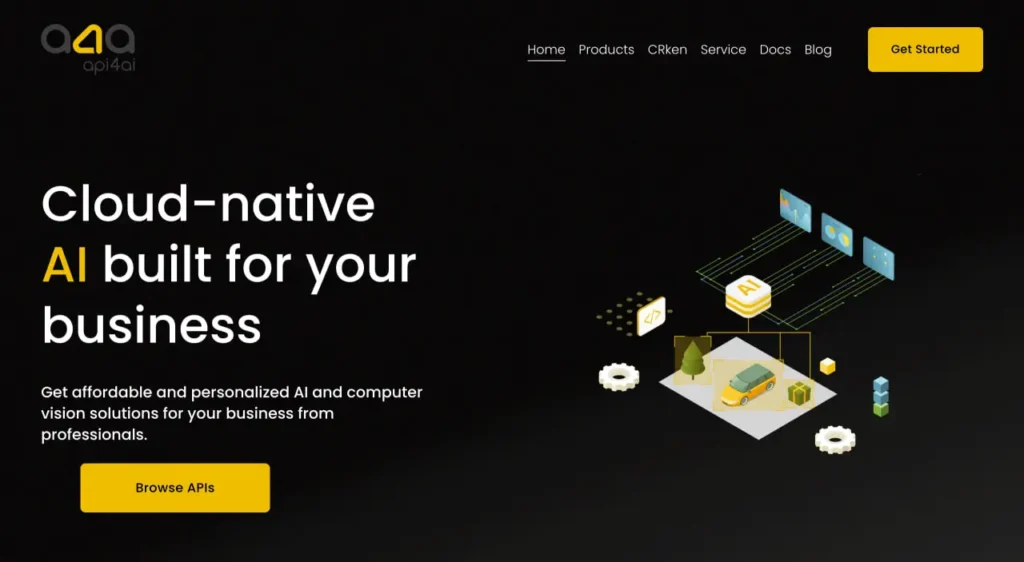
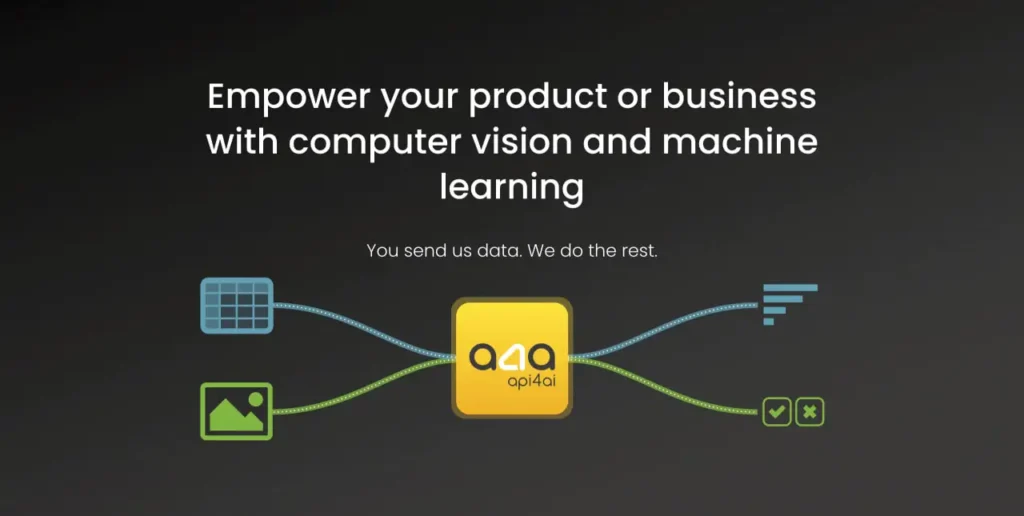
API4AI biedt cloudgebaseerde API's voor computervisie die taken op het gebied van visuele intelligentie afhandelen via REST-eindpunten. Ontwikkelaars sturen een afbeelding via een HTTP-verzoek; de API verwerkt deze met behulp van vooraf getrainde deep learning-modellen en retourneert gestructureerde JSON-gegevens.
Het platform maakt het trainen van modellen, het beheren van GPU-infrastructuur of het onderhouden van ML-pipelines overbodig. Elke API is gespecialiseerd in een specifieke taak: objectdetectie, optische tekenherkenning, filteren van NSFW-content, leeftijdschatting, achtergrondverwijdering of merklogoherkenning.
De basisworkflow is als volgt: een applicatie maakt een foto of ontvangt deze, stuurt de foto met een API-sleutel naar het gekozen API4AI-eindpunt en ontvangt de resultaten binnen twee seconden. Het systeem schaalt automatisch en verwerkt zowel individuele verzoeken als duizenden tegelijk, zonder handmatige toewijzing van resources.
Volgens de technische documentatie van API4AI maakt hun platform gebruik van Vision Transformers en convolutionele neurale netwerken. Vision Transformers zullen naar verwachting in 2026 commercieel volwassen zijn en presteren dan ook beter dan traditionele architecturen op het gebied van nauwkeurigheid en aanpasbaarheid aan realistische scenario's.
Kerntechnische architectuur
Het platform draait op een gedistribueerde cloudinfrastructuur met eindpunten in meerdere regio's. Dit vermindert de latentie bij internationale implementaties en biedt redundantie als er problemen optreden in één zone.
Authenticatie vindt plaats via API-sleutels die in de requestheaders worden meegegeven. De limieten voor het aantal aanvragen zijn afhankelijk van het abonnement en variëren van honderden tot miljoenen aanvragen per maand. Afbeeldingen kunnen worden ingediend als URL's, base64-gecodeerde strings of multipart-formuliergegevens.
De reactietijden bedragen gemiddeld 1,5 tot 3 seconden, afhankelijk van de complexiteit van de taak en de grootte van de afbeelding. Het systeem ondersteunt JPEG, PNG, WebP en andere gangbare formaten tot een bepaalde bestandsgrootte (doorgaans 10-20 MB per afbeelding).
Belangrijkste kenmerken en mogelijkheden
De catalogus van API4AI bevat meer dan een dozijn gespecialiseerde API's. Elke API is gericht op een specifieke bedrijfsbehoefte in plaats van een algemeen visiemodel te bieden. Dankzij deze modulariteit betalen teams alleen voor wat ze gebruiken en integreren ze alleen de functionaliteiten die ze nodig hebben.
Objectdetectie en -herkenning
De Object Detection API identificeert en lokaliseert objecten in afbeeldingen en retourneert de coördinaten van de begrenzingskaders en betrouwbaarheidsscores. Het herkent duizenden objectklassen, waaronder voertuigen, dieren, meubels, elektronica, voedsel en nog veel meer.
Praktische toepassingen zijn onder andere voorraadbeheer (geautomatiseerde voorraadtelling aan de hand van magazijnfoto's), retailanalyse (het volgen van de productplaatsing in de schappen) en beveiligingsmonitoring (het detecteren van ongeautoriseerde artikelen in verboden zones).
De API retourneert JSON-arrays met voor elk gedetecteerd object het klasselabel, het betrouwbaarheidspercentage en de pixelcoördinaten. Ontwikkelaars kunnen de resultaten filteren op basis van de betrouwbaarheidsdrempel om een balans te vinden tussen precisie en recall.
Optische tekenherkenning (OCR)
De OCR API extraheert tekst uit afbeeldingen van documenten, borden, schermafbeeldingen, bonnen, recepten en handgeschreven notities. Het ondersteunt meerdere talen en lettertypen en retourneert herkende tekst met positionele gegevens.
Zorginstellingen gebruiken dit voor het digitaliseren van papieren recepten. Hoewel OCR voor gedrukte tekst onder ideale omstandigheden nauwkeurigheidspercentages van meer dan 99,1% heeft bereikt, blijft de herkenning van handgeschreven tekst een uitdaging, met name bij het verwerken van medische documenten met een wisselende kwaliteit van het handschrift.
De API levert zowel onbewerkte tekst als gestructureerde JSON met woordkaders. Dit maakt verdere verwerking mogelijk, zoals het extraheren van trefwoorden, gegevensvalidatie of het creëren van doorzoekbare documentarchieven.
Leeftijdsverificatie en -schatting
De Age Verification API analyseert gezichtskenmerken om de leeftijd van een persoon te schatten. Deze API is ontworpen om te voldoen aan de regelgeving voor de verkoop van producten met een leeftijdsbeperking – zoals alcohol, tabak, loten en content voor volwassenen – via online kanalen.
Volgens gedocumenteerde praktijkvoorbeelden zagen bedrijven die geautomatiseerde leeftijdscontroles implementeerden een verbetering van de conversieratio tot wel 181 TP3T door de wrijving te verminderen in vergelijking met handmatige documentverificatie. Het aantal afgebroken winkelwagens daalde wanneer klanten geen overheidsdocumenten meer hoefden te uploaden.
Het systeem geeft een geschatte leeftijd en een betrouwbaarheidsscore terug. Om aan de regelgeving te voldoen, combineren veel implementaties dit met secundaire verificatiestappen in plaats van uitsluitend op visuele schatting te vertrouwen.
Achtergrond verwijderen en beeldsegmentatie
De Background Removal API isoleert objecten op de voorgrond (mensen, producten, voertuigen) van hun achtergrond en retourneert een transparante PNG-afbeelding of een afbeelding met een masker. E-commerceplatforms gebruiken dit om consistente productcatalogi te creëren zonder handmatige fotobewerking.
De API verwerkt complexe randen zoals haar, vacht en transparante objecten met redelijke nauwkeurigheid. Het verwerken van een standaard productfoto duurt 2-3 seconden, inclusief upload- en downloadtijd.
NSFW en contentmoderatie
De NSFW Content Detection API classificeert afbeeldingen in veiligheidscategorieën: veilig, suggestief, expliciet, gewelddadig en verontrustend. Sociale platforms, websites met door gebruikers gegenereerde content en online marktplaatsen gebruiken dit om communityrichtlijnen op grote schaal te handhaven.
Het systeem geeft waarschijnlijkheidsscores voor elke categorie in plaats van binaire beoordelingen. Hierdoor kunnen platforms aangepaste drempelwaarden instellen op basis van hun specifieke beleid en risicotolerantie.
Logodetectie en merkherkenning
De Logo Detection API identificeert merklogo's in afbeeldingen, wat handig is voor het monitoren van sponsoring, concurrentieanalyse, sociale media-analyse en merkbescherming. Het herkent duizenden grote merken in diverse sectoren.
Marketingteams gebruiken dit om de merkzichtbaarheid in door gebruikers gegenereerde content te volgen en het bereik van campagnes te meten. Mediabedrijven passen het toe om de zichtbaarheid van sponsors in uitgezonden beelden te verifiëren.
Virtueel passen
De Virtual Try-On API van API4AI maakt gebruik van deep learning-algoritmen om kledingstukken te integreren in foto's van modellen, waarbij natuurlijke houdingen en lichaamsverhoudingen behouden blijven. Modebedrijven integreren dit in hun e-commerceplatforms, zodat klanten kledingopties kunnen visualiseren zonder fysieke pasmodellen te hoeven passen.
De technologie verlaagt het retourpercentage doordat klanten beter geïnformeerde aankoopbeslissingen kunnen nemen. Bovendien maakt het een snelle uitbreiding van de catalogus mogelijk zonder dat elk artikel op elk model gefotografeerd hoeft te worden.
Automatiseer beeldanalyse met FlyPix AI
Veel organisaties werken met grote hoeveelheden lucht-, drone- of satellietbeelden, maar beschikken niet over efficiënte manieren om deze te verwerken. FlyPix-AI Het helpt bij het automatiseren van beeldanalysetaken, waardoor het gemakkelijker wordt om objecten te identificeren, gebieden te classificeren en nuttige informatie uit geodata te halen.
Op zoek naar snellere beeldanalyse?
FlyPix AI kan helpen met:
- objectdetectie in geospatiale beelden
- beeldannotatie en -classificatie
- Analyse van drone- en satellietbeelden
- training van aangepaste AI-modellen
👉 Probeer FlyPix AI om geautomatiseerde geospatiale analyses te onderzoeken.
Integratie en ontwikkelaarservaring
API4AI geeft prioriteit aan snelle integratie. De documentatie bevat codevoorbeelden in Python, JavaScript, PHP, Java en cURL. De meeste implementaties vereisen minder dan 20 regels code voor basisfunctionaliteit.
Ontwikkelaars beginnen met het aanvragen van een API-sleutel via het webdashboard. Gratis accounts bieden beperkte testmogelijkheden zonder betaalgegevens. Betaalde accounts geven toegang tot hogere limieten en ondersteuning op productieniveau.
Structuur van een REST API
Alle eindpunten volgen consistente patronen. Verzoeken maken gebruik van POST-methoden met de afbeeldingsgegevens en de API-sleutel. Reacties retourneren JSON met gestandaardiseerde structuren: resultaatarrays, betrouwbaarheidsscores, metadata en foutcodes indien van toepassing.
Het platform verzorgt automatisch de voorbewerking van afbeeldingen. Ontwikkelaars hoeven afbeeldingen niet te verkleinen, normaliseren of formatteren, behalve voor de basisbestandstypen. De API's accepteren afbeeldingen in hun oorspronkelijke afmetingen en passen de benodigde transformaties aan de serverzijde toe.
Foutafhandeling en snelheidslimieten
Het systeem retourneert HTTP-statuscodes en beschrijvende foutmeldingen wanneer verzoeken mislukken. Veelvoorkomende problemen zijn onder andere ongeldige API-sleutels, niet-ondersteunde bestandsindelingen, afbeeldingen die de maximale grootte overschrijden of schendingen van de snelheidslimiet.
De datalimieten worden maandelijks gereset. Wanneer de limieten bereikt zijn, worden aanvragen geretourneerd met statuscode 429 tot de volgende factureringscyclus. Hogere abonnementen bieden aanzienlijk grotere datalimieten en de mogelijkheid om naar behoefte extra capaciteit aan te schaffen.
Test- en sandboxomgeving
API4AI biedt testafbeeldingen en voorbeeldreacties in de documentatie. Ontwikkelaars kunnen met verschillende API's experimenteren met behulp van voorbeeldgegevens voordat ze deze in productiesystemen integreren.
De gratis versie fungeert als een effectieve testomgeving voor proof-of-conceptprojecten. Hiermee kunnen voldoende aanvragen worden gedaan om de nauwkeurigheid en prestaties voor specifieke gebruiksscenario's te valideren, zonder financiële verplichtingen.
Prestatie- en nauwkeurigheidsaspecten
De kwaliteit van de API varieert afhankelijk van de complexiteit van de taak en de kenmerken van de invoerafbeelding. Objectdetectie presteert het best met heldere, goed verlichte afbeeldingen met duidelijk herkenbare onderwerpen. De nauwkeurigheid van OCR is sterk afhankelijk van de tekstgrootte, de leesbaarheid van het lettertype en de beeldresolutie.
De Object Detection API is ontworpen om objecten in afbeeldingen met hoge nauwkeurigheid te identificeren en te lokaliseren onder gunstige omstandigheden. De prestaties nemen af bij afbeeldingen met een lage resolutie, extreme hoeken of zeer drukke scènes.
De OCR API verwerkte standaarddocumenten en gedrukte tekst met hoge nauwkeurigheid. De herkenning van handgeschreven tekst bleek minder betrouwbaar, met name bij cursief schrift of een onregelmatig handschrift – wat overeenkomt met bredere uitdagingen in de branche op dit gebied.
De nauwkeurigheid van de leeftijdsverificatie hangt af van factoren zoals beeldkwaliteit, gezichtshoek, make-up en belichting. De API retourneert betrouwbaarheidsscores die applicaties helpen bepalen wanneer aanvullende verificatiestappen nodig zijn.
Latentie en responstijden
De reactietijd is afhankelijk van de complexiteit van de taak, de grootte van de afbeelding en de serverbelasting. Eenvoudige taken, zoals het classificeren van NSFW-content, zijn binnen 1-2 seconden voltooid. Intensievere bewerkingen, zoals het verwijderen van achtergronden of virtueel passen, kunnen 3-4 seconden duren.
Netwerklatentie beïnvloedt de totale aanvraagtijd. Applicaties die gebruikers bedienen die zich ver van de serverregio's van API4AI bevinden, ondervinden extra vertraging. De cloudinfrastructuur van het platform is verdeeld over verschillende regio's, wat de latentie voor sommige gebruikers kan helpen verminderen.
Voor tijdgevoelige toepassingen kunnen ontwikkelaars asynchrone verwerkingspatronen implementeren: afbeeldingen ter analyse aanbieden, andere bewerkingen uitvoeren en de resultaten ophalen wanneer deze gereed zijn, in plaats van te wachten op API-reacties.
Schaalbaarheid en betrouwbaarheid
De cloudarchitectuur schaalt automatisch mee met pieken in de vraag. Applicaties hoeven tijdens verkeerspieken geen extra resources te reserveren; het platform wijst de verwerkingscapaciteit dynamisch toe.
Gegevens over uptime en betrouwbaarheid worden niet openbaar gemaakt in de beschikbare bronmaterialen. Ervaringen met betrouwbaarheid kunnen variëren.
Voor bedrijfskritische applicaties moeten teams terugvalstrategieën implementeren, zoals herhalingslogica voor tijdelijke storingen, geleidelijke terugval wanneer API's niet beschikbaar zijn en monitoring om langdurige uitval te detecteren.
Prijsstructuur en kostenanalyse
API4AI hanteert een prijsmodel op basis van gebruik, afhankelijk van het aantal aanvragen. Verschillende API's hebben verschillende kosten per aanvraag, afhankelijk van hun rekenkundige complexiteit. De exacte prijzen variëren en veranderen in de loop van de tijd, dus raadpleeg de officiële website voor de actuele tarieven.
Het platform biedt abonnementsniveaus met maandelijkse aanvraagquota tegen gereduceerde tarieven per aanvraag in vergelijking met een puur pay-as-you-go-model. Hogere abonnementsniveaus bieden een betere kostenefficiëntie voor applicaties die dagelijks duizenden afbeeldingen verwerken.
Kostenvergelijking: API versus maatwerkontwikkeling
Het bouwen van aangepaste computervisiemodellen vereist een aanzienlijke investering in data-annotatie, modeltraining, infrastructuur en doorlopend onderhoud. Teams hebben ML-engineers, GPU-resources en maanden ontwikkeltijd nodig.
Voor veel bedrijven blijven de kosten van API's aanzienlijk lager dan die van maatwerkontwikkeling, met name wanneer de totale eigendomskosten over meerdere jaren worden meegerekend. Het omslagpunt hangt af van het aanvraagvolume, de vereiste nauwkeurigheid en de interne kosten.
Voor grootschalige toepassingen die maandelijks miljoenen afbeeldingen verwerken, zijn maatwerkmodellen op de lange termijn mogelijk voordeliger. Bij kleinschalige toepassingen (tienduizenden aanvragen per maand) zijn API-oplossingen doorgaans geschikter.
| Factor | API4AI-platform | Aangepaste AI-ontwikkeling |
|---|---|---|
| Initiële insteltijd | Uren tot dagen | Minimaal 3-6 maanden |
| Vooruitinvestering | Minimaal (gratis versie beschikbaar) | $50,000-$500,000+ |
| Doorlopend onderhoud | Geen (wordt door het platform afgehandeld) | Er is een toegewijd ML-team nodig. |
| Schaalbaarheid | Automatisch | Vereist infrastructuurplanning |
| Aanpassing | Beperkt tot beschikbare API's | Volledig aanpasbaar |
| Het beste voor | Standaard gebruiksscenario's, snelle implementatie | Unieke eisen, zeer grote volumes |
Praktische voorbeelden en toepassingen
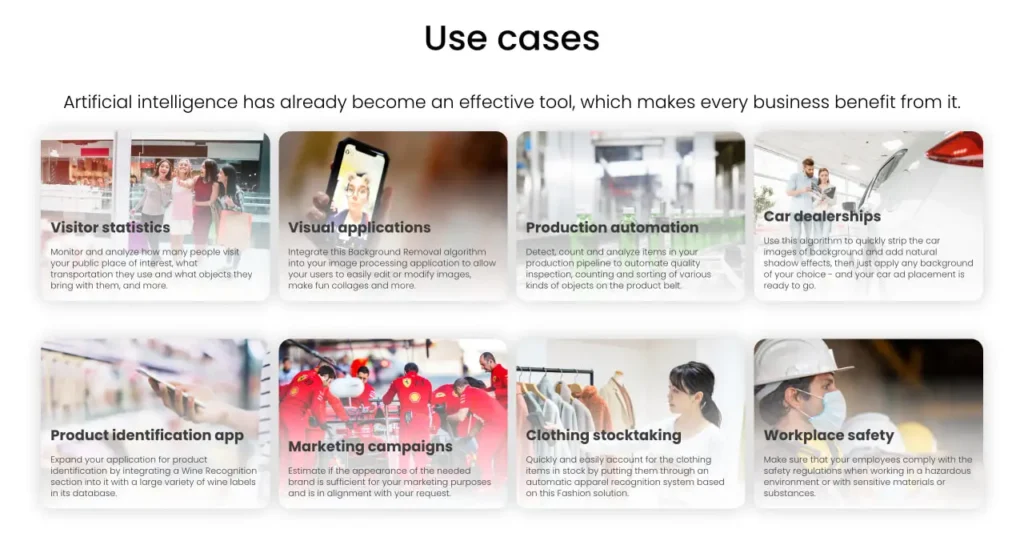
API4AI bedient bedrijven in de sectoren e-commerce, gezondheidszorg, media, beveiliging en consumententoepassingen. Hieronder vindt u gedocumenteerde implementatiepatronen.
E-commerce productcatalogisering
Online retailers gebruiken achtergrondverwijdering en objectdetectie om productfoto's op grote schaal te verwerken. In plaats van duizenden afbeeldingen handmatig te bewerken, automatiseren ze de standaardisatie van achtergronden en genereren ze overzichtelijke productcatalogi.
Het proces verkort de voorbereidingstijd van catalogi van weken naar dagen en zorgt voor visuele consistentie tussen alle productvermeldingen. Achtergrondverwijdering en objectdetectie kunnen de workflow voor het samenstellen van productcatalogi aanzienlijk versnellen.
Digitalisering van zorgdocumenten
Medische instellingen gebruiken OCR om papieren recepten, patiëntenformulieren en historische gegevens om te zetten in doorzoekbare digitale formaten. Dit verbetert de toegankelijkheid van gegevens en maakt integratie met elektronische patiëntendossiersystemen mogelijk.
De technologie stuit op problemen bij handgeschreven recepten, waar de kwaliteit van het handschrift sterk varieert. Veel implementaties combineren geautomatiseerde OCR met menselijke controle voor kwaliteitsborging in plaats van volledige automatisering.
Contentmoderatie voor sociale platforms
Platformen voor door gebruikers gegenereerde content zetten API's in voor het detecteren van NSFW-content, waarmee ongepaste inzendingen automatisch worden gemarkeerd voordat ze openbaar worden gemaakt. Dit vermindert de werkdruk van moderators en verkort de reactietijd bij schendingen van het beleid.
De systemen werken het best als voorfilters die overduidelijke overtredingen automatisch opsporen, terwijl twijfelgevallen worden doorverwezen naar menselijke moderators voor beoordeling. Deze hybride aanpak biedt een evenwicht tussen de efficiëntie van automatisering en genuanceerde besluitvorming.
Retailanalyse en schapbewaking
Bedrijven in de consumentengoederensector gebruiken objectdetectie om de productplaatsing in winkels te analyseren aan de hand van foto's. Vertegenwoordigers in het veld maken foto's van de schappen; API's identificeren producten, meten de beschikbare schapruimte en detecteren wanneer producten niet op voorraad zijn.
Deze gegevens vormen de basis voor het aanvullen van voorraden, controleren de naleving van promoties en bieden concurrentie-informatie over de productplaatsing van rivalen. De automatisering vervangt handmatige controles met behulp van klembordjes door schaalbare beeldanalyse.
Online verkoop met leeftijdsbeperking
Bezorgdiensten voor alcohol en online winkels implementeren API's voor leeftijdsverificatie om te voldoen aan de regelgeving en tegelijkertijd het aankoopproces te vereenvoudigen. Klanten sturen selfies in; het systeem schat de leeftijd en markeert accounts die aanvullende verificatie vereisen.
Zoals eerder vermeld, zagen bedrijven die geautomatiseerde leeftijdscontroles invoerden een verbetering van de conversie tot wel 181% door het aantal afgebroken winkelwagens te verminderen in vergelijking met handmatige documentuploads. De technologie dient als een eerste screeninglaag en niet als enige verificatiemethode voor transacties die cruciaal zijn voor de naleving van regelgeving.
Sterke punten en beperkingen
Elk platform kent compromissen. Hieronder lees je wat API4AI goed doet en waar het tegen beperkingen aanloopt.
Belangrijkste sterke punten
- Snelheid van implementatie: Teams kunnen API's binnen enkele uren integreren en testen. Deze snelle implementatietijd is ideaal voor bedrijven die snelle validatie nodig hebben of te maken hebben met strakke projectdeadlines.
- Geen expertise in machine learning vereist: Ontwikkelaars zonder achtergrond in machine learning kunnen geavanceerde computervisiefunctionaliteit implementeren. Het platform abstraheert de complexiteit van modeltraining, -optimalisatie en -onderhoud.
- Automatische schaling: De infrastructuur kan vraagfluctuaties opvangen zonder handmatige tussenkomst. Applicaties hebben geen capaciteitsplanning of resourceprovisionering nodig voor beeldverwerkingsworkloads.
- Diverse API-catalogus: Meerdere gespecialiseerde eindpunten dekken veelvoorkomende zakelijke behoeften. Teams kunnen API's combineren voor workflows met meerdere stappen, zonder van leverancier te hoeven wisselen.
- Betaling per gebruik: Gebruikers met een laag volume vermijden grote investeringen vooraf. Testen en het ontwikkelen van een proof-of-concept verlopen met minimaal financieel risico.
Opvallende beperkingen
- Beperkte aanpassingsmogelijkheden: Het platform biedt vooraf getrainde modellen die geoptimaliseerd zijn voor algemene toepassingen. Toepassingen die branchespecifieke trainingsgegevens of ongebruikelijke detectiedoelen vereisen, kunnen de modellen niet finetunen.
- API-afhankelijkheid: De kernfunctionaliteit is afhankelijk van de beschikbaarheid van externe services. Netwerkproblemen, API-uitval of prijswijzigingen hebben directe gevolgen voor applicaties. Het bouwen van kritieke systemen op basis van API's van derden brengt het risico van leveranciersafhankelijkheid met zich mee.
- Nauwkeurigheidsbeperkingen: Voorgegetrainde modellen presteren mogelijk minder goed in uitzonderlijke gevallen, bij ongebruikelijke hoeken, slechte belichting of bij domeinspecifieke beelden die niet in de trainingsdata voorkomen. De prestaties variëren afhankelijk van de kwaliteit van de invoer.
- Kosten op extreme schaal: Organisaties die dagelijks miljoenen afbeeldingen verwerken, kunnen merken dat de kosten per aanvraag de totale eigendomskosten van aangepaste infrastructuur en modellen overstijgen – hoewel deze drempel voor de meeste bedrijven ruim boven hun behoeften ligt.
- Overwegingen met betrekking tot gegevensbescherming: Beelden worden naar externe servers verzonden voor verwerking. Organisaties die gevoelige beeldgegevens verwerken, moeten de naleving van privacyregelgeving en bewaartermijnen van gegevens evalueren.
| Aspect | Kracht | Beperking |
|---|---|---|
| Insteltijd | Uren nodig voor integratie | Modellen kunnen niet worden aangepast. |
| Technische vaardigheden | Geen expertise in machine learning vereist | Beperkte controle over de verwerking |
| Kostenstructuur | Lage instapdrempel | Kan duur worden bij zeer grote volumes. |
| Nauwkeurigheid | Hoog voor veelvoorkomende scenario's | Kan problemen ondervinden met uitzonderlijke gevallen. |
| Infrastructuur | Volledig beheerd, automatisch schaalbaar | Risico van leveranciersafhankelijkheid |
| Privacy | Standaardversleuteling tijdens verzending | Gegevens verlaten de controle van de organisatie. |
Concurrentiel landschap en alternatieven
API4AI concurreert met diverse gevestigde platforms en cloudproviders die computervisie-functionaliteit aanbieden.
Belangrijkste concurrenten
- De Google Cloud Vision API biedt objectdetectie, OCR, gezichtsherkenning en beeldlabeling, ondersteund door de uitgebreide machine learning-infrastructuur van Google. Het biedt bredere integratie met andere Google Cloud-services, maar brengt doorgaans hogere prijzen met zich mee voor vergelijkbare aanvraagvolumes.
- Amazon Rekognition levert beeld- en videoanalyse via de AWS-infrastructuur. Het biedt een naadloze integratie met het AWS-ecosysteem en extra functies zoals herkenning van beroemdheden en moderatie van videocontent. De prijsstelling volgt de complexe gelaagde structuur van AWS.
- Microsoft Azure Computer Vision biedt vergelijkbare mogelijkheden, geïntegreerd met Azure-cloudservices. Het biedt sterke bedrijfsmatige ondersteuning en compliance-certificeringen die belangrijk zijn voor gereguleerde sectoren.
- Eden AI fungeert als een uniforme interface voor meerdere AI-aanbieders, waardoor ontwikkelaars via één integratie toegang krijgen tot verschillende vision-API's. Deze aanpak biedt flexibiliteit ten opzichte van leveranciers, maar voegt een abstractielaag toe die mogelijk vertraging of complexiteit met zich meebrengt.
Differentiatiefactoren
API4AI onderscheidt zich voornamelijk door gerichte specialisatie en transparante prijsstelling. Het platform legt de nadruk op specifieke zakelijke toepassingen in plaats van een alomvattende integratie in het cloud-ecosysteem.
Voor teams die al gebruikmaken van een ecosysteem van cloudproviders (AWS, Google Cloud, Azure), bieden native beeldverwerkingsservices een nauwere integratie met de bestaande infrastructuur. Voor bedrijven die op zoek zijn naar zelfstandige beeldverwerkingsfunctionaliteit zonder bredere cloudafhankelijkheden, bieden gespecialiseerde platforms zoals API4AI mogelijk eenvoudigere implementatiemogelijkheden.
De prijsconcurrentiekracht varieert per gebruiksscenario en volume. Over het algemeen vinden kleinere projecten de transparante prijsstelling per aanvraag van API4AI gemakkelijker te evalueren dan de complexe facturatiestructuren van cloudproviders.
Strategische overwegingen: Wanneer is API4AI zinvol?
Het platform is in bepaalde zakelijke contexten beter geschikt dan andere. Houd rekening met deze factoren bij het beoordelen van de geschiktheid.
Ideale use cases
API4AI is het meest geschikt voor organisaties die standaard computervisie-taken nodig hebben zonder dat ze over machine learning-expertise in huis beschikken. Startups die productconcepten valideren, middelgrote bedrijven die workflows automatiseren en grote ondernemingen die hun interne capaciteiten willen aanvullen, vinden allemaal waarde in kant-en-klare API's.
Projecten met duidelijke eisen die aansluiten op de beschikbare API's realiseren het snelst resultaat. Als de bedrijfsbehoefte overeenkomt met objectdetectie, OCR, leeftijdsverificatie of andere catalogusfunctionaliteiten, verloopt de integratie soepel.
Applicaties die een gemiddeld aantal aanvragen verwerken (honderden tot tienduizenden per dag) vormen de ideale API-economie. De kosten blijven beheersbaar en de infrastructuur wordt niet complex.
Situaties die alternatieven bevoordelen
Organisaties die zeer gespecialiseerde detectietaken vereisen – zoals het identificeren van specifieke industriële defecten, het analyseren van medische beelden of het herkennen van bedrijfseigen objecten – hebben aangepaste modellen nodig die getraind zijn op domeinspecifieke data. Voorgeprogrammeerde API's kunnen niet de vereiste nauwkeurigheid leveren voor unieke visuele problemen.
Bedrijven die dagelijks miljoenen afbeeldingen verwerken, moeten de kosten voor zelf ontwikkelen versus kopen zorgvuldig afwegen. Bij extreme schaalvergroting kunnen de totale kosten van maatwerkinfrastructuur lager uitvallen dan de cumulatieve API-kosten.
Bedrijven met strikte eisen ten aanzien van de opslaglocatie van gegevens of wettelijke beperkingen die externe gegevensoverdracht belemmeren, hebben on-premises of private cloudoplossingen nodig in plaats van openbare API-diensten.
Teams die al diep verankerd zijn in een cloud-ecosysteem (AWS, Azure, Google Cloud) geven mogelijk de voorkeur aan native beeldverwerkingsservices die naadloos integreren met de bestaande infrastructuur en facturering.
De toekomst van Vision API's en AI-integratie
De markt voor computervisie-API's blijft zich ontwikkelen naarmate de onderliggende modellen verbeteren en nieuwe mogelijkheden ontstaan. Vision Transformers bereikten in 2026 commerciële volwassenheid en boden verbeterde nauwkeurigheid en aanpasbaarheid ten opzichte van traditionele architecturen.
Prognoses vanuit de sector suggereren dat contextbewuste agenten over 2-3 jaar hun intrede zullen doen, en dat meer geavanceerde samenwerkingssystemen binnen 5 jaar worden verwacht.
De adoptie ervan neemt toe: 101.300.000 grote bedrijven gebruiken momenteel AI-agenten. Daarnaast is 821.300.000 leidinggevenden van plan om de komende drie jaar AI-agenten te implementeren, wat wijst op een sterke dynamiek richting geautomatiseerde intelligente systemen.
Voor API4AI en vergelijkbare platforms duidt deze trend op een uitbreiding van de mogelijkheden – van eenvoudige classificatie en detectie naar contextueel begrip en complexe visuele redenering. Applicaties zullen steeds vaker meerdere AI-functionaliteiten (beeldherkenning, taalverwerking, voorspelling) combineren in uniforme workflows.
Bedrijven die API's voor beeldherkenning evalueren, moeten niet alleen rekening houden met hun huidige behoeften, maar ook met de toekomstige ontwikkelingen. Platformen die investeren in onderzoek en het uitbreiden van hun mogelijkheden zullen gedurende meerjarige implementaties steeds meer waarde opleveren.
Veelgestelde vragen
API4AI biedt REST-eindpunten die toegankelijk zijn vanuit elke programmeertaal die HTTP-verzoeken kan uitvoeren. De documentatie bevat specifieke codevoorbeelden in Python, JavaScript, PHP, Java en cURL. Ontwikkelaars die in andere talen werken, kunnen deze voorbeelden raadplegen en de HTTP-verzoekpatronen aanpassen aan hun favoriete tools en frameworks.
De huidige API-structuur verwerkt individuele afbeeldingen per verzoek. Voor batchbewerkingen doen applicaties meerdere opeenvolgende of parallelle verzoeken. Er gelden snelheidslimieten voor het totale aantal verzoeken binnen de factureringsperiode, in plaats van voor het aantal gelijktijdige verzoeken. Dit maakt parallelle verwerking mogelijk voor snellere batchverwerking binnen die limieten.
Voor toepassingen met een laag tot gemiddeld volume (tot tienduizenden afbeeldingen per maand) zijn de kosten van API4AI doorgaans aanzienlijk lager dan die van maatwerkontwikkeling, rekening houdend met data-annotatie, modeltraining, infrastructuur en de doorlopende kosten van het machine learning-team. Maatwerkoplossingen kunnen economischer worden bij zeer hoge volumes (miljoenen afbeeldingen per maand) of wanneer de vereisten de initiële investering van $50.000+ en de bijbehorende technische resources rechtvaardigen.
Afbeeldingen worden verwerkt op de cloudinfrastructuur van API4AI en worden doorgaans niet langdurig opgeslagen, tenzij dit expliciet is geconfigureerd. Bedrijven die gevoelige beeldgegevens verwerken, dienen het gegevensverwerkingsbeleid van het platform te raadplegen en de naleving van relevante privacyregelgeving te beoordelen. Voor zeer gevoelige toepassingen hebben organisaties mogelijk on-premises of private cloudoplossingen nodig in plaats van openbare API-services.
Raadpleeg de officiële API4AI-documentatie of neem contact op met hun supportteam voor de actuele SLA-voorwaarden, die kunnen variëren afhankelijk van het abonnement. Discussies in de community suggereren een algemene betrouwbaarheid, maar formele uptime-garanties worden niet prominent vermeld. Bedrijfskritische applicaties zouden logica voor het opnieuw proberen en fallback-strategieën moeten implementeren, ongeacht de SLA-claims van de leverancier.
Het platform biedt vooraf getrainde modellen die geoptimaliseerd zijn voor algemene toepassingen. Het trainen of verfijnen van modellen op maat voor organisatiespecifieke detectietaken wordt niet aangeboden via de standaard API-catalogus. Bedrijven die zeer gespecialiseerde herkenningsmogelijkheden nodig hebben, hebben maatwerk AI-ontwikkeling of platforms nodig die modelaanpassing ondersteunen.
De API's ondersteunen doorgaans gangbare formaten zoals JPEG, PNG, WebP en andere, met een maximale bestandsgrootte van ongeveer 10-20 MB per afbeelding, afhankelijk van het specifieke API-eindpunt. De exacte specificaties staan vermeld in de technische documentatie voor elke API. Het platform verzorgt automatisch de benodigde beeldvoorverwerking, waardoor ontwikkelaars de invoer niet handmatig hoeven te verkleinen of normaliseren, behalve voor de basisformaten.
Conclusie: Is API4AI de juiste keuze voor uw project?
API4AI maakt een snelle implementatie van computervisie mogelijk voor standaard zakelijke toepassingen. Het platform elimineert de complexiteit van de infrastructuur en de noodzaak voor expertise op het gebied van machine learning, terwijl het een pay-per-use-model biedt dat geschikt is voor projecten in een vroeg stadium en toepassingen met een gemiddeld volume.
De dienst werkt het best wanneer de vereisten aansluiten op de beschikbare API's, zoals objectdetectie, OCR, leeftijdsverificatie, achtergrondverwijdering, contentmoderatie en vergelijkbare taken. Teams die deze mogelijkheden nodig hebben, kunnen de dienst binnen enkele uren integreren en testen, in plaats van maanden.
Maar er zijn beperkingen. De aanpassingsmogelijkheden zijn minimaal. De gegevens verlaten de controle van de organisatie. De nauwkeurigheid varieert afhankelijk van de kwaliteit van de invoer. De kosten bij extreme schaalvergroting kunnen hoger uitvallen dan die van maatwerkoplossingen.
Voor bedrijven die de integratie van AI voor beeldherkenning evalueren, komt het besluitvormingsproces neer op drie vragen: Voldoen standaard-API's aan uw eisen? Is uw aanvraagvolume economisch haalbaar gezien de API-kosten? Kunnen externe afhankelijkheden voldoen aan uw eisen op het gebied van betrouwbaarheid en compliance?
Wanneer de antwoorden overwegend positief zijn, biedt API4AI praktische waarde. Wanneer de vereisten specialisatie, controle of extreme schaalbaarheid vereisen, verdienen maatwerkontwikkeling of alternatieve platforms serieuze overweging.
De markt voor computervisie ontwikkelt zich razendsnel. Wat vandaag nog maatwerk vereist, kan morgen via API's beschikbaar zijn. En wat momenteel via API's werkt, kan bij toenemende schaal de noodzaak voor maatwerkinfrastructuur rechtvaardigen.
Evalueer API4AI op basis van de huidige behoeften en plan tegelijkertijd voor toekomstige groei. Test grondig met echte data voordat u overgaat tot productie-implementatie. En ontwikkel terugvalstrategieën die de kernfunctionaliteit beschermen als externe afhankelijkheden uitvallen.