

Quick Summary: Spider mites are tiny arachnids that feed on plant sap, causing stippling, webbing, and leaf damage. Identifying them early through visual inspection and webbing checks is crucial. Treatment includes water sprays, insecticidal soaps, predatory mites, and miticides like spirodiclofen. Prevention focuses on humidity control, plant health, and regular monitoring.
Spider mites rank among the most persistent pests that attack garden plants, houseplants, and agricultural crops. These microscopic destroyers can devastate entire plant collections before most people even notice they’re there.
The damage these tiny arachnids inflict goes far beyond aesthetic problems. Heavy infestations cause leaf drop, reduced plant vigor, and can kill entire plants if left unchecked.
But here’s the thing—catching spider mites early makes all the difference. Understanding what to look for and how to respond quickly can save your plants from serious harm.
Understanding Spider Mites: The Basics
Spider mites aren’t actually insects. They’re arachnids, related to spiders and ticks, which explains why they have eight legs instead of six.
The two-spotted spider mite (Tetranychus urticae) causes the most widespread problems. According to Washington State University, these pests attack innumerable hosts including weeds, field crops, ornamental and house plants, vegetables, forage crops, small fruits, and tree fruits.
Adults measure approximately 0.4 millimeters long—barely visible to the naked eye. The color ranges from pale green and greenish amber to yellowish, usually with two black spots on top (sometimes four).
Life Cycle and Reproduction
Spider mites reproduce at alarming rates. Female mites live for 2-3 weeks and lay eggs during that time. According to Washington State University research, generation intervals can complete in as little as 5-20 days depending on temperature.
The spherical eggs range from transparent and colorless to opaque straw yellow. Larvae emerge with just six legs initially, developing the characteristic eight legs as they mature through several molts.
Hot, dry conditions accelerate their life cycle dramatically. A generation can complete development in as little as 5 to 20 days under favorable conditions, with development occurring most rapidly during warm weather, meaning populations explode during summer months.
How to Identify Spider Mite Infestations
Early detection is everything when dealing with spider mites. The sooner problems are spotted, the easier they are to control.
Visual Signs and Symptoms
The first symptom most people notice is stippling—tiny yellow or white dots on leaf surfaces. This happens because mites pierce plant cells and suck out the contents.
As infestations progress, leaves take on a bronze or grayish cast. They may appear dusty or dirty. Severely damaged leaves turn completely yellow or brown, then drop off.
Fine webbing is the telltale sign that gives spider mites their name. Look for delicate silk strands stretched between leaves, stems, and branch tips. The webbing becomes more obvious as populations increase.
Inspection Techniques
Hold a white piece of paper under a leaf and tap the branch sharply. Examine the paper closely—spider mites look like tiny moving specks, barely the size of a grain of pepper.
Check the undersides of leaves carefully, preferably with a magnifying glass. Mites congregate there, along with their eggs and cast skins.
For tree fruits and agricultural crops, Washington State University research shows that monitoring leaf infestation levels provides reliable population estimates. When fewer than 85% of leaves show infestation, the percentage of infested leaves correlates statistically with mites per leaf.
Treatment thresholds vary by crop and situation. For tree fruits, binomial sampling provides the basis for economic thresholds. Above 85% leaf infestation, standard sampling methods lose accuracy and require different monitoring approaches.

Turn Aerial Images Into Usable Data With FlyPix AI
FlyPix AI uses AI agents to inspect and process geospatial images at scale. It can identify and outline objects in dense visual scenes, and users can train custom models for specific image analysis tasks.
For pest monitoring, this can help farming teams review visible crop areas, field conditions, and changes that may need closer inspection.
Need a Faster Way to Review Field Images?
FlyPix AI can help with:
- processing aerial and satellite images
- detecting visible changes across land areas
- creating custom AI models for image analysis
- cutting down manual annotation work
👉 Try FlyPix AI to review geospatial data faster.
Effective Spider Mite Control Methods
Multiple treatment options exist, ranging from simple physical controls to chemical miticides. The best approach depends on infestation severity, plant type, and setting.
Physical and Cultural Controls
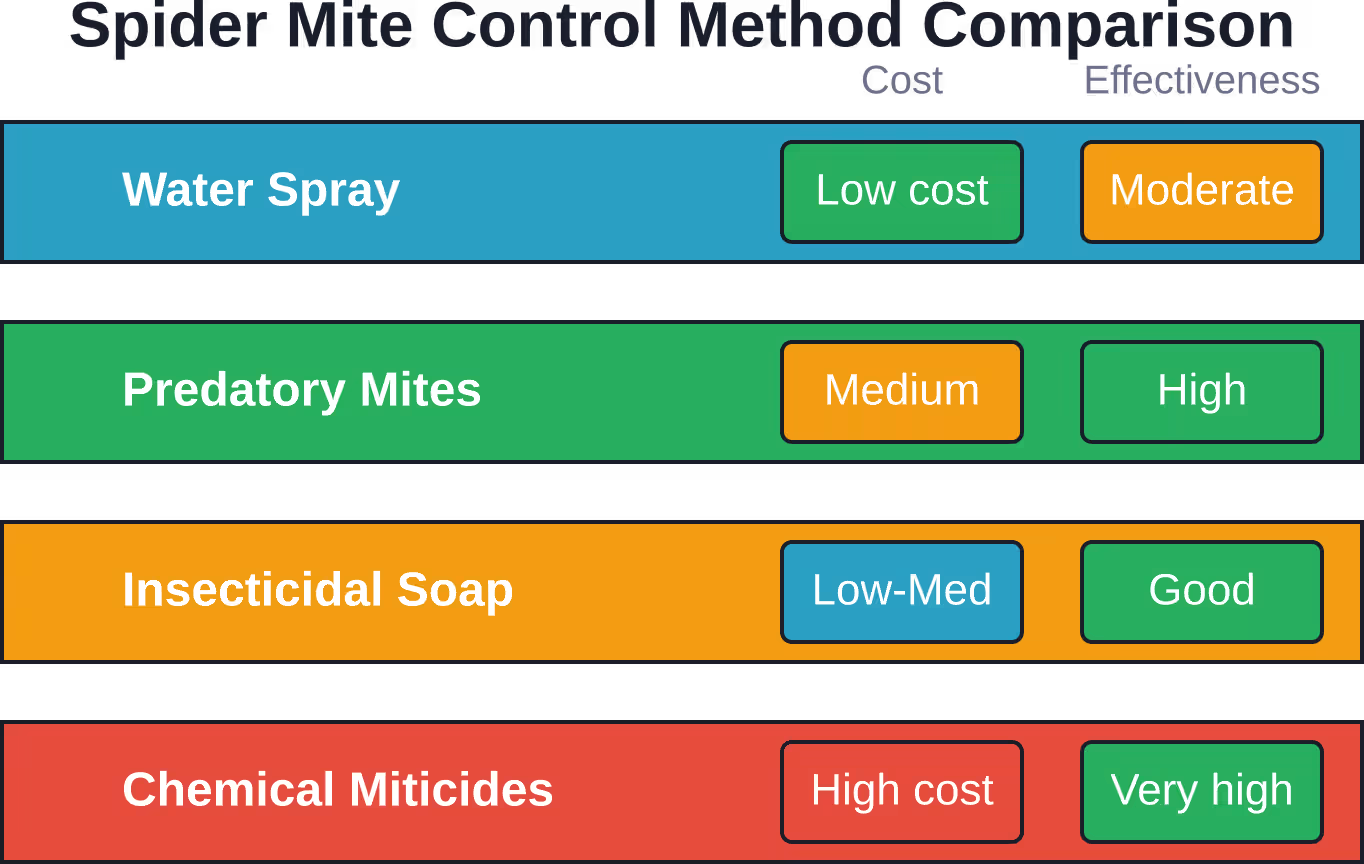
Water provides the simplest first-line defense. A strong spray from a garden hose knocks mites off plants and disrupts their webbing. Focus the spray on leaf undersides where mites congregate.
Repeat water treatments every few days for several weeks. This won’t eliminate all mites, but it reduces populations significantly and gives plants breathing room.
Removing heavily infested leaves and pruning damaged growth eliminates large concentrations of mites. Dispose of this material away from other plants—don’t compost it.
Biological Control Options
Predatory mites offer effective biological control, particularly in greenhouses and high tunnels. Phytoseiulus persimilis specifically targets two-spotted spider mites.
Research funded by Southern SARE found that predatory mites successfully controlled two-spotted spider mites in North Carolina tomato fields under proper management conditions. The key is releasing them before pest populations explode.
Other beneficial insects including ladybugs, lacewings, and minute pirate bugs also feed on spider mites. Avoiding broad-spectrum insecticides preserves these natural enemies.
Chemical Control Options
Insecticidal soaps and horticultural oils work well for light to moderate infestations. These products kill on contact but have no residual effect, so thorough coverage and repeat applications are essential.
Spray every leaf surface, especially undersides. Repeat treatments every 5-7 days for three to four applications.
For severe infestations, specific miticides provide more powerful control. UC Davis research documents several effective options for agricultural use:
| Active Ingredient | Application Rate | Key Notes |
|---|---|---|
| Spirodiclofen (Envidor) | 16-34 fl oz | Most effective with 0.5-1% oil concentration |
| Cyflumetofen (Nealta) | 13.7 fl oz | Apply with 0.5-1% oil for best results |
| Abamectin | Variable | Requires minimum 1% oil concentration |
Spirodiclofen targets all life stages as a contact toxin and shows greater effectiveness against twospotted spider mites than Pacific spider mites.
Rotate between products with different modes of action. Mites develop resistance quickly when the same chemical is used repeatedly.
Prevention Strategies That Actually Work
Preventing spider mite problems beats fighting heavy infestations every time. Several cultural practices significantly reduce mite pressure.
Environmental Management
Spider mites thrive in hot, dry conditions. Maintaining adequate humidity discourages their reproduction. Misting plants occasionally in dry indoor environments helps.
Avoid drought stress—water plants consistently. Stressed plants become more susceptible to mite damage and less able to tolerate feeding injury.
Space plants appropriately for good air circulation. Crowded conditions create microclimates that favor mite development.
Regular Monitoring
Inspect plants weekly during the growing season. Check new plants thoroughly before bringing them near established collections.
Quarantine new acquisitions for at least two weeks. Watch for any signs of pest problems before introducing them to other plants.
Keep records of when and where problems occur. Patterns often emerge—certain plant varieties may be more susceptible, or specific locations may have recurring issues.
Conclusion: Taking Action Against Spider Mites
Spider mites cause serious damage, but they’re not invincible. Success comes from early detection, quick response, and consistent follow-through.
Start inspecting plants today. Look for stippling, webbing, and those tiny moving specks on leaf undersides. Catching problems early dramatically improves treatment success.
Choose control methods appropriate for the situation. Water sprays and insecticidal soaps handle light infestations. Predatory mites offer sustainable long-term management in greenhouse settings. Reserve stronger miticides for severe problems that threaten valuable plants.
Prevention remains the best strategy. Regular monitoring, maintaining plant health, and managing environmental conditions create an environment where spider mites struggle to establish damaging populations.
Don’t wait until webbing covers your plants. Check them now, implement preventive measures, and respond quickly at the first signs of trouble. The plants will thank you.
Frequently Asked Questions
No. Spider mites only feed on plants and cannot bite or infest people or animals. They pose no direct health risk to humans or pets.
Spider mites typically survive only a few days without feeding on plant material. However, overwintering females can persist for several weeks in protected locations before needing to feed again.
Spider mites don’t fly or jump. They spread by crawling from plant to plant when foliage touches, by being carried on clothing or tools, or by ballooning—young mites produce silk strands that catch wind currents and carry them to new locations.
Spider mites feed continuously but are most active during warm, dry conditions. They don’t follow a strict day-night activity pattern like some insects.
Predatory mites and beneficial insects can suppress spider mite populations to tolerable levels but rarely eliminate them entirely. They work best as part of an integrated management approach rather than as standalone solutions.
Neem oil has moderate effectiveness against spider mites, primarily working as a repellent and growth regulator rather than a direct contact killer. Multiple applications are necessary, and it works best on light infestations combined with other methods.
Maintain plant health through proper watering and nutrition, monitor regularly for early detection, avoid creating hot and dry conditions, and preserve beneficial insect populations by avoiding broad-spectrum pesticides. Regular inspection remains the most important prevention tool.