
Quick Summary: Plant growth follows distinct stages—seed germination, seedling establishment, vegetative growth, reproductive development, and senescence—each requiring specific environmental conditions and nutrients. Understanding these stages helps farmers optimize irrigation, fertilization, and pest management to maximize yields. Research shows germination success depends heavily on soil temperature thresholds and moisture availability, while reproductive timing varies by crop and climate.
Every crop that feeds the world passes through predictable growth stages. From the moment a seed absorbs water to the final harvest, plants follow developmental patterns that determine yield, quality, and resilience.
Farmers who understand these stages make better decisions. They know when to irrigate, when nitrogen matters most, and when pest pressure peaks. The difference between a mediocre harvest and a record one often comes down to timing interventions correctly.
But here’s the thing—not all crops follow identical timelines. Warm-season grasses behave differently than legumes. Perennials have patterns that annuals never exhibit. And climate shifts are changing some of these patterns in ways researchers are still mapping.
This guide breaks down the fundamental stages of plant growth and explains why each one matters for agricultural productivity.
Understanding the Plant Life Cycle Framework
Plants progress through distinct developmental phases, each characterized by specific physiological processes and resource requirements. These stages aren’t arbitrary—they’re driven by genetic programming, environmental signals, and resource availability.
The major stages include seed dormancy and germination, seedling establishment, vegetative growth, reproductive development (flowering and fruiting), and senescence. Some classification systems divide these further, especially the reproductive phase.
Agricultural scientists track growth stages for practical reasons. Pest and disease susceptibility changes across stages. Nutrient demands shift dramatically. Water stress during one stage might reduce yields by 40%, while the same stress a week earlier causes minimal damage.
Why Growth Stage Classification Matters
Standardized growth stage systems help researchers and farmers communicate precisely. When an agronomist says “apply fungicide at R3,” soybean growers know exactly when that occurs—beginning pod development, roughly three to four weeks after flowering starts.
Different crops use different classification systems. Corn uses vegetative (V) and reproductive (R) stages with numbered subdivisions. Soybeans use a similar system. Small grains often use the Zadoks scale. Edamame growth in Miami-Dade County, for instance, follows reproductive stages from R1 (flowering) through R8 (full maturity, when 95% of pods reach maturity).
These systems allow precise timing of inputs.

Automate Geospatial Image Review With FlyPix AI
FlyPix AI helps teams detect, monitor, and inspect objects in satellite, aerial, and drone imagery. It is used across industries such as agriculture, forestry, infrastructure, construction, and government work.
For plant growth tracking, this can support faster visual checks across fields and make routine monitoring less dependent on manual image review.
Need Faster Geospatial Analysis?
FlyPix AI can help with:
- reviewing large image datasets
- detecting objects and visual patterns
- training models for specific inspection needs
- supporting field and land monitoring workflows
👉 Try FlyPix AI to automate image analysis.
Stage One: Seed Dormancy and Germination
Seeds represent plant life in suspended animation. Dormancy mechanisms prevent germination until conditions favor survival. Some seeds require cold stratification. Others need fire, scarification, or passage through an animal’s digestive system.
Fourwing saltbush seeds ingested by cattle showed 14% germination rates compared to just 8% for non-ingested seeds. The digestive process breaks down inhibitors that otherwise suppress sprouting.
Germination Requirements and Triggers
Germination begins when environmental conditions meet species-specific thresholds. Water absorption (imbibition) activates enzymes that mobilize stored energy. The embryo then breaks through the seed coat.
Temperature is critical. According to US Forest Service research, switchgrass germination begins when soil temperatures reach 68°F (20°C). Seed collected from southeastern Montana and northeastern Wyoming achieved 70 to 90% germination at temperatures between 68 and 86°F.
Moisture, oxygen, and sometimes light also play roles. Some seeds won’t germinate in darkness. Others require light to stay dormant, germinating only when buried.
Germination Rates and Agricultural Implications
Not all seeds germinate. Germinative capacity for switchgrass typically ranges from 40 to 70%. Farmers account for this when calculating seeding rates—if only 60% germinate, they plant more to hit target densities.
Seed viability declines over time, though storage conditions matter enormously. Fourwing saltbush seeds can remain viable for 15 years in dry storage, with some lasting up to 19 years. Most crop seeds lose viability faster, making seed age a practical concern.
Some species form soil seed banks. Ventenata, an invasive annual grass, maintains a short-term persistent seed bank—less than 1% of seeds remain viable for up to three years. This complicates eradication efforts, since the seed bank can reestablish populations after control measures.
Stage Two: Seedling Establishment
Once germination occurs, the young plant enters a vulnerable phase. The seedling must establish a functional root system before stored seed energy runs out. Simultaneously, it must develop photosynthetic capacity.
The first structures to emerge—cotyledons or seed leaves—often don’t resemble mature plant leaves. These serve primarily to deploy stored nutrients and, in some species, conduct limited photosynthesis.
True Leaf Development
True leaves mark the transition toward independent growth. These leaves possess the mature form and full photosynthetic machinery. Once several true leaves unfold, the plant can generate more energy than it consumes.
Seedling establishment is the highest-mortality phase. Frost, drought, herbivory, and disease kill more plants at this stage than any other.
Herbivory pressure impacts seedling establishment in shrub species. Even moderate grazing stress can thin stands enough to reduce future productivity.
Root System Development
Below ground, root architecture determines drought tolerance and nutrient access. Taproots anchor plants and reach deep water. Fibrous roots spread laterally, exploiting surface moisture and nutrients.
Root growth often outpaces shoot growth initially. This prioritization makes evolutionary sense—without water and nutrient access, photosynthetic capacity means nothing. The root-to-shoot ratio shifts later as the plant invests more resources aboveground.
Establishment takes time. Fourwing saltbush stands require three to four years to fully establish. During that window, the plants remain vulnerable to competition and environmental stress.
Stage Three: Vegetative Growth
The vegetative stage is all about biomass accumulation. The plant expands leaf area, extends stems, and deepens roots. No reproductive structures appear yet—energy flows entirely into growth.
This stage varies enormously in duration. Annual crops spend weeks in vegetative growth. Perennials may remain vegetative for years. Some plants, like agave, spend decades building biomass before a single reproductive event.
Nutrient Demands During Vegetative Growth
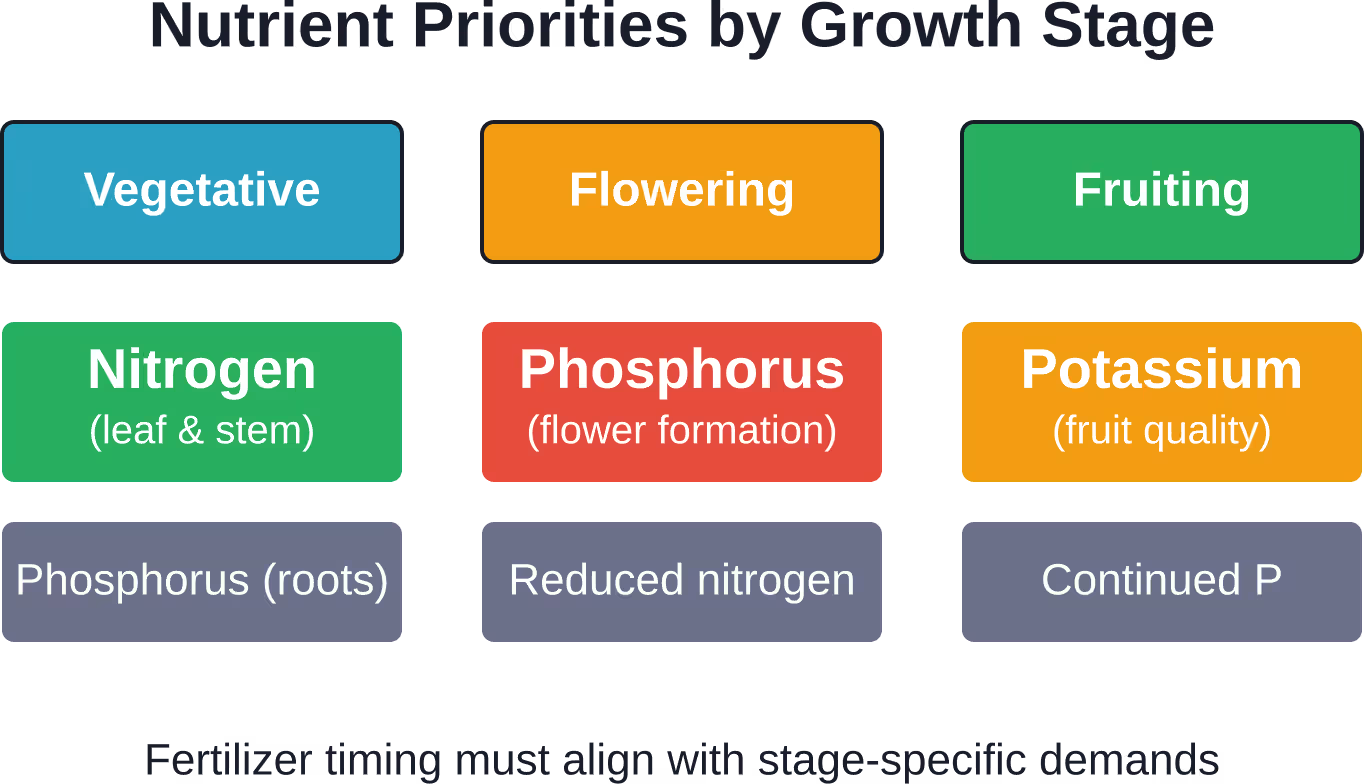
Nitrogen demand peaks during vegetative growth. This element is central to amino acids, proteins, and chlorophyll—all essential for building new tissue. Plants with insufficient nitrogen show stunted growth and yellowing (chlorosis).
Phosphorus supports root development and energy transfer. Potassium regulates water movement and enzyme activation. Micronutrients like iron, manganese, and zinc play specialized roles despite being needed in tiny quantities.
Agricultural systems time fertilizer applications to match these demands. Split applications—applying nitrogen in stages rather than all at once—reduce losses to leaching and volatilization while maintaining availability when plants need it most.
Environmental Controls on Vegetative Growth
Light intensity and duration drive photosynthesis rates. More light generally means more growth, up to the saturation point where additional light provides no benefit. Day length (photoperiod) also signals developmental transitions in many species.
Water availability limits growth in most agricultural systems. Even brief drought stress can slow vegetative expansion.
Temperature affects metabolic rates. Enzyme activity increases with temperature until heat stress causes denaturation. Each species has an optimal temperature range.
Stage Four: Reproductive Development
The transition to reproductive growth is one of the most critical events in a plant’s life. Environmental signals—especially photoperiod and temperature—trigger this shift. Once initiated, the plant redirects resources from vegetative growth toward flowers, seeds, and fruit.
Flower Initiation and Development
Flowering begins when meristems that previously produced leaves switch to producing floral structures. This transition is irreversible in most annual crops. Soybeans mark this with stage R1, when at least one flower appears at any node.
Timing varies by genetics and environment. Soybeans in the northern United States have long minimum day-length requirements for flowering onset, often exceeding 14 hours of daylight. But even within a variety, flowering time varies year to year, closely associated with temperature conditions.
Pollination follows flowering. Some crops self-pollinate. Others require wind, insects, or other vectors. Pollination success determines how many flowers set fruit—a key yield determinant.
Fruit and Seed Development
After successful pollination, the fertilized ovary develops into a fruit containing seeds. This phase is metabolically expensive. The plant mobilizes nutrients from leaves and stems, translocating them to developing seeds.
Seed filling determines final grain or fruit weight. Water stress during this window disproportionately impacts yield. Similarly, disease or pest damage that reduces photosynthetic area limits the resources available for seed development.
For soybeans, reproductive stages progress from R1 (beginning bloom) through R8 (full maturity). Similar systems exist for other crops. Corn uses R1 (silking) through R6 (physiological maturity). These standardized stages let researchers and farmers communicate precisely about timing.
| Crop | Key Reproductive Stages | Critical Management Windows |
|---|---|---|
| Soybean | R1 (flowering) to R8 (full maturity, 95% pods mature) | R3-R5: pod development, highest water demand |
| Corn | R1 (silking) to R6 (physiological maturity) | R1-R2: pollination window, stress severely reduces yield |
| Wheat | Heading to hard dough (Zadoks 50-87) | Flowering through grain fill: disease and water critical |
| Cotton | First square to open boll | Peak bloom to boll opening: irrigation and pest management |
Agricultural Management During Reproduction
Farmers adjust management as plants enter reproductive stages. Nitrogen applications often decrease—excess nitrogen late in development can delay maturity and reduce quality. Phosphorus and potassium become more important for fruit and seed development.
Pest management intensifies. Many insects and diseases specifically target reproductive structures. Protecting flowers and developing seeds becomes paramount.
Water management is also critical. Many crops show highest water sensitivity during flowering and early seed development. Irrigation scheduling often prioritizes these windows.
Stage Five: Maturation and Senescence
As seeds mature, the parent plant begins senescence—the aging process leading to death in annuals or dormancy in perennials. Leaves yellow as chlorophyll breaks down and nutrients mobilize to seeds. Photosynthesis declines. Eventually, the plant dries down.
Determining Harvest Timing
Harvest timing balances maturity against environmental risks. Harvest too early, and seeds lack full weight or quality. Wait too long, and weather might damage the crop or seeds might shatter and fall.
Physiological maturity—when seeds reach maximum dry weight—defines optimal harvest for many crops. At this point, seeds have achieved their genetic potential. Further delays risk losses to weather, pests, or lodging.
Soybeans reach R8 (full maturity) when 95% of pods have reached their mature color. Corn reaches R6 when kernels achieve maximum dry matter and a black layer forms at the kernel base. These visible markers help farmers schedule harvest equipment.
Post-Harvest Senescence in Perennials
Perennials don’t die after reproduction. Instead, they enter dormancy. Aboveground tissues may die back, but roots and crown buds survive. Stored carbohydrates accumulated during the growing season fuel regrowth the following year.
Managing perennials requires understanding these cycles. Harvesting or grazing too late in the season depletes carbohydrate reserves, weakening plants and reducing next year’s productivity. Timing the final cut or grazing event to leave adequate recovery time is essential.
Some perennials exhibit senescence only after many reproductive cycles. Giant sequoias can live thousands of years, reproducing repeatedly. Research indicates preliminary estimates suggest fewer than 80,000 naturally occurring giant sequoia trees remain in the Sierra Nevada, highlighting how even long-lived species face population pressures.
Environmental and Genetic Factors Influencing Growth Stages
While growth stages follow predictable patterns, timing and duration vary based on environmental conditions and genetic makeup.
Temperature Effects
Temperature governs developmental rate in most crops. The concept of growing degree days (GDD) quantifies this—each day contributes heat units above a base temperature toward developmental milestones.
Corn requires a specific GDD accumulation from planting to physiological maturity. The exact number depends on variety maturity class. Warmer weather accelerates development; cooler weather slows it. This allows reasonably accurate predictions of flowering or harvest dates.
Extreme temperatures disrupt normal patterns. Heat stress during flowering can cause pollen sterility. Frost during seedling establishment kills tender tissue. Managing these risks requires both variety selection and planting date decisions.
Photoperiod Sensitivity
Day length triggers developmental transitions in many species. Short-day plants flower when nights exceed a critical length. Long-day plants require nights shorter than a threshold. Day-neutral plants respond primarily to other cues.
Soybeans are short-day plants. Northern varieties require longer days before flowering than southern varieties. This adaptation ensures plants don’t flower too early (when small) or too late (risking frost before seed maturity) at their adapted latitude.
Photoperiod insensitivity has been bred into some crops to expand their geographic range. Modern wheat varieties, for instance, are less photoperiod-sensitive than wild relatives, allowing cultivation across wider latitudes.
Water and Nutrient Availability
Resource availability modulates growth rate and sometimes triggers stage transitions. Drought stress can hasten flowering in some species—a last-ditch reproductive effort before death. Conversely, abundant water and nutrients can extend vegetative growth.
Precipitation patterns strongly influence growth in dryland agriculture. These annual fluctuations complicate management.
Nutrient deficiencies rarely change stage progression but dramatically affect yield potential. A corn plant deficient in phosphorus still progresses through vegetative and reproductive stages, but produces fewer, smaller ears with incomplete kernel set.
Agricultural Applications of Growth Stage Knowledge
Understanding growth stages isn’t academic—it’s practical. Farmers use this knowledge daily to optimize production.
Precision Input Timing
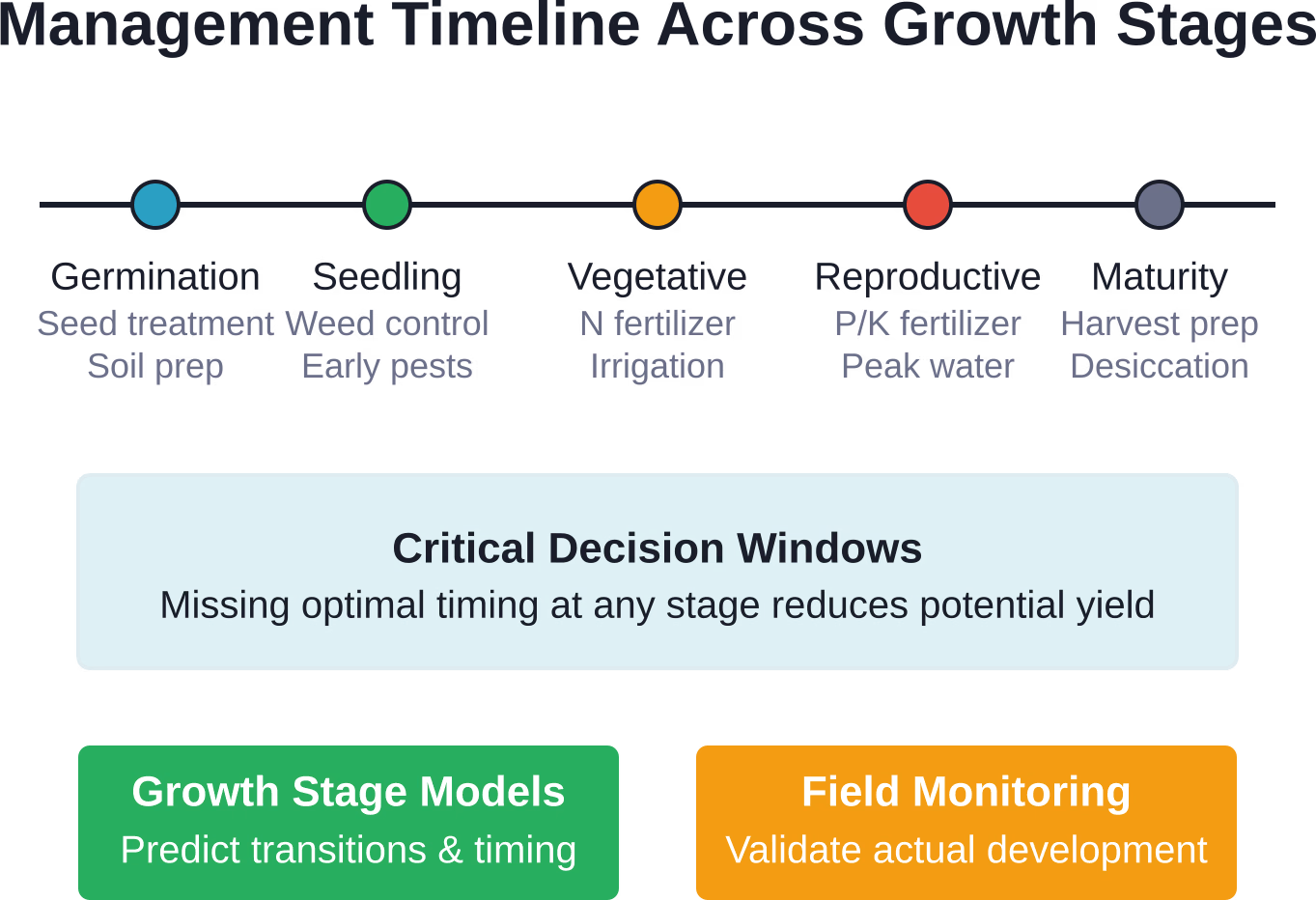
Modern crop simulation models like GOSSYM for cotton integrate growth stage information with weather, soil, and management data. These models simulate crop growth, development, and yield under different scenarios. Farmers use model outputs to decide irrigation schedules, fertilizer timing, and harvest windows.
The USDA Agricultural Research Service develops and maintains numerous crop simulation models. These tools help agricultural managers make accurate, timely, and cost-effective decisions to maintain food and fiber supply.
Pest and Disease Management
Pest pressure changes across growth stages. Some insects attack seedlings. Others target flowers or developing seeds. Timing insecticide applications to match vulnerable stages maximizes efficacy while minimizing environmental impact.
Disease susceptibility also varies. Many fungal diseases infect during flowering when flowers provide entry points. Scouting protocols adjust intensity based on growth stage—more frequent monitoring during high-risk windows.
Integrated pest management strategies use growth stage information to time interventions. Researchers at the USDA’s Sugarbeet Research unit are evaluating ultra-localized pesticide applicators that target individual plants at specific growth stages, potentially reducing pesticide use by 90% or more.
Irrigation Scheduling
Water requirements shift across growth stages. Seedlings need consistent surface moisture. Vegetative stages benefit from deep watering that encourages root growth. Reproductive stages—especially flowering and seed filling—are most sensitive to water stress.
Studies using satellite-based WaPOR data in Kenya’s Mwea irrigation scheme show how net primary productivity (NPP) correlates with evapotranspiration patterns across growth stages. These remote sensing tools let irrigation managers optimize water delivery timing and quantity.
Research on faba bean and chickpea in Sudan’s Gezira Scheme used soil water balance methods to quantify crop evapotranspiration across growth stages. Accurate estimation of crop water requirements is essential for efficient irrigation management where water scarcity constrains productivity.
Specialized Growth Patterns in Different Crops
While general growth stage frameworks apply broadly, individual crops exhibit unique patterns worth noting.
Legume Growth and Nodulation
Legumes like soybeans form symbiotic relationships with nitrogen-fixing bacteria. Nodule development occurs during early vegetative stages. These nodules convert atmospheric nitrogen into plant-available forms, reducing fertilizer requirements.
Nodulation success depends on soil conditions, bacterial strain presence, and early-stage plant health. Stressed seedlings may fail to nodulate properly, requiring supplemental nitrogen that would otherwise be unnecessary.
Perennial Forage Crops
Dairy forage crops exhibit complex growth patterns across multiple harvests per year. Timing cutting or grazing events to match growth stage affects both immediate yield and plant survival for subsequent cycles.
Research at the USDA Dairy Forage Research Center examines how flowering cover crops can stack ecosystem services. These crops provide both forage and pollinator habitat, with growth stage management balancing livestock feed value against ecological benefits.
Specialty Crops with Unique Stages
Some crops have idiosyncratic growth patterns. Edamame, introduced recently in Miami-Dade County, requires careful growth stage monitoring adapted to south Florida’s climate. The crop progresses through vegetative stages focused on leaf and node development, followed by reproductive stages from flowering through bean filling, culminating when beans reach at least 80% of their full size.
Cotton’s complex reproductive pattern includes squaring, flowering, boll development, and opening—each stage with specific management requirements. The GOSSYM model simulates these stages and their interaction with environment and management.
Climate Change Impacts on Growth Stages
Shifting climate patterns are altering growth stage timing and duration in ways that challenge traditional management approaches.
Phenological Shifts
Warmer temperatures advance spring phenology—plants leaf out, flower, and mature earlier. This creates mismatches with pollinators, increases frost risk for early-flowering perennials, and shortens growing seasons for some crops.
On the other hand, longer frost-free periods in some regions allow later planting or additional growing cycles. Farmers in areas with extended seasons are experimenting with double-cropping systems previously impossible.
Adaptation Strategies
Variety selection becomes more critical as climate shifts. Plant breeders are developing cultivars with altered photoperiod sensitivity, heat tolerance during flowering, and drought tolerance during critical growth stages.
Cover crop selection tools, like the Cover Crop Chart developed by the USDA Northern Great Plains Research Laboratory, help farmers match crop growth cycles to changing seasonal patterns. The chart includes information for 70 species on growth cycle, water use, and other characteristics relevant to timing.
Real talk: agriculture has always required adapting to weather variability. But the pace of climate change is pushing many systems beyond historical ranges, requiring more fundamental adjustments.
Conclusion
Plant growth stages represent more than botanical curiosity—they’re the foundation of effective agricultural management. From germination thresholds measured in soil temperature degrees to the narrow windows when flowering plants tolerate zero water stress, each stage presents specific challenges and opportunities.
Modern agriculture increasingly relies on growth stage models and real-time monitoring to optimize inputs. The payoff shows in higher yields, reduced environmental impact, and more resilient cropping systems.
But here’s what matters most: understanding these stages lets farmers work with plant biology rather than against it. Timing interventions to match developmental needs amplifies effectiveness while reducing waste. As climate patterns shift and agricultural challenges intensify, this knowledge becomes more valuable, not less.
For anyone managing crops—whether thousands of acres or a backyard garden—investing time to learn growth stage patterns and their implications pays dividends every growing season. The plants themselves provide the roadmap. The challenge is learning to read it.
Frequently Asked Questions
The main stages are seed germination, seedling establishment, vegetative growth, reproductive development (flowering and fruiting), and maturation/senescence. Each stage has distinct characteristics and resource requirements. Annual crops progress through all stages in one growing season, while perennials may spend years in vegetative growth before reproducing.
Growth stage knowledge allows precise timing of irrigation, fertilization, and pest control. Different stages have different vulnerabilities and resource needs. Applying inputs at the wrong stage wastes resources and may reduce yields. For example, water stress during flowering typically causes more yield loss than identical stress during vegetative growth.
Temperature governs developmental rate in most crops. Germination requires soil temperatures above species-specific thresholds—switchgrass needs 68°F (20°C) to begin germinating. Growing degree days accumulate based on daily temperatures, determining when plants transition between stages. Extreme heat or cold can disrupt normal development, causing sterility or tissue damage.
Nitrogen is the primary nutrient during vegetative growth, supporting leaf, stem, and root development. Phosphorus aids root establishment and energy transfer. Potassium regulates water movement and activates enzymes. During vegetative stages, plants use these nutrients to build biomass and photosynthetic capacity, with nitrogen being the most visible deficiency if lacking.
Most crops show highest water sensitivity during flowering and early seed development. Drought stress during these stages directly reduces flower viability, pollination success, and seed set. While vegetative growth also benefits from adequate water, short-term stress during vegetative stages is typically less damaging than stress during reproduction.
Harvest timing balances physiological maturity (maximum seed dry weight) against environmental risks. Visual indicators help—soybeans reach R8 when 95% of pods show mature color, while corn kernels develop a black layer at R6. Moisture content testing confirms when grain is dry enough for safe storage. Waiting too long after maturity risks weather damage or shattering losses.
No. Even within a variety, environmental factors cause variation. Temperature, day length, water availability, and nutrient levels all affect developmental rate. Soybeans in northern regions show year-to-year flowering time variation closely associated with temperature patterns despite consistent day length. This variability requires farmers to monitor actual field conditions rather than relying solely on calendar dates.