
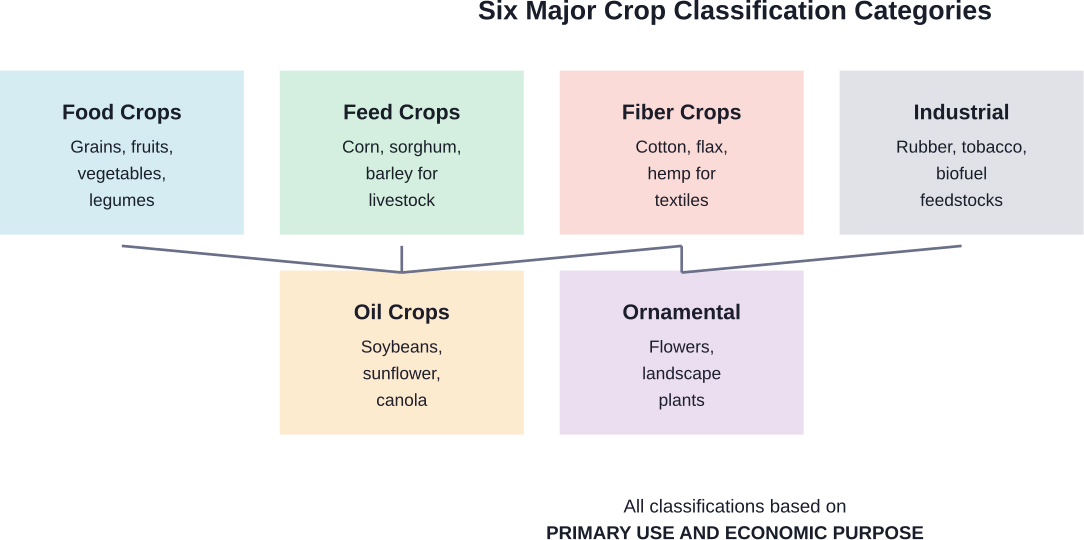
Crops are classified by use into six major categories: food crops (grains, fruits, vegetables), feed crops (animal nutrition), fiber crops (textiles), oil crops (cooking and industry), ornamental crops (landscaping), and industrial crops (non-food materials). Understanding these classifications helps optimize agricultural planning, resource allocation, and market strategies based on economic value and growing conditions.
A crop is a plant or plant product that can be grown and harvested for profit or subsistence. Agriculture depends on these diverse plant species to meet human needs—from feeding billions to providing raw materials for industry. But not all crops serve the same purpose.
Crop classification isn’t just academic. Farmers use these categories to make practical decisions about resource allocation, market opportunities, and production strategies. The Economic Research Service analyzes farm structure and crop economics to understand how these classifications impact productivity and financial performance.
This guide breaks down the six primary crop categories and explores what makes each type unique in terms of production, economic value, and agricultural management.
Food Crops: The Foundation of Human Nutrition
Food crops represent the most recognizable category—these plants are grown specifically for direct human consumption. They form the cornerstone of global food security and include grains, fruits, vegetables, and legumes.
Cereals dominate food crop production worldwide. Wheat, rice, and corn account for the majority of caloric intake across populations. According to FAO agricultural production statistics through 2024, these staple grains continue to represent the largest share of harvested areas globally.
Fruits and vegetables add nutritional diversity beyond basic calories. Tree nuts, potatoes, and specialty crops like tomatoes provide essential vitamins, minerals, and phytochemicals. The Agricultural Research Service develops new crop varieties with enhanced traits and disease resistance to improve food crop yields and nutritional profiles.
Legumes such as soybeans, beans, and lentils provide plant-based protein. Research shows these crops play dual roles—serving both as food crops and nitrogen-fixing soil amendments that improve agricultural sustainability.
Feed Crops: Powering Livestock Production
Feed crops are grown specifically to provide nutrition for livestock rather than direct human consumption. This category has expanded dramatically as global meat demand increases.
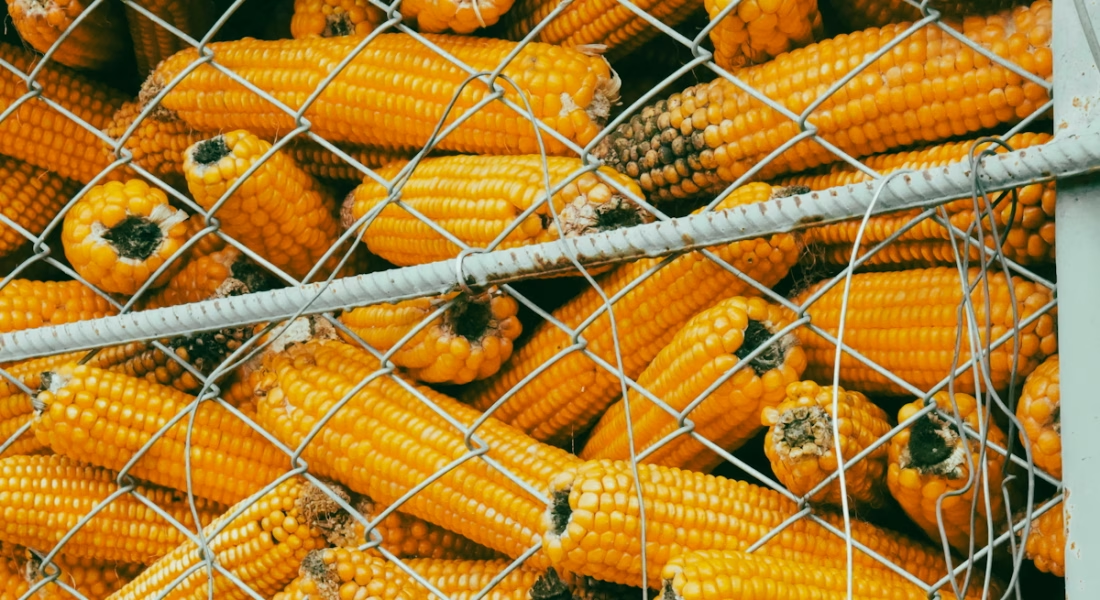
Corn is the most widely produced feed grain in the United States, with most of the crop providing the main energy ingredient in livestock feed. Sorghum and barley also serve as important feed grains. Hull-less barley, which is easier to digest, is fed to swine and poultry.
According to competitor sources citing the Food and Agriculture Organization, approximately 33 percent of agricultural land is dedicated to feed crop production. This substantial allocation reflects the economic importance of livestock industries and the conversion of plant calories into animal products.
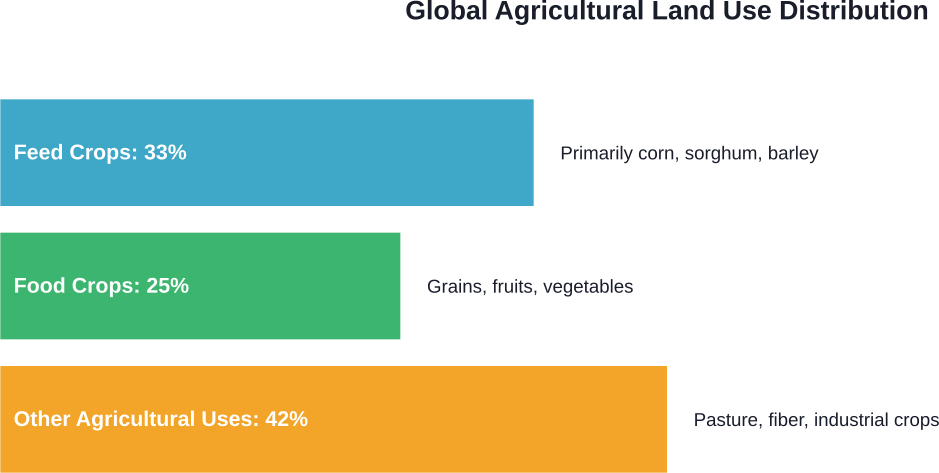
The production of feed crops has risen dramatically with increased demand for meat worldwide. Increased production of feed crops has changed the agricultural landscape, converting land previously used for diverse purposes into specialized livestock feed production systems.
Fiber Crops: Textiles and Materials
Fiber crops are cultivated for their natural fibers, which are processed into textiles, paper, and other materials. Cotton dominates this category as the world’s most important natural fiber crop.
The Economic Research Service analyzes events in U.S. and international cotton and textile markets that influence supply, demand, prices, and trade. Cotton production requires specific climate conditions and intensive management but generates significant economic value.
Other fiber crops include flax (linen production), hemp (textiles and industrial materials), jute, and sisal. These crops provide alternatives to synthetic fibers and support textile industries across diverse climates and agricultural systems.
Oil Crops: From Kitchen to Industry
Oil crops are grown primarily for extracting oils from their seeds or fruits. These oils serve both culinary and industrial purposes, making this an economically diverse category.
Soybeans represent the largest oil crop globally, producing oil for cooking while the remaining meal serves as high-protein livestock feed. This dual-purpose nature makes soybeans exceptionally valuable in agricultural rotations.
Other significant oil crops include:
- Sunflower (edible oil, high in unsaturated fats)
- Canola/rapeseed (cooking oil, biodiesel production)
- Palm (high-yielding tropical oil crop)
- Peanuts (food oil and direct consumption)
- Olives (premium culinary oils)
These crops provide essential dietary fats while supporting industrial applications ranging from biodiesel production to lubricants and cosmetics.
Ornamental Crops: Beauty and Landscaping
Ornamental crops are grown for aesthetic purposes rather than food or fiber production. This category includes flowers, decorative plants, and landscaping materials.
The ornamental horticulture industry represents a specialized agricultural sector focused on visual appeal rather than nutritional or material utility. Roses, tulips, orchids, and chrysanthemums dominate commercial flower production.
Nursery crops—trees, shrubs, and perennial plants grown for landscaping—also fall into this category. These crops support urban greening, property aesthetics, and the garden center industry.
Industrial Crops: Specialized Non-Food Products
Industrial crops are grown for specific manufacturing and industrial applications beyond the categories above. These plants provide raw materials for diverse products.
Tobacco, though controversial, remains an economically significant industrial crop in certain regions. Rubber trees produce latex for tire manufacturing and countless other products. Sugarcane and sugar beets provide both food (refined sugar) and industrial feedstocks for biofuels and chemicals.
The Agricultural Research Service works on developing new varieties with enhanced traits across all these categories. In fiscal year 2020, plant releases included two improved carrot lines, two Pinto dry bean varieties, two pea varieties, the Rainier Russet potato variety, two peach cultivars, and varieties of many other crops with enhanced traits and disease resistance.
Farm Structure and Crop Economics
Understanding crop types connects directly to farm structure and economic decisions. The Economic Research Service categorizes farms based on gross cash farm income (GCFI) and principal operator occupation.
Small farms with GCFI less than $350,000 represent a significant portion of U.S. agricultural operations. These farms often focus on specialized crops—ornamentals, organic vegetables, or niche products—rather than commodity-scale grain production.
Farming-occupation farms and off-farm occupation farms make different crop choices based on available labor, capital, and market access. Crop selection directly influences farm profitability, resource efficiency, and long-term sustainability.
| Crop Category | Primary Use | Major Examples | Economic Focus |
|---|---|---|---|
| Food Crops | Human consumption | Wheat, rice, fruits, vegetables | Food security, nutrition |
| Feed Crops | Livestock nutrition | Corn, sorghum, barley, alfalfa | Meat/dairy supply chain |
| Fiber Crops | Textiles, materials | Cotton, flax, hemp, jute | Textile industry |
| Oil Crops | Edible/industrial oils | Soybeans, sunflower, canola | Food, fuel, chemicals |
| Ornamental Crops | Aesthetic purposes | Flowers, landscape plants | Horticulture, landscaping |
| Industrial Crops | Manufacturing inputs | Rubber, tobacco, biofuel crops | Industrial production |

Turn Crop Data Into Something You Can Actually Use
Different crop types behave differently even within the same field. Growth rates shift, stress shows up unevenly, and small issues often go unnoticed until they affect yield. Classifying crops is one thing – understanding what’s actually happening across each zone is another.
FlyPix AI uses geospatial imagery and object detection to map crop types, monitor field conditions, and flag early signs of stress or anomalies. You work with real visual data instead of assumptions, which makes it easier to adjust decisions across different crop areas. If you want to see how this works on your fields, contact the FlyPix AI team and try it on your own data.
Making Informed Crop Decisions
Understanding crop classifications empowers better agricultural decisions at every scale. Whether planning a small diversified farm or managing large-scale commodity production, recognizing the fundamental differences between food, feed, fiber, oil, ornamental, and industrial crops shapes strategy and profitability.
The agricultural sector continues evolving as new varieties emerge, market demands shift, and climate patterns change. Staying informed about crop characteristics and economic trends helps agricultural stakeholders adapt effectively.
For detailed production statistics and market analysis specific to individual crops, consult resources from the Economic Research Service and FAO agricultural production databases—these provide the most current data on harvested areas, yields, and economic values across all major crop categories.
Frequently Asked Questions
The six main crop categories are food crops (grown for human consumption), feed crops (livestock nutrition), fiber crops (textiles and materials), oil crops (edible and industrial oils), ornamental crops (aesthetic purposes), and industrial crops (specialized manufacturing inputs). This classification is based on primary use rather than botanical relationships.
According to competitor sources citing the Food and Agriculture Organization, feed crops occupy approximately 33 percent of agricultural land globally, making them the largest single category by land allocation. This reflects the substantial resource requirements of livestock production systems.
Yes. Soybeans are a prime example—they’re processed for oil (oil crop category) while the remaining meal serves as livestock feed (feed crop category). Corn similarly serves as both a food crop and the most widely produced feed grain in the United States. Classification often depends on how a specific harvest is marketed and used.
Farmers select crops based on climate suitability, soil conditions, available capital and equipment, market access, price expectations, and farm structure. The Economic Research Service notes that small farms often focus on high-value specialty crops, while larger operations concentrate on commodity crops with established supply chains.
Government agricultural programs often target specific crop categories differently. Feed grains, cotton, and oilseeds typically receive commodity support programs, while specialty crops (fruits, vegetables, nuts) have separate research and promotion initiatives. Understanding these classifications helps policymakers design effective agricultural support systems.
Yes. Crops can also be classified by growing season (warm-season vs. cool-season), life cycle (annual, biennial, perennial), botanical family, or water requirements. These alternative classifications help with crop rotation planning, pest management, and resource allocation at the farm level.
The Agricultural Research Service develops new crop varieties with enhanced traits and disease resistance across multiple crop categories. Research focuses on exploiting genetic diversity from crop genebanks to create improved cultivars with higher yields, better nutritional profiles, and greater resilience to environmental stresses.