

Fertilizers fall into three main categories: synthetic (fast-acting, water-soluble nutrients), organic (slow-release, soil-building materials), and controlled-release (coated granules that feed gradually). The best choice depends on your goals—synthetic fertilizers deliver quick results for nutrient-deficient plants, organic options improve long-term soil health, and controlled-release products offer convenience with less risk of over-fertilizing.
Walk into any garden center and the fertilizer aisle looks like a chemistry lab exploded. Bags labeled with cryptic numbers, bottles promising miracle growth, and shelves stacked with everything from fish emulsion to synthetic pellets.
Here’s the thing though—choosing the right fertilizer isn’t nearly as complicated as those jargon-heavy labels suggest. Once the basics make sense, the decision gets straightforward.
Understanding the NPK Ratio: Those Three Important Numbers
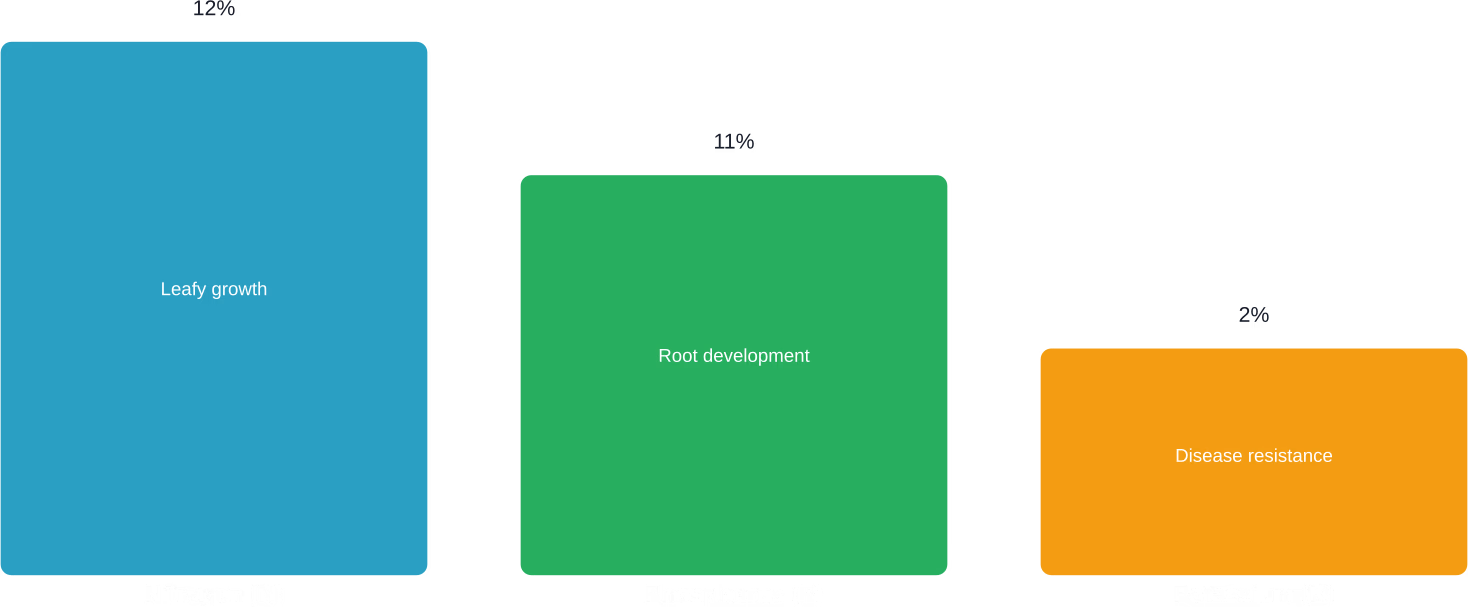
Every fertilizer label displays three numbers separated by dashes—something like 12-11-2 or 5-10-5. These numbers represent the percentage by weight of nitrogen (N), phosphorus (P), and potassium (K), the three most critical plant nutrients.
So what does a 12-11-2 fertilizer actually contain? According to the Oregon State University Extension Service, that means 12% nitrogen, 11% phosphorus, and 2% potassium. The remaining percentage consists of filler material and trace elements.
Each nutrient serves a specific purpose. Nitrogen drives leafy green growth and overall plant vigor. Phosphorus supports root development and flowering. Potassium strengthens disease resistance and helps regulate water uptake.
For most garden applications, products with nitrogen values between 5 to 10 and phosphorus and potassium values of 1 to 4 work well. Using nitrogen concentrations above 10 percent significantly increases the risk of over-fertilizing, which can damage plants rather than help them.
Synthetic Fertilizers: Fast Results with Precision Control
Synthetic fertilizers are manufactured through industrial processes. They deliver nutrients in forms plants can absorb immediately.
The main advantage? Speed. When plants show deficiency symptoms—yellowing leaves, stunted growth, poor flowering—synthetic fertilizers correct problems quickly, often within days.
Water-soluble formulas dissolve completely, making them ideal for container plants and quick feeding. Granular synthetics can be broadcast across large areas efficiently.
That said, synthetic fertilizers don’t improve soil structure. They provide pure nutrition but nothing to feed soil microorganisms or build organic matter. Overuse can also lead to nutrient runoff, which creates environmental concerns.
Common synthetic nitrogen sources include anhydrous ammonia (82% N), which ranks as the highest-nitrogen conventional option available, while urea (46% N) is the highest-nitrogen solid fertilizer.
Organic Fertilizers: Slow and Steady Soil Building
Organic fertilizers derive from plant or animal sources—manures, compost, bone meal, feather meal, and similar materials.
These products work differently than synthetics. Rather than delivering immediately available nutrients, organic fertilizers must be broken down by soil microorganisms first. This creates a slow-release effect that feeds plants gradually over weeks or months.
The University of Florida Extension notes that many gardeners use granular products or manures to supply main nutrients, then apply liquid fertilizers to correct minor deficiencies or boost growth quickly.
Organic fertilizers improve soil structure, increase water retention, and support beneficial microbial activity. They’re nearly impossible to over-apply since nutrients release slowly.
The trade-offs? Lower nutrient concentrations mean more product is needed. Results take longer to appear. And nutrient ratios are less precise than synthetic formulas.
Feather meal provides about 12% nitrogen and breaks down slower than blood meal. Rock phosphate supplies phosphorus slowly over multiple growing seasons.
Controlled-Release Fertilizers: The Convenience Option
Controlled-release fertilizers use coatings or chemical compounds to meter out nutrients gradually. These products combine some benefits of both synthetic and organic options.
Polymer-coated granules release nutrients through tiny pores when soil moisture and temperature trigger dissolution. Sulfur-coated formulas work similarly.
The result? One application can feed plants for months. This reduces labor, minimizes fertilizer waste, and nearly eliminates burn risk from over-application.
Controlled-release products work especially well for container plantings, slow-growing perennials, and situations where frequent reapplication isn’t practical.
The downside is cost—controlled-release fertilizers typically cost more per pound of actual nutrient than standard synthetic or organic options.
Which Fertilizer Type Works Best?
The honest answer? It depends on the situation.
Synthetic fertilizers excel when plants need immediate correction of deficiencies or a quick growth boost before flowering. They’re also practical for large-scale applications where cost per nutrient matters.
Organic fertilizers make sense for long-term soil health, edible gardens where growers prefer natural inputs, and situations where gradual feeding prevents waste.
Controlled-release products shine for container gardens, landscape plantings, and anywhere convenience justifies the higher cost.
Many experienced gardeners use combinations—organic amendments to build soil health as a foundation, with synthetic or liquid supplements when specific plants need targeted feeding.
| Fertilizer Type | Nutrient Release Speed | Soil Building | Cost | Best For |
|---|---|---|---|---|
| Synthetic | Immediate | None | Low | Quick corrections, large areas |
| Organic | Slow (weeks) | Excellent | Moderate | Long-term soil health |
| Controlled-Release | Gradual (months) | Minimal | High | Containers, convenience |
Application Tips That Actually Matter
Regardless of fertilizer type, soil testing removes guesswork. Tests reveal actual nutrient levels and pH, preventing unnecessary applications.
Research from MIT published in 2025 in the Journal of the American Chemical Society found that lanthanides, a class of rare earth elements, can increase plant resilience to UV stress and enhance seedling growth. The study showed that a single nanoscale dose of lanthanides applied to seeds can benefit common crops, though field and greenhouse studies are ongoing to test results across different crop types.
Water plants before and after fertilizing to prevent root burn and help nutrient distribution. Apply granular products when rain is expected within 48 hours, or water thoroughly after application.
Follow label rates carefully. More fertilizer doesn’t equal better results—it creates waste, environmental problems, and can damage plants.
For calculating application rates, Oregon State University Extension provides this example: To apply 3 pounds of nitrogen per 1,000 square feet using a 12-11-2 fertilizer (which contains 12% nitrogen), divide 3 by 0.12 to get 25 pounds of fertilizer per 1,000 square feet.

See How Fertilizers Actually Perform Across Your Fields
Picking a fertilizer is one thing, but understanding how it behaves across different parts of a field is where things usually get unclear. FlyPix AI uses drone and satellite imagery to break that down visually – showing differences in crop development, areas with slower growth, or spots where plants react differently. These patterns often point to how nutrients are being absorbed and where adjustments might be needed.
Over time, this makes it easier to compare results from different approaches without relying only on yield at the end of the season. You can see how crops respond during growth, not just after. That helps fine-tune application timing, coverage, and overall fertilizer strategy based on what’s actually happening in the field, not assumptions.
Stop guessing what works, contact FlyPix AI and start making fertilizer decisions based on real field data.
Making the Right Choice for Your Garden
Fertilizer selection doesn’t require advanced chemistry knowledge. Understanding NPK ratios, recognizing how synthetic, organic, and controlled-release products differ, and matching fertilizer type to specific goals makes the decision straightforward.
Start with soil testing to establish actual needs. Choose synthetic fertilizers when speed matters and organic options when building long-term soil health ranks as priority. Consider controlled-release products for convenience in containers and landscapes.
The best fertilizer isn’t the one with the fanciest label or highest price tag—it’s the one that delivers the nutrients plants need, when they need them, without waste or environmental harm.
Frequently Asked Questions
Organic fertilizers come from plant or animal sources and release nutrients slowly as soil microbes break them down. Synthetic fertilizers are manufactured chemically and provide immediately available nutrients. Organic options build soil health over time, while synthetics deliver faster results without improving soil structure.
Absolutely. Over-fertilizing damages plant roots, causes leaf burn, promotes excessive foliage at the expense of flowers or fruit, and wastes money. Excess nutrients also wash into waterways, creating environmental problems. Always follow label rates and consider soil testing before applying.
Timing depends on fertilizer type and plant needs. Fast-growing vegetables may need feeding every 2-4 weeks during active growth with water-soluble products. Slow-release organic fertilizers might be applied just once or twice per season. Controlled-release products can last 3-6 months per application.
Not necessarily, though specialized products exist. Leafy vegetables benefit from higher nitrogen ratios. Flowering plants need more phosphorus. Most general-purpose fertilizers with balanced ratios work fine for mixed gardens. Specific needs matter more than having dozens of specialized products.
Each has advantages. Liquid fertilizers provide uniform coverage and fast absorption, ideal for containers and quick fixes. Granular products last longer, work well for large areas, and cost less per application. Many gardeners keep both on hand for different situations.
Skip the fertilizer. Adding nutrients plants don’t need wastes resources and can create imbalances that reduce growth. Focus instead on maintaining soil organic matter through compost additions, which supports nutrient availability without over-application.
Not always. Compare cost per pound of actual nutrient rather than package price. A concentrated synthetic fertilizer may deliver nutrients more economically than a premium organic blend, or vice versa. Consider goals—if building soil health matters, organic products justify higher costs even if nutrient analysis shows lower numbers.