
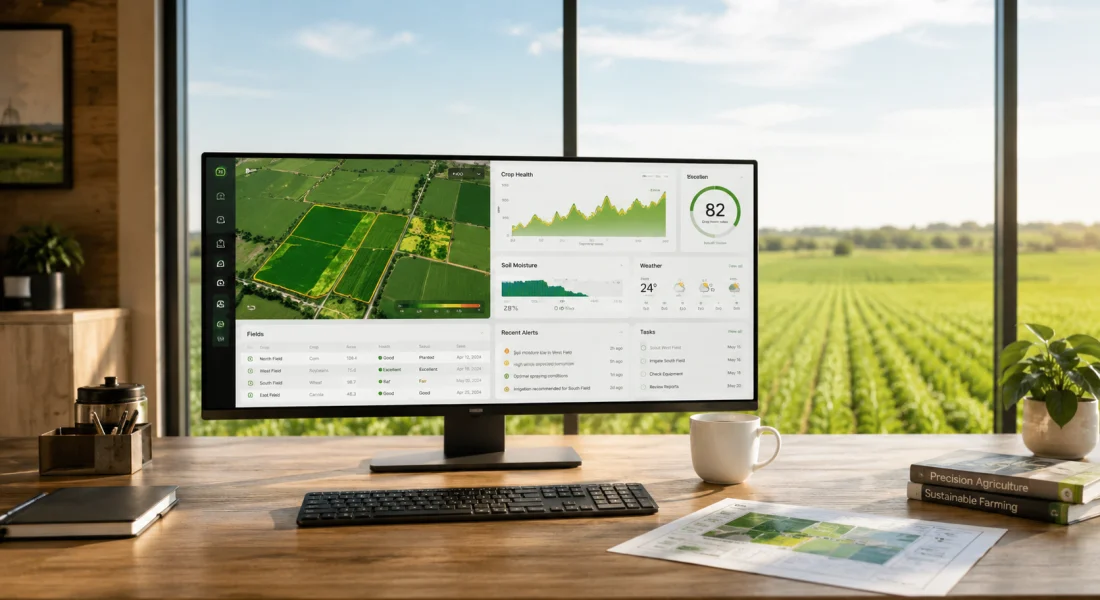
Quick Summary: AGRIVI is a comprehensive farm management software platform designed for large-scale agribusiness operations. It centralizes agricultural data, crop planning, field monitoring, and financial tracking to enable data-driven decisions and optimize farm profitability. The platform integrates real-time weather insights, pest risk monitoring, and advanced analytics to help farmers control complex operations and improve yields.
Farm management has evolved dramatically over the past two decades. What used to be tracked in paper notebooks and spreadsheets now flows through sophisticated digital platforms that integrate everything from soil conditions to financial projections. AGRIVI stands out in this landscape as a comprehensive solution built specifically for large-scale agricultural operations facing complex management challenges.
According to a 2022 McKinsey survey, 75 percent of farmers expect cost hikes, with fertilizer, crop protection, and labor identified as the top three areas of cost increases for more efficient operational tools. Digital agriculture technologies address these pressures by optimizing input use, reducing waste, and increasing efficiency through data-driven decisions.
AGRIVI positions itself as a market-leading farm management software that enables agribusiness companies to control complex farm operations from a single platform. But what exactly does this tool offer, and how does it deliver value to modern agricultural enterprises?
What Is AGRIVI Farm Management Software?
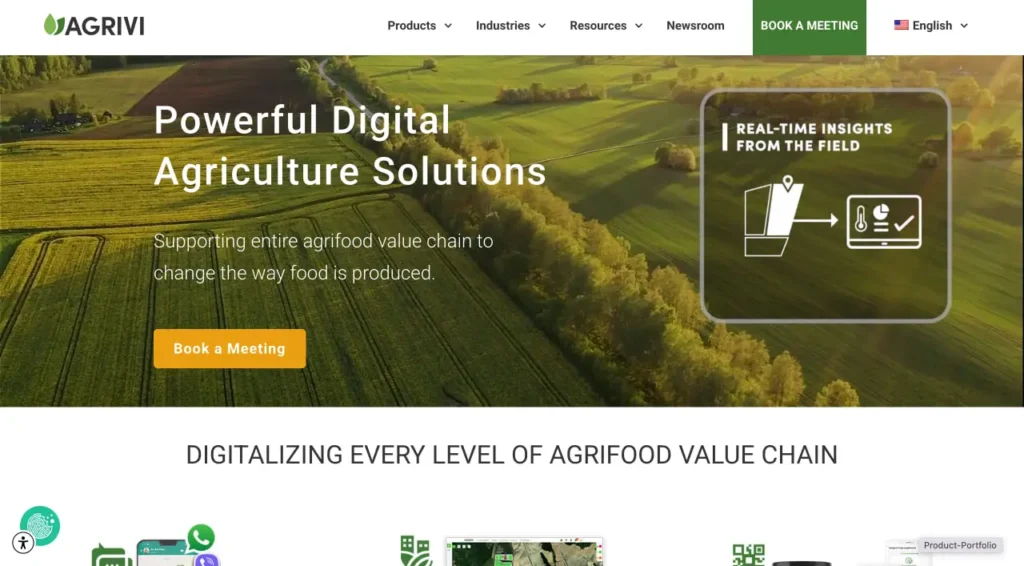
AGRIVI is a digital agriculture platform that supports the entire agrifood value chain. The software creates what the company calls a “digital twin” of farm operations—a comprehensive digital representation that tracks every aspect of agricultural production in real time.
The platform integrates field activities, finance, inventory, and workforce operations within one system. This centralization means agricultural data that was previously scattered across multiple tools, files, and physical records now lives in one accessible location.
Large-scale farms face unique challenges that smaller operations don’t encounter. Managing hundreds or thousands of acres requires coordinating multiple teams, tracking numerous crop varieties, monitoring diverse field conditions, and maintaining detailed financial records. AGRIVI was designed specifically to handle this complexity.
Core Features of AGRIVI 360 Farm Enterprise
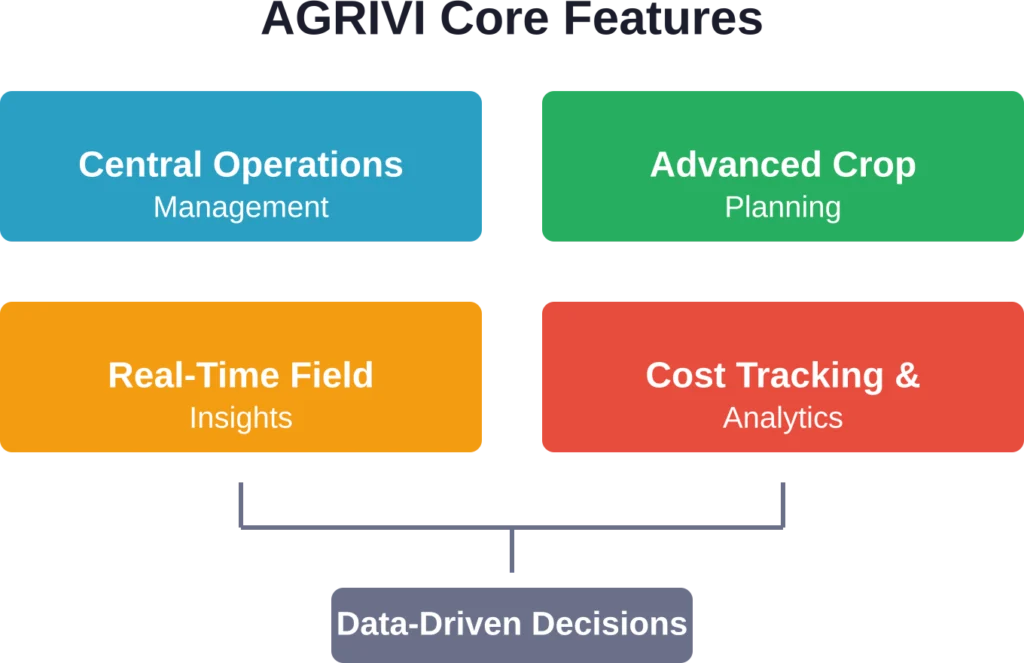
The flagship product—AGRIVI 360 Farm Enterprise—offers several key capabilities that address the operational needs of large agribusinesses.
Central Farm Operations Management
One platform consolidates all agricultural data and process management. Teams can access this information anytime and anywhere, which is crucial for operations that span large geographic areas or involve remote field teams.
This centralization eliminates data silos. When agronomists, financial managers, and operations coordinators all work from the same data source, decisions become faster and more aligned across the organization.
Advanced Crop Planning
Planning and budgeting for a growing season requires precision. AGRIVI provides a 360-degree overview of agronomic, financial, and operational plans organized by crop and field.
This feature allows operations managers to model different scenarios, compare projected costs against expected yields, and adjust plans before committing resources. The planning module connects directly to execution tracking, so teams can compare actual performance against initial projections throughout the season.
Real-Time Field Insights
Decisions based on outdated information lead to missed opportunities and avoidable losses. AGRIVI delivers fact-based insights grounded in real-time weather conditions, pest risk assessments, and field-level data.
These insights help agronomists respond quickly to changing conditions—whether that means adjusting irrigation schedules based on upcoming weather or deploying pest management interventions before infestations spread.
Add Field-Level Geospatial Analysis with FlyPix AI
Farm management tools are more useful when field data is supported by clear visual analysis from current geospatial imagery. FlyPix AI helps teams process satellite, drone, aerial, LiDAR, SAR, and multispectral imagery for detection, segmentation, classification, and change monitoring. For workflows related to AGRIVI, it can support field-level image analysis where teams need to identify land features, crop areas, surface changes, or mapped zones before using the data in farm management and reporting processes.
FlyPix AI can support agricultural data workflows with:
- Field and plot segmentation from geospatial imagery
- Detection of visible field features and surface patterns
- Change monitoring across imagery from different dates
- Custom AI model training for farm-specific analysis tasks
👉Reach out to FlyPix AI to discuss geospatial image analysis for your agricultural data workflow.
How AGRIVI Tracks Farm Costs and Profitability
Farmers run highly complex business operations. Hundreds of data points are generated daily, and how those pieces of information translate into cost control directly affects profitability.
AGRIVI monitors all farm income and costs within operations. The system tracks expenses from tillage through harvesting, connecting each cost to specific fields, crops, and activities.
This granular tracking reveals exactly where money is being spent and identifies opportunities for cost savings. When operations managers can see that one field’s input costs per acre are significantly higher than similar fields, they can investigate and address the discrepancy.
Post-calculation reports compare actual expenses against budgeted amounts, showing variances that inform future planning. Over time, this creates a data-driven approach to budgeting that becomes increasingly accurate.
Digital Agriculture Adoption and ROI
Precision agriculture technologies have seen substantial adoption increases over the past 20 years. According to USDA research, guidance autosteering systems were used by 52 percent of midsize farms and 70 percent of large-scale crop-producing farms in 2023—up from single-digit adoption rates in the early 2000s.
The adoption rates of precision agriculture technologies increase sharply with farm size. Small family farms show the lowest adoption rates, while large-scale operations demonstrate the highest usage across nearly all technology categories.
AGRIVI addresses this market by focusing specifically on large agribusiness companies that face the most complex operational challenges. The company reports that one client—Barbados Agricultural Management Company—saw a 10-15% increase in revenue, with the CEO noting: “This is where AGRIVI came in and really helped us organize our business. We’ve seen a 10-15% increase in revenue already, and we’re only just starting.”
Farm management software delivers ROI through several mechanisms: reducing input waste, optimizing labor allocation, improving yield consistency, and enabling faster decision-making based on real-time data rather than delayed or incomplete information.
| Benefit Category | Impact Area | How AGRIVI Delivers Value |
|---|---|---|
| Cost Reduction | Input Optimization | Precise tracking identifies overuse and waste opportunities |
| Revenue Growth | Yield Improvement | Data-driven decisions improve crop performance and consistency |
| Efficiency Gains | Labor Allocation | Centralized management reduces coordination overhead |
| Risk Management | Weather & Pest Response | Real-time alerts enable proactive interventions |
| Strategic Planning | Season Budgeting | Historical data improves forecasting accuracy |
Supporting the Agrifood Value Chain
AGRIVI positions itself as supporting the entire agrifood value chain—not just farm operations. The platform connects farm-level data to downstream partners, including food processors, retailers, and input manufacturers.
This broader integration creates traceability throughout the supply chain. Retailers can trace products back to specific fields and production practices. Input manufacturers gain insights into how their products perform under real-world conditions. Food processors can verify that raw materials meet specific quality or sustainability standards.
This value chain approach reflects a broader trend in agriculture toward greater transparency and data sharing among supply chain partners.
Pricing and Accessibility Considerations
According to Software Connect, AGRIVI’s starting price is listed at $19 per user per month. However, AGRIVI itself does not disclose a standard per-user monthly starting price, as its enterprise pricing is strictly quotation-based. According to multiple other industry software directories, standard entry-level tier prices are not available publicly because pricing scales entirely based on total farm acreage, specific modules selected, and contract scope.
For current pricing details and plan options tailored to specific operational needs, prospective users should contact AGRIVI directly or visit the official website for up-to-date information.
Real-World Implementation
Implementing comprehensive farm management software requires more than just purchasing licenses. Large operations need data migration, staff training, and process adjustments to fully leverage the platform’s capabilities.
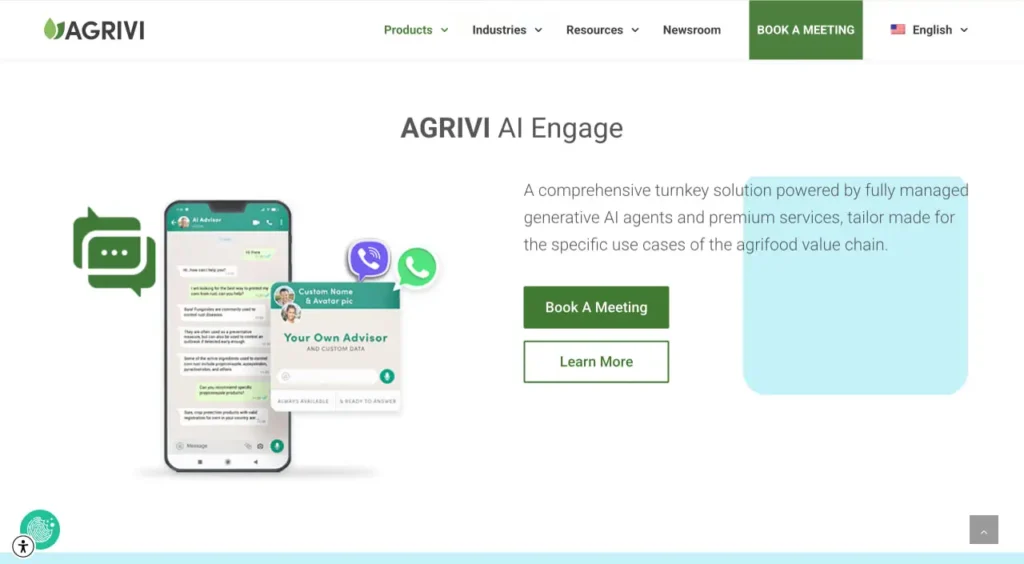
AGRIVI offers what the company describes as a “turnkey solution” approach to digital agriculture—providing not just software but also implementation support to help operations transition from legacy systems or paper-based tracking.
The transition period varies depending on operation size and existing technology infrastructure, but the goal is creating a functional digital twin that accurately reflects real-world operations and becomes the central source of truth for decision-making.
Frequently Asked Questions
AGRIVI is specifically designed for large-scale agribusiness operations managing complex, multi-field operations. The platform is most valuable for enterprises that struggle with coordinating data across multiple teams, crops, and locations. Smaller family farms may find the system more robust than their needs require.
The platform is cloud-based and designed for anytime, anywhere access. While specific offline capabilities aren’t detailed in available documentation, modern farm management platforms typically offer mobile apps with some offline functionality that syncs when connectivity is restored. Check with AGRIVI directly regarding offline requirements for remote field operations.
Available information indicates AGRIVI can incorporate real-time field data, weather conditions, and sensor inputs into its decision-making platform. Specific integration capabilities with particular equipment brands or IoT sensors would need to be confirmed based on the equipment in use.
The Barbados Agricultural Management Company reported seeing a 10-15% revenue increase “only just starting” after implementation. ROI timelines vary based on operation size, implementation completeness, and how quickly staff adopt data-driven workflows. Full ROI typically requires at least one complete growing season of data collection and analysis.
The platform is designed for complex operations with diverse crop portfolios. The crop planning module organizes data by crop and field, suggesting it accommodates multiple crop types. Specific support for particular crops or specialized farming methods should be verified during the evaluation process.
Data ownership and privacy terms are critical considerations for any farm management platform. These details are typically covered in service agreements and privacy policies. Farms should review these terms carefully before committing operational data to any cloud-based platform.
The Future of Digital Farm Management
Agriculture faces mounting pressures from climate change, resource constraints, and economic volatility. These challenges make data-driven decision-making not just advantageous but increasingly necessary for maintaining profitability.
AGRIVI represents the current state of comprehensive farm management platforms—tools that integrate multiple operational aspects into unified systems that provide visibility, control, and analytical capabilities that weren’t possible with previous generations of farm software.
For large-scale operations struggling to coordinate complex activities across multiple teams and locations, centralized platforms like AGRIVI offer a path toward more efficient, profitable, and sustainable operations.
The key question for any farm considering implementation isn’t whether digital tools provide value—the data on precision agriculture adoption and ROI is clear. The question is whether a specific platform fits the operation’s particular needs, integrates with existing workflows, and provides support adequate for successful implementation.
For operations ready to transition to comprehensive digital management, exploring AGRIVI’s capabilities through a demo or pilot program provides the clearest picture of how the platform would function within specific operational contexts. Visit the official AGRIVI website to schedule a consultation and evaluate whether the platform aligns with operational goals and management priorities.