
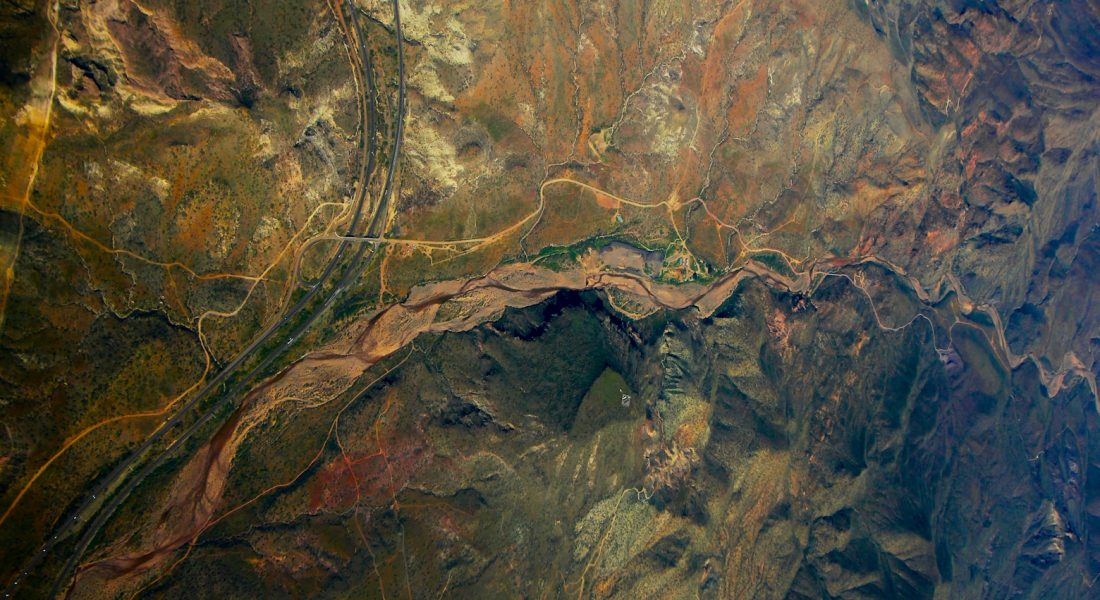
Geospatial data platforms are changing how we make sense of the world around us. They take raw spatial data-like maps, satellite images, or location-based information-and turn it into something useful, whether you’re planning a city or tracking environmental changes. These platforms blend advanced tech with user-friendly tools, so anyone from urban planners to researchers can dig into data without needing a PhD. I’ve always been fascinated by how a few clicks can reveal patterns that’d take weeks to spot otherwise. It’s not perfect-sometimes the learning curve’s a bit steep-but the insights you get make it worth the effort. If you’re curious about what’s happening on the ground, these platforms are a game-changer.

1. FlyPix
We offer a geospatial AI platform designed to analyze satellite, aerial, and drone imagery, making it easier to detect and monitor objects on the Earth’s surface. Our tools let users train AI models to identify specific items in images without needing deep programming knowledge, which is practical for a range of industries like agriculture or infrastructure. The platform ties data to geographic coordinates, so users can work with precise spatial information, though getting the hang of model training might take a bit of practice.
Our system supports quick analysis of complex scenes, helping users save time by automating tasks like object detection and mapping. We provide an interactive workspace where users can test features, such as finding similar objects across a map, which is handy for exploring the platform’s capabilities. It’s built to be flexible, adapting to different project needs, and integrates multispectral data for more detailed insights, especially in fields like environmental monitoring.
Key Highlights:
- AI-driven analysis of geospatial imagery
- Supports satellite, aerial, and drone data
- Allows custom AI model training without coding
- Integrates multispectral data for detailed analysis
- Features an interactive map for testing capabilities
Services:
- Object detection and analysis in geospatial images
- Custom AI model training for specific industries
- Geospatial data tied to coordinates
- Multispectral data processing
- Interactive map creation and sharing
Contact Information:
- Website: flypix.ai
- Email: [email protected]
- Phone: +49 6151 2776497
- Address: Robert-Bosch-Str. 7, 64293 Darmstadt, Germany
- LinkedIn: www.linkedin.com/company/flypix-ai

2. HEAVY.AI
HEAVY.AI provides a platform focused on handling large-scale geospatial data, enabling users to visualize and analyze complex datasets with speed. The system supports interactive exploration of spatial information, allowing users to map out billions of data points without needing to simplify or reduce the dataset. It integrates well with existing geospatial tools and formats, making it easier to pull in data from various sources. The platform’s ability to layer and cross-filter datasets helps uncover patterns across space and time, which is useful for industries needing detailed spatial insights.
The platform’s SQL engine follows Open Geospatial Consortium standards, supporting complex queries and analytics on large datasets, with optional GPU acceleration to keep things fast. Native support for standard geospatial file formats like shapefiles and GeoJSON simplifies data import, while integrations with PyData tools enable advanced geospatial machine learning workflows. HEAVY.AI serves industries like telecommunications, energy, and public sector, addressing use cases from network planning to disaster management.
Key Highlights:
- Handles large-scale geospatial datasets without downsampling
- Supports interactive visualization with billions of geospatial features
- Integrates with standard geospatial file formats like shapefiles and GeoJSON
- Offers GPU-accelerated SQL queries for fast analytics
- Enables geospatial machine learning through PyData integrations
Services:
- Interactive geospatial data visualization and analytics
- Support for Open Geospatial Consortium-compliant SQL queries
- Import and processing of standard geospatial file formats
- Cross-filtering and layering of multiple datasets
- Integration with data science tools for geospatial machine learning
Contact Information:
- Website: www.heavy.ai
- Linkedin: www.linkedin.com/company/heavy-ai
- Facebook: www.facebook.com/heavyai
- Twitter: x.com/heavy_ai

3. Spatial Data Platform
Spatial Data Platform offers a solution for real-time geospatial data processing, designed to break down data silos and provide actionable insights. The platform supports a range of industries by enabling visualization and analysis of spatial data, helping users monitor and manage assets efficiently. It focuses on delivering immersive and transparent experiences, whether for planning or tracking purposes. The system’s strength lies in its ability to process data quickly, allowing users to make decisions based on up-to-date information.
The platform caters to specific sectors like mining, municipalities, and utilities, offering tools for real-time monitoring and predictive analytics. Features like smart metering and automated reporting help streamline operations, while the emphasis on stakeholder engagement ensures clear communication of insights. Spatial Data Platform is built to adapt to various use cases, from environmental monitoring to infrastructure maintenance, making it a versatile choice for geospatial needs.
Key Highlights:
- Processes geospatial data in real-time for immediate insights
- Supports immersive visualization for planning and management
- Enables predictive analytics for optimized operations
- Facilitates stakeholder engagement through transparent reporting
- Adapts to multiple industries with tailored geospatial solutions
Services:
- Real-time geospatial data visualization and processing
- Predictive analytics for resource and asset management
- Smart metering for municipal and utility applications
- Automated reporting for operational transparency
- Real-time monitoring for environmental and infrastructure use cases
Contact Information:
- Website: spatialdp.com
- Phone: +27 12 345 5330
- Email: [email protected]
- Address: 30 Alexandra Road, Queens Office Park, Ground Floor, Building 2, Irene | 0157
- LinkedIn: www.linkedin.com/company/theiglobegroup
- Facebook: www.facebook.com/iglobesa
- Twitter: x.com/iglobesystems
- Instagram: www.instagram.com/theiglobegroup

4. Federal Geographic Data Committee (FGDC)
The Federal Geographic Data Committee (FGDC) coordinates geospatial activities across federal agencies, focusing on the development of the National Spatial Data Infrastructure (NSDI). The committee structure includes a steering group, executive committee, and working groups that guide policy and operational efforts. FGDC oversees initiatives like GeoPlatform.gov, which provides access to shared geospatial data, services, and applications, supporting a range of federal and public needs.
FGDC collaborates with non-federal partners, including state, tribal, and local governments, as well as private organizations, to ensure the NSDI reflects diverse needs. The committee manages standards, training, and outreach programs to maintain consistency and accessibility in geospatial data use. FGDC’s work supports applications from disaster response to infrastructure planning, emphasizing coordination and policy development.
Key Highlights:
- Oversees the National Spatial Data Infrastructure (NSDI)
- Manages GeoPlatform.gov for shared geospatial data access
- Coordinates federal geospatial activities through a committee structure
- Engages non-federal partners for inclusive data initiatives
- Maintains standards and training for geospatial data consistency
Services:
- Coordination of federal geospatial policies and initiatives
- Management of GeoPlatform.gov for data and service access
- Development and oversight of geospatial data standards
- Support for NSDI training and outreach programs
- Facilitation of public and private sector collaboration
Contact Information:
- Website: www.fgdc.gov
- Phone: (+1) 703 648 5755
- Email: [email protected]
- Address: 12201 Sunrise Valley Dr., MS 590, Reston, VA 20192
- Facebook: www.facebook.com/fgdcgov
- Twitter: x.com/fgdcgov

5. GeoServer
GeoServer offers an open-source platform for sharing and managing geospatial data, built to work seamlessly with various data sources. Users can create and edit maps using open standards, which makes it a flexible choice for those needing to integrate spatial data into their workflows. The platform’s integration with tools like OpenLayers simplifies map creation, while its modular design allows for additional features through extensions. It’s a community-driven project, with a focus on transparency and accessibility, which appeals to those who value open-source solutions.
The platform supports a range of Open Geospatial Consortium standards, enabling data sharing and editing through services like Web Map Service and Web Feature Service. GeoServer’s ability to connect with popular mapping APIs, such as Google Maps or ArcGIS, ensures it fits into diverse setups. The community behind it keeps things moving with regular updates and support, making it a practical option for anyone looking to publish geospatial data without proprietary constraints.
Key Highlights:
- Open-source platform for geospatial data sharing
- Supports Open Geospatial Consortium standards for interoperability
- Integrates with mapping APIs like OpenLayers and Google Maps
- Modular design with extensions for added functionality
- Community-driven with transparent updates and support
Services:
- Geospatial data visualization and editing
- Web Map Service for map creation in various formats
- Web Feature Service and Web Coverage Service for data sharing
- Support for standard geospatial file formats
- Integration with external GIS tools and APIs
Contact Information:
- Website: geoserver.org

6. Esri
Esri provides a geospatial platform called ArcGIS, designed to integrate and analyze data through a geographic lens. The system allows users to manage and visualize spatial information, supporting a wide range of applications from urban planning to environmental monitoring. Its tools help create detailed maps and perform spatial analytics, making it useful for organizations that need to connect diverse datasets. The platform’s flexibility suits both small projects and large-scale operations, though it can feel overwhelming at first.
ArcGIS supports various industries by offering tools for mapping, data management, and field operations. It includes capabilities like real-time asset tracking and 3D visualization, which help users make sense of complex spatial relationships. Esri also provides resources like training and community forums, which are handy for getting up to speed. The platform’s focus on geographic context makes it a go-to for those needing to ground their decisions in location-based insights.
Key Highlights:
- Integrates data through geographic context
- Supports real-time mapping and 3D visualization
- Offers tools for spatial analytics and data management
- Includes training and community support resources
- Applies to industries like government and infrastructure
Services:
- Geospatial data integration and management
- 2D and 3D mapping and visualization
- Spatial analytics with AI-infused workflows
- Field data collection and workforce management
- Imagery processing and remote sensing
Contact Information:
- Website: www.esri.com
- Email: [email protected]
- Phone: +19097932853
- Address: 380 New York Street, Redlands, California, United States of America
- LinkedIn: www.linkedin.com/company/esri
- Facebook: www.facebook.com/esrigis
- Twitter: x.com/Esri
- Instagram: www.instagram.com/esrigram

7. CARTO
CARTO delivers a cloud-native platform for spatial analytics, designed to simplify geospatial workflows for data analysts and developers. The system focuses on processing large datasets quickly, offering tools to visualize and analyze spatial information without complex data pipelines. Its drag-and-drop interface makes it approachable, even for those not deeply familiar with coding. The platform’s emphasis on cloud integration feels like a natural fit for modern data ecosystems, though it takes a bit of time to explore its full range of features.
The platform includes AI-driven tools for geospatial reasoning, allowing users to interact with data through natural language or custom agents. CARTO’s visualization capabilities handle massive datasets, creating interactive maps and dashboards for sharing insights. It also supports app development with minimal backend setup, which is practical for building scalable solutions. The focus on enterprise needs makes it a solid choice for organizations looking to streamline their spatial analysis.
Key Highlights:
- Cloud-native platform for geospatial analytics
- Supports large-scale data visualization
- Offers AI-driven geospatial reasoning tools
- Enables low-code spatial analysis with drag-and-drop
- Facilitates scalable app development in data lakehouses
Services:
- Spatial data visualization and interactive dashboards
- Low-code spatial analytics with ready-to-use components
- AI-driven geospatial analysis with natural language interaction
- Framework-agnostic app development
- Cloud-based data integration and processing
Contact Information:
- Website: carto.com
- Email: [email protected]
- Facebook: www.facebook.com/CartoDB
- LinkedIn: www.linkedin.com/company/carto
- Twitter: x.com/CARTO

8. Cesium
Cesium provides an open-source platform focused on creating 3D geospatial applications, enabling developers to work with large and complex datasets. Built on WebGL, it allows for smooth rendering of 3D visualizations directly in web browsers, which makes it accessible across various devices. The platform supports a range of data formats and integrates with tools like Unreal Engine, offering flexibility for industries like urban planning and defense. Its open standards approach fosters compatibility with other systems, which is a big draw for those who need to combine multiple data sources.
The platform includes CesiumJS for web-based 3D globes and maps, alongside Cesium ion for cloud-based data hosting and streaming. Developers can use these tools to visualize everything from city-scale models to real-time simulations, like tracking vehicles or environmental changes. The community-driven aspect keeps it evolving, with regular updates and support for new use cases. It’s a solid choice for anyone looking to build immersive geospatial experiences without being tied to proprietary systems.
Key Highlights:
- Open-source platform for 3D geospatial visualization
- Built on WebGL for browser-based rendering
- Supports 3D Tiles for streaming large datasets
- Integrates with game engines like Unreal and Unity
- Community-driven with a focus on open standards
Services:
- 3D geospatial data visualization and analysis
- Cloud-based data hosting and streaming via Cesium ion
- Support for real-time data and dynamic simulations
- Integration with external data formats like GeoJSON and KML
- Tools for building interactive maps and digital twins
Contact Information:
- Website: cesium.com
- Email: [email protected]
- Address: 601 Walnut Street, Suite 250 S, Philadelphia, PA 19106
- LinkedIn: www.linkedin.com/company/cesium-gs
- Twitter: x.com/CesiumJS

9. Google Maps Platform
Google Maps Platform offers a suite of tools for building geospatial applications, leveraging frequently updated data to create maps and insights across numerous countries. Developers can use APIs and SDKs to integrate mapping features into apps, from basic navigation to advanced 3D visualizations. The platform’s strength lies in its familiar interface, which users already know from Google Maps, making it straightforward for creating location-based services. It supports a variety of industries, though the pricing structure might take some time to navigate.
The platform provides features like photorealistic 3D maps, address validation, and AI-powered place summaries, which help businesses with tasks like site selection or delivery optimization. Tools like Google Earth and Earth Engine enable detailed satellite imagery analysis and no-code map creation, appealing to both developers and non-technical users. Its focus on real-time data updates ensures applications reflect current conditions, which is handy for dynamic use cases like logistics or urban planning.
Key Highlights:
- Provides APIs and SDKs for geospatial application development
- Offers photorealistic 3D maps and satellite imagery
- Supports real-time data updates for accurate mapping
- Includes no-code tools for map creation
- Integrates AI for enhanced place and area insights
Services:
- Dynamic map creation and styling
- Navigation and route planning tools
- Address validation and place details
- Geospatial analytics with Earth Engine
- Weather and solar data integration for specialized applications
Contact Information:
- Website: mapsplatform.google.com
- LinkedIn: www.linkedin.com/showcase/googlemapsplatform
- Twitter: x.com/GMapsPlatform

10. NV5
NV5 delivers geospatial solutions tailored to engineering, infrastructure, and defense, focusing on data analytics and asset management. The company combines consulting with technology to handle everything from data collection to advanced processing, making it useful for projects requiring detailed spatial insights. Its tools work across the entire geospatial workflow, from acquiring data to delivering actionable reports, which suits organizations needing end-to-end support. The emphasis on automation and AI makes it practical for handling large datasets efficiently.
The platform supports enterprise GIS systems, offering capabilities like real-time monitoring and predictive analytics for mission-critical applications. NV5’s expertise in areas like hyperspectral data and sensor fusion allows for customized solutions, particularly in high-stakes fields like defense or infrastructure maintenance. While the breadth of services can feel complex, it’s designed to adapt to specific project needs, ensuring flexibility for diverse use cases.
Key Highlights:
- Focuses on geospatial analytics for infrastructure and defense
- Integrates AI and automation for data processing
- Supports enterprise GIS system implementation
- Handles diverse data types like lidar and hyperspectral imagery
- Offers consulting alongside technical solutions
Services:
- Geospatial data collection and processing
- AI-driven analytics and predictive modeling
- Enterprise GIS system management
- Real-time monitoring and decision support
- Imagery and video transformation for actionable insights
Contact Information:
- Website: www.nv5.com
- Phone: 954.495.2112
- Email: [email protected]
- Address: 200 South Park Road, Suite 350, Hollywood, FL 33021
- LinkedIn: www.linkedin.com/company/nv5
- Facebook: www.facebook.com/NV5.inc
- Twitter: x.com/nv5_inc
- Instagram: www.instagram.com/nv5_inc

11. GRASS
GRASS, or Geographic Resources Analysis Support System, serves as an open-source engine for geospatial processing, handling both raster and vector data with ease. It’s built for tasks like terrain modeling, hydrology, and imagery analysis, making it a go-to for researchers and analysts working with environmental or spatial data. The Python API and temporal framework let users dive into time series analysis or whip up custom scripts without much hassle, which is great for those who need flexibility without proprietary restrictions.
Its design supports heavy-duty analysis across different hardware, so whether someone’s running it on a beefy server or a modest laptop, it gets the job done. The community keeps it alive with contributions, ensuring it stays relevant for applications like ecosystem studies or urban planning. It’s not the flashiest tool out there, but its raw power and open nature make it a solid pick for anyone serious about geospatial work.
Key Highlights:
- Open-source engine for geospatial data processing
- Handles raster, vector, and time series analysis
- Includes Python API for custom scripting
- Supports large-scale analysis across hardware types
- Community-driven with regular updates
Services:
- Terrain and ecosystem modeling
- Hydrological data analysis
- Imagery processing and management
- Time series analysis with temporal framework
- Custom geospatial programming via Python API
Contact Information:
- Website: grass.osgeo.org
- Email: [email protected]
- Address: 14525 SW Millikan #42523, Beaverton, Oregon, United States
- Linkedin: www.linkedin.com/company/grass-gis
- Twitter: x.com/grassgis

12. Hexagon
Hexagon offers a suite of geospatial platforms focused on turning raw data into actionable insights for industries like construction, manufacturing, and urban planning. The platforms handle everything from digitizing physical objects to creating interactive 2D and 3D maps, which helps users visualize and analyze complex spatial relationships. The tools are designed to integrate with existing workflows, making it easier to manage large datasets or build real-time applications.
The platforms include options like M.App Enterprise for customizable apps with business intelligence features and LuciadFusion for managing and sharing big data across multiple systems. Hexagon’s approach emphasizes practical applications, like improving operational efficiency or supporting decision-making with clear visualizations. It’s a robust setup for those who need to bridge raw data with real-world processes, though it can take some time to get the hang of the full ecosystem.
Key Highlights:
- Provides platforms for geospatial data management and visualization
- Supports 2D and 3D map creation
- Integrates analytics and business intelligence tools
- Enables real-time situational awareness applications
- Focuses on data sharing across multiple systems
Services:
- Interactive 2D and 3D map applications
- Data management and publishing for large datasets
- Geospatial web and desktop application development
- Business intelligence and analytics integration
- Field-to-office workflow solutions
Contact Information:
- Website: hexagon.com
- Phone: +46 8 601 26 20
- Email:[email protected]
- Address: Lilla Bantorget 15, SE-111 23 Stockholm, Sweden
- LinkedIn: www.linkedin.com/company/hexagon-ab
- Facebook: www.facebook.com/HexagonAB
- Twitter: x.com/HexagonAB
- Instagram: www.instagram.com/hexagon_ab

13. FAO Hand-in-Hand Geospatial Platform
The FAO Hand-in-Hand Geospatial Platform, developed by the Food and Agriculture Organization, provides open-access data to support agricultural and food security initiatives. It pulls together millions of data layers from sources like the UN, NGOs, and academia, offering tools for economists, policymakers, and agriculture experts to make informed decisions. The platform is tied to the Hand-in-Hand Initiative, aiming to target interventions in vulnerable regions.
Users can access detailed food security indicators and agricultural statistics, which help in planning projects like irrigation improvements or rural development. The platform’s strength is its focus on practical, data-driven solutions for real-world challenges, like addressing hunger or optimizing farming practices. It’s straightforward but requires some familiarity with geospatial tools to fully tap into its potential.
Key Highlights:
- Open-access platform for agricultural data
- Integrates data from UN, NGOs, and academia
- Supports food security and agricultural interventions
- Tied to the Hand-in-Hand Initiative
- Provides tools for policy and project planning
Services:
- Access to food security and agricultural statistics
- Geospatial data visualization and analysis
- Support for targeted agricultural interventions
- Integration of multi-source data layers
- Tools for rural development and policy planning
Contact Information:
- Website: www.fao.org
- Email: [email protected]
- Phone: (+39) 06 57051
- Address: Viale delle Terme di Caracalla, 00153 Rome, Italy
- LinkedIn: www.linkedin.com/company/fao
- Facebook: www.facebook.com/UNFAO
- Twitter: x.com/FAO
- Instagram: www.instagram.com/fao

14. RMBL Spatial Data Platform
RMBL’s Spatial Data Platform focuses on creating standardized geospatial datasets for scientific research in fields like ecology and hydrology. It’s designed to help researchers access high-quality data for studies on topics like environmental changes or terrain analysis. The platform relies on community feedback to shape its offerings, ensuring datasets meet real-world research needs. It’s a niche tool, but its open approach makes it valuable for scientists who need reliable spatial data.
The platform stores its data on cloud services like Amazon S3 and archives it with DOIs for easy citation, which is handy for academic work. RMBL also provides training through webinars to help users make the most of the data, covering topics like lidar and UAV data collection. The emphasis on collaboration with researchers adds a practical edge, though it’s more geared toward specialized users than general audiences.
Key Highlights:
- Creates standardized datasets for scientific research
- Stores data on cloud platforms with DOIs for citation
- Shaped by community feedback from researchers
- Offers training through webinars on geospatial tools
- Focuses on ecology, hydrology, and geophysics
Services:
- Standardized geospatial dataset creation
- Cloud-based data storage and access
- Archiving with DOIs for academic citation
- Training webinars for geospatial data use
- Collaborative data product development
Contact Information:
- Website: www.rmbl.org
- Address: 8000 County Road 317 in Gothic, CO, north of Crested Butte, CO
- Phone: (970) 349-7231
- Email: [email protected]
- Facebook: www.facebook.com/rockymtnbiolab

15. Foursquare
Foursquare provides a geospatial platform centered on location data for marketing, analytics, and app development. It uses real-time movement data to create insights, like tracking foot traffic or consumer behavior, which businesses can use for tasks like site selection or campaign planning. The platform’s strength is its focus on privacy, giving users control over their data while integrating with various partners for flexibility. It’s user-friendly but requires some setup to fully leverage its features.
The platform offers tools like Spatial Workbench for cloud-based analytics and Places API for adding location details to apps. Developers can access open-source point-of-interest data, while marketers use features like geofencing to target customers in real time. Foursquare’s approach blends practical analytics with app-building capabilities, making it versatile for businesses looking to incorporate location into their strategies.
Key Highlights:
- Focuses on location data for marketing and analytics
- Prioritizes consumer data privacy with user controls
- Integrates with multiple partners for data access
- Supports real-time consumer movement tracking
- Offers open-source point-of-interest data
Services:
- Real-time location analytics and geofencing
- Cloud-based geospatial data processing
- API for adding place details to applications
- Open-source point-of-interest data access
- Campaign performance and foot traffic analysis
Contact Information:
- Website: foursquare.com
- LinkedIn: www.linkedin.com/company/foursquare
- Twitter: x.com/foursquare

16. Whitebox Geospatial
Whitebox Geospatial delivers a suite of tools designed for geospatial data analysis, emphasizing flexibility and integration with existing GIS systems. The platform, rooted in academic research, handles raster, vector, and LiDAR data, supporting tasks like hydrological analysis and terrain modeling. Its open-source core, WhiteboxTools, plugs into software like QGIS and ArcGIS, offering a wide range of tools for users who need robust processing without relying on external libraries. The Python-based Whitebox Workflows adds scripting capabilities, which is handy for automating complex workflows.
The platform also offers paid extensions, like the Whitebox Toolset Extension, which add advanced features for specialized tasks such as breakline mapping or machine learning-based analysis. While the free tools are powerful on their own, the extensions provide extra functionality for those needing deeper capabilities. Whitebox’s focus on speed and portability makes it a practical choice for geospatial professionals, though it’s more about raw analysis than flashy map-making.
Key Highlights:
- Open-source core with extensive geospatial tools
- Integrates with QGIS and ArcGIS for enhanced functionality
- Supports Python scripting for workflow automation
- Handles raster, vector, and LiDAR data processing
- Offers paid extensions for advanced analysis
Services:
- Geospatial data analysis and processing
- Hydrological and terrain modeling
- LiDAR data processing and contour creation
- Python-based workflow automation
- Integration with GIS software via plugins
Contact Information:
- Website: www.whiteboxgeo.com
- Email: [email protected]
- LinkedIn: www.linkedin.com/in/john-lindsay-phd
- Facebook: www.facebook.com/Whitebox-Geospatial-108678944764778
- Twitter: x.com/whiteboxgeo

17. SuperMap
SuperMap provides a comprehensive GIS platform tailored to industries like smart cities, land management, and natural resources. The software suite includes tools for desktop, cloud, and web-based applications, supporting tasks from data visualization to complex spatial analysis. With a focus on integrating big data, 3D GIS, and AI, SuperMap enables users to manage large datasets and create actionable insights. Its cross-platform approach ensures compatibility across different environments, which is useful for diverse project needs.
The platform supports a range of applications, from urban planning to environmental monitoring, with tools designed to handle spatial big data and real-time processing. SuperMap’s emphasis on innovation means it’s constantly evolving to meet industry demands, though its breadth can feel a bit overwhelming for new users. The combination of desktop, server, and mobile solutions makes it versatile for organizations looking to build integrated geospatial systems.
Key Highlights:
- Supports desktop, cloud, and web-based GIS applications
- Integrates big data, 3D GIS, and AI technologies
- Focuses on industries like smart cities and land management
- Enables real-time spatial data processing
- Cross-platform compatibility for diverse workflows
Services:
- Geospatial data visualization and mapping
- Big data GIS and spatial analysis
- 3D GIS modeling and visualization
- AI-driven geospatial analytics
- Cloud and mobile GIS application development
Contact Information:
- Website: www.supermap.com
- Address: Building 107, No. A10, Jiuxianqiao North Road, Chaoyang District, Beijing, PR China, 100015
- Phone: +86-10-5989 6503
- Email: [email protected]
- Facebook: www.facebook.com/SuperMap
- Linkedin: www.linkedin.com/company/supermap
- Twitter: x.com/SuperMap__GIS
- Instagram: www.instagram.com/supermap_gis

18. Precisely
Precisely works at the point where data management meets location intelligence. The platform builds geospatial capabilities into its broader Data Integrity Suite. Instead of offering a stand-alone mapping tool, Precisely connects spatial data with governance, integration, and data quality processes. Location becomes part of the overall data flow, not an isolated feature.
The platform helps organizations understand where events happen and how that context affects decisions. It verifies data, enriches it with location attributes, and keeps systems aligned across departments. The focus is practical. Clean data. Clear context. Fewer surprises when teams rely on location-based insights for planning, reporting, or operations.
Key Highlights:
- Integrates geospatial capabilities into enterprise data systems
- Combines data quality, governance, and location intelligence
- Connects location context with business workflows
- Supports modernization and automation initiatives
- Embeds spatial insights into broader data strategies
Services:
- Location data enrichment and validation
- Enterprise data integration
- Data governance and quality management
- Contextual analytics with spatial layers
- Process automation supported by location insights
Contact Information:
- Website: www.precisely.com
- Phone: +1 (877) 700 0970
- E-mail: [email protected]
- LinkedIn: www.linkedin.com/company/preciselydata
- Twitter: x.com/PreciselyData
- Facebook: www.facebook.com/PreciselyData
- Instagram: www.instagram.com/preciselydata

19. UP42
UP42 runs a geospatial data platform built around Earth observation. The platform brings together satellite imagery, aerial data, and processing tools under one roof. Instead of chasing multiple vendors, users can search, compare, order, and manage imagery in one place. It feels more like a structured workspace than a traditional data marketplace.
Data from different providers is converted into consistent formats. That detail matters. It reduces friction later when teams move into analysis. The platform also supports satellite tasking, image enhancement, and analytics workflows. Developers can connect through an API or SDK, while analysts can use the web console. The structure is straightforward. Find data. Manage it. Process it. Move forward.
Key Highlights:
- Centralized platform for Earth observation data
- Access to satellite and aerial imagery providers
- Standardized data formats for easier downstream use
- Supports automated tasking requests
- Offers console, API, and SDK access
Services:
- Satellite and aerial data ordering
- Cross-provider tasking management
- Data normalization and storage
- Image enhancement and processing
- Integration into custom applications
Contact Information:
- Website: up42.com
- E-mail: [email protected]
- LinkedIn: www.linkedin.com/company/up42
- Twitter: x.com/UP42_
- Facebook: www.facebook.com/up42Official
- Instagram: www.instagram.com/up42official

20. Privateer
Privateer approaches geospatial data from a broader angle. The platform combines satellite feeds, terrestrial inputs, and customer data into one integrated system called Elements. The idea is simple. Bring everything together. Then turn it into something usable.
Elements work across domains – land, sea, air, space. The platform processes imagery and sensor data, then fuses it into structured intelligence. This is not just about viewing maps. It is about monitoring activity, tracking movement, and understanding patterns across large environments. Insights can be accessed through a user interface or connected directly into other systems through APIs. The structure supports continuous awareness rather than one-time analysis.
Key Highlights:
- Multi-domain geospatial data fusion platform
- Combines satellite and ground-based data streams
- Supports operational monitoring use cases
- Provides access through interface and APIs
- Focuses on real-time intelligence workflows
Services:
- Satellite data integration
- Cross-domain geospatial analysis
- Maritime and activity monitoring
- Intelligence platform integration
- Operational data streaming and fusion
Contact Information:
- Website: www.privateer.com
- LinkedIn: www.linkedin.com/company/privateerspace
- Twitter: x.com/privateerspace
- Instagram: www.instagram.com/privateer.space

21. Planet
Planet builds its geospatial platform around constant observation. The platform operates satellite constellations that capture Earth imagery frequently and at scale. Through the Planet Insights Platform, users can monitor areas, task new images, and work with analytics tools in one system.
The strength of the platform lies in repetition. Daily coverage makes it easier to detect changes that might otherwise go unnoticed. Teams can look back in time, compare imagery, and follow patterns across regions. The platform supports sectors like agriculture, infrastructure, and government monitoring. It is designed for ongoing visibility rather than static image downloads.
Key Highlights:
- Satellite-driven geospatial monitoring platform
- Frequent Earth observation coverage
- Integrated imagery and analytics environment
- Historical and current data comparison
- Supports commercial and public sector use cases
Services:
- Continuous satellite monitoring
- High-resolution image tasking
- Archive data access
- Geospatial analytics feeds
- Integrated insight workflows
Contact Information:
- Website: www.planet.com
- Address: 645 Harrison Street, 4th Floor, San Francisco, CA 94107
- Phone: (415) 829-3313
- LinkedIn: www.linkedin.com/company/planet-labs
- Twitter: x.com/planet
- Facebook: www.facebook.com/PlanetLabs
- Instagram: www.instagram.com/planetlabs

22. SafeGraph
SafeGraph focuses on places. The platform maintains structured datasets of global points of interest and related attributes. Instead of broad mapping tools, the platform concentrates on reliable place data that can feed analytics systems, dashboards, or applications.
The dataset includes details such as location categories, geometry, and status indicators. It is built to plug into existing workflows. Retail analysis, site selection, and market research are common use cases. The platform keeps data organized and ready for use. The value comes from consistency. When location records stay clean and current, downstream analysis becomes simpler.
Key Highlights:
- Structured global points of interest datasets
- Detailed place attributes and geometry data
- Designed for integration with analytics platforms
- Supports market and site evaluation use cases
- Focuses on updated and organized location records
Services:
- Global POI datasets
- Place geometry and polygon data
- Attribute enrichment for location analysis
- Data delivery to analytics platforms
- Location intelligence support for business decisions
Contact Information:
- Website: www.safegraph.com
- E-mail: [email protected]
- LinkedIn: www.linkedin.com/company/safegraph
- Twitter: x.com/safegraph
- Facebook: www.facebook.com/SafeGraph

23. Picterra
Picterra provides a geospatial data platform focused on extracting information from satellite and aerial imagery. The platform works with organizations that need to detect objects, monitor land use, or track changes over time. Instead of building everything from scratch, users can train detection models directly within the platform. It is built around practical image analysis, not just map viewing.
Picterra centers its work on turning raw imagery into usable layers. The platform allows teams to define what they want to detect – roads, buildings, vegetation, or specific features – and then apply that logic across large areas. It supports collaboration and sharing of results, so insights can move from analysts to decision-makers without too much friction. The focus stays on applied geospatial analysis that connects directly to operational tasks.
Key Highlights:
- Provides a geospatial data platform for satellite and aerial image analysis
- Enables custom object detection within imagery
- Supports land monitoring and change detection workflows
- Allows collaboration and sharing of results
- Focuses on practical use of spatial imagery
Services:
- Satellite and aerial imagery analysis
- Custom detection model training
- Land use and asset monitoring
- Spatial data layer creation
- Workflow integration for operational teams
Contact Information:
- Website: picterra.ai
- Address: Chem. des Plaines 15, 1007 Lausanne, Switzerland
- LinkedIn: www.linkedin.com/company/picterra

24. LiveEO
LiveEO provides geospatial data platforms that turn satellite data into risk intelligence. The platform focuses on areas like vegetation management, pipeline monitoring, and deforestation risk. Instead of offering raw imagery alone, LiveEO structures satellite inputs into workflows that support compliance and asset protection.
The platform collects satellite and LiDAR data, processes it, and delivers risk indicators that teams can act on. Solutions such as TradeAware, Treeline, and SurfaceScout address specific operational needs. The system connects satellite insights with enterprise software through APIs, which makes it easier to embed geospatial intelligence into daily processes. The approach stays centered on risk detection and early visibility.
Key Highlights:
- Provides satellite-based geospatial risk intelligence
- Focuses on vegetation, pipeline, and supply chain risks
- Combines satellite and LiDAR inputs
- Delivers insights through APIs and platforms
- Supports compliance and asset monitoring
Services:
- Vegetation management monitoring
- Pipeline threat detection
- Deforestation risk analysis
- Satellite data processing and analytics
- Integration with enterprise systems
Contact Information:
- Website: www.live-eo.com
- Address: Cuvrystraße 3 – 4, 10997 Berlin, Germany
- Phone: +49 162 3414693
- Email: [email protected]
- LinkedIn: www.linkedin.com/company/liveeo

25. TomTom Orbis Maps
TomTom Orbis Maps provides a geospatial data platform designed for businesses that need flexible mapping solutions. The platform builds digital maps that can be customized, extended, and combined with external datasets. The platform is structured around open standards, which allows integration with different tools and development environments.
Orbis Maps supports web, mobile, and embedded systems. Organizations can access map data through APIs, SDKs, or uncompiled formats. The platform also allows private customization, including adding proprietary data layers. Traffic, routing, and location analytics sit alongside core map content. The system is built for organizations that need mapping infrastructure rather than a simple navigation app.
Key Highlights:
- Provides an open and flexible geospatial mapping platform
- Supports integration with proprietary and open data
- Accessible through APIs, SDKs, and software tools
- Includes routing, traffic, and analytics capabilities
- Designed for enterprise and developer environments
Services:
- Digital map data and customization
- Routing and navigation APIs
- Traffic and mobility analytics
- Integration with embedded and mobile systems
- Location-based data solutions for business use
Contact Information:
- Website: www.tomtom.com
- Address: De Ruijterkade 154, 1011 AC, Amsterdam
- LinkedIn: www.linkedin.com/company/tomtom
- Twitter: x.com/tomtom
- Facebook: www.facebook.com/TomTom
- Instagram: www.instagram.com/tomtomglobal

26. Mapbox
Mapbox provides a geospatial data platform that helps developers build maps, navigation tools, and location-based applications. The platform focuses on giving teams control over how maps look and behave. Instead of fixed map styles, Mapbox allows customization through APIs and SDKs across web, mobile, and automotive systems.
The platform combines map rendering, search, routing, and traffic data in one environment. Developers can integrate geocoding, movement data, and boundaries into their applications. Mapbox also supports 3D mapping and advanced navigation features. The structure fits teams that want to embed mapping directly into their products, rather than relying on a static mapping service.
Key Highlights:
- Provides a customizable geospatial data platform
- Supports web, mobile, and automotive mapping
- Combines mapping, search, and navigation tools
- Offers APIs and SDKs for integration
- Includes traffic and movement datasets
Services:
- Interactive map rendering
- Navigation and routing APIs
- Geocoding and place search
- Traffic and movement data integration
- Custom map styling and development tools
Contact Information:
- Website: www.mapbox.com
- LinkedIn: www.linkedin.com/company/mapbox
- Twitter: x.com/mapbox
- Instagram: www.instagram.com/mapbox

27. Teren
Teren provides a geospatial data platform focused on environmental intelligence. The platform works through the Terevue platform, which supports risk analysis for infrastructure, energy, land management, and natural resource sectors. The emphasis is on understanding environmental threats before they escalate.
The platform applies earth science and geospatial analysis to detect risks such as geohazards, wildfire exposure, watershed changes, and vegetation impacts. Teren builds what it calls environmental twins, digital representations of assets and surrounding risk factors. The system supports custom risk modeling so organizations can focus on the factors most relevant to their operations. The approach centers on resilience planning grounded in spatial data.
Key Highlights:
- Provides a geospatial environmental intelligence platform
- Focuses on infrastructure and natural resource risk
- Supports wildfire, geohazard, and watershed analysis
- Builds digital environmental representations of assets
- Enables customized risk modeling
Services:
- Environmental risk detection
- Geospatial hazard analysis
- Vegetation and wildfire monitoring
- Infrastructure resilience planning
- Customized spatial risk modeling
Contact Information:
- Website: www.teren4d.com
- Address: 165 S Union Blvd Suite 650, Lakewood, CO, 80228
- E-mail: [email protected]
- LinkedIn: www.linkedin.com/company/teren-inc
Conclusion
Geospatial data platforms are no longer niche tools used only by mapping specialists. They have become part of how modern organizations understand risk, plan operations, and respond to change. Location data used to sit in separate systems. Now it connects directly to daily decisions.
What stands out is how different these platforms feel from one another. Some focus on satellite monitoring. Others center on mapping infrastructure, environmental risk, or structured place data. The technology behind them can be complex, but the purpose is simple. Turn raw spatial data into something people can actually use.
There is no single model that fits every case. A utility platform will need something different from a retail analytics team. A developer building a navigation app will look at maps in a different way than an environmental risk manager. That is the point. These platforms are not just about displaying maps. They shape how organizations see the physical world and act on it.
In the end, geospatial data is not just about where things are. It is about understanding what is happening in those places and what might happen next. The platforms covered here approach that challenge from different angles, but the goal stays consistent. Make spatial data clear. Make it useful. And make it part of everyday decision-making.