
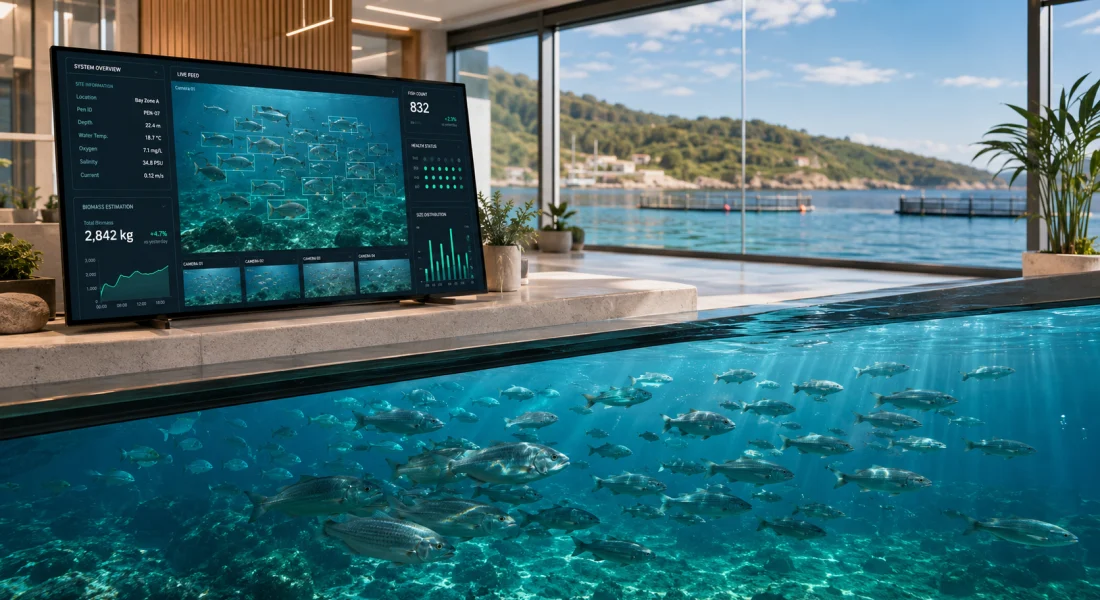
Korte samenvatting: Aquabyte is een AI-gestuurd platform voor het monitoren van aquacultuur dat geautomatiseerde luizentellingen, gewichtsmetingen en biomassa-schattingen levert voor zalm-, coho- en forelkwekerijen. Het systeem levert dagelijkse gegevens en voorspellingen tot twee weken vooruit zonder handmatige visbehandeling, waardoor kwekers behandelingen, voerschema's en oogsttijden kunnen optimaliseren en tegelijkertijd het welzijn van de vissen en de operationele efficiëntie kunnen verbeteren.
De viskweek is een nieuw tijdperk ingegaan waarin camera's en kunstmatige intelligentie de invasieve handmatige inspecties vervangen. Aquabyte loopt voorop in deze transformatie en biedt aquacultuurbedrijven een manier om cruciale parameters te monitoren zonder hun visbestand te belasten.
Het platform pakt drie fundamentele uitdagingen aan waar elke zalm- en forelkweker mee te maken krijgt: het volgen van de populaties zeeluis, het nauwkeurig meten van het visgewicht gedurende de hele productiecyclus en het schatten van de biomassa voor de oogstplanning. Traditionele methoden vereisen het vangen van vissen met netten, wat stress veroorzaakt en het risico op sterfte vergroot. Het computervisiesysteem van Aquabyte werkt continu onder water en verzamelt gegevens terwijl de vissen op natuurlijke wijze zwemmen.
Maar maakt deze technologie de beloftes ook waar? Hieronder lees je wat het platform te bieden heeft, hoe het werkt en welke rol het speelt in moderne aquacultuur.
Wat Aquabyte daadwerkelijk doet
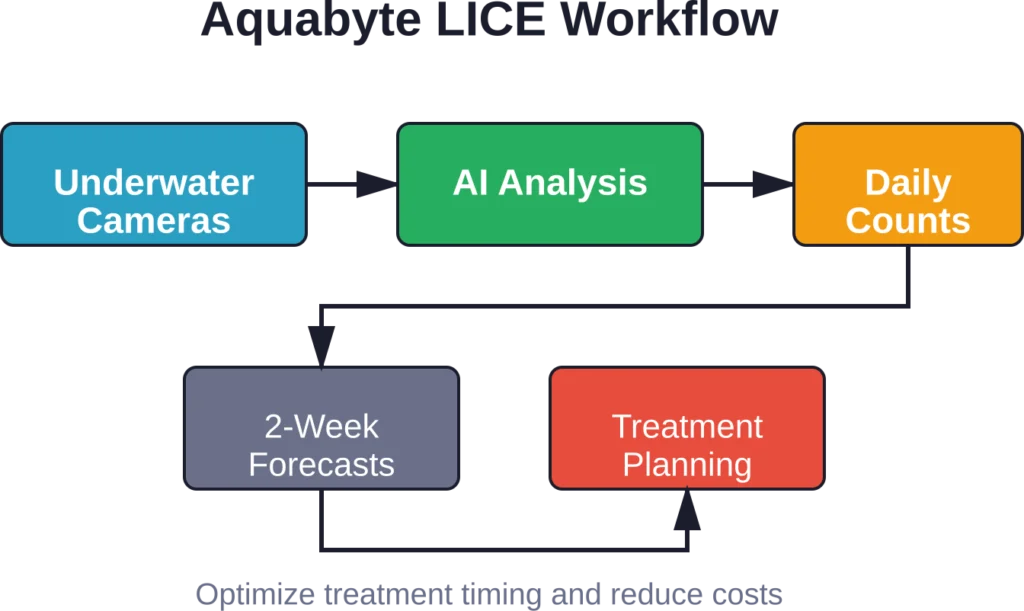
Aquabyte werkt met behulp van onderwatercamera's die in de viskwekerijen zijn geïnstalleerd. Deze camera's leggen continu videobeelden vast, die vervolgens door AI-algoritmes worden geanalyseerd om specifieke gegevens te verzamelen over de gezondheid, grootte en parasietenbesmetting van de vissen.
Het platform bestaat uit drie hoofdtools, die elk gericht zijn op een specifieke operationele behoefte:
| Hulpmiddel | Primaire functie | Toetsuitvoer |
|---|---|---|
| Aquabyte Luizen | Geautomatiseerde detectie en telling van zeeluis | Dagelijkse aantallen + 2-weekse prognoses |
| Aquabyte GEWICHT | Individuele gewichtsmeting van vissen | Gewichtsverdeling, K-factor, CV-gegevens |
| Aquabyte Biomassa | Totale biomassa-schatting | Metrieken voor oogstplanning |
Elk instrument werkt onafhankelijk, hoewel veel boerderijen meerdere systemen inzetten om een compleet inzicht in hun bedrijfsvoering te krijgen.
Bewaak activa en infrastructuur met FlyPix AI
Organisaties die grote gebieden, faciliteiten of infrastructuur beheren, vertrouwen vaak op geodata om veranderingen te volgen en problemen te identificeren. FlyPix AI helpt bij het automatiseren van beeldanalyse en -monitoring met behulp van luchtfoto's, satellietbeelden en dronebeelden.
Wilt u beter zicht over grote gebieden?
FlyPix AI kan helpen met:
- infrastructuurbewaking
- Detectie en tracking van objecten
- analyse van lucht- en satellietbeelden
- geautomatiseerde geospatiale inspecties
👉 Probeer FlyPix AI om oplossingen voor geospatiale monitoring te onderzoeken.
Geautomatiseerde luizentelling: het kernproduct
Zeeluis is een van de duurste problemen in de zalmkweek. Als een plaag niet wordt bestreden, beschadigt deze de vissen, vermindert de groeisnelheid en kan leiden tot noodbehandelingen die honderdduizenden euro's per kooi kosten.
Aquabyte LICE voert dagelijks automatische tellingen uit zonder dat de vissen handmatig hoeven te worden aangeraakt. Het systeem identificeert individuele luizen op zalm, coho en forel terwijl ze langs camera's zwemmen, waardoor een compleet beeld ontstaat van de infectieniveaus in het hele bassin.
Hoe de voorspelling werkt
Het platform telt niet alleen de huidige luizenpopulatie. Het voorspelt de luizendruk tot wel twee weken vooruit, waardoor bedrijfsleiders de tijd hebben om behandelingen te plannen voordat de besmettingen kritieke niveaus bereiken.
Deze voorspellende mogelijkheid verandert de behandelingsmethode. In plaats van te reageren op zichtbare problemen, kunnen boeren interventies plannen tijdens optimale weersomstandigheden of behandelingen coördineren over meerdere stallen voor maximale effectiviteit.
Kostenimpact van verminderde behandelingen
Aquabyte stelt zelf dat "gezien alle kosten die gepaard gaan met luizenbehandelingen, het verminderen van slechts één behandeling de investering in ons systeem al kan terugverdienen."“
Dat is geen marketingpraatje. Behandelingen tegen zeeluis vereisen gespecialiseerde apparatuur, chemicaliën of poetsvissen, arbeid en, belangrijker nog, productiestilstand. Vissen stoppen met eten tijdens en na de behandeling, wat direct van invloed is op de groeisnelheid en de oogsttijd.
Vaker en consistentere metingen maken een meer onderbouwde besluitvorming mogelijk. In plaats van volgens een vast schema te behandelen, kunnen bedrijven interventies precies uitvoeren wanneer dat nodig is – en ze overslaan wanneer de luizendruk onder de kritische drempel blijft.
Gewicht en groei volgen
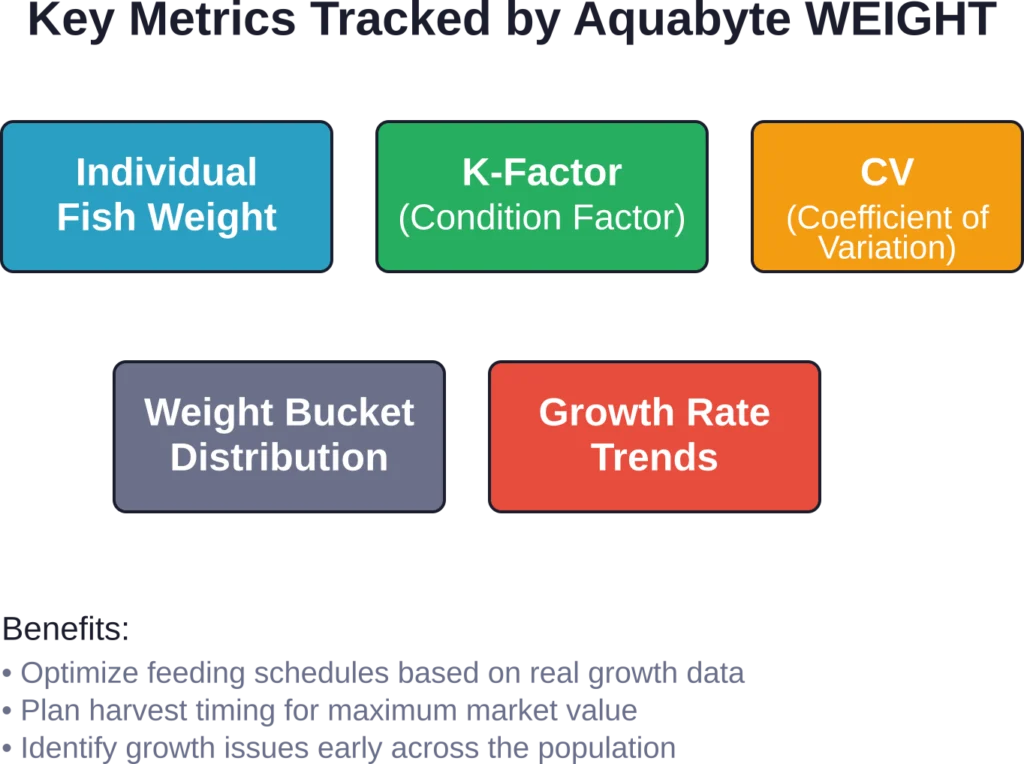
Aquabyte WEIGHT levert nauwkeurige metingen van het individuele visgewicht en de groeisnelheid gedurende de gehele productiecyclus. Het systeem biedt realtime gegevens over gewichtsmetingen, inclusief de K-factor (conditiefactor) en CV (variatiecoëfficiënt), evenals de verdeling over de gewichtsbakken.
Bij traditionele bemonstering op basis van gewicht wordt een deel van de vissen gevangen, handmatig gewogen en het gewicht vervolgens geëxtrapoleerd naar de gehele populatie. Dit proces is stressvol voor de vissen, levert slechts periodieke momentopnamen op en introduceert bemonsteringsfouten.
De op AI gebaseerde aanpak meet continu. Historische gegevens, gecombineerd met realtime metingen, bieden landbouwbedrijven zowel de huidige status als trendanalyses om toekomstige groeicurven te voorspellen.
Voedingsoptimalisatie
Voer vormt de grootste operationele kostenpost in de aquacultuur. Overvoeding leidt tot geldverspilling en een verslechtering van de waterkwaliteit. Ondervoeding vertraagt de groei en verlengt de productiecyclus.
Nauwkeurige, actuele gewichtsgegevens stellen veehouders in staat om de voerhoeveelheden aan te passen op basis van de werkelijke groeiprestaties in plaats van theoretische modellen. Wanneer de groei versnelt of vertraagt, worden de voerschema's direct aangepast.
Nauwkeurige oogstplanning
Het oogstmoment bepaalt de winstgevendheid. Marktprijzen schommelen en het behalen van het streefgewicht op het juiste moment maximaliseert de opbrengst per vis.
De gegevens over de gewichtsverdeling van Aquabyte laten precies zien hoeveel vissen in elke gewichtscategorie vallen. Kwekerijbeheerders kunnen zien wanneer het grootste deel van hun visbestand de optimale oogstgrootte bereikt, of vaststellen of de populatie zich heeft opgesplitst in meerdere cohorten die gefaseerde oogsten vereisen.
Het aspect van het welzijn van vissen
Aquabyte positioneert zijn technologie niet alleen als een middel om de operationele efficiëntie te verbeteren, maar ook als een instrument voor welzijnsverbetering. En die bewering is niet geheel onterecht.
Handmatig bemonsteren is stressvol voor vissen. Het vangen met netten, hanteren en wegen veroorzaakt verwondingen, leidt tot cortisolreacties en soms zelfs tot sterfte. Het frequent bemonsteren – noodzakelijk voor nauwkeurige gegevens – verergert deze kosten voor het welzijn van de vissen.
Passieve camerabewaking elimineert dit compromis. Vissen zwemmen op natuurlijke wijze rond terwijl camera's continu gegevens verzamelen. Geen netten, geen handelingen, geen stress.
Voor boerderijen die werken onder certificeringsprogramma's voor dierenwelzijn of die reageren op druk van consumenten met betrekking tot productiepraktijken, is dit onderscheid belangrijk. De technologie biedt een controletraject dat aantoont dat de monitoring van dierenwelzijn het dierenwelzijn zelf niet in gevaar brengt.
Adoptie en prestaties in de praktijk
Aquabyte heeft zijn activiteiten uitgebreid naar meerdere landen en regio's. Het bedrijf is een partnerschap aangegaan met Vitruvian Partners als meerderheidsinvesteerder – een alliantie die gericht is op het versnellen van de toepassing van AI-gestuurde technologie in de aquacultuur wereldwijd.
De activiteiten strekken zich nu uit over meerdere continenten, waardoor Aquabyte zijn positie als technologieleverancier voor commerciële viskweek versterkt. Het platform wordt getest in diverse productieomgevingen en de eerste resultaten van pilotprogramma's worden door de deelnemende bedrijven positief beoordeeld.
Eerlijk gezegd: de aquacultuursector neigt naar conservatisme. Boeren investeren traag in nieuwe technologie en geven de voorkeur aan beproefde oplossingen boven experimentele systemen. Dat Aquabyte commercieel succesvol is gebleken, suggereert dat de technologie meetbare waarde biedt die verder gaat dan theoretische voordelen.
Praktische overwegingen voor de implementatie
Het inzetten van onderwatercamerasystemen in viskwekerijen brengt unieke uitdagingen met zich mee die moeten worden aangepakt voor effectieve monitoring.
Omgevingsfactoren
De helderheid van het water kan variëren per locatie en seizoen, wat de beeldkwaliteit beïnvloedt. Biologische aangroei kan zich op lenzen ophopen, waardoor regelmatig onderhoud nodig is om helder zicht te garanderen.
Hardware en infrastructuur
Camera's vereisen een betrouwbare stroom- en datatransmissie-infrastructuur. De apparatuur moet bestand zijn tegen de zware omstandigheden op zee gedurende langere perioden en daarbij effectief blijven functioneren.
AI-systeemaanpassing
De AI-algoritmes van Aquabyte zijn ontworpen om te functioneren onder wisselende zichtomstandigheden en passen zich aan veranderingen in waterkwaliteit, verlichting en beweging in de verblijven aan.
Adoptie en implementatie
Boerderijen die overwegen om Aquabyte te gaan gebruiken, kunnen rechtstreeks contact opnemen met Aquabyte voor actuele prijzen en implementatievereisten. De complexiteit van de installatie en het onderhoud variëren afhankelijk van de indeling van de faciliteit, de kooigrootte en de bestaande infrastructuur.
De plaats van Aquabyte in de moderne aquacultuur
Het platform pakt concrete operationele problemen aan met meetbare kosten. Behandelingen tegen zeeluis, inefficiënte voeding en fouten in de oogsttijd hebben allemaal een directe invloed op de winstgevendheid. Hulpmiddelen die deze kosten verlagen, zorgen voor een duidelijk rendement op de investering (ROI).
Dat gezegd hebbende, is dit geen kant-en-klare oplossing. Effectief gebruik vereist integratie van cameragegevens in bestaande bedrijfsprocessen, training van personeel in het interpreteren van door AI gegenereerde inzichten en aanpassing van besluitvormingsprocessen om continue monitoring te benutten in plaats van periodieke metingen.
| Kracht | Beperking |
|---|---|
| Elimineert de stress van handmatige handelingen. | Vereist investeringen in infrastructuur |
| Continue realtime monitoring | De prestaties zijn afhankelijk van de helderheid van het water. |
| Voorspellende prognoses voor behandelingen | Leercurve voor acceptatie door medewerkers |
| Nauwkeurige individuele vismetingen | Integratie met bestaande systemen is nodig |
Deze technologie is een belangrijke stap richting datagestuurde aquacultuur. Of het voor een specifiek bedrijf zinvol is, hangt af van de omvang van de kwekerij, het productievolume, de huidige monitoringkosten en de operationele complexiteit.
Veelgestelde vragen
Aquabyte levert frequentere en consistentere metingen dan handmatige bemonstering, waarbij slechts een kleine groep vissen wordt onderzocht. De continue monitoring registreert dagelijkse variaties die bij periodieke bemonstering niet worden opgemerkt, hoewel specifieke nauwkeurigheidscijfers niet openbaar worden gemaakt. Het systeem is ontworpen om de arbeidsintensieve handmatige tellingen te verminderen en tegelijkertijd dagelijkse tellingen en prognoses voor de komende twee weken te leveren.
Het platform werkt momenteel met gekweekte zalm, coho en forel. Deze soorten vormen de belangrijkste commerciële focus voor de technologie, omdat ze te maken hebben met aanzienlijke zeeluisdruk en het meest gebaat zijn bij nauwkeurige groeimonitoring.
Het systeem maakt gebruik van onderwatercamera's die in kooien zijn geïnstalleerd, waarvoor montage-infrastructuur en dataverbindingen nodig zijn. De specifieke installatievereisten variëren per locatie. Neem rechtstreeks contact op met Aquabyte voor locatiespecifieke implementatiegegevens en actuele technische specificaties.
Moderne aquacultuurbedrijven maken vaak gebruik van meerdere softwaresystemen voor voorraadbeheer, voerschema's en productiebewaking. De integratiemogelijkheden dienen met Aquabyte te worden afgestemd op de specifieke softwareomgevingen en de vereisten voor gegevensexport.
Camerabewaking is afhankelijk van zichtbaarheid. De AI-algoritmes zijn ontworpen om te functioneren onder wisselende omstandigheden wat betreft waterhelderheid, maar extreme troebelheid zal de prestaties beïnvloeden. Praktische tests op diverse locaties suggereren dat het systeem de typische operationele omstandigheden aankan, hoewel de waterkwaliteit ter plaatse een aandachtspunt kan zijn.
Uit de gegevens van Aquabyte blijkt dat de investering in het systeem al terugverdiend kan worden door slechts één luizenbehandeling minder te doen. De daadwerkelijke terugverdientijd hangt af van de bedrijfsomvang, de huidige behandelingsfrequentie, de arbeidskosten en het productievolume. Bedrijven met een hoge luizendruk en frequente behandelingen zullen sneller rendement zien dan bedrijven met een van nature lagere parasietenbelasting.
De plaatsing en dekking van de camera's zijn afhankelijk van de vorm van de hokken. Grote of diepe hokken vereisen mogelijk meerdere camera's voor een complete bewaking. Neem contact op met Aquabyte voor specifieke aanbevelingen voor de plaatsing, gebaseerd op de afmetingen van de faciliteit en de configuratie van de hokken.
Eindbeoordeling
Aquabyte biedt praktische hulpmiddelen die kostbare operationele problemen in de commerciële viskweek aanpakken. De geautomatiseerde luizentelling, gewichtsmeting en biomassa-schatting maken handmatige handelingen overbodig en leveren frequentere en consistentere gegevens dan traditionele bemonsteringsmethoden.
De technologie is niet perfect: ze vereist investeringen in infrastructuur, werkt het best in helder water en vraagt om aanpassingen in de werkprocessen. Maar voor bedrijven die worstelen met luizenproblemen, het optimaliseren van de voeding of het bepalen van het oogstmoment, biedt het platform meetbare voordelen die worden ondersteund door daadwerkelijke commerciële toepassingen.
Is het de investering waard? Dat hangt volledig af van de operationele schaal en de huidige monitoringkosten. Maar de kernwaarde – continue, stressvrije vismonitoring met voorspellende inzichten – speelt in op reële behoeften in de moderne aquacultuur.
Voor landbouwbedrijven die AI-gestuurde monitoringtools overwegen, is Aquabyte een van de meest volwaardige commerciële oplossingen met bewezen succes in diverse regio's. Neem rechtstreeks contact op met Aquabyte voor actuele functies, prijzen en implementatiemogelijkheden die specifiek zijn afgestemd op uw bedrijfsbehoeften.