

Kurzzusammenfassung: API4AI ist eine Cloud-basierte Plattform mit sofort einsatzbereiten Computer-Vision- und KI-APIs für Aufgaben wie Objekterkennung, OCR, Altersverifizierung und Hintergrundentfernung. Die Plattform bietet schnelle Integration, skalierbare Infrastruktur und nutzungsbasierte Abrechnung, ohne dass interne KI-Expertise erforderlich ist. Sie richtet sich an Unternehmen aus den Bereichen E-Commerce, Gesundheitswesen, Sicherheit und Medien, die ihre Workflows für visuelle Intelligenz automatisieren möchten.
Künstliche Intelligenz hat sich vom Modewort in den Chefetagen zur operativen Realität entwickelt. Unternehmen integrieren KI-gestützte Bilderkennung, Textextraktion und visuelle Analyse mittlerweile in ihre täglichen Arbeitsabläufe – oft ohne Modelle von Grund auf neu zu entwickeln.
An dieser Stelle kommt API4AI ins Spiel.
Diese Plattform bietet vorkonfigurierte Computer-Vision-APIs, die Entwickler innerhalb von Minuten statt Monaten integrieren können. Doch hält sie, was sie verspricht: Geschwindigkeit, Genauigkeit und Kosteneffizienz? Und wie schneidet sie im Vergleich zu Eigenentwicklungen oder alternativen Plattformen ab?
Dieser Testbericht untersucht die Kernfunktionen von API4AI, die Leistung in der Praxis, die Integrationsmöglichkeiten, die Preisstruktur und die strategische Eignung für verschiedene Geschäftskontexte. Alle Informationen basieren auf dokumentierten Anwendungsfällen, fundierter KI-Forschung und verifizierten technischen Spezifikationen – es werden keine erfundenen Benchmarks oder Fallstudien verwendet.
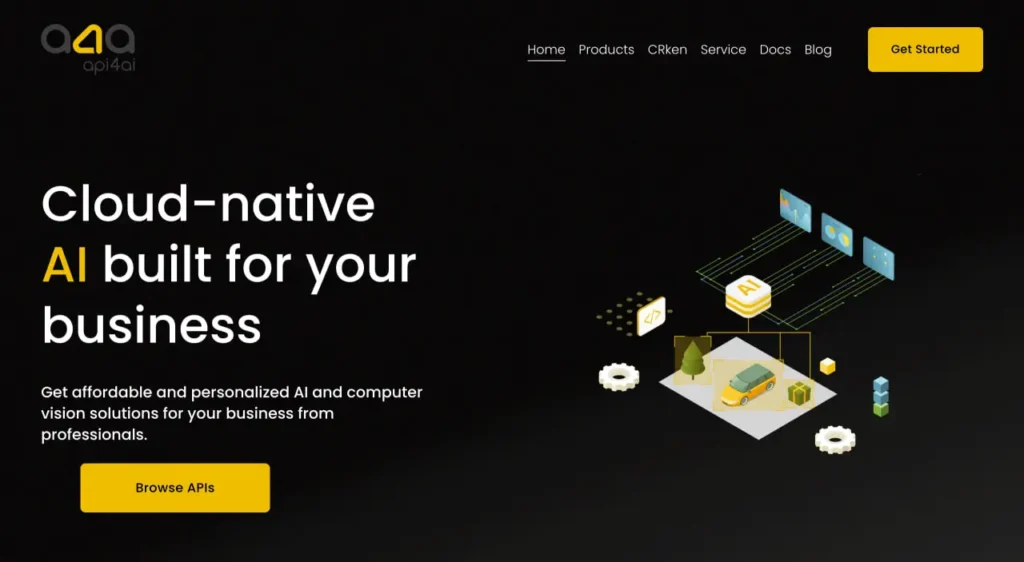
Was ist API4AI und wie funktioniert es?
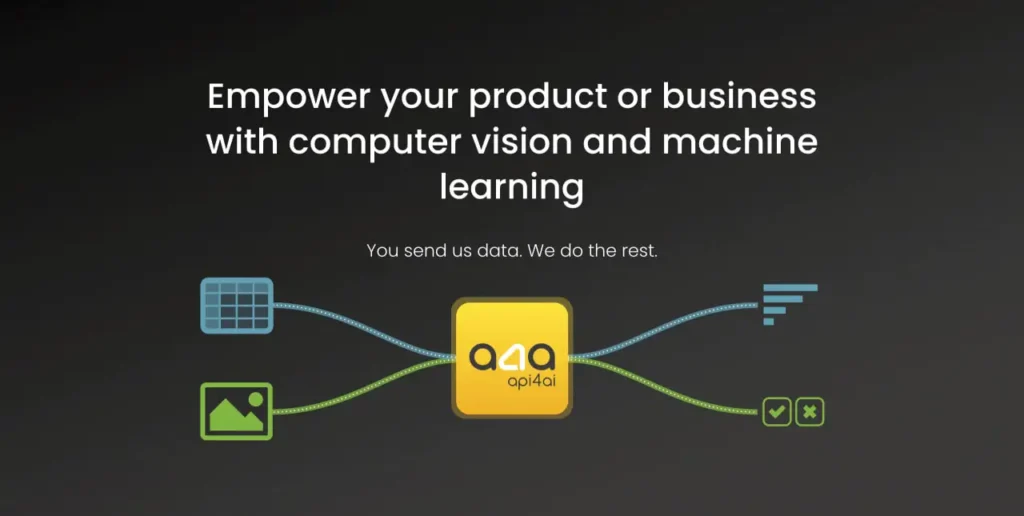
API4AI bietet cloudbasierte Computer-Vision-APIs, die visuelle Analyseaufgaben über REST-Endpunkte verarbeiten. Entwickler senden ein Bild per HTTP-Anfrage; die API verarbeitet es mithilfe vortrainierter Deep-Learning-Modelle und gibt strukturierte JSON-Daten zurück.
Die Plattform macht das Trainieren von Modellen, die Verwaltung der GPU-Infrastruktur und die Wartung von ML-Pipelines überflüssig. Jede API ist auf eine bestimmte Aufgabe spezialisiert – Objekterkennung, optische Zeichenerkennung, Filterung von nicht jugendfreien Inhalten, Altersschätzung, Hintergrundentfernung oder Markenlogoerkennung.
Der grundlegende Arbeitsablauf ist folgender: Eine Anwendung erfasst oder empfängt ein Bild, sendet es mit einem API-Schlüssel an den gewählten API4AI-Endpunkt und erhält die Ergebnisse in weniger als zwei Sekunden. Das System skaliert automatisch und verarbeitet einzelne Anfragen oder Tausende gleichzeitig ohne manuelle Ressourcenzuweisung.
Laut der technischen Dokumentation von API4AI nutzt deren Plattform Vision Transformers und Convolutional Neural Networks. Vision Transformers erreichten bis 2026 Marktreife und übertrafen ältere Architekturen hinsichtlich Genauigkeit und Anpassungsfähigkeit in realen Anwendungsszenarien.
Technische Kernarchitektur
Die Plattform läuft auf einer verteilten Cloud-Infrastruktur mit Endpunkten in mehreren Regionen. Dies reduziert die Latenz bei internationalen Bereitstellungen und bietet Redundanz, falls in einer Zone Probleme auftreten.
Die Authentifizierung erfolgt über API-Schlüssel, die in den Anfrageheadern übergeben werden. Die Ratenbegrenzungen hängen vom Abonnement ab und reichen von Hunderten bis zu Millionen von Anfragen pro Monat. Bilder können als URLs, Base64-kodierte Zeichenketten oder Multipart-Formulardaten übermittelt werden.
Die Reaktionszeiten liegen im Durchschnitt zwischen 1,5 und 3 Sekunden, abhängig von der Komplexität der Aufgabe und der Bildgröße. Das System unterstützt JPEG, PNG, WebP und weitere gängige Formate bis zu festgelegten Dateigrößenbeschränkungen (typischerweise 10–20 MB pro Bild).
Hauptmerkmale und Funktionen
Der Katalog von API4AI umfasst über ein Dutzend spezialisierte APIs. Jede einzelne API adressiert einen spezifischen Geschäftsbedarf, anstatt ein universelles Bildverarbeitungsmodell anzubieten. Dank dieser Modularität zahlen Teams nur für die tatsächlich genutzten Funktionen und können genau die Funktionen integrieren, die sie benötigen.
Objekterkennung und -zuordnung
Die Objekterkennungs-API identifiziert und lokalisiert Objekte in Bildern und gibt Koordinaten der Begrenzungsrahmen sowie Konfidenzwerte zurück. Sie erkennt Tausende von Objektklassen – Fahrzeuge, Tiere, Möbel, Elektronik, Lebensmittel und vieles mehr.
Anwendungsbeispiele aus der Praxis sind Bestandsmanagement (automatisierte Bestandszählung anhand von Lagerfotos), Einzelhandelsanalysen (Verfolgung der Produktplatzierung in Regalen) und Sicherheitsüberwachung (Erkennung nicht autorisierter Gegenstände in Sperrzonen).
Die API liefert JSON-Arrays mit der Klassenbezeichnung, dem Konfidenzprozentsatz und den Pixelkoordinaten jedes erkannten Objekts. Entwickler können die Ergebnisse anhand eines Konfidenzschwellenwerts filtern, um ein ausgewogenes Verhältnis zwischen Präzision und Trefferquote zu erzielen.
Optische Zeichenerkennung (OCR)
Die OCR-API extrahiert Text aus Bildern von Dokumenten, Schildern, Screenshots, Quittungen, Rezepten und handschriftlichen Notizen. Sie unterstützt mehrere Sprachen und Schriftarten und gibt erkannten Text mit Positionsdaten zurück.
Organisationen im Gesundheitswesen nutzen dies zur Digitalisierung von Papierrezepten. Obwohl die OCR-Technologie für gedruckten Text unter idealen Bedingungen Genauigkeitsraten von über 991 TP3T erreicht, bleibt die Handschrifterkennung eine Herausforderung – insbesondere bei der Verarbeitung medizinischer Dokumente mit unterschiedlicher Handschriftqualität.
Die API liefert sowohl unformatierten Text als auch strukturiertes JSON mit Begrenzungsrahmen auf Wortebene. Dies ermöglicht die Weiterverarbeitung, beispielsweise die Extraktion von Schlüsselwörtern, die Datenvalidierung oder die Erstellung durchsuchbarer Dokumentenarchive.
Altersverifizierung und -schätzung
Die API zur Altersverifizierung analysiert Gesichtsmerkmale, um die Altersspanne einer Person zu schätzen. Sie dient der Einhaltung der Altersbeschränkungen beim Verkauf von Produkten wie Alkohol, Tabakwaren, Lottoscheinen und Inhalten für Erwachsene in Online-Kanälen.
Laut dokumentierten Anwendungsfällen konnten Unternehmen, die automatisierte Altersprüfungen einführten, Konversionsratensteigerungen von bis zu 181 % erzielen, indem sie den Aufwand im Vergleich zur manuellen Dokumentenprüfung reduzierten. Warenkorbabbrüche gingen zurück, wenn Kunden auf das Hochladen von amtlichen Ausweisdokumenten verzichteten.
Das System liefert ein geschätztes Alter und einen Konfidenzwert. Um den gesetzlichen Bestimmungen zu entsprechen, kombinieren viele Implementierungen dies mit zusätzlichen Verifizierungsschritten, anstatt sich ausschließlich auf die visuelle Schätzung zu verlassen.
Hintergrundentfernung und Bildsegmentierung
Die API zur Hintergrundentfernung trennt Vordergrundmotive (Personen, Produkte, Fahrzeuge) vom Hintergrund und gibt ein transparentes PNG-Bild oder ein maskiertes Bild zurück. E-Commerce-Plattformen nutzen dies, um einheitliche Produktkataloge ohne manuelle Bildbearbeitung zu erstellen.
Die API verarbeitet komplexe Kanten wie Haare, Fell und transparente Objekte mit angemessener Genauigkeit. Die Verarbeitung eines Standard-Produktfotos dauert inklusive Upload- und Downloadzeit 2–3 Sekunden.
NSFW und Inhaltsmoderation
Die NSFW Content Detection API klassifiziert Bilder in Sicherheitskategorien – unbedenklich, anzüglich, explizit, gewalttätig und verstörend. Soziale Plattformen, Websites für nutzergenerierte Inhalte und Marktplätze nutzen diese Funktion, um die Community-Richtlinien umfassend durchzusetzen.
Das System liefert Wahrscheinlichkeitswerte für jede Kategorie anstelle von binären Urteilen. Dadurch können Plattformen individuelle Schwellenwerte basierend auf ihren spezifischen Richtlinien und ihrer Risikotoleranz festlegen.
Logoerkennung und Markenwiedererkennung
Die Logo Detection API identifiziert Markenlogos in Bildern und ist nützlich für Sponsoring-Monitoring, Wettbewerbsanalyse, Social-Media-Analysen und die Durchsetzung von Markenrechten. Sie erkennt Tausende von bekannten Marken aus verschiedenen Branchen.
Marketingteams nutzen dies, um die Markenpräsenz in nutzergenerierten Inhalten zu verfolgen und die Reichweite von Kampagnen zu messen. Medienunternehmen verwenden es, um die Präsenz von Sponsoren in Sendematerialien zu überprüfen.
Virtuelle Anprobe
Die Virtual Try-On API von API4AI nutzt Deep-Learning-Algorithmen, um Kleidungsstücke in Model-Fotos einzufügen und dabei natürliche Posen und Körperproportionen beizubehalten. Modehändler integrieren diese Funktion in E-Commerce-Plattformen, um Kunden die Möglichkeit zu geben, Kleidungsoptionen ohne physische Muster zu visualisieren.
Die Technologie senkt die Retourenquote, indem sie Kunden hilft, fundiertere Kaufentscheidungen zu treffen. Sie ermöglicht außerdem eine schnelle Katalogerweiterung, ohne dass jedes Produkt an jedem Model fotografiert werden muss.
Automatisieren Sie die Bildanalyse mit FlyPix AI
Viele Organisationen arbeiten mit großen Mengen an Luft-, Drohnen- oder Satellitenbildern, verfügen aber nicht über effiziente Methoden zu deren Verarbeitung. FlyPix AI Hilft bei der Automatisierung von Bildanalyseaufgaben und erleichtert so die Identifizierung von Objekten, die Klassifizierung von Bereichen und die Gewinnung nützlicher Informationen aus Geodaten.
Sie suchen nach einer schnelleren Bildanalyse?
FlyPix AI kann helfen bei:
- Objekterkennung in Geodatenbildern
- Bildannotation und Klassifizierung
- Drohnen- und Satellitenbildanalyse
- benutzerdefiniertes KI-Modelltraining
👉 Probieren Sie FlyPix AI aus. Erforschung der automatisierten Geodatenanalyse.
Integration und Entwicklererfahrung
API4AI legt Wert auf schnelle Integration. Die Dokumentation enthält Codebeispiele in Python, JavaScript, PHP, Java und cURL. Die meisten Implementierungen benötigen weniger als 20 Codezeilen für die Basisfunktionalität.
Entwickler registrieren sich zunächst über das Web-Dashboard für einen API-Schlüssel. Kostenlose Konten ermöglichen eingeschränkte Tests ohne Angabe von Zahlungsdaten. Kostenpflichtige Konten bieten höhere Ratenlimits und Support auf Produktionsniveau.
REST-API-Struktur
Alle Endpunkte folgen einheitlichen Mustern. Anfragen werden per POST-Methode mit den Bilddaten und dem API-Schlüssel gesendet. Die Antworten liefern JSON mit standardisierten Strukturen – Ergebnis-Arrays, Konfidenzwerte, Metadaten und gegebenenfalls Fehlercodes.
Die Plattform übernimmt die Bildvorverarbeitung automatisch. Entwickler müssen Bilder nicht über die grundlegenden Dateitypanforderungen hinaus skalieren, normalisieren oder formatieren. Die APIs akzeptieren Bilder in ihren Originalabmessungen und führen die notwendigen Transformationen serverseitig durch.
Fehlerbehandlung und Ratenbegrenzungen
Das System gibt HTTP-Statuscodes und aussagekräftige Fehlermeldungen zurück, wenn Anfragen fehlschlagen. Häufige Probleme sind ungültige API-Schlüssel, nicht unterstützte Dateiformate, Bilder, die die Größenbeschränkungen überschreiten, oder Überschreitungen der Ratenbegrenzung.
Die Datenratenbegrenzungen werden monatlich zurückgesetzt. Sobald die Begrenzungen erreicht sind, werden Anfragen bis zum nächsten Abrechnungszeitraum mit dem Statuscode 429 zurückgesendet. Höherwertige Tarife bieten deutlich höhere Kontingente und die Möglichkeit, bei Bedarf zusätzliche Kapazität zu erwerben.
Test- und Sandbox-Umgebung
API4AI stellt Testbilder und Beispielantworten in der Dokumentation bereit. Entwickler können mit verschiedenen APIs anhand von Beispieldaten experimentieren, bevor sie diese in Produktionssysteme integrieren.
Das kostenlose Kontingent dient als effektive Testumgebung für Machbarkeitsstudien. Es ermöglicht ausreichend viele Anfragen, um Genauigkeit und Leistung für spezifische Anwendungsfälle ohne finanzielle Verpflichtungen zu validieren.
Leistungs- und Genauigkeitsaspekte
Die API-Qualität variiert je nach Aufgabenkomplexität und Eigenschaften des Eingabebildes. Die Objekterkennung erzielt die besten Ergebnisse mit klaren, gut beleuchteten Bildern, die deutlich erkennbare Objekte zeigen. Die Genauigkeit der Texterkennung hängt stark von der Textgröße, der Schriftklarheit und der Bildauflösung ab.
Die Objekterkennungs-API dient dazu, Objekte in Bildern unter günstigen Bedingungen mit hoher Genauigkeit zu identifizieren und zu lokalisieren. Die Leistung verschlechtert sich bei niedrig aufgelösten Bildern, extremen Aufnahmewinkeln oder sehr unübersichtlichen Szenen.
Die OCR-API verarbeitete Standarddokumente und gedruckten Text mit hoher Genauigkeit. Die Erkennung handgeschriebener Texte erwies sich als weniger zuverlässig, insbesondere bei Schreibschrift oder uneinheitlicher Handschrift – was den branchenweiten Herausforderungen in diesem Bereich entspricht.
Die Genauigkeit der Altersverifizierung hängt von Faktoren wie Bildqualität, Gesichtswinkel, Make-up und Beleuchtung ab. Die API liefert Konfidenzwerte, die Anwendungen helfen zu entscheiden, wann zusätzliche Verifizierungsschritte erforderlich sind.
Latenz- und Reaktionszeiten
Die Antwortzeiten hängen von der Komplexität der Aufgabe, der Bildgröße und der Serverauslastung ab. Einfache Aufgaben wie die Klassifizierung von nicht jugendfreien Inhalten sind in 1–2 Sekunden abgeschlossen. Aufwändigere Operationen wie das Entfernen des Hintergrunds oder die virtuelle Anprobe können 3–4 Sekunden dauern.
Die Netzwerklatenz beeinflusst die gesamte Anfragezeit. Anwendungen, die Nutzer bedienen, die weit von den Serverregionen von API4AI entfernt sind, erfahren zusätzliche Verzögerungen. Die Cloud-Infrastruktur der Plattform ist über verschiedene Regionen verteilt, was die Latenz für einige Nutzer reduzieren kann.
Für zeitkritische Anwendungen können Entwickler asynchrone Verarbeitungsmuster implementieren – Bilder zur Analyse einreichen, andere Operationen fortsetzen und Ergebnisse abrufen, wenn sie bereit sind, anstatt auf API-Antworten zu warten.
Skalierbarkeit und Zuverlässigkeit
Die Cloud-basierte Architektur skaliert automatisch, um Bedarfsspitzen abzufangen. Anwendungen müssen bei hohem Datenverkehr keine zusätzlichen Ressourcen bereitstellen – die Plattform teilt die Verarbeitungskapazität dynamisch zu.
Verfügbarkeits- und Zuverlässigkeitsdaten werden in den verfügbaren Quellen nicht öffentlich zugänglich gemacht. Die tatsächlichen Zuverlässigkeitswerte können variieren.
Für unternehmenskritische Anwendungen sollten Teams Ausweichstrategien implementieren – Wiederholungslogik für vorübergehende Fehler, sanfte Leistungsreduzierung bei Nichtverfügbarkeit von APIs und Überwachung zur Erkennung längerer Ausfälle.
Preisstruktur und Kostenanalyse
API4AI verwendet ein nutzungsbasiertes Abrechnungsmodell, das sich nach dem Anfragevolumen richtet. Die Kosten pro Anfrage variieren je nach API und spiegeln deren Rechenkomplexität wider. Die genauen Preise können sich ändern, daher finden Sie die aktuellen Tarife auf der offiziellen Website.
Die Plattform bietet verschiedene Abonnementstufen mit monatlichen Anfragekontingenten zu vergünstigten Preisen pro Anfrage im Vergleich zur reinen nutzungsbasierten Abrechnung. Höhere Stufen bieten eine bessere Wirtschaftlichkeit für Anwendungen, die täglich Tausende von Bildern verarbeiten.
Kostenvergleich: API vs. individuelle Entwicklung
Die Entwicklung kundenspezifischer Computer-Vision-Modelle erfordert erhebliche Investitionen in Datenkennzeichnung, Modelltraining, Infrastruktur und laufende Wartung. Teams benötigen ML-Ingenieure, GPU-Ressourcen und monatelange Entwicklungszeit.
Für viele Unternehmen sind API-Kosten deutlich niedriger als Kosten für individuelle Entwicklungen – insbesondere wenn man die Gesamtbetriebskosten über mehrere Jahre betrachtet. Der Break-Even-Punkt hängt vom Anfragevolumen, der erforderlichen Genauigkeit und den internen Ressourcenkosten ab.
Für Anwendungen mit hohem Datenaufkommen, die monatlich Millionen von Bildern verarbeiten, können individuelle Modelle langfristig wirtschaftlicher sein. Anwendungsfälle mit niedrigem bis mittlerem Datenaufkommen (zehntausende Anfragen pro Monat) sprechen in der Regel für API-Lösungen.
| Faktor | API4AI-Plattform | Custom AI Development |
|---|---|---|
| Ersteinrichtungszeit | Stunden bis Tage | Mindestens 3-6 Monate |
| Vorabinvestition | Minimal (kostenlose Version verfügbar) | $50,000-$500,000+ |
| Laufende Wartung | Keine (wird von der Plattform verarbeitet) | Ein dediziertes ML-Team wird benötigt. |
| Skalierbarkeit | Automatisch | Erfordert Infrastrukturplanung |
| Personalisierung | Beschränkt auf verfügbare APIs | Vollständig anpassbar |
| Am besten geeignet für | Standardisierte Anwendungsfälle, schnelle Bereitstellung | Besondere Anforderungen, sehr hohes Volumen |
Anwendungsfälle und Anwendungen aus der Praxis
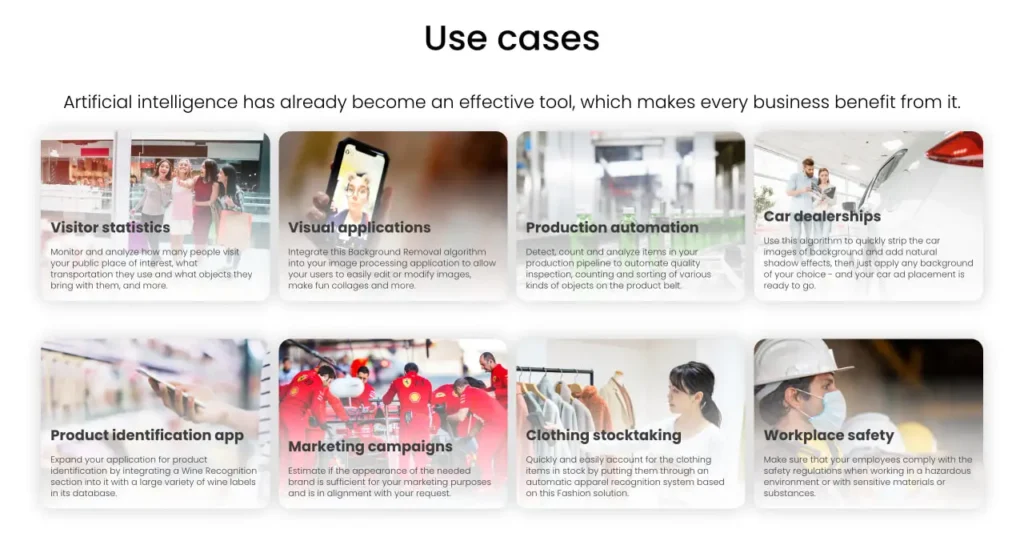
API4AI bedient Unternehmen aus den Bereichen E-Commerce, Gesundheitswesen, Medien, Sicherheit und Verbraucheranwendungen. Hier finden Sie dokumentierte Implementierungsmuster.
E-Commerce-Produktkatalogisierung
Online-Händler nutzen Hintergrundentfernung und Objekterkennung, um Produktfotos in großem Umfang zu verarbeiten. Anstatt Tausende von Bildern manuell zu bearbeiten, automatisieren sie die Hintergrundstandardisierung und erstellen so übersichtliche Produktkataloge.
Das Verfahren verkürzt die Katalogvorbereitungszeit von Wochen auf Tage und gewährleistet ein einheitliches Erscheinungsbild aller Angebote. Hintergrundentfernung und Objekterkennung können die Arbeitsabläufe bei der Produktkatalogerstellung deutlich beschleunigen.
Digitalisierung von Gesundheitsdokumenten
Medizinische Einrichtungen nutzen OCR, um Papierrezepte, Patientenformulare und Patientenakten in durchsuchbare digitale Formate umzuwandeln. Dies verbessert die Datenzugänglichkeit und ermöglicht die Integration in elektronische Patientenaktensysteme.
Die Technologie stößt bei handschriftlichen Rezepten an ihre Grenzen, da die Handschriftqualität stark variiert. Viele Implementierungen kombinieren daher die automatische Texterkennung (OCR) mit einer manuellen Qualitätsprüfung anstelle einer vollständigen Automatisierung.
Inhaltsmoderation für soziale Plattformen
Plattformen für nutzergenerierte Inhalte setzen APIs zur Erkennung ungeeigneter Inhalte ein, um unangemessene Beiträge automatisch zu kennzeichnen, bevor sie öffentlich angezeigt werden. Dies reduziert den Arbeitsaufwand der Moderatoren und verbessert die Reaktionszeiten bei Richtlinienverstößen.
Die Systeme eignen sich am besten als Vorfilter, die offensichtliche Verstöße automatisch erkennen und Grenzfälle zur Beurteilung an menschliche Moderatoren weiterleiten. Dieser hybride Ansatz vereint die Effizienz der Automatisierung mit differenzierter Entscheidungsfindung.
Einzelhandelsanalysen und Regalüberwachung
Konsumgüterunternehmen nutzen Objekterkennung, um die Produktplatzierung im Handel anhand von Fotos zu analysieren. Außendienstmitarbeiter erfassen Bilder der Regale; APIs identifizieren Produkte, messen die Regalfläche und erkennen Warenengpässe.
Diese Daten dienen der Planung von Nachbestellungen, der Überprüfung der Einhaltung von Werbeaktionen und liefern Wettbewerbsinformationen zur Produktplatzierung der Konkurrenz. Die Automatisierung ersetzt manuelle Prüfungen durch skalierbare Bildanalyse.
Online-Verkäufe mit Altersbeschränkung
Alkohol-Lieferdienste und Online-Händler setzen APIs zur Altersverifizierung ein, um gesetzliche Bestimmungen einzuhalten und gleichzeitig den Kaufprozess so einfach wie möglich zu gestalten. Kunden laden Selfies hoch; das System schätzt das Alter und kennzeichnet Konten, die einer zusätzlichen Verifizierung bedürfen.
Wie bereits erwähnt, konnten Unternehmen, die automatisierte Altersprüfungen einführten, durch die Reduzierung von Kaufabbrüchen im Vergleich zu manuellen Dokumenten-Upload-Prozessen Konversionsratensteigerungen von nahezu 181 TP3T erzielen. Die Technologie dient als erste Prüfinstanz und nicht als alleinige Verifizierungsmethode für Compliance-kritische Transaktionen.
Stärken und Grenzen
Jede Plattform bringt Kompromisse mit sich. Hier erfahren Sie, was API4AI gut kann und wo es an seine Grenzen stößt.
Wichtigste Stärken
- Geschwindigkeit der Bereitstellung: Teams können APIs innerhalb weniger Stunden integrieren und testen. Dieser schnelle Implementierungszeitraum eignet sich für Unternehmen, die eine schnelle Validierung benötigen oder unter Zeitdruck stehen.
- Keine ML-Kenntnisse erforderlich: Entwickler ohne Vorkenntnisse im Bereich maschinelles Lernen können anspruchsvolle Computer-Vision-Funktionen implementieren. Die Plattform abstrahiert die Komplexität von Modelltraining, Optimierung und Wartung.
- Automatische Skalierung: Die Infrastruktur bewältigt Nachfrageschwankungen ohne manuelles Eingreifen. Anwendungen benötigen keine Kapazitätsplanung oder Ressourcenbereitstellung für Bildverarbeitungs-Workloads.
- Vielfältiger API-Katalog: Mehrere spezialisierte Endpunkte decken gängige Geschäftsanforderungen ab. Teams können APIs für mehrstufige Arbeitsabläufe flexibel kombinieren, ohne den Anbieter wechseln zu müssen.
- Pay-per-Use-Ökonomie: Nutzer mit geringem Volumen vermeiden hohe Vorabinvestitionen. Tests und Machbarkeitsstudien erfolgen mit minimalem finanziellen Risiko.
Bemerkenswerte Einschränkungen
- Eingeschränkte Anpassungsmöglichkeiten: Die Plattform bietet vortrainierte Modelle, die für allgemeine Anwendungsfälle optimiert sind. Anwendungen, die branchenspezifische Trainingsdaten oder ungewöhnliche Erkennungsziele benötigen, können die Modelle nicht feinabstimmen.
- API-Abhängigkeit: Die Kernfunktionalität ist von der Verfügbarkeit externer Dienste abhängig. Netzwerkprobleme, API-Ausfälle oder Preisänderungen wirken sich direkt auf Anwendungen aus. Die Entwicklung kritischer Systeme auf Basis von Drittanbieter-APIs birgt das Risiko der Abhängigkeit von diesen Anbietern.
- Genauigkeitsbeschränkungen: Vortrainierte Modelle können bei Grenzfällen, ungewöhnlichen Blickwinkeln, schlechten Lichtverhältnissen oder domänenspezifischen Bildern, die nicht in den Trainingsdaten enthalten sind, unterdurchschnittliche Leistungen erbringen. Die Leistung variiert je nach Qualität der Eingabedaten.
- Kosten im extremen Maßstab: Organisationen, die täglich Millionen von Bildern verarbeiten, könnten feststellen, dass die Gebühren pro Anfrage die Gesamtbetriebskosten für kundenspezifische Infrastruktur und Modelle übersteigen – allerdings liegt diese Schwelle weit über den Bedürfnissen der meisten Unternehmen.
- Datenschutzaspekte: Die Bilder werden zur Verarbeitung an externe Server übertragen. Organisationen, die sensible Bilddaten verarbeiten, müssen die Einhaltung der Datenschutzbestimmungen und der Anforderungen an den Datenspeicherort prüfen.
| Aspekt | Stärke | Einschränkung |
|---|---|---|
| Einrichtungszeit | Stunden für die Integration | Modelle können nicht angepasst werden. |
| Technische Fähigkeiten | Keine ML-Kenntnisse erforderlich | Begrenzte Kontrolle über die Verarbeitung |
| Kostenstruktur | Niedrige Eintrittsbarrieren | Kann bei sehr hohen Stückzahlen teuer werden. |
| Genauigkeit | Hoch für gängige Szenarien | Könnte bei Sonderfällen Schwierigkeiten haben |
| Infrastruktur | Vollständig verwaltet, automatische Skalierung | Risiko der Lieferantenabhängigkeit |
| Datenschutz | Standardmäßige Verschlüsselung während der Übertragung | Daten verlassen die organisatorische Kontrolle |
Wettbewerbsumfeld und Alternativen
API4AI konkurriert mit mehreren etablierten Plattformen und Cloud-Anbieterdiensten, die Computer-Vision-Funktionen anbieten.
Hauptkonkurrenten
- Die Google Cloud Vision API bietet Objekterkennung, OCR, Gesichtserkennung und Bildbeschriftung auf Basis der umfangreichen ML-Infrastruktur von Google. Sie ermöglicht eine breitere Integration mit anderen Google Cloud-Diensten, ist aber in der Regel bei vergleichbarem Anfragevolumen teurer.
- Amazon Rekognition bietet Bild- und Videoanalyse über die AWS-Infrastruktur. Es ist eng in das AWS-Ökosystem integriert und bietet zusätzliche Funktionen wie Prominentenerkennung und Videoinhaltsmoderation. Die Preisgestaltung richtet sich nach der komplexen AWS-Tarifstruktur.
- Microsoft Azure Computer Vision bietet ähnliche Funktionen, die in die Azure-Cloud-Dienste integriert sind. Es bietet umfassende Unterstützung für Unternehmen und Compliance-Zertifizierungen, die für regulierte Branchen von Bedeutung sind.
- Eden AI fungiert als einheitliche Schnittstelle für verschiedene KI-Anbieter und ermöglicht Entwicklern den Zugriff auf diverse Bildverarbeitungs-APIs über eine einzige Integration. Dieser Ansatz bietet zwar Flexibilität seitens der Anbieter, führt aber durch eine zusätzliche Abstraktionsschicht zu Latenz oder Komplexität.
Differenzierungsfaktoren
API4AI zeichnet sich vor allem durch fokussierte Spezialisierung und transparente Preisgestaltung aus. Die Plattform legt den Fokus auf spezifische Anwendungsfälle im Geschäftsbetrieb anstatt auf eine umfassende Integration in Cloud-Ökosysteme.
Für Teams, die bereits ein Cloud-Ökosystem (AWS, Google Cloud, Azure) nutzen, bieten native Bildverarbeitungsdienste eine engere Integration in die bestehende Infrastruktur. Unternehmen, die eigenständige Bildverarbeitungsfunktionen ohne umfassende Cloud-Abhängigkeiten benötigen, finden in spezialisierten Plattformen wie API4AI möglicherweise einfachere Implementierungsmöglichkeiten.
Die Wettbewerbsfähigkeit der Preise variiert je nach Anwendungsfall und Volumen. Im Allgemeinen finden kleinere Projekte die transparente Preisgestaltung von API4AI pro Anfrage einfacher zu bewerten als die komplexen Abrechnungsstrukturen von Cloud-Anbietern.
Strategische Überlegungen: Wann API4AI sinnvoll ist
Die Plattform eignet sich besser für bestimmte Geschäftskontexte als andere. Berücksichtigen Sie diese Faktoren bei der Bewertung der Eignung.
Ideale Anwendungsfälle
API4AI eignet sich am besten für Organisationen, die Standardaufgaben im Bereich Computer Vision benötigen, aber keine ML-Expertise im Team haben. Startups, die Produktkonzepte validieren, mittelständische Unternehmen, die Arbeitsabläufe automatisieren, und Konzerne, die ihre internen Kapazitäten ergänzen, profitieren gleichermaßen von sofort einsatzbereiten APIs.
Projekte mit klaren Anforderungen, die zu den verfügbaren APIs passen, erzielen den schnellsten Nutzen. Wenn der Geschäftsbedarf mit Objekterkennung, OCR, Altersverifizierung oder anderen Katalogisierungsfunktionen übereinstimmt, verläuft die Integration reibungslos.
Anwendungen mit moderatem Anfrageaufkommen (Hunderte bis Zehntausende Anfragen täglich) bieten optimale Bedingungen für eine wirtschaftlichere API-Nutzung. Die Kosten bleiben überschaubar, während gleichzeitig eine komplexe Infrastruktur vermieden wird.
Situationen, die Alternativen begünstigen
Organisationen, die hochspezialisierte Erkennungsaufgaben benötigen – wie die Identifizierung spezifischer industrieller Defekte, die Analyse medizinischer Bilddaten oder die Erkennung geschützter Objekte – benötigen maßgeschneiderte Modelle, die mit domänenspezifischen Daten trainiert wurden. Vorkonfigurierte APIs können die erforderliche Genauigkeit für individuelle visuelle Probleme nicht gewährleisten.
Unternehmen, die täglich Millionen von Bildern verarbeiten, sollten die Wirtschaftlichkeit von Eigenentwicklung versus Zukauf sorgfältig abwägen. Bei extrem hohem Datenvolumen können die Gesamtkosten für eine kundenspezifische Infrastruktur unter die kumulierten API-Gebühren sinken.
Unternehmen mit strengen Anforderungen an den Datenstandort oder regulatorischen Beschränkungen, die eine externe Datenübertragung verhindern, benötigen On-Premise- oder Private-Cloud-Lösungen anstelle von öffentlichen API-Diensten.
Teams, die bereits tief in ein Cloud-Ökosystem (AWS, Azure, Google Cloud) eingebunden sind, bevorzugen möglicherweise native Bildverarbeitungsdienste, die sich nahtlos in die bestehende Infrastruktur und Abrechnung integrieren lassen.
Die Zukunft von Vision-APIs und KI-Integration
Der Markt für Computer-Vision-APIs entwickelt sich stetig weiter, da die zugrundeliegenden Modelle verbessert und neue Funktionen entstehen. Vision Transformers erreichten bis 2026 die kommerzielle Reife und bieten im Vergleich zu älteren Architekturen eine höhere Genauigkeit und Anpassungsfähigkeit.
Branchenprognosen gehen davon aus, dass kontextsensitive Agenten in 2-3 Jahren auf den Markt kommen werden, während fortgeschrittenere kollaborative Systeme innerhalb von 5 Jahren erwartet werden.
Die Einführung schreitet rasant voran: 101.030 große Unternehmen nutzen bereits KI-Agenten. Darüber hinaus planen 821.030 Führungskräfte, in den nächsten drei Jahren KI-Agenten einzuführen, was auf eine starke Dynamik hin zu automatisierten intelligenten Systemen hindeutet.
Für API4AI und ähnliche Plattformen deutet dieser Trend auf eine Erweiterung der Fähigkeiten hin – über einfache Klassifizierung und Erkennung hinaus hin zu Kontextverständnis und komplexem visuellem Denken. Anwendungen werden zunehmend verschiedene KI-Funktionen (Bildverarbeitung, Spracherkennung, Vorhersage) in einheitlichen Arbeitsabläufen kombinieren.
Unternehmen, die Vision-APIs evaluieren, sollten neben ihren aktuellen Bedürfnissen auch die zukünftige Entwicklung berücksichtigen. Plattformen, die in Forschung und den Ausbau ihrer Funktionen investieren, werden über mehrere Jahre hinweg einen wachsenden Mehrwert bieten.
Häufig gestellte Fragen
API4AI bietet REST-Endpunkte, die von jeder Programmiersprache aus zugänglich sind, die HTTP-Anfragen senden kann. Die Dokumentation enthält konkrete Codebeispiele in Python, JavaScript, PHP, Java und cURL. Entwickler, die mit anderen Sprachen arbeiten, können diese Beispiele als Referenz nutzen und die HTTP-Anfragemuster an ihre bevorzugten Tools und Frameworks anpassen.
Die aktuelle API-Struktur verarbeitet einzelne Bilder pro Anfrage. Für Stapelverarbeitungen senden Anwendungen mehrere sequentielle oder parallele Anfragen. Die Ratenbegrenzungen beziehen sich auf das gesamte Anfragevolumen innerhalb des Abrechnungszeitraums und beschränken nicht die Anzahl gleichzeitiger Anfragen. Dadurch wird eine Parallelisierung für eine schnellere Stapelverarbeitung innerhalb dieser Grenzen ermöglicht.
Bei Anwendungen mit geringem bis mittlerem Datenvolumen (bis zu zehntausend Bilder pro Monat) ist API4AI in der Regel deutlich günstiger als eine individuelle Entwicklung, wenn man Datenkennzeichnung, Modelltraining, Infrastruktur und die laufenden Kosten des ML-Teams berücksichtigt. Individuelle Lösungen können sich bei sehr hohem Datenvolumen (Millionen von Bildern pro Monat) oder wenn die Anforderungen die Vorabinvestition von über 10.000 INR und den Einsatz dedizierter technischer Ressourcen rechtfertigen, als wirtschaftlicher erweisen.
Bilder werden auf der Cloud-Infrastruktur von API4AI verarbeitet und in der Regel nicht langfristig gespeichert, sofern dies nicht explizit konfiguriert ist. Unternehmen, die sensible Bilddaten verarbeiten, sollten die Datenschutzrichtlinien der Plattform prüfen und die Einhaltung der geltenden Datenschutzbestimmungen sicherstellen. Für besonders sensible Anwendungen benötigen Organisationen möglicherweise On-Premise- oder Private-Cloud-Lösungen anstelle öffentlicher API-Dienste.
Die aktuellen SLA-Bedingungen finden Sie in der offiziellen API4AI-Dokumentation oder erhalten Sie beim Support-Team. Diese können je nach Abonnementstufe variieren. Diskussionen in der Community deuten auf eine allgemeine Zuverlässigkeit hin, formale Verfügbarkeitszusagen werden jedoch nicht explizit kommuniziert. Geschäftskritische Anwendungen sollten unabhängig von den SLA-Angaben des Anbieters Wiederholungslogik und Ausweichstrategien implementieren.
Die Plattform bietet vortrainierte Modelle, die für allgemeine Anwendungsfälle optimiert sind. Individuelles Modelltraining oder Feinabstimmung für organisationsspezifische Erkennungsaufgaben werden über den Standard-API-Katalog nicht angeboten. Unternehmen, die hochspezialisierte Erkennungsfunktionen benötigen, benötigen entweder individuelle KI-Entwicklung oder Plattformen, die die Modellanpassung unterstützen.
Die APIs unterstützen gängige Formate wie JPEG, PNG, WebP und weitere, wobei die Dateigröße je nach API-Endpunkt auf ca. 10–20 MB pro Bild begrenzt ist. Genaue Spezifikationen finden Sie in der technischen Dokumentation der jeweiligen API. Die Plattform übernimmt die notwendige Bildvorverarbeitung automatisch, sodass Entwickler Eingaben über die grundlegenden Formatvorgaben hinaus nicht manuell skalieren oder normalisieren müssen.
Fazit: Ist API4AI das Richtige für Ihr Projekt?
API4AI ermöglicht die schnelle Implementierung von Computer-Vision-Funktionen für gängige Geschäftsanwendungen. Die Plattform reduziert die Komplexität der Infrastruktur und den Bedarf an ML-Expertise und bietet gleichzeitig ein nutzungsbasiertes Abrechnungsmodell, das sich für Projekte in der Frühphase und Anwendungen mit mittlerem Volumen eignet.
Der Dienst funktioniert am besten, wenn die Anforderungen mit den verfügbaren APIs übereinstimmen – Objekterkennung, OCR, Altersverifizierung, Hintergrundentfernung, Inhaltsmoderation und ähnliche Aufgaben. Teams, die diese Funktionen benötigen, können sie innerhalb von Stunden statt Monaten integrieren und testen.
Es gibt jedoch Einschränkungen. Die Anpassungsmöglichkeiten sind minimal. Die Daten verlassen die Kontrolle des Unternehmens. Die Genauigkeit hängt von der Qualität der Eingabedaten ab. Bei extrem hohem Datenaufkommen können die Kosten individueller Lösungen höher sein.
Für Unternehmen, die die Integration von Bildverarbeitungs-KI evaluieren, reduziert sich der Entscheidungsrahmen auf drei Fragen: Entsprechen Standard-APIs Ihren Anforderungen? Passt Ihr Anfragevolumen zu den API-Preisen? Können externe Abhängigkeiten Ihre Zuverlässigkeits- und Compliance-Anforderungen erfüllen?
Bei positiven Ergebnissen bietet API4AI einen pragmatischen Mehrwert. Wenn die Anforderungen Spezialisierung, Kontrolle oder extreme Skalierbarkeit erfordern, sollten individuelle Entwicklungen oder alternative Plattformen ernsthaft in Betracht gezogen werden.
Der Markt für Computer Vision entwickelt sich weiterhin rasant. Was heute noch individuelle Entwicklungen erfordert, kann morgen schon über APIs verfügbar sein. Und was sich aktuell über APIs realisieren lässt, kann bei steigendem Umfang eine individuelle Infrastruktur rechtfertigen.
Bewerten Sie API4AI anhand Ihrer aktuellen Bedürfnisse und planen Sie gleichzeitig zukünftiges Wachstum ein. Testen Sie gründlich mit realen Daten, bevor Sie die Anwendung produktiv einsetzen. Entwickeln Sie zudem Ausweichstrategien, die die Kernfunktionalität schützen, falls externe Abhängigkeiten ausfallen.